Interview: Preserving Protest and Legacy with WE LIVE IN CAIRO Cast Album
The Lazours discuss the legacy of WE LIVE IN CAIRO, the power of cast albums & how their latest projects continue exploring art, protest & humanity.
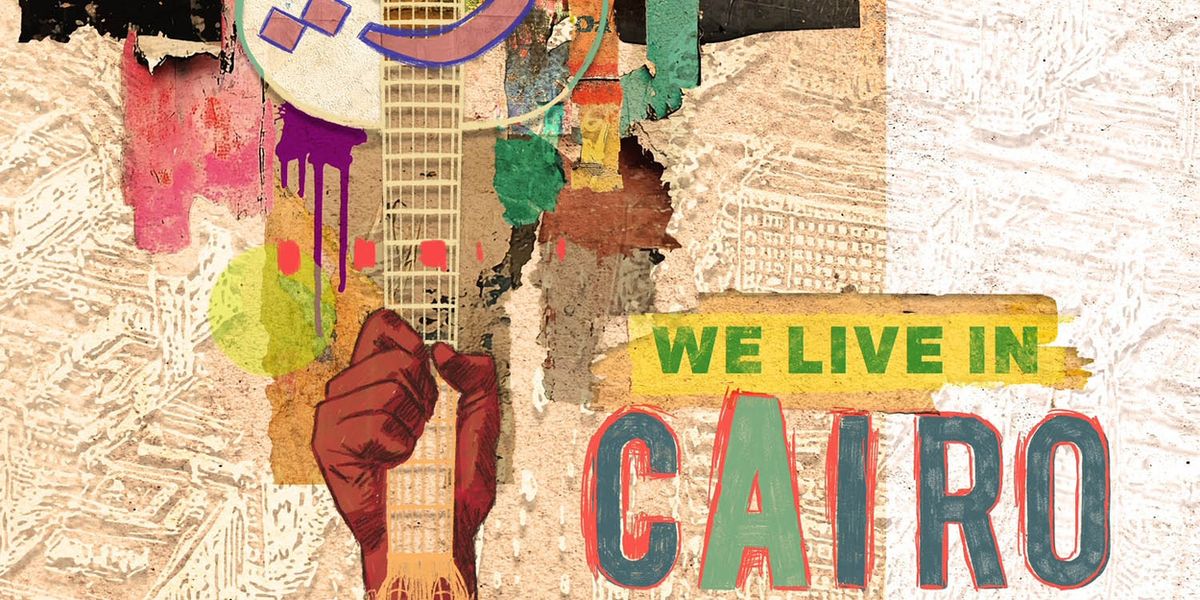
When WE LIVE IN CAIRO premiered at New York Theatre Workshop, the musical, which is about young revolutionaries during Egypt’s 2011 Arab Spring, was met with acclaim for its urgent storytelling and heartfelt exploration of art, activism, and identity. Now, with the release of the show's Original Off-Broadway Cast Recording from Center Stage Records, brothers and writers The Lazours (Daniel and Patrick) reflect on the work’s decade-long evolution and its lasting resonance.
"Cast albums are really a strong pillar of the tradition of musical theater," says Patrick Lazour. "Musical theater is, yes, a live, ephemeral thing, like all theater is, but musical theater has this opportunity to put something on record for the people, for the love of theater, for posterity, and for the Broadway and Off-Broadway lovers. And that’s just an exciting thing. I know my love for musical theater was made on cast recordings. It was made on the imagination that cast recordings provoke."
"You can imagine into a show if you haven’t seen it. But at the same time that you’re imagining into that show and maybe imagining a future production of that show, you’re listening to this thing that’s captured in amber. It’s this beautiful double full-sided experience."
For The Lazours, WE LIVE IN CAIRO represents not only a record of a past production but also a creative milestone. "I’m obviously excited that the album is out now," Patrick says. "I’m thrilled about that. I’m also thrilled that in 20 years, we’ll be able to listen to this album. Maybe this show will have another life. But the fact that we can go back and be like, 'Oh my gosh, look at this ensemble of six doing this amazing thing at this moment in time.' That’s incredible."
"The musical theater fans are the deepest divers of listeners," Daniel notes with deep reverence for musical theater fans. "Cast albums do such a great job of building the web that is this beautiful community that we live in. There is such a respect among musical theater listeners for the undiscovered voices, of which there are a number on this album."
"The amount of people who have messaged me on Instagram or sent me an email saying, 'I listened to the album, and I really appreciated this' is moving," Patrick agrees. "In a time where we’re looking at 30-second sound bites and singles, the fact that there’s this tradition of an album that’s still alive and well in a community is a moving and inspiring thing."
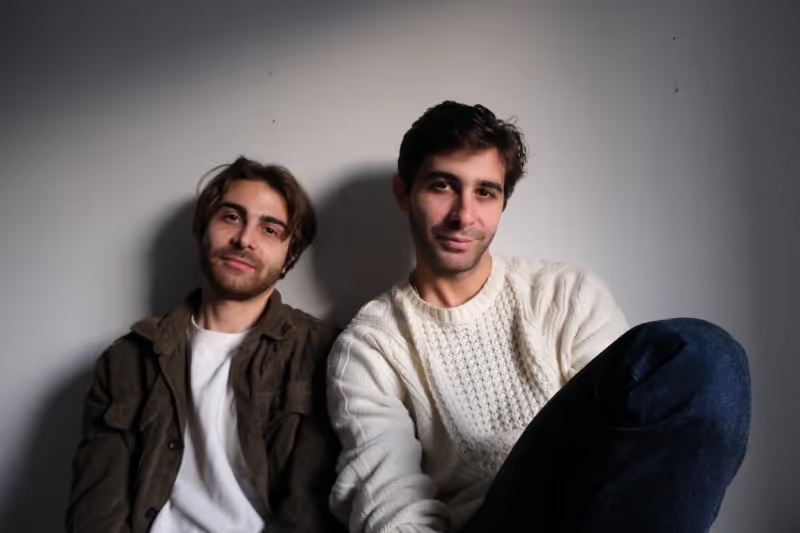
Photo by Chayenne Skeete.
The show’s own journey mirrors the historical complexity it depicts. "We grew with it," Daniel recalls. "We grew with the history that was changing. The first draft of the show ended at basically what is now the end of Act One. We were conceiving it as a one-act all those years ago because that’s what the story was to us in 2012. It was, 'Look at democracy in the Arab world.' And it was a very pat narrative. But as we grew and as we were introduced to a lot of scholars and activists from the region, they basically said, in so many words, 'You’re missing the drama of post-revolutionary Egypt.' And then we endeavored to tell that story."
"I remember having this really formative conversation with the photographer who inspired this entire project, Ed Ou," Patrick vivdly remembers about one pivotal conversation. "I was probably 22 or 23. He was like, 'Do you know that none of those people in that photograph that you love so much are talking to one another? This person and this person are having a fight. This person is no longer in Egypt, and this person is trying to keep it all together.' That was what really spun off the second act."
The Lazours’ commitment to authenticity extends to the sound of the recording. "What comes to mind is some of the vocal stylings that show up on the album," Daniel says. "At the end of 'Wall Song,' John El-Jor is doing this riff that’s not looped. People have asked if it’s a loop, but it’s not. That was intentional because there is this tradition of ornamentation, and you’ll hear how he does that. It’s just this beautiful thing that Lebanese singer Sabah does that we were drawing on for that."
"Part of the mission of the piece is to show the humanity of Arab people, to show the humanity of Muslim people. The richness, the depth, and complexity of people that are—as we know—more than ever now at best treated apathetically by many," Patrick adds. "So the fact that we had a cast that had the same drive to tell that story and make that one of the elements of this story was so necessary."
The WE LIVE IN CAIRO recording also showcases collaboration at its finest, featuring orchestrations by two-time Tony winner Michael Starobin and production by two-time Grammy and Tony winner Charlie Rosen. "Starobin is a mentor to us," Daniel says. "Just working with him was a real moment. He has such a reverence for the text of a song, and you can really hear that in his orchestration."
"Every project is his opportunity to both mentor and learn," Patrick continues. "He knows what has worked in the past, but he also says, 'This is a new generation of writers, and they have something that I don’t have.' The influence that he gives as an orchestrator—as co-orchestrator with Daniel—is storytelling through instrumentation."
As for Rosen, Daniel says, "He came in with fresh ears. We've all lived in this world for over five years, and he could really step back and be like, 'Wait a minute, why would you include that? That doesn’t make sense.' For him, it was all coming fresh, and he was able to reflect it back. For everyone in this process, that was invaluable."
"The show changes so much. The way it’s met the world in each of these presentations has been vastly different," Daniel notes about the power of the show's salient messages about youth and protest. "I think the score is a collection of protest songs. Do with it what you will as a young person, as a young idealistic person. Maybe take lessons if there are lessons in it, and also see that it’s worth it to try."
"Daniel and I, as writers, are most interested in the interrogation of a thing," Patrick adds. "This is an intellectual interrogation of youth activists. I really want to make sure each of these characters is just as complex and vivid and contradictory as we all are."
While WE LIVE IN CAIRO continues to inspire, the brothers are already deep in new projects. Their musical NIGHT SIDE SONGS opens this season at Lincoln Center Theater, and THE LUNCHBOX, an adaptation of Ritesh Batra’s acclaimed film, will premiere at Berkeley Repertory Theatre in 2026.
"The more obvious connection between CAIRO and NIGHT SIDE SONGS is that both play with audience engagement," Daniel says. "There was a singalong portion in CAIRO that inspired the concept of NIGHT SIDE SONGS. And in a more abstract way, NIGHT SIDE SONGS started as a piece about the first chemotherapy trials in the 1960s. Maybe subconsciously, we were still drawn to those turning points in history."
"The characters had some similarities to the characters in CAIRO," Patrick adds. "They were young mavericks working within a system. But NIGHT SIDE SONGS became a very intimate story. It’s about mortality and illness, but told in a very small way."
On THE LUNCHBOX, Daniel shares, "Ritesh Batra, who wrote and directed the film, always knew he wanted to make a musical of it. It’s been a really beautiful process with Rachel Chavkin. The tent poles of the musical are slightly different from the tent poles of the movie, which hopefully will be satisfying for people who know both."
"It’s been super collaborative. It stands to reason that you’d be subservient to the person who created the movie, but it’s the farthest thing from the case," Patrick concludes. "It’s a team of really imaginative, impulsive—in the best way—artists."

.jpg?format=auto&width=365)