Interview: Director Tim Jackson on TWO STRANGERS' Charming Love Letter to NYC
A whimsical two-hander becomes a heartfelt event as director Tim Jackson reflects on the journey, joy, and surprising emotional power of the new musical.
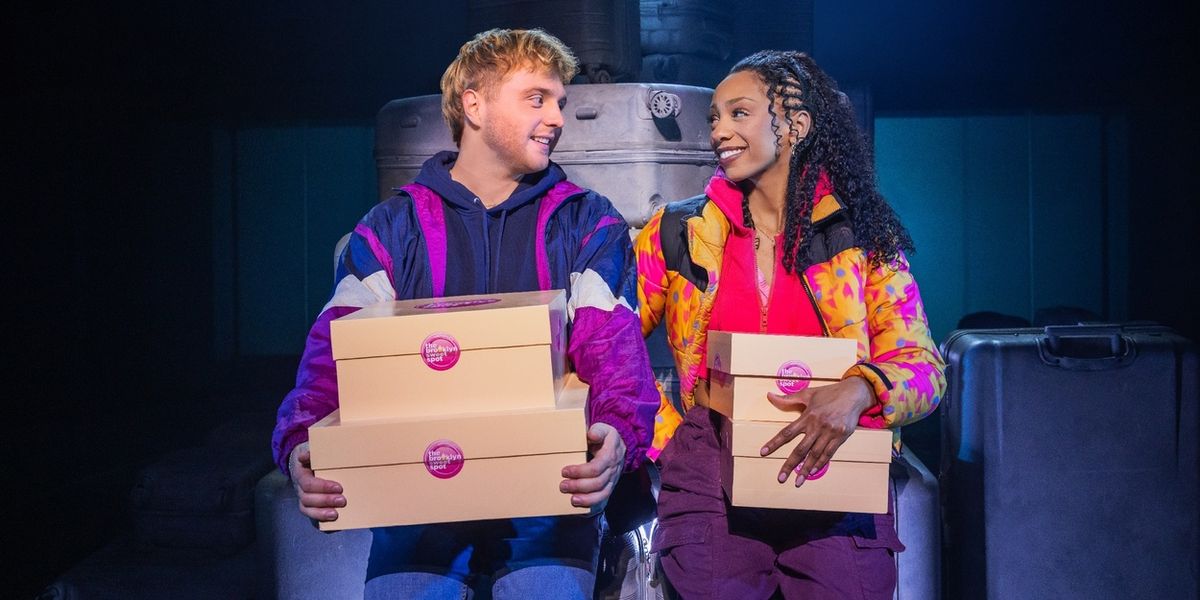
It’s well-known that there’s a particular kind of magic that happens in New York. It’s the kind that can easily turn strangers into co-conspirators, make inconvenience into adventure, and change the heart of even the most cynical among us as they learn to believe in possibility again. That very precise alchemy is at the heart of Two Strangers (Carry a Cake Across New York), the charming, funny, and deeply heartfelt musical two-hander now lighting up Broadway’s Longacre Theatre.
For director and choreographer Tim Jackson, who has shepherded the musical from its earliest days, watching the show grow from a small regional production in 2019 to Broadway in 2025 has been nothing short of life-changing. “To be honest, it's been the highlight of my career because it's something that from the get-go, I was so passionate about when I very first read the material,” he says. Working closely with writers Kit Buchan and Jim Barne, “It's been such a pleasure,” he recalls. “And it has been a big journey."
Originally staged under the Christmas holidays inspired title THE SEASON, the musical has evolved across multiple productions, cities, and casts. Songs have changed, scenes have shifted, and characters have been sharpened, but the core story never wavered. “The DNA of the show remains really strong,” Jackson notes, because “Dougal and Robin were already there, and they were already robust characters. It's just been so fun to flesh them out and learn who they are as we've gone through.”
That emotional clarity is one of the show’s greatest strengths. Though the musical is whimsical, and at times even fantastical, it never abandons emotional honesty. Jackson remembers being immediately struck by the writing. “The characters first jumped off the page to me because they spoke like real people and they seemed to feel real feelings,” he explains. “I only read the first four or five pages of the script before I called up the producer and said, ‘Please don't let anyone else read this. I really, really want to do this.’”
%20Matthew%20Murphy.jpg?format=auto&width=1400)
Photo by Matthew Murphy.
One of the constants in the show’s evolution has been actor Sam Tutty, who plays the wide-eyed English optimist Dougal. “It has been lovely to watch Sam growing the character over the four productions of Off West End, West End, A.R.T., and now, Broadway,” Jackson says. “He's a real talent. He enjoys digging into the text and finding the most out of it.”
Robin, the smart but jaded New Yorker, has been played by multiple actors over the years. Jackson is quick to credit them all, from the early regional cast of Tori Allen-Martin and Alex Cardall, the breakout Kiln and West End performances featuring Dujonna Gift, and the electric partnership between Tutty and Christiani Pitts in the U.S. productions.
For Jackson, working with new Robins has been its own revelation. When Pitts joined the production at A.R.T., Jackson says, “It was an injection of new life into the show from an American perspective, which was really helpful and really exciting.” He also praises her comedic instincts, noting her “mining for every ounce of humor that lies in the text,” and celebrates her ability to make Robin “a super round and robust character.”
Robin’s authenticity, especially as a Black woman from Flatbush, Brooklyn, is striking in performance. Jackson knows that representation couldn’t be accidental. “We have made sure that we have surrounded ourselves by Americans and Black Americans all the way through as much as possible so that we've been ears completely open at all times,” he reveals. He recalls Pitts meeting the writers and assuming one of them was Black, which truly underscores the creatives’ sensitivity around their work. “They [Jim Barne and Kit Buchan] were like, ‘Oh, my gosh, that's such a relief.’” It wasn’t luck, Jackson insists, but “a great deal of care and intentionality.”
He also credits the many Black women involved in the production, especially associate director Asmeret Ghebremichael, whom he calls “a really wise energy,” ensuring the character’s perspective remained grounded and true.
%20Matthew%20Murphy.jpg?format=auto&width=1400)
Photo by Matthew Murphy.
Additionally, one of the most refreshing aspects of TWO STRANGERS is that its New York isn’t just Times Square glitter. It masterfully includes and celebrates neighborhood soul. “New York doesn't always have to be Manhattan,” Jackson notes, explaining the choice to set some key moments in Flatbush. It felt like “a place that had so much heart, and life, and vibrancy,” ensuring it is also a place Robin needed to reconnect with.
That connection between character and city is what keeps the story from tumbling into cliché. Jackson explains, “Our love of New York movies and our love of being in a city that feels like the opportunities are endless was really true.” The goal was never kitsch, but emotional resonance. “It's not all cheesy and fluffy. There's a variation of the pictures that we paint.”
Though the musical features only two performers, it fills the Longacre with delightful scale and movement. That was intentional. “I always had the intention that the third character in the musical would be the set,” Jackson says. Working with designer Soutra Gilmour, he envisioned “this playground that the characters could explore and interact with.”
The luggage-stacked architecture, which is evocative, surprising, and deeply New York, grew from conversations about place, displacement, and emotional baggage. “We started talking about emotional baggage and feeling left behind, and reclaiming your baggage,” Jackson says, “and then it just developed from there.”
The design’s surprises, he says, mirror the city itself. “You turn down one street and there's something that you weren't expecting there.”
Without spoiling the show’s most breathtaking moment, Jackson admits that its emotional payoff was meticulously built. “At no point did [Dougal and Robin] go to the top of either tower until the climax,” he explains. He wanted the characters to “earn the audience's hearts and trust before [he made the audience] feel anything that's too emotional or overly romantic.” The goal was to avoid “the saccharin” and deliver something earned, honest, and genuinely moving.
%20Matthew%20Murphy.jpg?format=auto&width=1400)
Photo by Matthew Murphy.
If there’s a thesis to Jackson’s artistry, it’s connection. Reflecting on his own journey, he says, “I feel like as a director, I'm the son of so many experiences.” His advice to anyone seeking a creative life is simple but powerful. “Make as many connections with people as you possibly can,” he states. “The more people I experience, the more people I work with, the better I probably am at making this show relatable to as many audience members as possible.”
Perhaps that’s why TWO STRANGERS does resonate so deeply. It knows that every New Yorker, native or visitor, believer or skeptic, is walking around with baggage, waiting for connection, hoping for a spark. Sometimes, all it takes is a chance encounter with a stranger to experience the unexpected in the greatest city in the world.

BroadwayWorld Merch
Shirts, mugs, phone cases & more
Powered by

|