Interview: Meet the General Managers That Keep Broadway Running, Wendy Orshan and Jeffrey M. Wilson
Orshan and Wilson founded 101 Productions, Ltd.
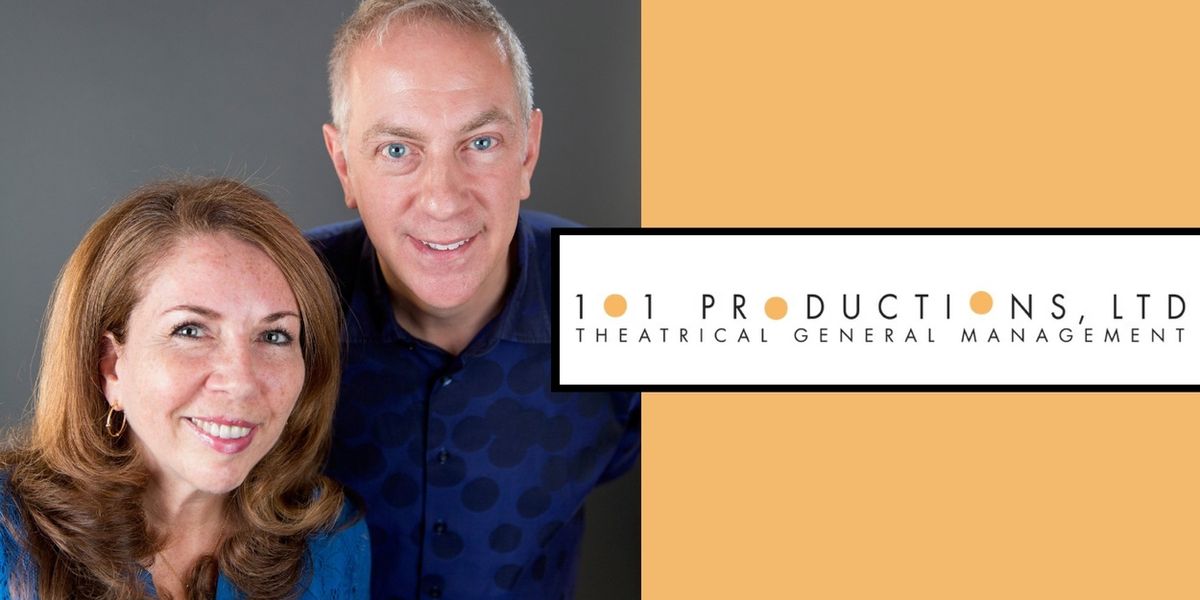
Every Broadway show needs general management and Wendy Orshan and Jeffrey M. Wilson are here to provide. The pair heads 101 Productions, Ltd.- a theatrical General Management firm formed in 1994.
The comapny has provided executive producing and general management services for more than 30 years on more than 140 Broadway, Off Broadway and touring productions including the original productions of Spamalot, Curtains, Radio Golf, Noise/Funk, Lucky Guy, History Boys, Pretty Woman: The Musical, and Dear Evan Hansen as well as revivals of The Normal Heart, Kiss Me Kate, Noises Off, Macbeth, for colored girls.., Plaza Suite and many more, including several high-profile international transfers.
Recent Broadway shows include Art starring Bobby Cannavale, James Corden, and Neil Patrick Harris, and Jamie Lloyd's Waiting for Godot, starring Keanu Reeves and Alex Winter, the Broadway transfer of the Olivier Award-winning revival of Cabaret, Jamie Lloyd's hit revival of Sunset Boulevard starring Nicole Scherzinger, the commercial transfer of the Second Stage Theatre production of Appropriate starring Sarah Paulson, Some Like It Hot, Prima Facie starring Jodie Comer, A Doll's House starring Jessica Chastain, Suffs, Othello starring Denzel Washington and Jake Gyllenhaal, and Smash.
BroadwayWorld recently had an in-depth conversation with the pair about what they do, how their operation got started, and what's to come. Check out part 1 of the interview below and check back later for part 2!
Let’s start at the beginning of how you guys met, which was at Gatchell & Neufeld, working on Music of Andrew Lloyd Webber with Michael Crawford, post Phantom…
Wendy O: Jeff had traveled the world with him when we met on the music of Andrew Lloyd Webber, and Sarah as well. But it's a fascinating thing you say the The Phantom of the Opera because that tour was one of those first moments where people heard those chords outside of Broadway.
Jeffrey W: Phantom wasn't touring yet, so the only place you could hear those songs was on that concert tour.
Wendy O: Sometimes it was with 50-piece orchestra, and it was absolutely stunning.
Wendy O: We liked each other during the Music of Andrew Lloyd Webber, and we did something that Broadway had ever done before with these amphitheater tours…. We went all around England, Japan and Australia after they took it around the United States.
I think we thought we liked doing things slightly different. I think if Tyler hadn't tragically suddenly passed away, I was really happy having that job. I never wanted to be the front and center person. When he came to New York, Peter and Tyler were a good pair together. I knew that I would never want to be on my own. I would always want to have a partner.
I had worked before that at the Weissler office, and Barry and Fran were like co-partners in that way, too. When we talked about this, other people that we spoke to said, “Oh my God, it makes perfect sense. You and Jeff should be business partners. You would be so great together.”
Where did the name come from?
Wendy O: We had gone one day to see the 101 Dalmatians movie. We both liked it, the animated one.
Jeffrey W: Well, it was always my favorite movie and she had never seen it. It was playing up at that movie theater in Rockefeller Center that is now a Sephora or something. It was one of those old Art Deco movie theaters. We went and we saw it, and we were like the only two people there.
Wendy O: I think we were the only adults.
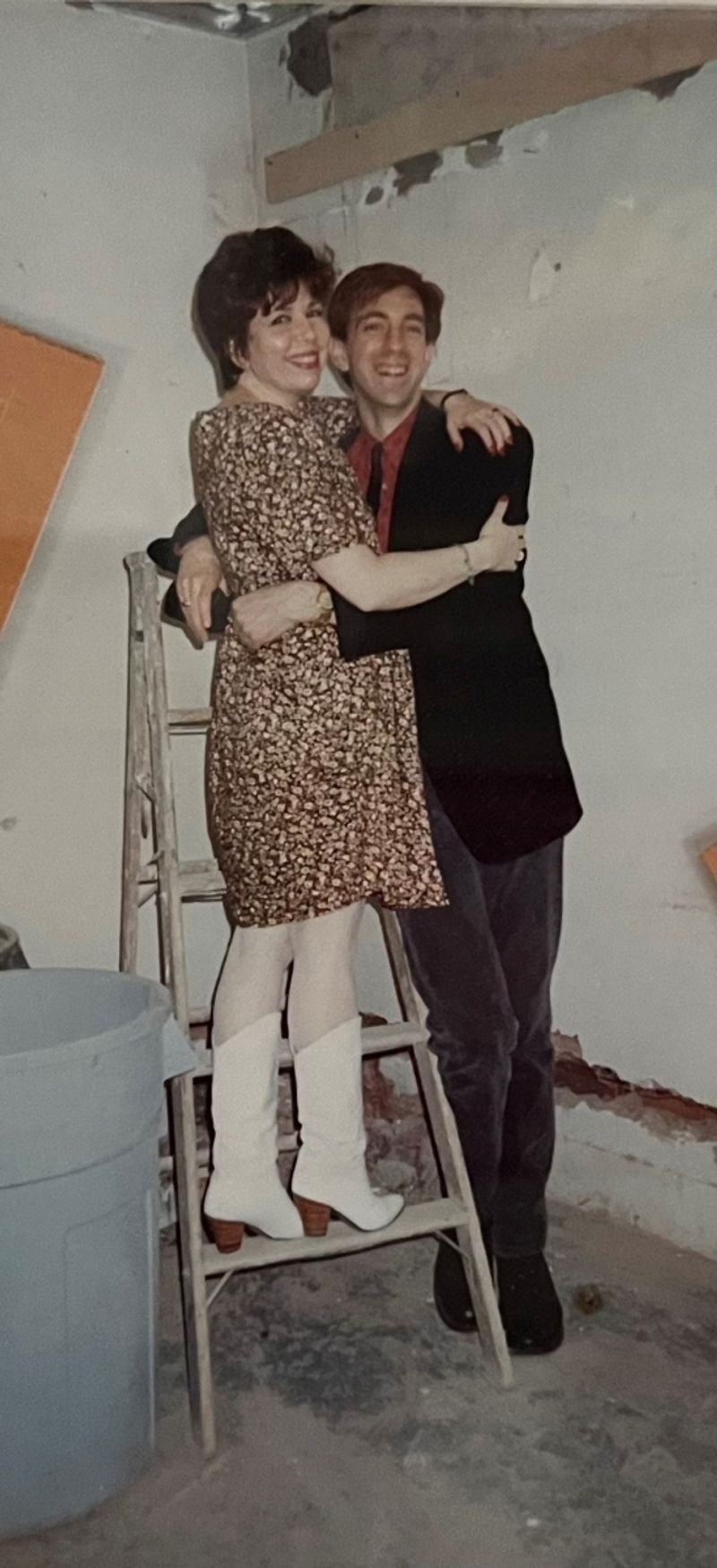 Wendy O: We talked about naming a company, and we didn't want it to be Wilson and Orshan. We came up with 101 Productions, Ltd. It was a throwback to the puppies, 101 Dalmatians. It was also that we felt like we wanted to be the people that were always happy to talk about the basics.
Like, “Here's the bottom line of how you do the show. Here's all the basics with it.”.
Nancy Coyne of Serino Coyne ad agency created our logo, which are dots as in puppy spots, but dots within the 101 Productions name. At that time, a theatre magazine – “In Theatre” in 1998 had this thing about the new fresh faces of tomorrow. Jeff and I were one of them. Now, we're old, but back then –
You’re still fresher than some other faces…
Wendy O: I know. It was that perception that we looked at doing things in a different way and we were a different kind of energy. We were a part of really the greatest general management team that there was on Broadway with Gatchell & Neufeld. We sent out letters to people, “We're thinking of doing this.” Alan Wasser, Bernie Jacobs, Gerry Schoenfeld, all these giants that sadly are not around now called and were kind and helpful. After Gatchell & Neufeld, our first 101 show was Red Buttons in Buttons on Broadway. Do you remember who Red Buttons was?
Well, by name – yes.
Wendy O: His dream was to come to Broadway. We got a theater, and filled with … maybe 20 old people.
Jeffrey W: Nobody came.
Wendy O: Nobody came.
Jeffrey W: His target audience was 75 and up. He was just a decade too late in doing the show.
Wendy O: It was so sad. We sat in his dressing room.
Jeffrey W: We literally had weekly grosses of $6,000.
Jeffrey W: It was so sad, but he could tell stories.
Wendy O: Oh, we were in that dressing room an awful lot. We had arrived on Broadway, because we had our own Broadway show for a day.
Jeffrey W: It was called Buttons on Broadway. Oh, my God.
Did you ever think then there might be 100 more? Never mind 150 more?
Wendy O: Never. Really never thought it would go on this long.
Jeffrey W: No.
Wendy O: I didn't really think we would provide an environment for this many people to have worked at 101 and then gone on and done wonderful, kind, really good things in our industry. I'm always so proud when I see people that have worked for us.
Jeffrey W: I'm sure we raised some monsters too.
Wendy O: I'm sure. But you always hope in a way that people do it their own way. But that while doing that they’ve picked up something good that you're trying to instill within them.
Yes. If you can pass on one good thing and they can pass on one good thing, then society continues at least in theory.
Wendy O: Yes.
When you said, “Let's try this for 10 years,” did you talk again in 10 years? Or has it just –
Jeffrey W: No. We just never looked back.
Wendy O: No, we haven't. I mean sometimes, it’s so hard out there now. Sometimes, we turn around and go like, “Oh gosh.”
Jeffrey W: What have we done? How did we do that?
Wendy O: What have we done? Remember when it was just so easy and so simple? But, we always wanted to just keep it to ourselves. We had lovely interest in going in-house places, and that wasn’t of interest to us, and we haven't ever wanted to sell our company. I think we just always wanted to decide who we work for and what we work on.
And, it’s allowed for some highlights outside of the norm?
George C. Wolfe had us do this concert for President Obama, which was like a highlight. David Binder had us open Governor's Island for the New Island Festival in 2003.
Jeffrey W: That was before you were allowed to go to Governor's Island to stay overnight or anything. There was no running water. Or electricity. Yes, it was crazy.
Wendy O: That's been great that we've been able to decide those things.
Jeffrey W: I'm going to make ourselves sound really old now, but when we went into this and when we said, “Let's try it for 10 years,” that was before e-mail. It was before smartphones. People had cell phones, but they were very rudimentary.
Yes, in the car only?
Jeffrey W: Yes. It was a very different time. The way we do business has gotten so much more complicated by all the machines that were supposed to make it easier for us.
Wendy O: Yes, very true. We were interim General Managers down at the public for George Wolfe and we were in the Delacorte doing a show. Jeff and I had these pagers, like the way doctors wear pagers. We had this code that if there was a problem, text us with 911 and we'll find a place to call you. I just remember being in the Delacorte. I was born in New York. I'm a New Yorker, and just thinking this is so magical. Like, “Here I am in the greatest city in the world at the Delacorte and working on a show.” It's free theater. All of my dreams come true.
And then the pager goes off and you're like, “Oh my God, we have to leave the park in order to find a phone booth.” It was so different at that time period, and you were just so much more connected to your shows than you are now. Now, you're on endless Zooms trying to talk about selling tickets, press disappearing, chat rooms, trolls, snarks…
So, the gossip was always there?
Wendy O: Yes, because what you learn sadly is people like being quoted. They like being a source. They love feeling important about that. That's why it's so hard when you have these shows now with, you know, so many investors and so many co-producers to make your incredibly costly musical. You want to share, but you almost can't share in writing because it’s sensitive.
Jeffrey W: Yes. And people like feeling like they're on the inside. Without giving you any information, I got a call from a friend of mine the other day saying, “Do you know somebody…” and he gave me the description of the person. I said, “Yes.” He's like, “Well, they were in a gay bar the other day badmouthing your show, and this other show, and that show.” People don't realize how small the world is.
What are today's challenges versus yesterday's challenges? You mentioned technology is both making things simpler and putting us all on too many things, too many e-mails.
Wendy O: I think probably there's such a big turnover of shows. It's so hard to become a long-running show. That tiny pool because the pool is smaller now in theater goers. It's very, very hard to have an inexpensive show and have a great gross. They just don't work together any longer. We spend so much of our time trying to figure out who the audience is. We're very lucky on Romeo and Juliet. It's an audience that hasn't come to Broadway before. But, we're not going to have that audience come and see Othello because they can't afford tickets to Othello. We're not going to have that audience come and see our show Smash because that's not going to be what they're interested in.
I think you spend so much more time now trying to figure out the right alchemy to make your show exist and catch on. We work on things all the time where we turn around and say, “That was a great show. Why didn't it have a longer run? Why isn't it doing better?” You're not really able to control it now in the ways that previously, you lost money one week, you made money another week. You hung in there. When we were at Gatchell & Neufeld, Cats had a million-dollar advance for 10 years. Nobody worried about it in the way you do now. I think that is the pressure that is so completely different for us now.
Jeffrey W: Really, it's been since the pandemic that the costs have gone up exponentially to a point where a show can't survive anymore on regular ticket prices. You need to be able to be selling the $499, $599, $699 seats just to survive. It used to be that if you were lucky enough to be able to sell those premium seats that was gravy, and it was helping you recoup and have some profit. Now, you need those seats just to survive. It's really awful. When you look at the grosses and you see all these shows that are doing over a million dollars, many of them are losing money. That's just insane. It's insane.
Wendy O: Back then, to be in that million-dollar club was such an incredible and rare badge of honor.
Yes, like your problems are solved. These shows are fine. Don't worry about them.
Wendy O: At the end of Dear Evan Hansen, it's like all I wanted. I was like, “Wow, if we just get the numbers back up there.” Dear Evan Hansen, brilliant as it was a countdown makes a difference. But then you all of a sudden realize you're just praying for this thing that used to be so much easier to attain.
Jeffrey W: We all do budgets. General Managers, we've shared this with each other, that we do these budgets, and we look at the numbers and we just go, “Oh, there must be some horrible mistake here. This play can't possibly cost $8 million,” but it does. A lot of us had dealt with insurance claims because of the pandemic. One show that we were on, because of the particulars of that show, the insurance claim dragged on quite a while, and we were making a claim with the insurance company that in the time that it took for the show to get back on, the cost of doing business had really gone up. We needed to come up with some factor for getting paid for that differential. The insurance company's claim was, “Oh, but ticket prices have gone up too.”
We did a little analysis and from 2000, when the world shut down to 2023, the average ticket price had gone up something like 8.5%. We looked at wages and minimum wages for the various different unions on average in that period had gone up 12%. The insurance company said, “Oh, you're right. Here's your money.” You couldn't argue the fact that our costs have not gone up in proportion to what we're able to sell our tickets for. That's even with the $399, $499, $599, $699 tickets. It's crazy.
Is there anything that gives you hope about that getting better?
Jeffrey W: I don't know. I don't know how to answer that. I'll say this, I'm constantly surprised at how well some shows are able to do. She mentioned our Romeo and Juliet. We're in that tiny little Circle in The Square Theater. This was for An Enemy of the People and Romeo and Juliet. We really struck gold twice, because we never thought we would see grosses over a million dollars in that theater. We've had them consistently on both of those shows. It's what enabled Enemy to recoup and it's what's going to enable Romeo and Juliet to recoup; being able to do those kind of numbers in that theater. It was the same producing and creative team… we were very lucky. You never would have thought you'd do those numbers in that theater. So, somebody out there is buying the tickets and paying the higher prices, thankfully. But, it's hard to count on that.
Wendy O: It's interesting that you mention hope. We are very, very lucky to do a lot of star-driven work. Greg Nobile and Seaview produced both An Enemy of the People and Romeo and Juliet. The creative triangle is the interesting thing. It was Michael Imperioli with Jeremy Strong on Enemy. In that right combination. On R+J, Jack Antonoff hadn't done anything on Broadway before. He had a fan base. Kit Connor had a fan base. Rachel Zegler had a fan base. So on Romeo + Juliet (Sam Gold directed both) you get hopeful, because you find something that people want to see and you think, “I'm bringing in a new audience that maybe hasn't come before because they're a fan of Jack Antonoff music.” Then they have a great time in live theater and maybe they're going to see something else.
I think for both of us, you want to believe that Broadway doesn't stay in an elitist world where people can't come and enjoy it. Because when the art is good, the art is impactful. It makes a difference in people's lives. Whether or not it's stuff during a time period where you think to yourself, “My God, how has nothing changed? Look at the world we're in.”
Or, it’s comedy - when we did Spamalot and that many people were laughing and having a good time every night and you thought, “That's amazing.” We've been really fortunate in the breadth of the 150, starting with Red Buttons, that you feel like what you contribute to, the dream somebody has to make something happen you help with. Or an artist making a Broadway debut, Nicole (Scherzinger) talking about waiting her whole life to come and do a show on Broadway, that a thousand people walk out having felt something seeing her be brilliant and they're going to communicate it to somebody else. I think that's what keeps us going after all these years. Funnily, Seminar was Sam Gold's first Broadway show, and this is now our fifth Sam Gold show. You turn around and go, “That's meaningful.” I was there in the beginning and I'm here now at this incredible success moment. I think for us, as just humans, that thing makes a difference. It keeps you going.
How do you balance that with the stresses of now playing therapist to a producer whose show is grossing a million dollars a week and still losing money? How do you not take that home with you at night?
Wendy O: You should hear the conversation on the train going home sometimes at night.
Do you both take the train home together?
Wendy O: Yes. I think we share with each other a lot. I think that's why I never ever wanted to be on my own. Because you have to have somebody to share with, to say, “I just spent two hours on an ad meeting talking about a problem.” Or a problem that you feel like you can't control in any kind of way. Sometimes you have to be the bearer of reality. You have to have a one-on-one with that person and just say, “I can look down the road, we need to close.” Or “I can look down the road, it's not going to happen.” My gosh, we have this saying, we've gone to see shows elsewhere that people want to transfer. We don't mean to talk ourselves out of a job, but here's all the reasons why we don't think you should do this. If you end up saying you want to do it, we're there for you. I think Jeff and I are very honest that way.
Jeffrey W: Yes. But those conversations are never about whether we liked the show or not.
Wendy O: Correct.
Wendy O: Sometimes just that the show wasn't well enough received there, so in this harsh landscape, it's going to be even harder. We were very lucky for a long period of time when Bill Haber and Bob Boyett were transferring all these shows from the National Theater and over from London. It was incredible to be a part of Jumpers coming to Broadway. Things that you wouldn't think would necessarily happen. Those were painful sometimes if something didn't catch on, that over there you would try to explain in that economics. For £5, people were buying tickets, and it was different. You sometimes end up being the motor for something that maybe your gut says, “This could actually not turn out to be as good as everyone hopes it was.” That was a great 10-year run of them bringing over and creating just amazing work.
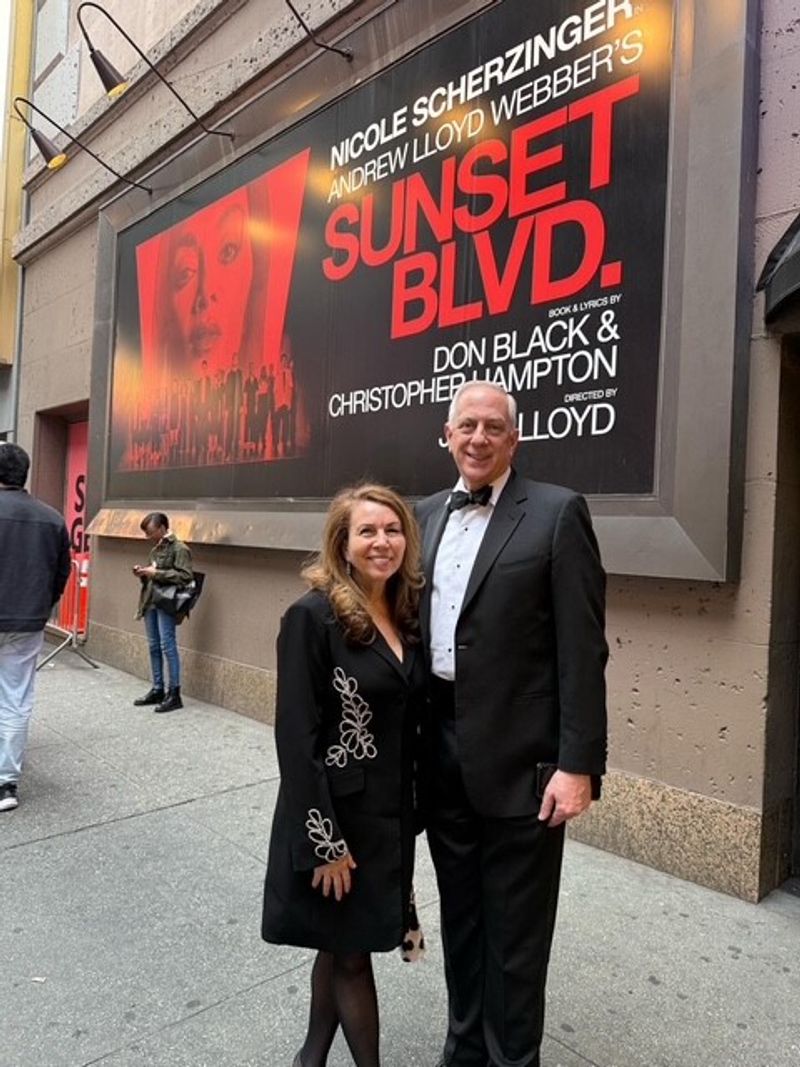 Jeffrey W: It's still so much more cost-efficient in London somehow, that I don't know how or why. Even there, ticket prices are really going up in a way they never were before. But you can still do – I use Sunset Boulevard as the example. They mounted this production of Sunset in London for £3 million. It cost us $14 million to do it on Broadway and that's a show that was already done.
Yes, and it didn't have a lot of set pieces.
Jeffrey W: Well, it's got more than you think. It's so simple and stunning in its design, but there's a lot that goes into making that happen. But still, it shouldn't be more than four times the cost.
Wendy O: Yes. We used to say three times. We used to say you could look at something costing three times, and now it's really four. Who knows what's going to ultimately happen with our economy and how it's all going to work out. I think the hardest thing now is people raising money. I think general managers feel such a responsibility, or if you're the executive producer, which we are sometimes, that you – it's a nail-biter. It's a small group of people that do this thing.
How much do you guys get involved directly with the money areas portion of things?
Wendy O: I think we do in the sense that we try to help people understand to do it early. Everybody's going to go to these 10 people. What is your thing going to be that's going to be different? There're so many legalities. We have an office of about 15 or 20 people that work for us, and investment documents are so complicated now. How do you have to check them? Who's credited and who's not? When we started out, it really wasn't like that. We never got involved in that kind of minutia. We don't raise money. Sometimes we match-make. Sometimes we think these two people would be a good combination with each other, because it's a very particular person. You want to think through someone being the sole GP because the liability is so enormous. A lot of times we put those things together.
That leads me into, what is your day-to-day life? What is a normal day for a general manager? Is there a normal day or a normal week?
Jeffrey W: There isn't a normal day, is there? I don't think there is.
Wendy O: We have five or six shows now. We're in rehearsal. There's always an ad meeting. There's always a ticketing meeting. We do a lot of what we call internal meetings with the teams. We have a general manager on each one of the shows. All of them have been with us for a really long time, Chris Morey, Jeff Klein, Chris Taggart, Marshall Purdy – he is recent. You get together with them and with the company managers and you try to hear what's going on. Problems that they're worried about or things that they're seeing come down the road. We have our brilliant Some Like It Hot tour out on the road, so you want to catch up with them. We're both Tony voters, so you try to wedge that into with a clear brain to go see somebody else’s show, which should be a real enjoyment because you're not worrying about anything.
Jeffrey W: Yes, and just the volume of the e-mails and the texts and the WhatsApp's, and all of it coming in and bombarding you. A lot of what we do is putting out fires. Also, a big part of what we do is anticipating the fires. It's hard to say what a typical day is. I used to say that a typical day was being on the phone all day. Now, we're not on the phone as much as we are just on the e-mail and trying to stay ahead of it.
Wendy O: We have weekly Zooms with all the producers, so you try to get the team together. We have a lot of amazing people who work for us, and you like to push them to lead the Zoom or interact with the client or raise things they're thinking about. Many of our team like Beth Blitzer or Kathy Kim or Christine Stump or Steve Supeck have been with us for over ten years. I think we don't go to our shows as much as we used to. We used to go backstage a lot. And then, when the pandemic happened, that came out of your cycle. We used to be at Dear Evan Hansen probably at least once a week, but now you try to go up to Cabaret. You try to go next door to Sunset. We have Othello in rehearsal and loading in the Barrymore. We have Smash in rehearsal and loading into the Imperial. We have Romeo and Juliet up at Circle. You come in the beginning of the week with all the best intentions of how you're going to run around as much, and we just don't get to do that as much. There's a disconnect with that that I think both of us feel is a loss. Especially Jeff more so because he was company manager. I was never really a company manager, so he understands the way that dynamic is within the building.
When you're checking in on these shows, are you checking with people, company managers, cast?
Wendy O: I think you like to just be seen in some way. You do like to see the stage managers. They really are representatives in the building. Sometimes, it is about seeing the cast. Sometimes if you're on a limited engagement with a star who hasn't done Broadway before to a great degree, you're the producer's representative, so you want to be there in both good times and in bad times. We're lucky, there's a lot of relationships that we've maintained. We met Eddie (Redmayne) making his Broadway debut, and then we had Eddie come back in Cabaret. We've always stayed in touch with Alfred Molina. There are shows that you get close to in a way that you want to have that relationship continue, or you want to be able to foster that relationship in other things. It was a highlight that Jeremy Strong, we had him on An Enemy of the People, and it was joyful to send him a note when he got an Oscar nomination.
Those connections are rare, and I think we're very lucky. It's funny, sometimes when you're talking with the interns, we have interns from different schools every year, they're like, “It's so glamorous, it's so wonderful.” To us, of course, it isn't. It's intense work and pressure. You step back and you go, “You know what? You're right.” I got to do a show with Bradley Cooper or with Tom Hanks, and to you, we had five years of Mike Nichols on Spamalot. How extraordinary an education is that? We've had a great, great career.
Jeffrey W: Well, just as something as simple as sending Michael Crawford a happy birthday e-mail. Not everybody in the world gets to do that. You do, we do.
Do you still get starstruck at all?
Jeffrey W: Oh, yes.
Wendy O: You know what? We are so fortunate we're the managers of Dolly Parton’s new musical. We were down in Nashville and she, at the end of the week, was taking photos with people. Standing next to her, having her put her arm around us, I absolutely got starstruck. Jeff is from Houston, from Texas, and I was like, “We are standing next to and in the room with, and working with a mega human being, a mega star, an icon.” No explanation like it is so-and-so front. I was speechless. I think that was recently the moment that took me outside of my body.
Jeffrey W: Well, I had met Dolly before she had, so I introduced them, and I said, “Dolly, this is Wendy. She's going to be the brains of the operation when it comes to New York.” She said, “Well, we got the talent. We need the brains.” But yes, occasionally there's somebody who comes along where you just think, “Oh, I'm so old and jaded, I don't get-” and then you're like, “Oh my God, I'm weak in the knees.”
Wendy O: Yes, totally. We took this picture with her, and her team is so kind because they know what it means to everybody, and they sent us the photo. I never ever do this. I was showing it to my godchildren, and they were like, “Wow, Aunt Wendy, that's the most incredible thing.” You know how normal people look at what we do and who we work with, and think it's incredible. Being in a rehearsal room with Denzel Washington is like an out-of-body experience, too.
Jeffrey W: Yes. It's so funny, because yes, but I also felt that way about Jake Gyllenhaal the first time we worked together. Now, he's just Jake and he’s with Denzel in Othello. You know what I mean? You get to know the people, and they're people. But, before that, they're like gods.”
Wendy O: We have to talk about that a lot in the office, because people need to be discreet. People need to be confidential. We have a wonderful office – so many new young people. Because of what we work on, people have access to things that are different. It's different because we grew up with discretion and confidentiality. They just want to share every single thing that ever happens to them. We're not on social media that way, so it's a very, very different kind of experience. But yes, I think there's probably somebody on everything. You make your decision to say yes to a show because there's just something about each opportunity you get that you just say, “This is going to be a different kind of experience. This is going to be memorable; I'm going to help somebody's dream come true. I'm going to help make something happen. I'm going to connect to people that wouldn't get to do something otherwise.”
There's something about all of that that makes awe. That first run-through or that first preview, it's always special. No matter what the actual show is, whether other people think it's good or bad. I don't go in the chat rooms anymore because I take it hard when they hate my shows. It's terrible.
Wendy O: It's terrible when they hate your show because you have to love what you work on. You have to be very clear-minded about it. But when everyone loves your show, when you have that big old hit, when everybody's talking about how great your show is, it's amazing. It's an amazing feeling, because you as a general manager have worked on it for five years before anyone ever sees it.
What about the flip side of that? When a project becomes difficult, or a personality is difficult?
Jeffrey W: That never happens.
Right.
Wendy O: It's always so hard. It's always really, really hard. You do the best you can to have grace and kindness and help navigate people through a challenging time. We always really fight to never to let our shows close early. That's the worst. If you said 16 weeks only, you're going to get to the end of it, no matter what. Because otherwise, it becomes such an embarrassment and a failure in people's minds. You don't want to leave them thinking of that. It's always horrible when those terrible reviews come out. You're sitting in the room and people are like, “What does this mean?” You don't want to say, "It means it's going to be really rough on us now." Maybe the audience is going to like it and we're going to have good word of mouth.
How does the GM navigate that process? It's open, the reviews maybe weren't what you expected or weren't what you wanted. What sort of gear do you then kick into?
Jeffrey W: Oftentimes, the dollars speak for themselves. We spend a lot of our time on shows trying to project what the grosses are going to be so that we can project at what point do we run out of money. Then you have to go to the producer and say, “We think you can only make it three more weeks unless you go find some more money somewhere.” Oftentimes, they do. They'll go out and get a priority loan or whatever because they believe in their show. What you can't do is have somebody not know that the money is going to run out. That's a hard thing.
Wendy O: I also think different shows are different. Pretty Woman got scathing reviews when we opened on Broadway. But there was an audience that really liked it. It felt like if we could get to a year, it could feel respectable. Then, we went out on tour, and we did great, and the tour recouped and made profit. We were a huge hit in the UK. All of those things you try to say to a person, “Erase your Broadway experience.” But if you hadn't run on Broadway for a year, you might not have all these other things. Sometimes, you take the bad and you try to flip it if that show allows for that kind of experience. The Scarlet Pimpernel, one of our early shows, we retooled it in the Original Theatre and retooled it again and moved it to to a different Broadway theater and then retooled it again for the road because those producers loved it so much.
Jeffrey W: It lost money every time.
You have a half dozen shows at any given time?
Jeffrey W: Thereabouts, yes.
Wendy O: Yes, I think so. Yes. At any given time, you're working on four or five things for the future and trying to line them up so when a building becomes available, it can come in.
Are you always trying to keep it around six? Is that a sweet spot?
Jeffrey W: No. There's not a certain number; it sort of ends up being like that.
Wendy O: We've never gone down to having nothing. During the pandemic, like all the other GM offices, we were busier than ever redoing every list every single day. We've always had a handful of things. It's expensive to run an office where we have both this floor and the floor below. You have to keep your staff, and you don’t want to lose them because then you're retraining people. You become a family. They grow so much and you want them to be tomorrow’s leaders. You know what that's like. It becomes a vicious cycle. There's two of us. But, we're lucky in the sense that there's always something down the horizon. We have a lot of really loyal producers we work for. We're fortunate that also new people come our way, and you click. We work for a lot of people that are always planning in the future, too.
What makes you say no to a show?
Jeffrey W: It's usually because we're too busy. It almost never has anything to do with what we think about the show or who the producer is. It's often just saying, “If you need us to do something right now, we won't be able to do a good job for you.” The best example I can give of that is when Margo Lion came to us with a little show called Hairspray and asked if we could jump in. We were doing Dance of the Vampires at the time. We said, “If you need something right now, we can't do it.” Let me be clear, we didn’t turn down Hairspray. She never really offered the show to us. She just needed us to jump in and do some budgets at that moment, and we couldn't. We had a chance to do Hairspray, and we blew it. Most of the time, it's that. We have to be honest with producers and say, “We can't jump in to help you right now. Maybe in six months, but right now we can't.” That's really what it is.
Wendy O: I think part of it is, we tend to work together on things. Our bandwidth is, one of us is always pushing something along a little bit more than the other, but we do tend to be partners in things. We can't overload ourselves too much. Even though my dream is that we don't have to be a part of every single meeting. People are happy with the other people in the office. You eventually hear from somebody, “Wow, I haven't seen you for a while,” or “Where have you been,” that kind of thing. You have to be mindful of, I can't be triple booked for the same one hour.
That's been my dream, too.
Jeffrey W: Wait, we can't be triple booked? Why are we always triple booked?
Wendy O: We are frequently triple booked, but it becomes a problem. I'm running around the office going, “I don't understand. How are we dividing up today?”
How do you divide things up?
Wendy O: Do you know what? We literally still don't know.
Jeffrey W: We don't even know how to explain it to people.
Wendy O: People figure out who you go to. We work in the same office. Our desks are side by side. But our desks are so messy, we weren't going to allow you in.
Jeffrey W: We try to be interchangeable so that one of us can jump in. Honestly, very often, and it happened twice today, where we were on Zooms, and another Zoom was coming up, and we literally in the spur of the moment said, “You stay on that one, I'll go do this one.” I don't know how we do it or how we decide, or how people know who to come to with what questions, but it somehow has worked for us for 30 years. I guess we shouldn't change it. We really do try to know enough about each project, so that we can jump in. Sometimes it's because of scheduling. Sometimes it's just because of life.
Wendy O: Jeff was down in Nashville more than I was on our Dolly thing. I will always make sure that he's on those particular Zooms, and I'll try to listen in. Jeff was the Chair of the Labor Committee, so he gets involved in a lot of League things that I tend to stay here and not necessarily do.
Jeffrey W: She's just decided that for any Union question, people have to come to me. I don't know why I became the arbiter of all that.
Wendy O: You do a good job.
Jeffrey W: She tends to get much more involved in the minutia of the advertising than I do. There's those things that just naturally we divide up. But, really when it comes to attending meetings, which now are mostly by Zoom or taking a phone call or whatever, it's really about which one of us has the bandwidth at that moment.
It also feels like you've built a team that has more longevity and less turnover than many offices around the business. Was that intentional? Is that something you've thought more about over time to create an environment that fosters that?
Wendy O: I think that Gatchell & Neufeld was like a family. People were there for so many years. I always loved the way Peter and Tyler treated everybody. I think that when we started here, we had two employees in the beginning….
Jeffrey W: When we started, started?
Wendy O: I always felt that I wanted people to work somewhere where they wanted to be every single day. I think it organically happened that we just didn't lay people off when a show ended. We always tried to find a way to elongate it. Ron Gubin, who works with us Jeff and I have known from Gatchell & Neufeld days. We've known him 40 years, and Christine Stump who works here, same thing. We're lucky that way, but I think the other general managers, Jeff Klein, Chris Taggart, Chris Morey I always hope they are happy.
Jeffrey W: Chris Morey went away and came back. There's a lot of that. We used to argue a lot about company managers because I would say – because company managers literally work for the show. When the show closes, that's it. They're out of a job and we can't afford to keep them on. But, she would always say, “Why can't we find something new for them?” Or “Why can't they stay here? Why do they have to go off and do another show?” I would say, “It's good for them to go work in other offices and learn how to do other things in other places, and then come back and work for us again.” That has happened a lot through the years. Some of those company managers have gone on to become associate general managers or general managers. It's been good.
Wendy O: I try to feed them.
Literally?
Wendy O: Yes, we have a lot of cookies around the office. I'm surprised there’s not food out right now, because normally they put a plate of cookies out. Somehow you didn't get cookies today.
I’ll come back for them! What are you most proud of? If you look back over the last 30 years, other than still being here after 30 years, which is impressive.
Jeffrey W: I don't even know how to answer that question.
Wendy O: I think that whether it's been a producer, a writer, an actor, that we've been a part of someone's dream that they thought was not possible to actually happen. I think about Benj and Justin's first Broadway show. Stacey Mindich, first-time sole GP. Arielle Tepper had a dream of Annie, her favorite musical. I think those moments have just mattered a lot in somebody thinking, “I could never have that.” All of a sudden, they do. It's not that we make the show happen, it's that we are a part of building a foundation to help them realize that kind of thing. I think that's always, for me, been the most exciting. I think right alongside of it is that Jeff and I still look forward to seeing each other every day.
Rare and lucky.
Jeffrey W: Well, she does.
Wendy O: Jeff, it's on the record. Say it. Go ahead. Come on. Can we say Jeff chuckled or laughed????
What would you tell somebody that's starting out today?
Jeffrey W: Don’t go into show business.
I whisper that to my four-and-a-half-year-old before bed every night.
Jeffrey W: I don't know. If they catch the bug, you can’t stop it.
If somebody was interested in becoming a general manager today…
Wendy O: We talk about that with the interns here. We tell them to read a lot, to listen, to go see everything. We go see everything because you might see some Costume Designer's work that one day you're in a position to say, “Hey, I know somebody.” It's a difficult business to get in, and you need to find a way to have a living while you're trying to make a living. It's a really complicated business that way.
It feels like it's getting more complicated versus less complicated and being okay with rejection, rejection, rejection.
Wendy O: In all different fields. Whether you're an actor, a director, a playwright, your work doesn't get recognized right away. We lose out on shows that I wish we had. All of a sudden you're like, “Well, why don't we have a long-running musical with 14 companies around the world? Wouldn't life be easier that way?” We don't have that, so you keep on having to come up to the bat again and keep on trying.
Is that a hope or something to check off the list?
Wendy O: I think you always do hope it. Because it makes a big difference to have that stability. I came from an office where they had Cats and Starlight Express. Back then, it was very easy to spawn off multiple companies. We had that with Spamalot and with Dear Evan Hansen and with Pretty Woman. Big hits like that don't happen on Broadway frequently. It's a rare year when you have something like that.
Are you involved in the future life cycle of the show if it goes to London, on tour, etc.?
Jeffrey W: When they happen, we've always been involved in some way. The closest we came to that mega hit was Spamalot or Dear Evan Hansen. But we haven't had in this office a Hamilton or a Cats or a Wicked. Even Pretty Woman, we were involved in the German production, the London production, the UK tour. You are peripherally involved in some of the other licenses, as well. Kathy Kim in our office has worked in some fashion on all of the Pretty Woman companies.
 Does that put you on the road a lot?
Jeffrey W: It can sometimes.
Wendy O: Which is always a lot of fun.
It's still fun?
Wendy O: Yes.
Jeffrey W: Yes.
Wendy O: Yes, I think it's still fun. It's always thrilling. For Dolly, we're working in a whole new building at a University where they've never done something like this. That's always fun when you go to a unique place. We were the managers of Frost/Nixon, and our tour launched in…?
Jeffrey W: Owensboro, Kentucky.
Wendy O: Jeff went there with Michael Grandage, our British director. That was like taking Michael Grandage –
Jeffrey W: – to an Olive Garden in Owensboro, Kentucky.
And there’s no video of this?
Jeffrey W: It was definitely an experience.
Are there things I haven't asked you about that you would like to get on the record?
Jeffrey W: I don't know. I'm trying to think after this interview and you write this down, it's going to be like, “Well, I don't know what the hell they do, but they seem to be having a good time.”
I think your passion has come through in many ways…
Jeffrey W: I still can't describe to my family what I do for a living. They still don't get it after all these years.
Wendy O: We support the Rising Star Program at the League, and we did a class together. We subsidized their “graduation” that they ended up doing with the League at Sardi’s. We love that program. I got a note from one of the people in the class that was like, “It's so inspiring that you and Jeff just fell into doing this.” I dropped out of college. Jeff was a college graduate, but I am not. I went to the High School of Performing Arts (the FAME school as it was known back then), so I wasn't really academically running down that path. It just gives me so much hope for what I can think about and what I can dream about. I think that's sort of it. That somehow, even though it's hard and it's difficult, we still look forward to it. We still find joy in doing it.
We try to incorporate in others to give them the confidence that they can do it or they can think about doing it. Whether it's being a GM or a producer or a writer, whatever those things are. I think that's just so important. We grew up looking at Alan Wasser and Marvin Krauss and Charlotte Wilcox and just thinking, “That's so cool that they have that.” Obviously, for me mostly, with Tyler. I think that's it, and it's really a dream come true. It's amazing that for all these years, we've made a living for ourselves and for all of those people out there. I never would have thought that that was even possible for a college dropout.
I'm sure if you do the Harold Prince statistic, the trickle effect of the 150 shows is employed…
Jeffrey W: That's amazing. But even on tough shows, you come out with good experiences and good friendships form and great stories.
Wendy O: I think you try not to leave. There's obviously bad things that happen on shows. But you try to leave it in a graceful way so that when you run into that person somewhere, it's not a horrifying moment.
Yes. Trying to think back on the positive experiences and how you all went into it.
Wendy O: Yes. With all the best intentions!
Learn more about 101 Productions, Ltd.

.jpg?format=auto&width=365)