


Review: ROMANS, A NOVEL, Almeida Theatre
Alice Birch returns with a vast portrait of masculinity
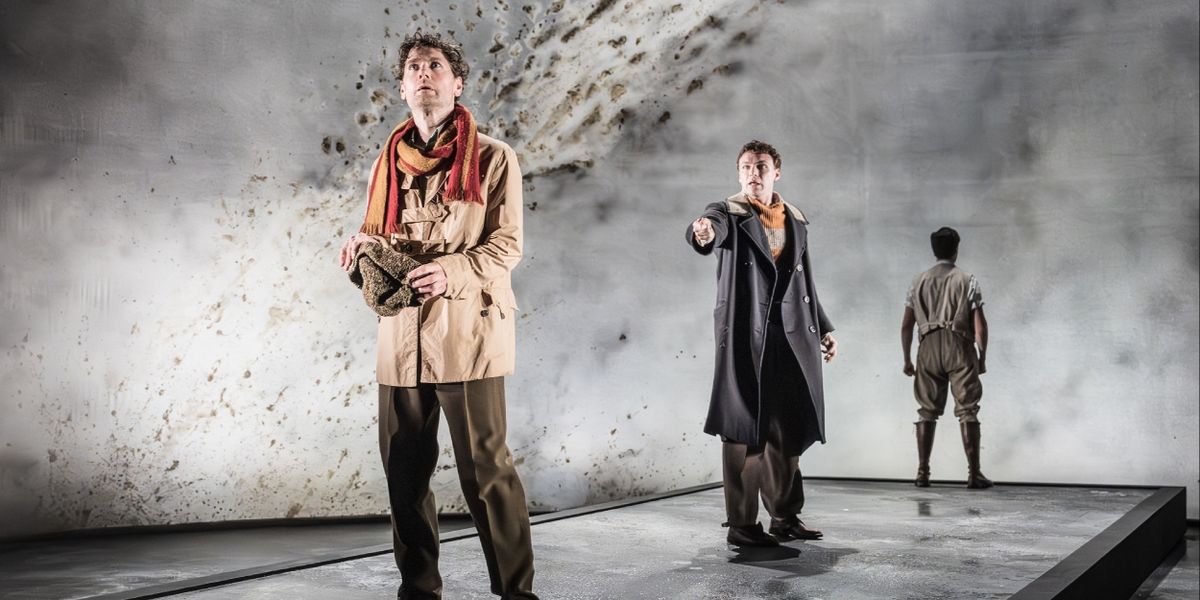
 Alice Birch’s Romans, a novel is an expansive portrait of literary masculinity through the ages. With an ever-shifting form, an array of subtle references, and an intricate, thought-provoking script, this is a play that many will find difficult and impenetrable. At its core, however, it’s a truly perceptive piece that understands masculinity like little else.
Romans follows three brothers: Jack, Marlow, and Edmund, writing their lives from a painful childhood into an impossibly drawn-out adulthood that stretches across the decades. Jack (Kyle Soller), the eldest, becomes a successful writer, starts a cult, and tries to redeem himself from cancellation. Marlow (Oliver Johnstone), seven years younger, goes from an adventurer to a prominent colonialist trader, soon to be the richest man in the world. The youngest son Edmund (Stuart Thompson) finds himself in and out of a prison for crimes he swears he didn’t commit, before eventually attempting to live entirely separately from civilization.
.jpg?format=auto&width=1400)
Image Credit: Marc Brenner
Their stories are told in four chapters: their rural childhood, boarding school education, and experience of war; their young adulthood in the age of exploration and societal shake-up; the smoke-covered haze of what feels like the 60s and 70s, full of early filmmaking, sex and drugs; and finally a vividly painted contemporary scene combining a cancelled author, a right-wing podcast, and a hunt.
If this sounds like a lot, that’s because it is. Birch’s play is longer than average, listed as 2h50 with an interval, and spans three impossibly long lifetimes. It’s an immense piece of work, rich with detail while still being pretty opaque. As a straightforward drama, it’s fractured, inconsistent, and near impossible to follow. In these gaps, however, Birch’s play finds its brightness. Never interested in the obvious or the easy, the writer sews together threads of literature from the past 150 years: narratives of the sheltered child, the tortured soldier, the cult figure and the cheating husband are all eerily familiar, without being attributed to any singular novel or character.
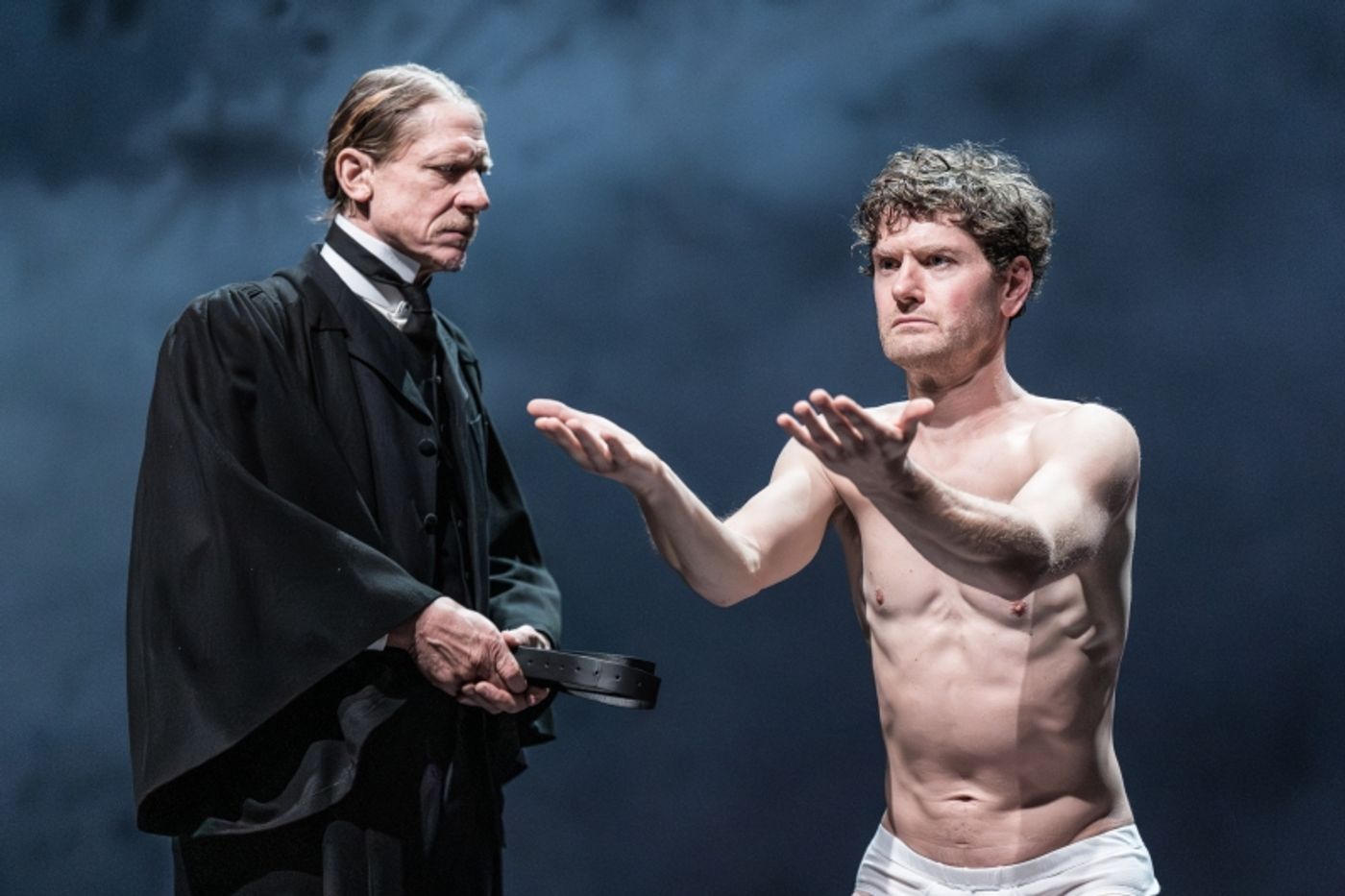
Image Credit: Marc Brenner
In this way, Romans spans not only the development of the novel but the development of masculinity, as a literary theme, a concept, and a belief system. Like a painting that you can’t quite make sense of until centimetres away, this play asks a lot of its audience members. It’s rich for interpretation: the kind of piece you want to sit and ponder, to discuss in the bar after, to hold a book club about.
It’s a play that really has something to say, beyond the standard ‘men are bad’ – Birch explores loneliness, honour, and a feeling of deserving more that really confronts our present moment, especially in the wake of last weekend’s demonstration. The final scene – the most on the nose – also features far right podcasters wielding guns, but offers a new context to events such as the killing of Charlie Kirk by preceding all of this with a history of how masculinity got to this point.
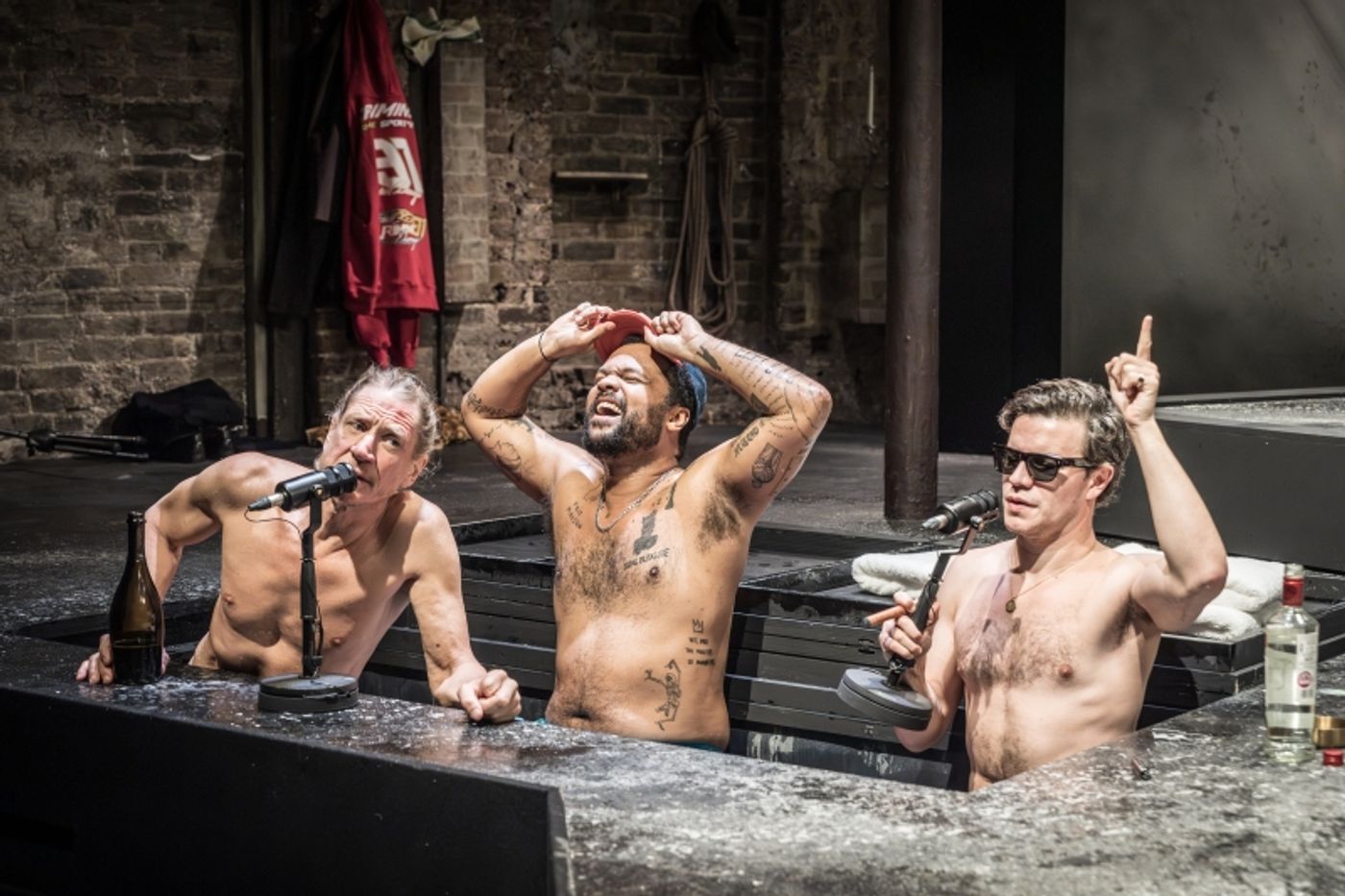
Image Credit: Marc Brenner
With this much complexity going on, and this many strands to keep track of, Romans is a real task for its actors. Fortunately, all relish the challenge. Kyle Soller gives a virtuosic leading turn of Jack, easily evolving from nervous young boy to self-assured husband and father. Oliver Johnstone's Marlow is in many ways the most easily recognisable archetype, but the actor brings a simmering menace to the part, never veering too far into cliche. Stuart Thompson has less stage time, but is perhaps the most compelling, portraying Edmund as only-just human and only-just man, teetering on the edge of it all.
Birch’s female characters are brought to life by Agnes O’Casey, Adelle Leonce, and Yanexi Enriquez – each is given a killer monologue, and Enriquez impresses throughout with her comedic chops. The whole ensemble excel in their physicality, offering a corporeal form to these literary sketches.
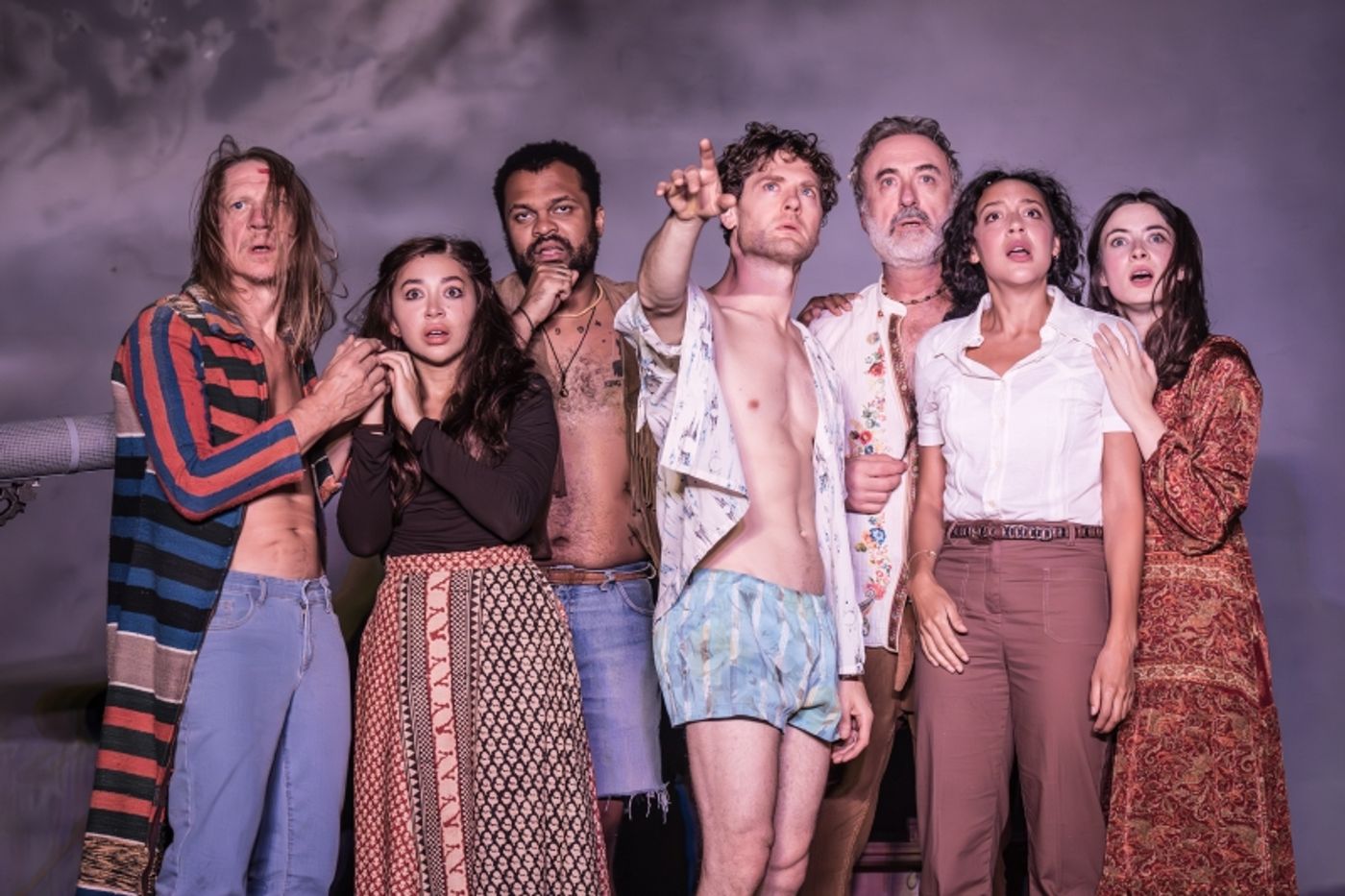
Image Credit: Marc Brenner
Sam Pritchard’s direction brings this out with skill and precision. He pieces together a stage choreography as detailed and thoughtful as Birch’s script, rich with visual motifs and overlapping worlds. Especially brilliant is his work on the second ‘chapter’, which sees the cast striding forward atop a slowly turning revolve, creating vivid visual frame after frame. The final scene, too, is a feat of coordination, using the full space in an eruption of action.
Pritchard and Birch’s world-building is ably supported by set and costume design by Merle Hensel, featuring some very intelligent tailoring, as well as a blood-splattered backdrop that takes on new meanings as the play progresses. There’s also a very well used revolve, and some live camera work. Benjamin Grant’s sound design and Jasmin Kant Rodgman’s composition further expand this, and include a banging needle drop in the play’s final ‘chapter’. The lighting, by Lee Curran, has its ‘wow’ moment at the end, but is strong throughout.
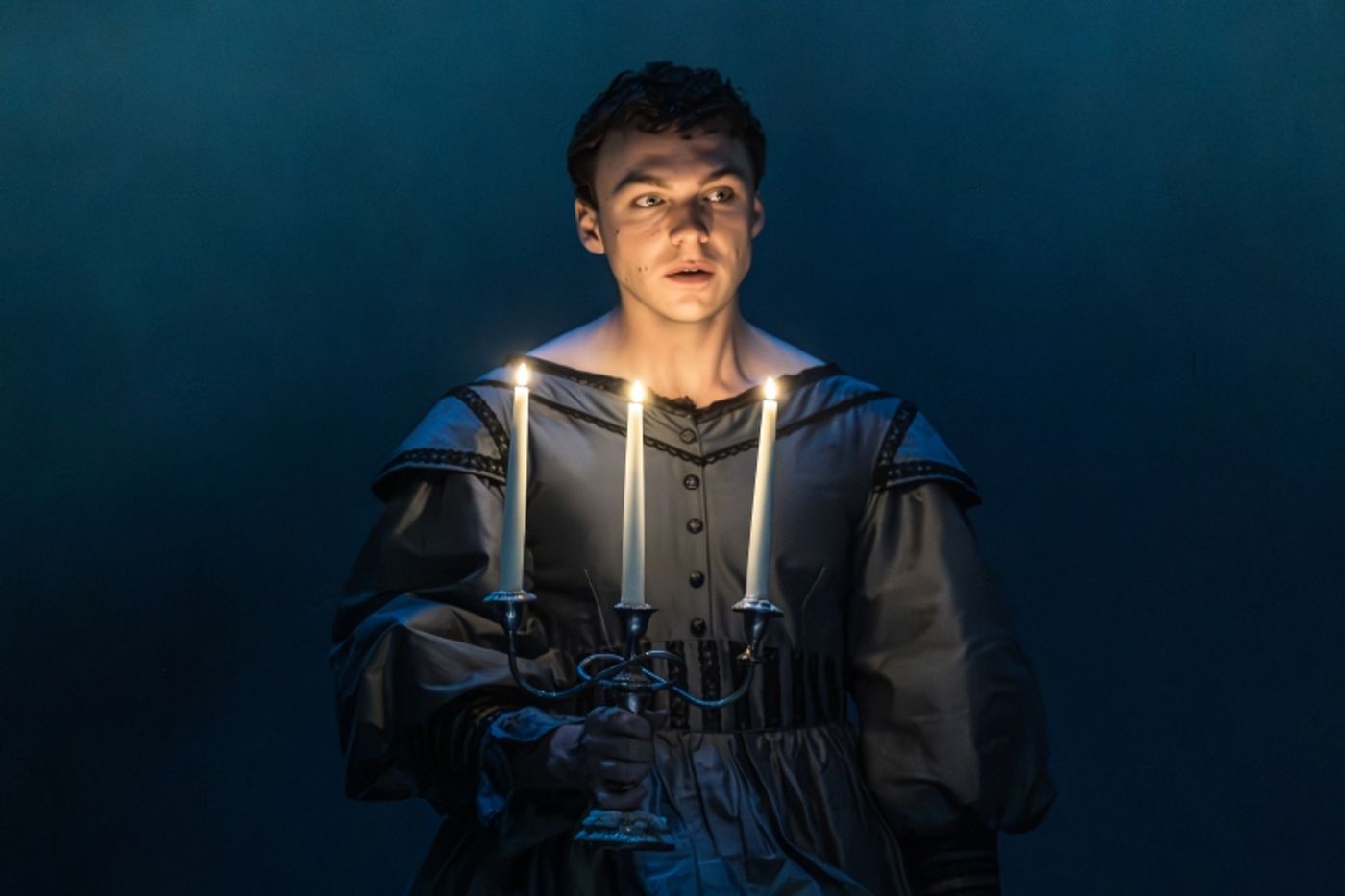
Image Credit: Marc Brenner
Romans strikes me as a play that many will dislike, find boring, or misunderstand. It’s difficult, deceptive, and something of an enigma – but if you take the time to get under its skin, you’ll find a unique piece of theatre, ready to tackle our crisis of masculinity head-on.
Romans, a novel runs at the Almeida Theatre until 11 October.
Cover Image Credit: Marc Brenner






Reader Reviews
To post a comment, you must register and login.