


Interview: Je’Shaun Jackson Talks 'Juicy' Details of FAT HAM at Orlando Shakes
Reprising a role they've met before, Je’Shaun Jackson is serving up radical softness at the backyard barbecue.
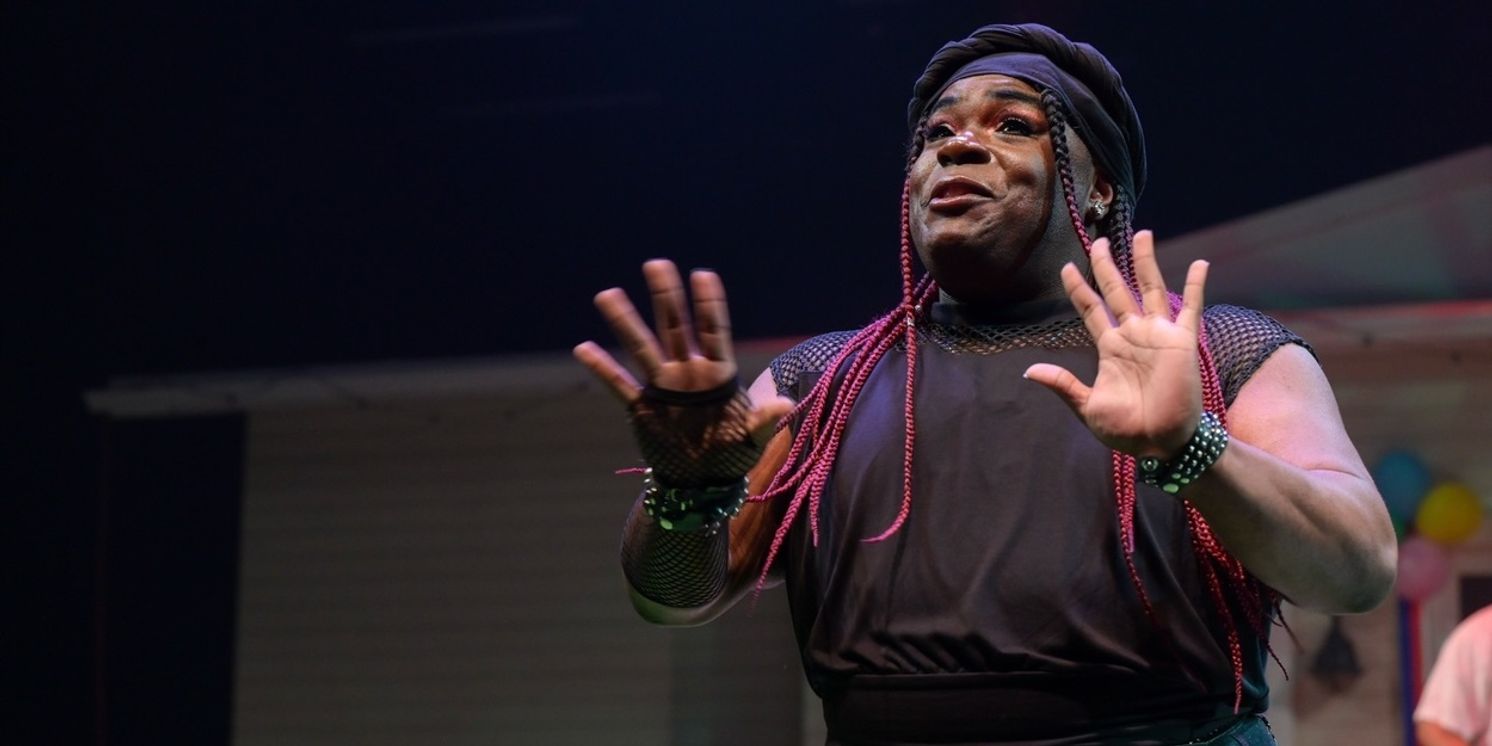
For Je’Shaun Jackson, the path to the backyard barbecue at Orlando Shakes wasn’t paved with the glossy "perfection" expected of reality TV. Following a transformative (and at times traumatic) experience on Season 20 of American Idol, Je'Shaun has traded the television lens for the visceral, messy vulnerability of the stage. Now starring as Juicy in James Ijames’ Pulitzer Prize-winning FAT HAM for a second time, Je'Shaun finds profound power in the very "softness" that society often tries to weaponize.
Thank you for joining me this morning, Je’Shaun! So, off the bat, I want to grab your American Idol experience. How did your experience with the show affect your theatrical career? Did you feel like it changed you as an artist, or did it maybe just expand your platform?
That experience—I don't talk about it often because it was traumatic in a lot of ways. But mainly, when it comes to performing, it made me—it gets emotional because at first.
I'm sorry, we can talk about something else.
Oh, no, it's fine. It helps set where I move forward from there. There was a comment said to me that they didn't air; they edited it all wrong. What they put on TV is not what they said to me in the room. In the room, Katy Perry and Luke Bryan both told me that I present so perfect. They said that when you're perfect, you can't make a mistake, because when you do, all they pay attention to is that one mistake, and not how perfect everything else was.
Being told that during such a vulnerable time messed with me mentally. Going into different experiences after that—even when I went back to theater—I was so afraid to make a mistake because I thought they’d only pay attention to that one error. It took a lot to get out of that mindset. Having people look at you doing what you do best, but a dramatic version of it because that’s what plays on TV, is difficult. They draft this character for you and you're meant to play that character, and that's not who I was to the core.
It helped me know that I can't take everyone else's opinions as law. For a few months, I was so afraid to make a mistake. Then I realized that some insecurities are placed upon you because people expect you to be able to take it because they can't take it themselves. Now looking back, I think it helped shape the artist I am. I’m determined to prove everyone wrong in a way, but the Je’Shaun now knows that the only person I'm trying to prove something to is myself. I only compete with myself. I'm not competing with anyone else. Although that experience was traumatic, it taught me to truly believe in my art and not take so much law from what other people have to say about me.
So much of what you just said about other people's insecurities or expectations of you speaks to the themes of FAT HAM, right? That's a direct correlation to the role of Juicy. As Juicy, you are the pillar of this play. Are you on stage for the entire time?
I leave stage for a total of four minutes.
That’s wild. Given the enormity of the role, how do you pace yourself on stage? Did it take you a minute to figure out where you could take a breather?
The first time I did this, it was harder. I was bringing so much of myself into it. An intimacy coordinator at that time allowed Je’Shaun to protect Juicy in the moments where Juicy needs it most. I realized I don't have to be in the forefront completely; I can just come in when Juicy needs me.
In this experience, I had to learn how to release myself. I have to leave Juicy in the space and bring Je’Shaun home. The first time, I was bringing Juicy home and carrying so much weight. Now, I find moments to breathe. In the hyper moments—like the panic attacks—I have to allow myself to sit in the stillness and the quiet.
My amazing mother, Patrece [Bloomfield, portraying Tedra], taught me a hack. I put peppermint and tea tree oil right the inside of my arms because I spend a lot of time as Juicy balled up in those panic attacks. The oils bring me back to reality and calm everything down. Pacing is just finding those moments of stillness and breath.
What was it like to get the casting call? I know you've done this role before. What was it like to hear you were doing it again and that you have this undertaking ahead of you?
When my team first sent me the audition, I just did it. When you're a very specific type and a lot of theaters are doing the show, you tend to get the same material. I had auditioned for it a couple of times before I played it the first time. This was the first time I got that audition and I understood the material a lot more.
When I got the offer, I wondered if I was going to go back and do this. It was hard the first time; I was a different version of myself. Growth happens all the time. The first time I did the show, I found the spark to keep doing theater because I was about to quit. Doing the show now, I found light. I didn't expect that. Both experiences were great, but this experience is special. I'm at a different point in my life where I understand Juicy and myself a lot more. Roberta [Emerson] is an amazing director who pushes us out of our comfort zone. She told me, "Je’Shaun, you're closing yourself off. Allow yourself to experience every moment of what Juicy is." That informs so much of the way I play Juicy now.
Your work with Roberta and your performance is so dynamic. It goes from subtle moments to these huge, over-the-top moments. It almost creates an acting style that separates Juicy from everyone else. Was that intentional direction from Roberta or something that grew naturally?
Roberta says she doesn't "direct." She just lets you play. Giving an artist the space to feel and explore is so special in theater because you don't get that all the time. We sat at the table and talked about it before we got on our feet. You understand everyone's piece in the puzzle and how everyone fits together.
Drafting Juicy came about by asking: what is Juicy's escape? His mind is literally his escape. He feels soft on the outside; he leads with softness and light. But those crazy hyper moments where he's talking to the audience or speaking in Shakespearean—those set him apart from the expectation and the reality. His reality is so big and beautiful, but he feels like he has to fit into the expectation of what it means to be a man. Those escapes came naturally. The big moments are big because he’s living in a reality that is real to him. That struggle and battle is so real that the high moments just happened.
Speaking of the soliloquies and the Shakespearean language: FAT HAM is clearly not a one-to-one translation of HAMLET. What was your relationship with Shakespeare's original text? Did you focus on the text of FAT HAM and leave HAMLET to what it is?
HAMLET was used as a tool to convey Juicy's inner turmoil because it is so poetic. Juicy thinks through movement and song. That's why poetry is beautiful—it is music. Shakespeare is poetry, and poetry is a song.
I had the pleasure of working with someone called "The Sonnet Man" back in college, and he rapped Shakespeare. He taught me how to think of Shakespeare through music. In one show, I did big monologues to the beat of "Partition" by Beyoncé. It helped me understand Shakespeare so much.
The first time I did this show, my director, Darnell, was heavy into Shakespeare. We sat and dissected the "I have heard" monologue. What does it truly mean to Juicy? Why is this the song he's singing at this moment? When you understand that Shakespeare is not as confusing when you relate it to yourself, the words just come out as music.
What is your process post-show to transform back into Je’Shaun and allow Juicy to remain at the theater?
After the dancing, before I walk out of the theater, I let out one big breath. I think, "Okay, there's Juicy, here's Je’Shaun." I always bring my dog; she’s in the dressing room and she clicks me out of it fast because she's just happy and jumping on me. Then I get in my car, roll the windows down for fresh air, and listen to my "GOAT" playlist—random songs I can bop to. It’s the routine I follow every single day. I leave everything in the space because Juicy has lived their story, and now it's time for Je’Shaun to continue.
All the other characters in the play consistently refer to Juicy as he/him. Speaking on gender identity, do you see Juicy as a cisgender man? Masculinity and queerness are not mutually exclusive. Does the referencing of Juicy as male come off as a way to "other" Juicy?
Society does that a lot, which is why I took on my non-binary identity as Je’Shaun. Even though I never came out and said, “I go by she/they,” I was called she/they more than he/him because I present very feminine. I wear feminine-presented clothing, have my nails done, and wear wigs. It came from the fact that I like to feel pretty. At first, it bugged me, then I realized that's just society.
I have to remind people it's okay to say he/him; I don't mind it at all as long as it's respectful. I think Juicy just presents as Juicy. I don't follow the labels. When Juicy says, "I'm just me," that’s what it is. The gender fluidity plays such a factor. When the family uses "he," it's because that’s what they know him as. It only bugs me when it’s used to say, "You're soft, and men in our family aren't soft." If "me" bothers you, that's a you problem. Gender expression is layered and complex, and Juicy lives in that unknown. The unknown is full of potential.
Theater is traditionally a queer space, but Black queerness has not seen a ton of representation. Having a piece like FAT HAM, where it's so celebrated and joyful—what was it like to work with that material?
I never felt so right until I did FAT HAM. I'm always cast as the loud, sassy person because it's something I can do. Being in this position to actually be who I am—someone who leads with their heart and is soft—is beautiful. I’m actually such an introvert.
Having a space where I get to be queer and Black and my life doesn't end in a tragedy is amazing. I get to take ownership of that identity. This piece has allowed me to choose my most authentic self. James Ijames did a beautiful job highlighting every version of a Black person in 90 minutes. It shows that Blackness and queerness are not a monolith. We are not the same. Our lived experiences are different. All these different walks of life are like pieces of a puzzle that make one grand masterpiece.
Alright, if you have a couple more minutes, I would love to do a quick lightning round with you!
Let's do it!
Must-have item in your bag when you go to the theater?
My nebulizer.
What do you listen to pre-show?
Anything Beyoncé or Olivia Dean. I’m really high on Olivia Dean right now.
Favorite post-show snack?
Ice cream, even though I'm lactose intolerant. You have to do it sometimes!
What are you currently binging?
I’m re-watching Criminal Minds.
Since we’re in Orlando - what’s your favorite theme park attraction?
I just went to Universal, and it’s not an attraction, but I need some more Butterbeer. Frozen Butterbeer is my favorite.
And of course, Disney or Universal?
I’m going to go with Disney, but I would pick Universal just for the Butterbeer. But I love the storytelling of Disney. It makes you feel so at home.
FAT HAM runs at the Orlando Shakes through March 29. or tickets, visit the link below or call the box office at (407) 447-1700.
Photos courtesy of Orlando Shakes.




Videos