


Review: World Premiere of Lang’s NATIONS Brings Wealth of Music to NY Philharmonic under Dudamel
Soloists Barron and Tines and Philharmonic Chorus Add Vibrancy to the Evening
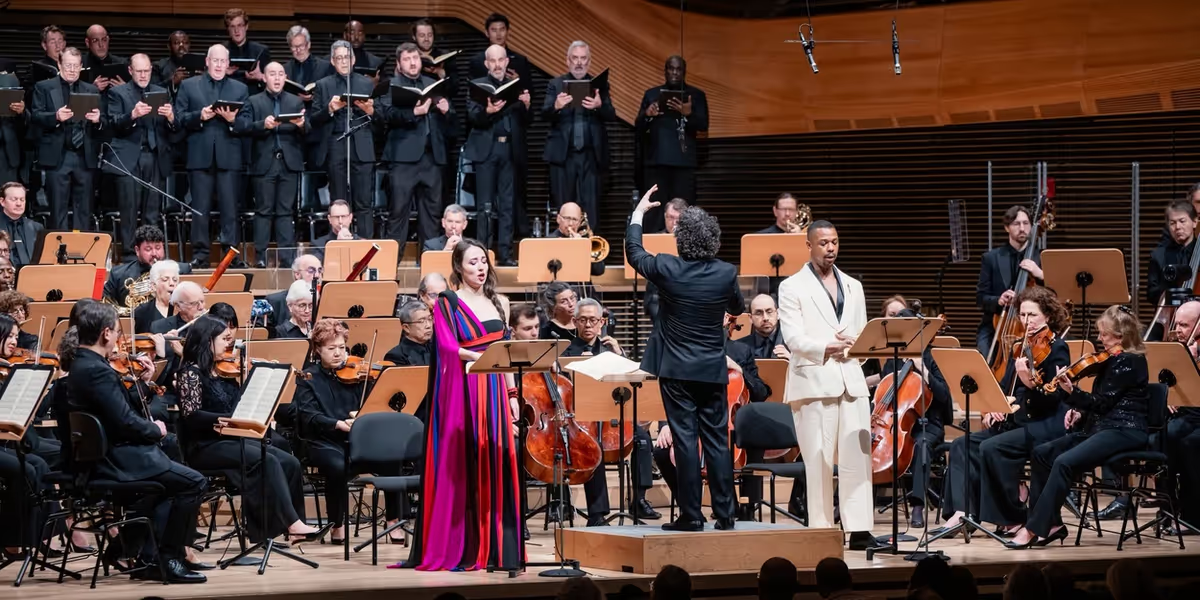
Composer David Lang’s THE WEALTH OF NATIONS had a splendid world premiere this week at the New York Philharmonic under Artistic Director Designate Gustavo Dudamel, with mezzo Fleur Barron, bass-baritone Davone Tines and the Philharmonic’s chorus (under Malcolm Merriweather).
With a text by the composer based on writings by a number of notables—from Adam Smith, who wrote “The Wealth of Nations,” exploring the nature and causes of a nation’s wealth, to president Franklin Roosevelt—it received a justifiably rousing reception at Geffen Hall.
It’s part of the orchestra’s celebration of the “US at 250,” a remembrance of the two-and-a-half centuries since the Declaration of Independence was signed. If only we had more to cheer about, in these days of war in the Middle East, division with our traditional allies and a rift along political factions in the country in a way that hasn’t been seen for a very long time (if ever).
But at least, there is music to appeal to our spirits. The work seems inspired in form by the oratorio, though the traditional sacred storytelling is generally far from inherent in any modern iterations of this kind of music. However, it is true to the bare bones staging of the traditional approach: no scenic design or costumes. And it does not suffer from this manner of performance.
Composer Lang was in fine form, often taking a syncopated or rhythmic approach in his composition. He afforded ample opportunities for the soloists—particularly Tines—and chorus to show off their notable capabilities, as well as bravura work from the orchestra under maestro Dudamel, who was simply, purely in control.
I found the bass-baritone’s voice sounding notably dark and resonant in “the woolen coat” section, singing of the different arts employed “to complete even this homely production.” "If I could have a piece of bread...it would be enough," he sang, his voice rising, in "enough."
He and Barron, making her Philharmonic debut, were well served in “the house of mirth,” as were the trio of trombones who were showcased in it. (The duo were also telling in “the true statesman,” which speaks of “freedom of speech, of thought, of press…overthrown…”) She was notable in “if there ever are,” pensive and pleading against the off-kilter music for the strings.
We had music to soothe and elevate us, even if Lang did produce a text that kept our world-view problems center stage. (Those literary sources, besides Smith and Roosevelt, who showed that many of the challenges we face today are not only of our times, were Ralph Waldo Emerson, Edith Wharton, Maria A. Stewart, Frederick Douglass and Eugene Debs.)
The piece was divided into 18 sections in all, including a couple of orchestral interludes, but ending on a somber note. “The very simple secret” calls upon the united forces on stage to join together, in brilliant form, noting that “no society can surely be flourishing and happy of which the far greater part of the members are poor and miserable.”
What is that secret? It is “the establishment of perfect justice, of perfect liberty and of perfect equality” to bring “the highest degree of prosperity to all.”
Caption: The orchestra and chorus, with Dudamel (back to the camera), Barron left, Tines right.
Credit: Brandon Patoc
Prefer BroadwayWorld in Google Search?
Add us as a preferred source so our stories show up more often in Top Stories and Google’s AI answers — for you.
Sign up for all the news on the Fall season, discounts & more...

Reader Reviews
To post a comment, you must register and login.