


DISTANT OBSERVER By John Jesurun & Takeshi Kawamura Comes to La MaMa, 3/16-4/1
-WEB.jpg?format=auto&width=1400) "Distant Observer: Tokyo/New York Correspondence" is a collaboration between Japanese playwright/director Takeshi Kawamura and American playwright/director John Jesurun. The project is conceived as a play written and directed in collaborative partnership by both artists. Written in sequential chapters by each playwright, it combines two noted and formative artists of the same generation, both with distinct voices and significant work, in a deep creative conversation across cultures. Its plot follows a supposed murderer who reinvents himself, and is reinvented by circumstance, in a series of adventures in the Suicide Forest of Japan. La MaMa will present the play's world premiere, directed by Jesurun, March 16 to April 1 in its Ellen Stewart Theatre, 66 East Fourth Street.
"Distant Observer: Tokyo/New York Correspondence" is a collaboration between Japanese playwright/director Takeshi Kawamura and American playwright/director John Jesurun. The project is conceived as a play written and directed in collaborative partnership by both artists. Written in sequential chapters by each playwright, it combines two noted and formative artists of the same generation, both with distinct voices and significant work, in a deep creative conversation across cultures. Its plot follows a supposed murderer who reinvents himself, and is reinvented by circumstance, in a series of adventures in the Suicide Forest of Japan. La MaMa will present the play's world premiere, directed by Jesurun, March 16 to April 1 in its Ellen Stewart Theatre, 66 East Fourth Street.
They are chatting of the blossoms
Yet in their hearts
They are thinking very different thoughts To witness "Distant Observer: New York/Tokyo Correspondence" will be like being invited to take a wild ride, not unlike watching serial improvisation. Part of the thrill is to see how the chapters of the story, being born of two minds and two cultures, can actually stack up and work together. The writings are not braided, like in a usual collaboration, but more like individual links in a chain, but stylistically, they are actually hard to pick apart. Neither author's work seems dominant. The production's style will be a blend of language, film, architectural space and media. Jesurun will design the set and video. The actors are Claire Buckingham, Kotoba Dan, Kyle Griffiths, Samuel Im and Anastasia Olowin. Lighting Designer is Jeff Nash. Production Manager is Caleb Hammond. Production Stage Manager is Katie Pedro. There will be a talk-back Sunday, March 18 with the co-authors.John Jesurun, a winner of the MacArthur "Genius" Fellowship in 1996, is widely acknowledged as one of the foremost innovators of avant-garde theater, creating virtuoso works that overlap media and language in surprising and unpredictable ways. He was originally trained as a sculptor at the Philadelphia College of Art and studied film at Yale before turning to playwriting in the early 1980's. He was the Associate Producer of "The Dick Cavett Show" for two years. He has received grants and fellowships from the Rockefeller and Guggenheim Foundations as well as the NEA. In addition to La MaMa, his works have been presented in major venues and festivals both nationally and internationally. Jesurun's work has long been distinguished by his use of film and video to destabilize the audience's sense of reality. His "Deep Sleep" (La MaMa, 1986) had two 70-minute films projected on facing screens while the five actors were caught in between. Jesurun received an Obie in 1986 for "Deep Sleep. His other La MaMa works include "Red House" (1984), "Number Minus One" (1984), "Dog's Eye View" (1984), "Black Maria" (1987), a revival of his most famous work, "Shatterhand Massacree," (1992), "Iron Lung" (1992), "Point of Debarkation" (1993), "Slight Return" (1995), "Philoktetes" (2014), three installments of his famed series "Chang in a Void Moon" (2003), "Stopped Bridge of Dreams" (2012) and "Shadowland Live" (2015). Takeshi Kawamura is one of Japan's leading playwrights and theater makers with plays spanning three decades of contemporary theater in Japan. His work explores the ways in which things are both remembered and forgotten socially, politically and culturally. He has written over 50 plays and received numerous awards including Japan's prestigious Kishida Kunio Drama Award. His work has been performed in many international venues and translated into several languages. His "Aoi/Komachi," presented by Japan Society in New York in 2007 as part of its 100th anniversary celebration, was a re-imagining of two 14th century Noh plays into contemporary settings. Kawamura and Jesurun are artists of the same generation. They met when Kawamura was in New York on an Asian Cultural Council grant in 1996. Their collaboration in the writing of this play was carried out over three years, supported by the Saison Foundation. Aya Ogawa (Japanese to English translation) is a playwright, director and translator. She was translator of "Five Days in March," a revolutionary Japanese play by Toshiki Okada, which was performed by Witness Relocation at La MaMa in 2010. Her own plays, which she created and directed, include "Ludic Proxy" (The Play Company), "Journey to the Ocean" (Foundry Theatre), and "oph3lia" (HERE). Her translations have been published by Samuel French among others, and produced in the U.S. and U.K. She is a member of New Dramatists, a Usual Suspect at NYTW, an Artist in Residence at Brooklyn Arts Exchange (BAX) and recipient of the President's Award, LMCC. Her latest project about failure will be shown on June 15 and 16 at BAX. (ayaogawa.com) This project is supported in part by the Saison Foundation, which funded its writing development over several years. This production of the world premiere of "Distant Observer: Tokyo/New York Correspondence" is supported by The Japan Foundation through the Performing Arts JAPAN Program and by additional support from the Axe-Houghton Foundation. ABOUT LA MAMA
La MaMa Experimental Theatre Club is dedicated to the artist and all aspects of the theater. An integral part of New York City's cultural landscape, La MaMa has a worldwide reputation for producing daring work in theater, dance, performance art, and music that defies form and transcends boundaries of language, race, and culture. Founded in 1961 by theater pioneer and legend Ellen Stewart, La MaMa is a global organization with creative partners and dedicated audiences around the world. La MaMa presents an average of 60-70 productions annually, most of which are world premieres. To date, over 5,000 productions have been presented at La MaMa with artists from more than 76 nations. La MaMa's 56th season highlights artists of different generations, gender identities, and cultural backgrounds, who question social mores and confront stereotypes, corruption, bigotry, racism, and xenophobia in their work. Its stages embrace diversity in every form and present artists that persevere with bold self-expression despite social, economic, and political struggle and the 56th season reflects the urgency of reaffirming human interconnectedness.
|
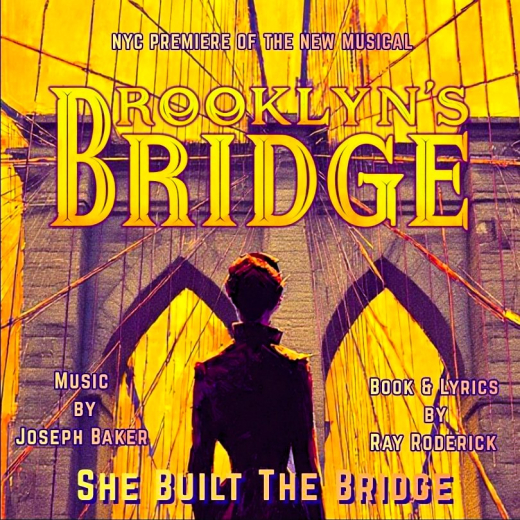
BROOKLN'S BRIDGE - A New Musical - SHE Built the Bridge! The Space at Irondale (8/07-8/23) |
|
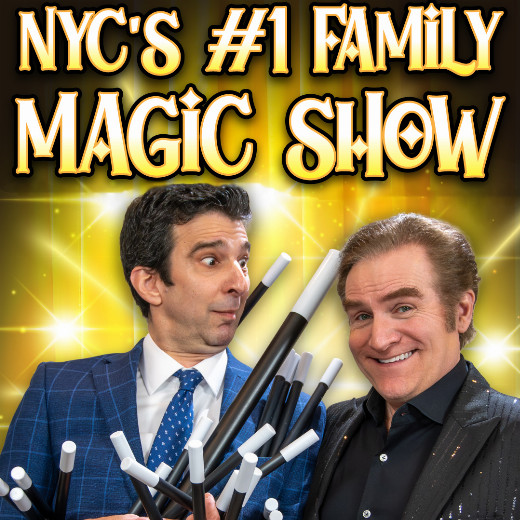
Broadway Magic Hour Broadway Magic Hour: Magic Show (7/25-1/02) |

|
Broadway Takes On The 80s The Cutting Room (9/14-9/14) |

|
Eileen Barnett: Back Again...For The Very First Time! The Laurie Beechman Theatre (10/06-10/06) |
|
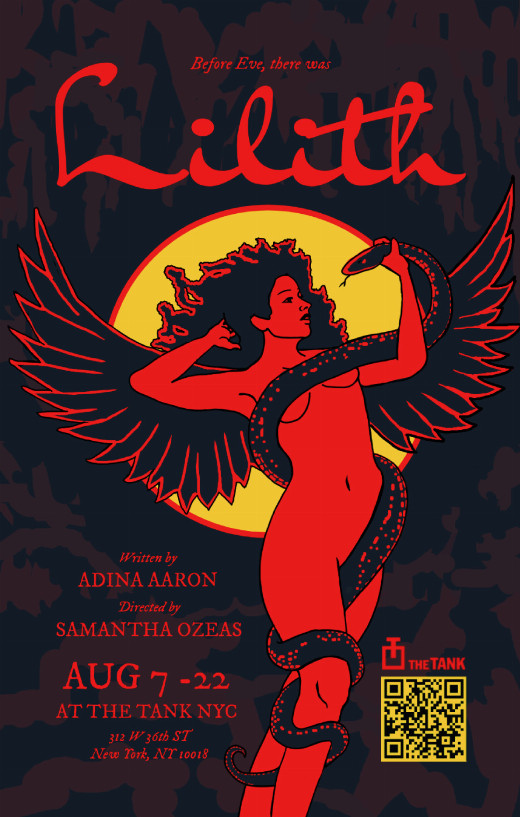
Lilith The Tank (8/07-8/22) |
|
Oh, Kentucky! Center at West Park (8/22-8/22) |
|
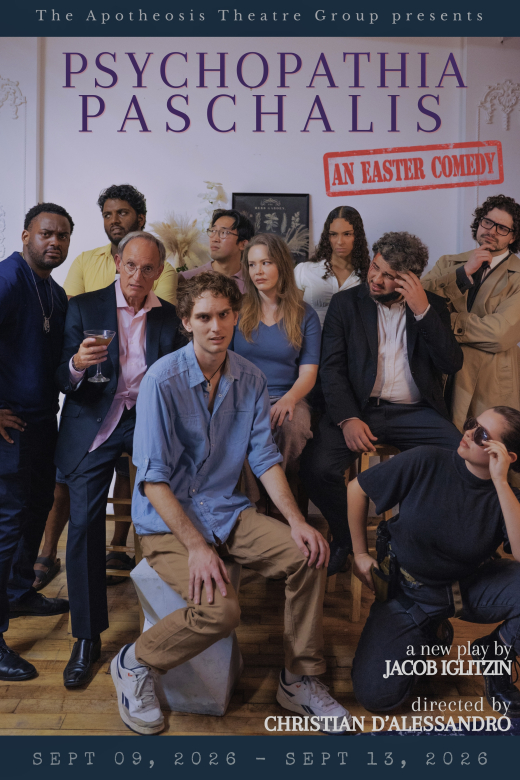
Psychopathia Paschalis: An Easter Comedy Factory Series at Chain Theatre (9/09-9/13) |
|
Rock Never Dies Hard Rock Cafe (5/29-8/30) |
|
Immigrant Nation: People in Transit The Museum of Modern Art (7/03-9/10) |
|
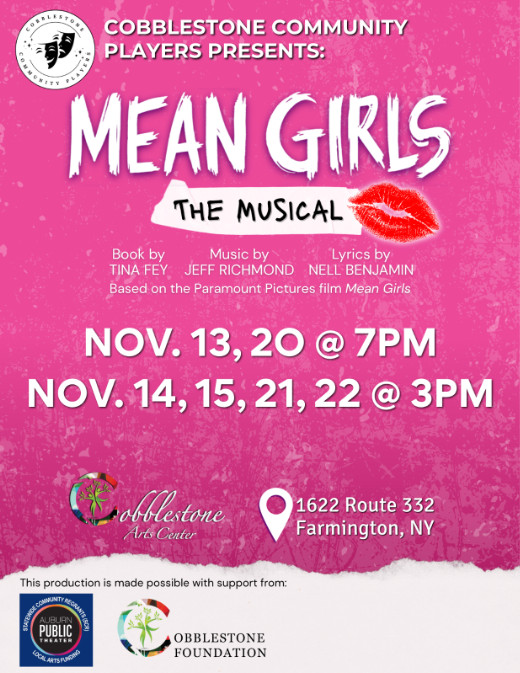
Mean Girls Cobblestone Arts Center (11/13-11/22) |