


One of the Museum’s earliest displays showcases a flock of Passenger Pigeons foraging for acorns. #museum #extinction #passengerpigeon #science #ornithology In September of 1914, Martha, the last-known living Passenger Pigeon, died at the Cincinnati Zoo. Her death at age 29 after a lifetime in captivity marked the disappearance of her once-abundant species from the world—and made Passenger Pigeons synonymous with the extinction of species at human hands.
American Museum of Natural History
Museum · Upper West Side
The American Museum of Natural History in New York City is one of the largest and most renowned museums of its kind in the world. It has a vast collection of over 34 million specimens, including fossils, meteorites, minerals, plants, and animals from around the globe. A tourist would want to visit the museum for its fascinating exhibits that showcase the history of our planet and its inhabitants.
Some of the museum's most popular attractions include the dinosaur fossils, the Hall of Biodiversity, the Rose Center for Earth and Space, and the Butterfly Conservatory. Visitors can also learn about various cultures from around the world through the museum's extensive anthropological collections.
In addition to its permanent exhibits, the American Museum of Natural History also hosts several temporary exhibitions throughout the year. These exhibitions feature a range of topics, from ancient civilizations to current scientific research, and provide visitors with a unique and informative experience.
Location
Central Park West & 79th St, New York, NY 10024 · Get Directions
American Museum of Natural History Videos
How did some of Earth's earliest complex animals move—and could half-a-billion-year-old fossils reveal clues about life on other planets? In this video, invertebrate paleontologist and Museum Curator Scott Evans takes us from Australia's Nilpena Ediacara National Park back in time to decode the mysteries of the Ediacaran Era—a time 550 million years ago when marine organisms made a pivotal shift from microscopic life to complex, mobile animals. By analyzing fossil impressions of Spriggina, a soft-bodied organism with left-right symmetry, Evans uncovered surprising physical clues: body-bending patterns that suggest wriggling movement, evidence of the animal lifting its head off the seafloor, and even a directional preference indicating right-handedness. Because handedness often correlates with complex sensory systems in modern animals, these ancient organisms may have possessed surprisingly advanced nervous systems. And understanding how life first transitioned to complexity on Earth helps scientists define the conditions needed to search for complex life elsewhere in the universe... #Paleontology #Fossils #Ediacaran #Evolution #Astrobiology #Science
🍂🐛A forest floor is a busy place, full of hungry bugs, beetles, and weevils! The American Museum of Natural History’s Life on the Forest Floor Diorama combines artistry and education to show a precisely designed cross section of forest soil, enlarged to 24 times its actual size. This diorama was installed in the 1950s. #museum #nyc #insects #entomology #diorama
About 99.9% of mammal species alive today—including humans—are from a mammal group, Theria, that survived the extinction of non-avian dinosaurs in the late Cretaceous and thrived over the next 66 million years. To understand what helped these animals succeed, paleontologists study ancient mammal fossils that are incredibly small, rare, and difficult to find. Join Jin Meng, a paleontologist at the American Museum of Natural History, to explore what life was like in the immediate aftermath of the catastrophic asteroid impact—and how specialized teeth and ears, helped our very ancient relatives survive. See how Meng and colleagues are using technologies like CT scanning to unlock new information from delicate fossils that wasn’t possible even a few decades ago. #paleontology #fossils #evolution *** Subscribe to our channel: http://www.youtube.com/subscription_center?add_user=AMNHOrg Check out our full video catalog: http://www.youtube.com/user/AMNHorg This video and all media incorporated herein (including text, images, and audio) are the property of the American Museum of Natural History or its licensors, all rights reserved. The Museum has made this video available for your personal, educational use. You may not use this video, or any part of it, for commercial purposes, nor may you reproduce, distribute, publish, prepare derivative works from, or publicly display it without the prior written consent of the Museum. © American Museum of Natural History, New York, NY
We’re heading into the Museum’s Department of Herpetology to learn some interesting facts about these diverse and important reptiles. #herpetology #biodiversity #museum #nyc #science
🦈 Dive into the American Museum of Natural History’s Hall of Vertebrate Origins to learn about the biggest shark of all: megalodon. Did you know? Fossilized shark teeth are commonly found, but other remains are elusive. Why? Sharks’ skeletons are mostly made from cartilage, not bone, and as a result, their bodies tend to break down rather than fossilize. Check out the related video to learn more! #naturalhistory #naturalhistorymuseum #sharks #megalodon #didyouknow
More in The Upper West Side
More Museums
American Museum of Natural History News

Video: Sydney James Harcourt Talks CATS: THE JELLICLE BALL Closing and More
Sydney James Harcourt reflected on the closing of CATS: The Jellicle Ball during an appearance on Jimmy Kimmel Live, which was guest hosted by Rosie O'Donnell. Watch the full interview here.

Video: Sydney James Harcourt Releases New Single 'DEVIANT' With FēRL
Sydney James Harcourt, who most recently played the Rum Tum Tugger in Cats: The Jellicle Ball, has released a new single! Learn more about the song and listen to it here.

Stephen Laughton Named Associate Artistic Director of Echo Theater Company
Playwright and filmmaker Stephen Laughton has joined Los Angeles' Echo Theater Company as associate artistic director, joining Chris Fields and Elana Luo in leading the company.
AN EVENING WITH NEIL DEGRASSE TYSON is Coming to the Florida Theatre
The Florida Theatre will present An Evening With Neil deGrasse Tyson, Search For Life In The Universe at the historic Florida Theatre in downtown Jacksonville.
BAD KREYOL Will Join Mosaic Theater Company 2026-2027 Season
Mosaic Theater Company announced BAD KREYÒL, the latest play by Tony Award-nominated playwright Dominique Morisseau, as the fourth production of its 2026-2027 season, directed by Stori Ayers at the Atlas Performing Arts Center.

Jiashan He: How a Dancer-Turned-Marketer Shapes Communication and Community in the Arts
New York’s arts and culture scene spans world-class museums, landmark performance venues, and experimental art spaces woven into the city’s daily life. It includes longstanding institutions such as the American Museum of Natural History, Lincoln Center for the Performing Arts and The Juilliard School, alongside newer icons like the High Line. Within this vibrant ecosystem, much of the work that shapes culture happens offstage. “Art is not a mirror held up to reality, but a hammer with which to shape it,” wrote Bertolt Brecht. And if art shapes the world, then those who steward it behind the scenes shape the conditions in which that transformation becomes possible.

Mosaic Theater Company Reveals First Slate of Programming for 2026 – 2027
Mosaic Theater Company has revealed its first productions of its 2026 – 2027 season. The full slate will be the company’s largest subscription season since the Covid-19 pandemic.
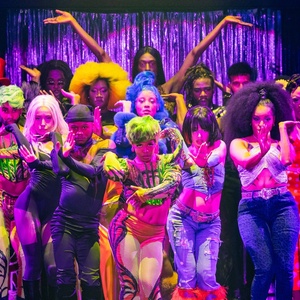
Meet the Cast of CATS: THE JELLICLE BALL, Now Playing on Broadway
Performances are now underway for CATS: The Jellicle Ball, which begins preview performances Wednesday, March 18 at the Broadhurst Theatre ahead of a Wednesday, April 7 opening night. Meet the cast here!
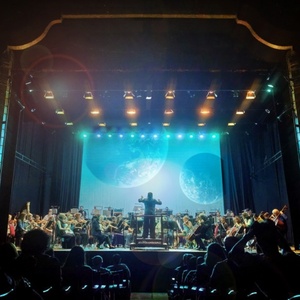
Robin Ince and Jen Gupta to Host THE EXOPLANETS at Hackney Empire
Join Robin Ince and Professor Jen Gupta for an evening of music and astrophysics with THE EXOPLANETS at Hackney Empire. Learn more about the event here!

Gamelan Kusuma Laras To Present 2025's KLENÈNGAN: CLASSICAL JAVANESE MUSIC IN AN INFORMAL SETTING
Gamelan Kusuma Laras will present an evening of Javanese music for the public in the klenengan format, which features musicians who gather for a kind of jam session, often arranged by a family for a special event.

The Hermitage Artist Retreat Welcomes Tiffany Colli-Moon As New Programs Director
The Hermitage Artist Retreat has announced Tiffany Colli-Moon as its new Programs Director, following a national search led by TOC Arts Partners. Joyous R. Pierce joins the organization as Artist & Alumni Relations Manager.
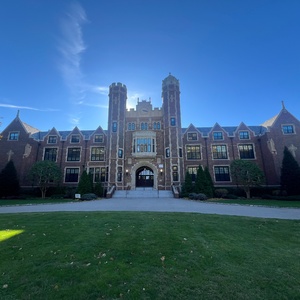
Student Blog: Going Back to School in a New Way
Like most college freshmen, the first few weeks of school were rough. Trying to make new friends while also maintaining my friendships back home was a lot to balance with the college workload and adjusting to my new life. But, like most college freshmen, we work through it and find our way.
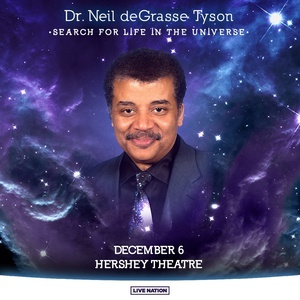
Neil DeGrasse Tyson Brings COSMIC COLLISIONS to Hershey Theatre
Join Dr. Neil deGrasse Tyson at Hershey Theatre on March 5 for COSMIC COLLISIONS, exploring asteroid impacts and their effects on Earth.
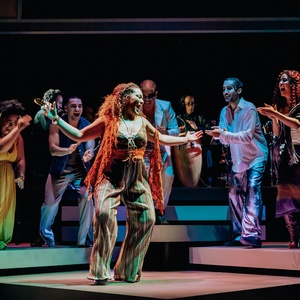
New York's Cultural Institutions Group Adds BRIC, Pregones / Puerto Rican Traveling Theater, and More
New York City Mayor Eric Adams and New York City Department of Cultural Affairs (DCLA) Commissioner Laurie Cumbo have announced five new members of the city’s Cultural Institutions Group.

SPACE! THE IMPROVISED MUSICAL is Coming to Caveat in May
SPACE! THE IMPROVISED MUSICAL will take place at Caveat in May. It's the marriage destined since the dawn of time: astrophysics and musical theater. Learn more!
American Museum of Natural History Frequently Asked Questions
- What are the closest subway stops to American Museum of Natural History?
-
The closest subway stops to the American Museum of Natural History at Central Park West & 79th St are:
1. 81st Street-Museum of Natural History Station - This station is located right next to the museum, making it the most convenient option. It is served by the B and C trains.
2. 79th Street Station - This station is a short walk away from the museum. It is served by the 1 train.
Both of these subway stops provide easy access to the museum and are well-connected to other parts of the city.
While you're in the area, I highly recommend exploring Central Park, which is right across the street from the museum. It's a beautiful oasis in the middle of the city and offers various activities such as walking, biking, and picnicking. You can also visit other iconic attractions nearby, such as the Strawberry Fields memorial dedicated to John Lennon and the Central Park Zoo.
For the latest subway updates and service changes, I recommend checking the official website of the Metropolitan Transportation Authority (MTA) at https://new.mta.info/. This will provide you with real-time information on any delays or disruptions that may affect your travel plans.
- What's the best way to get to American Museum of Natural History by bus?
-
The closest bus stops to the American Museum of Natural History at Central Park West & 79th St in New York City are:
1. Central Park West/W 79 St: This stop is served by the M10 bus. You can check for updates on the M10 bus schedule [here](http://bustime.mta.info/m/index?q=101189).
2. Central Park West/W 81 St: This stop is served by the M10 and M79-SBS buses. You can check for updates on the M10 bus schedule [here](http://bustime.mta.info/m/index?q=101191) and the M79-SBS bus schedule [here](http://bustime.mta.info/m/index?q=101193).
Please note that bus schedules and routes may be subject to change, so it's always a good idea to check for updates before your visit. Enjoy your trip to the American Museum of Natural History!
- How much time should I plan to spend at American Museum of Natural History?
-
The American Museum of Natural History is a treasure trove of knowledge and exhibits, so it's easy to get lost in all the wonders it has to offer. Ideally, you should plan to spend at least half a day exploring this incredible museum. With over 45 exhibition halls, including the iconic Hall of Dinosaurs and the Rose Center for Earth and Space, there is so much to see and learn.
If you're a science enthusiast or have a particular interest in a specific area, you might want to allocate even more time to fully immerse yourself in the exhibits. Additionally, the museum often hosts special exhibitions and shows, so make sure to check their website for any temporary attractions that might catch your interest.
Remember, the American Museum of Natural History is a popular destination, so it's a good idea to arrive early to beat the crowds and make the most of your visit. Don't forget to grab a map at the entrance to help navigate your way through the museum's vast collection. Enjoy your time exploring the wonders of the natural world!
- Can I bring food and drinks into American Museum of Natural History?
-
The American Museum of Natural History in New York City has a food and drink policy that allows visitors to bring their own food and beverages into the museum. However, please note that food and drinks are not permitted in exhibition halls or theaters. There are designated areas within the museum where you can enjoy your snacks and meals, such as the food court located on the lower level. Additionally, the museum has several cafes and a restaurant where you can purchase food and drinks if you prefer not to bring your own. Just remember to be respectful and clean up after yourself to help maintain the museum's cleanliness. Enjoy your visit to the American Museum of Natural History!
- Does American Museum of Natural History offer luggage storage?
-
The American Museum of Natural History in New York City does not offer luggage storage facilities for visitors. For security reasons, backpacks, suitcases, and other large bags are not permitted inside the museum. However, you can find several luggage storage services near the museum where you can securely store your belongings while you explore the exhibits. These services typically charge a fee based on the size and duration of storage. Just a friendly reminder, it's always a good idea to travel light and leave large bags at your accommodation whenever possible to make your visit to the museum and other attractions more enjoyable.
- Is American Museum of Natural History a good place to visit for foreign travelers who are not native English speakers?
-
Absolutely! The American Museum of Natural History is a fantastic destination for visitors from other countries and non-English language speakers. The museum offers multilingual exhibits, audio guides, and written materials in various languages, including Spanish, French, German, Italian, Japanese, Mandarin, and more. This ensures that everyone can fully enjoy and understand the exhibits, regardless of their language proficiency.
The museum's exhibits are visually captivating and offer a wealth of information about the natural world, history, and culture. From the iconic dinosaur fossils in the Hall of Saurischian Dinosaurs to the stunning dioramas in the Hall of North American Mammals, there is something for everyone to marvel at.
Additionally, the museum frequently hosts special exhibitions that cover a wide range of topics, from ancient civilizations to space exploration. These exhibitions often include interactive displays and multimedia presentations, making them engaging for visitors of all ages and language backgrounds.
If you're planning a visit to the American Museum of Natural History, I highly recommend checking their website for information on current exhibitions and any language-specific services they may offer. It's a must-see attraction for anyone interested in science, history, and the wonders of the natural world.
- What ages are appropriate for American Museum of Natural History?
-
The American Museum of Natural History in New York City is a fantastic destination for visitors of all ages! While it is particularly popular among families with children, people of all ages can enjoy the museum's exhibits and displays. The museum offers a wide range of interactive exhibits, fascinating artifacts, and educational programs that cater to both kids and adults. Whether you're a curious child or a lifelong learner, you'll find something to pique your interest at the American Museum of Natural History. So, don't hesitate to bring your family or explore the museum on your own – it's an experience you won't want to miss!

.jpg?format=auto&width=365)

Tickets From $58

Tickets From $71

Tickets From $71

Tickets From $71
