


Interview: HOW TO DANCE IN OHIO's Ashley Wool on THE BROADWAY ERA at The Beechman
Ashley Wool spills on her new solo cabaret show, THE BROADWAY ERA, which plays 7/28 at the Laurie Beechman

In her new solo cabaret show, The Broadway Era, Ashley Wool reflects on her journey to becoming an original cast member of the Broadway musical How to Dance in Ohio, a production celebrated for its groundbreaking representation of neurodiverse performers. Set to play one night only at the Laurie Beechman on Monday July 28 at 7 pm, Wool’s show blends music and personal storytelling, exploring how her autism diagnosis in 2008—initially kept private out of fear it would impact her career—ultimately became central to her artistry and advocacy.
During the pandemic, Wool began speaking publicly about her experience, eventually becoming a sought-after voice in conversations around autistic representation in the media. The Broadway Era chronicles that journey, offering an honest and often humorous look at how identity, community, and musical theatre intersect. Wool will be joined by members of her chosen family in this one-night-only celebration of authenticity, connection, and transformation through performance.
Read a conversation with Wool about the upcoming show, her advocacy work for representation, and more.
What have you been up to since How to Dance in Ohio closed last year?
I've done some readings of new plays and musicals, and even a screenplay, but mostly I've been focused on developing this cabaret show. I mounted two previous versions of it Off-Broadway at Saint Luke's Theatre in January and April and got a great response with a lot of helpful feedback. I've also been working on a few theatre projects behind the scenes—right now, I'm house-managing a show at Saint Luke's called Bear Grease. It's a very creative all-Indigenous hip-hop reimagining of Grease the musical--kind of a good-natured parody of the source material that's also a love letter to Indigenous American culture in all its diversity. It's the most fun I've ever had working on a show that I'm not onstage in. The cast and creative team are so kind and passionate, and the audience response has been fantastic. It's also only the second Indigenous musical in Off-Broadway history, which is astounding from a representation perspective. Obviously, I'm not directly comparing my experience to the Indigenous experience, but the energy in that company reminds me of how it felt working on How to Dance in Ohio, pouring your heart and soul into a show that you really believe in, which also happens to position you as the public faces of a marginalized community in spaces you were historically excluded from. There's a very special flavor of camaraderie on projects like that, and it elevates the experience for everyone.
How did your time in Ohio affect you?
There is no part of my life that Ohio didn't touch, but one line from the show that I've been thinking a lot about recently is towards the end of the play when Marideth is resisting going to the dance, and her dad says, "You will leave your room and participate, because you can't learn everything about life from a screen." There's a tendency in advocacy circles to become very cynical, especially when you're faced with a 24-hour news cycle focused on very frightening political turmoil. Social media algorithms are designed to be addictive, and they thrive on simplistic knee-jerk rage, which trains your brain to lean so deeply into negativity bias that you view everything through a lens of bitter helplessness. Our brains can absorb a lot of information, but that doesn't magically make us psychologically equipped to do anything with that information except scream into the void about how "someone" should do "something." Ohio showed me that the way out of that cycle is to narrow your focus on what you can control and what you can contribute to building in community with others. And it should be in-person whenever possible, especially if it involves music and theatre. The Internet is a great accessibility tool, but we should never confuse healthy accessibility boundaries with unproductive walls of self-isolation.
How does it feel to be bringing this cabaret show to the Laurie Beechman?
Amazing! The best thing about cabaret is that it allows so much space for your personality and humanity outside of your career and people's expectations of you. It helps to collaborate with people who bring out the best in you but can also be honest and deliver constructive criticism. I brought in the brilliant Joe Langworth to direct the show, and he has been a tremendous help in clarifying my vision and providing objectivity on how the storytelling resonates. My dear friend David John Madore is music-directing for the third time, and we have a great collaborative rapport. Both of us are autistic and ADHD, and our sessions together often consist of a lot of info-dumping and spitting fragmented sentences at each other until we land on a shared understanding—which works great for us, and often leads to delightful creative breakthroughs. David has such an impressive breadth of musical knowledge and is always willing to think outside the box and try the crazy unconventional thing. But then sometimes we get too far outside the box, and that's where Joe comes in, to reroute and streamline. Having the right team around you with the right balance of skills makes the process much more joyful and less overwhelming.
Who do you hope comes to see this show?
People who really are not in the mood to go out on a Monday night and see a show, but decide to go anyway. People who are tired from work, people who are burnt out from stress; people who are grieving a breakup or a death or just the general state of the world; people who would rather sit at home in the dark and doomscroll the night away, but decide to go to a show instead. People who only know of me by association or through social media and maybe think I'm kind of annoying and are just curious to see if I'm equally annoying in person. People who have never heard of me, and maybe never even been to a cabaret, but their therapist told them to "do something spontaneous."
Can you tell us a bit about your process shaping the song selection and stories you're sharing in this concert?
I'm choosing music and stories that introduce people to previous versions of myself and how they all led me to where I am now—which I know isn't exactly groundbreaking for a cabaret show. The trajectory my life and career have taken is certainly unconventional, but I think a lot of people out there can find parallels in it to their own lives. I grew up always feeling different in ways I couldn't understand, and then I found my voice through theatre and music, and then I got this very othering diagnosis that I thought would end any chance I had at making that my career, and instead it turned out to be the X factor that led to my Broadway debut. I think that's an inspiring story, but I hope what makes it unique is that it's inspiring for the right reasons. I don't want people to see me as an example of what happens when an autistic person works hard to overcome the odds and prove people wrong, and that's the end of the story. I do work hard, and I have overcome a lot, but I also grew up with a robust support system that gave me a lot of love and encouragement even before we had all the information about my neurology, and my "Broadway era" is the ongoing work of shining a light on that and paying it forward. If you give me all the credit for my success, you're absolving yourself of the responsibility you have to help create a world where everyone has that support, whatever it looks like for them. Not every autistic person will end up on Broadway, but I want every autistic person to have the chance to step into their own equivalent of "the Broadway era."
You’ve been doing activism about neurodiversity in media and entertainment for a while. Do you have any advice for neurodivergent people who are interested in performing or pursuing creative careers?
Surround yourself with good people who make good art, and focus more on being a good person making good art than on being "unproblematic" or "good representation." Sometimes you're going to challenge people by defying a stereotype, and sometimes you're going to challenge people by exemplifying a stereotype—either way, you can't and won't please everybody. Advocate for yourself and ask for what you need, but create strategized practices of self-regulation for the times when you can't get what you need. There will always be times you have to mask, or code-switch, or do things that don't feel authentic or comfortable to protect your safety and your peace. There will also be times you have to apologize and take accountability for causing harm that you may not have intended, and there will be times when your best efforts won't be enough for some people. But don't let those moments or those relationships consume more of your energy than they're worth. Just focus on doing the next right thing.
Is there anything else you'd like to add?
The earlier version of this show was called Broadway. That Happened. I had chosen that title because How to Dance in Ohio had such a limited run, and I carried a lot of grief and, admittedly, some defensiveness about that. I really wanted to remind people that yes, this happened. We were here, on Broadway, and our presence mattered. We were selling out shows in March and April when people were planning their spring breaks, and I was fielding dozens of requests from education professionals and disability advocacy groups about class trips and talkbacks, but due to circumstances beyond our control, we only got to do a handful of them. And being ignored by the Tonys really sucked, because that felt like the ultimate missed opportunity to connect more with the larger Broadway community that had already embraced us. So many major players in the industry were genuinely excited about our show, and believed in the show, and put a lot of effort into evangelizing on our behalf, and when the show closed, I had all the stereotypical insecure-actor intrusive thoughts of "what if I never work again? what if all those moments are gone forever?" But they aren't gone. People do remember the show, and still talk about how it impacted them—how our presence on Broadway impacted them. And it's because of that show that I have a clearer and more confident idea of where my voice belongs in this community and in these bigger cultural conversations about equity and inclusivity. And that's not past tense. It's ongoing, and it's bigger than one person or one production contract. Hence, The Broadway Era.
Learn more about Ashley Wool online at www.ashleywool.com.
Tickets to the Broadway Era are available on the Laurie Beechman’s website here.
|
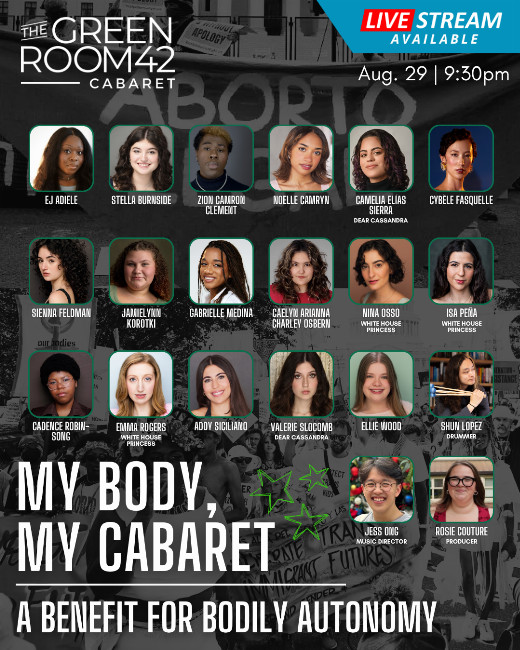
My Body, My Cabaret The Green Room 42 (8/29-8/29) |
|
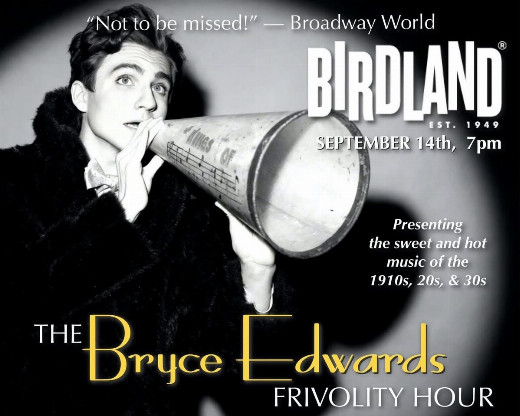
The Bryce Edwards Frivolity Hour BIRDLAND (9/14-9/14) |
|
Will Kelley: For the Record Laurie Beechman Theatre (8/29-8/29) |
|
Rizo: Serving Cult Joe's Pub (9/03-9/03) |

|
Brandie Inez Sutton: Miss Sutton, Live! 54 Below (10/08-10/08) |
|
C. Anthony Bryant: Audacity - A Villain's Songbook Joe's Pub (10/25-10/25) |

|
Ann Hampton Callaway: Here's To Life 54 Below (11/13-11/13) |

|
Martina Barta - What The World Needs Now Is Love: A Burt Bacharach Tribute 54 Below (10/01-10/01) |

|
54 Sings Broadway's Greatest Hits! 54 Below (10/30-10/30) |
|
Justin Vivian Bond: Madame Stanley Joe's Pub (9/09-9/09) |