


Exclusive: Inside the Making of ROCKY HORROR Doc STRANGE JOURNEY with Filmmaker Linus O'Brien
Strange Journey: The Story of Rocky Horror is now available to rent or purchase on demand.
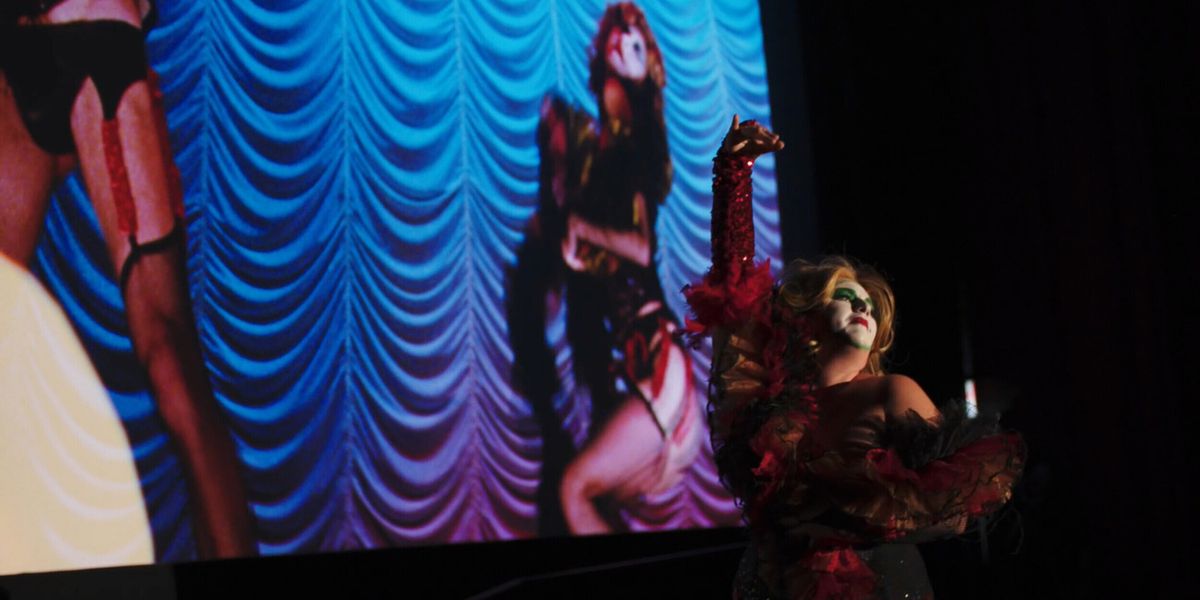
As the son of Richard O'Brien, the impact of The Rocky Horror Show is not lost on Linus O'Brien— far from it. That's certainly true today, with screenings of his documentary, Strange Journey, taking him around the world, where he has met legions of fans who have been irrevocably changed by its message of open-mindedness and liberation.
Still, though he grew up with the creator of Rocky Horror, O'Brien recalls feeling removed from the fanfare in his earlier years, even amid the screenings and shadowcasts that continued to keep it alive in the subsequent decades.
It has now been more than 50 years since the release of the beloved film version, and the demand for Rocky Horror certainly hasn't slowed. Between the ongoing Tony-nominated revival on Broadway and the UK tour, the "Time Warp" is still happening everywhere and will likely continue for many years to come.
Following awards at prestigious film festivals and two (!) theatrical runs, Strange Journey: The Story of Rocky Horror is now available to rent on digital platforms. To mark the occasion, we caught up with Linus O'Brien to discuss the genesis of the project, his role in the film, and his own experience with the cult classic work over the years.
This interview has been condensed for clarity and length.
Strange Journey is in reference to the line from Rocky Horror, but I would imagine you've had your own journey—perhaps strange, perhaps not—getting this project out in the world. How would you characterize that journey from the initial idea to now?
I don't know if it's been strange, but it has been difficult. It's been so well received that that's been the joy of it. There were 56,191 films released last year and on Letterboxd, we apparently came in at 43. There've been lots of little things like that along the way. We've won numerous awards at film festivals and were nominated for a Critics’ Choice Best First Documentary Award.
The response from the audience has been amazing. Seeing 75-year-old shadowcast members meet teenage shadowcast members who have just gotten into Rocky and sharing the same stories [has] been really gratifying. If you had told me all the good things that would happen in the last year and a half since it first made its world premiere at South by Southwest, I would be very, very pleased. It's a testament to the team that made the documentary alongside me.
You say that it's been a difficult journey. Could you elaborate on that?
We thought that we would get picked up after South by Southwest by HBO or Netflix. They both responded really well to it, but I think there was some resistance to films supporting or having themes of LGBTQ in them. I don't think it's the sole reason. I'm not saying that this is definitely what happened, but there seemed to be that kind of vibe.
We were surprised that that didn't happen purely based on the response from everyone who'd seen it and the subject matter. So we released it ourselves in 50 theaters over the course of six weeks last September and had a good response.
A company called Magenta Light Studios and the head of acquisitions over there, Weezie Melançon, loved the documentary. She, in particular, thought that Rocky Horror is evergreen, which it is, [and so] the documentary would be evergreen. It's always going to be there to support and show fans of Rocky what they might have not remembered from the past of it and also from the people who are going in to see it without knowing much about Rocky at all.
They've released it in theaters again and it's now on streaming through them. We're going to do a documentary roadshow later in the year, hopefully with some live Q&As afterwards and Trixie Mattel hosting some of the events. People keep wanting to see it, so four years after I had the idea, I'm still ensconcing it.
You mentioned that it's evergreen, but also, timing is everything. The anniversary was last year, and there's this new production on Broadway and so it does seem like it's back in the zeitgeist, too, which adds to the appeal.
Absolutely. The UK tour still goes on… and then Broadway, with its nine Tony nominations and a fantastic response to Luke Evans' performance. I've said this in other places as well, but we'll all be dead and somewhere someone will be watching Rocky, listening to Rocky or performing it somewhere on stage or in front of a screen. It's quite something that anything has this longevity, but especially Rocky.
Was there ever a consideration to approach this as strictly a documentarian and not a documentarian who is also the son of Richard O’Brien?
The producers especially were like, "You don't want to put too much of yourself into the documentary." There's this kind of understanding that once the documentarian inserts themselves, it becomes maybe self-aggrandizing or doesn't feel quite right. I was kind of on the fence about it myself, so we played it kind of loose and didn't look to insert myself and didn't look to keep myself out of it. And then hopefully we'd find enough places to just give a hint of me in it.
I think there was a choice to have the camera go back onto me at one shot… and then you hear some of the subjects refer to Richard as my dad. It was a fine line and we worked with what we had. If I could do the interviews with my dad again, I probably would've asked more questions that I've now, two years later, thought of.
What was your relationship with the Rocky Horror phenomenon growing up? How did it change after Strange Journey?
It's always been this rather odd thing that is kind of happening outside of us. There'd be anniversaries and conventions and birthdays or new productions. It would always be there, but it wasn't dominant. One of those shows that was very memorable was going to New York for the 10th anniversary at the Beacon Theater. They showed the movie and clips from Tim [Curry] 's other work and it was really something. That would be a big marker for me when I was growing up. People might think it's strange, but as dominant as it was and as ever-present as it was, there was life going on. I was trying to navigate school and all the rest of it.
I think my dad, for many years, dismissed his own work as kind of frivolous fun, which on the surface it kind of is, but obviously there's a deeper meaning there. To become aware of it as a family and then to be able to support that in the movie and show other people how supportive Rocky has been to people who felt a bit lost— it's been incredible to contribute just a small part to its legacy.
There's a quote in the movie that says, "You don't make cults. Audiences make cults." That really sparked my attention because an artist or a creative person can make something, but ultimately, it's the audience that latches onto one piece of work.
Just look at the things that go viral! You could have made five albums, but this one song, for whatever reason, gets featured in a meme and becomes something way bigger than yourself. Even though you created it, it's out of your hands now. Maybe there's a good lesson in that. I think as soon as you create any work of art or do anything creative and you put it out into the world, it is no longer yours. You should have had the joy making it or creating it in the first place and then you kind of wash your hands of the whole thing. The joy is in the making.
Is that something that has changed for your dad over time with this?
Very much no. Even though the tours are still going on and the Broadway production, it's very much out of his hands. He doesn't really engage with it. It's this thing that he made many years ago, these songs he wrote many years ago and he just tries to stay in the moment as much as possible. He never sought fame [or] fortune. He's not nostalgic and I think it's a good way to be. You want to stay grounded as much as possible and not let your ego get out of control and he definitely hasn't done that. He very much appreciates and loves that the people are supported, but he doesn't go down those roads, which many of us might, because that's a lonely place, I think, at the end of the day.
There are people in the documentary who are involved with the movie and the stage show, of course. But there are also those, such as Jack Black, who are not part of the phenomenon but were affected by it. What was the process in finding those people and getting their voices in the film?
Sometimes you just get very lucky with this stuff. Belinda Sinclair was the second Janet after Julie Covington and I had a personal connection to her because of the family. Peter Hinwood is someone I wanted and was very lucky to get him. Jack Black, we knew of the connection because of his Rock-y the Vote version of Time Warp, which is amazing. And then we found out about the story about his sister and his connection to Meatloaf. Trixie Mattel, we actually heard through the grapevine [that she] had a great connection to Rocky and really wanted to share it.
You try to plan as much as possible. Some people drop out, some people don't respond to your calls and then you're kind of hoping that it all comes together. There's a line that Belinda Sinclair says at the end of the movie, which was incredibly impactful. And I go, “God, if we didn't get her, then we wouldn't have that line and the movie loses something.” And the same with my dad's early adulthood friend, Chrissie Shrimpton, who [was] the girlfriend of Mick Jagger.
Sometimes when we were making the film, you're just kind of on a wave, and you're trying to surf that wave throughout all the financial difficulties and the timing and the cities, and you get to the edit and you're like, “Okay, so what do we have?” We were lucky that we had enough to really craft a story that we wanted to tell and that we were happy with.
That process also opens up opportunities for happy surprises along the way. Somebody might say something that sparks a different path that you didn't necessarily plan, but is integral to what you wanted to tell.
A lesson I keep on telling myself is that when things don't happen the way that you wanted them to, nine times out of ten, something better comes along that otherwise wouldn't have happened. It almost became a case of, and maybe this is true for life, that whenever there's failure in front of you, embrace it because it's just stopping this next good thing that's just around the corner.
What has it been like for you to watch the film with an audience?
It's been a dream come true. I've had so many lovely experiences with it, from South by Southwest to the Provincetown Film Festival. When people want to come up and say hello, they have this look in their eyes and I know what's coming. It's the “first time they ever saw Rocky story.” They don't want to tell me their names. They don't want to say hello. They just want to share that they put their Rocky Horror clothes underneath their regular clothes, told their mom they were staying at a friend, jumped out of their bedroom window, got in their friend's car and went to have their experience.
It's much like someone's first kiss or the first time they lost their real virginity: it's kind of burned in their brain. And also what's been great is, in the last 25 minutes of the documentary, where we start talking about the midnight screenings and the effect on the LGBTQ community, you can really feel the emotions coming up in the room and people crying at different times. I wasn't sure we were ever going to see it in regular theaters and I didn't know that we'd have such an emotional response to the film. These are memories that will never leave me.
Photo Credit: Magenta Light Studios
Prefer BroadwayWorld in Google Search?
Add us as a preferred source so our stories show up more often in Top Stories and Google’s AI answers — for you.
Sign up for all the news on the Fall season, discounts & more...
.jpg?format=auto&width=300)
.png?format=auto&width=365)




