


Interview: George Takei Takes a Star Trek Into MUSIC OF THE COSMOS With Boston Pops
Actor will appear at Symphony Hall on May 23-24
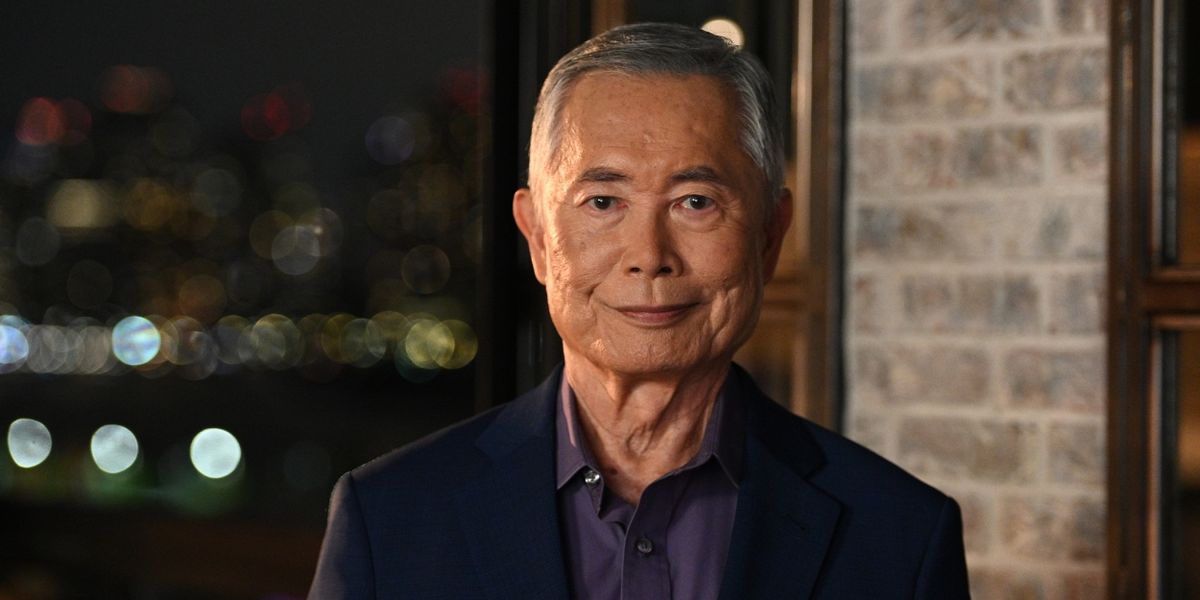
When it comes to “Star Trek,” George Takei has been there from the beginning, when the now iconic “Theme from Star Trek,” by composer Alexander Courage, first invited television viewers to go “where no man has gone before.”
Indeed, the actor and activist first played Mr. Sulu, helmsman of the Starship Enterprise, on the premiere episode of the original series on NBC-TV on September 8, 1966. Since then, he has reprised the role in “Star Trek: The Animated Series,” six “Star Trek” feature films, an episode of “Star Trek: Voyager,” and the video game “Star Trek: Captain’s Chair.”
On May 23 and 24, Takei will join Keith Lockhart and the Boston Pops at Symphony Hall for “Music of the Cosmos.” Developed in partnership with the Museum of Science, Boston, and its Center for Space Sciences, the multi-media program will be divided into two acts: “Science Fact,” which will feature astronaut and Needham native Sunita Williams, and “Science Fiction,” which will be narrated by Takei and feature music from all eras of “Star Trek.”
In addition to his work as Mr. Sulu, Takei has also made sure that another part of his life is never forgotten – a time during World War II when, as a five-year-old, he and his parents and two siblings were among some 120,000 Japanese Americans forced to leave their homes after Pearl Harbor and placed in internment camps.
That part of Takei’s personal story inspired his “legacy project,” the musical “Allegiance” – with music and lyrics by Jay Kuo and a book by Mark Acito, Lorenzo Thione, and Kuo – which premiered at The Old Globe in San Diego in September 2012 and opened on Broadway at the Longacre Theatre on November 8, 2015, with Takei in a cast that also included Lea Salonga and Telly Leung.
Takei, whose acclaimed autobiography, “To the Stars,” was published in 1995, is also the author of the 2019 award-winning bestselling graphic novel “They Called Us Enemy.” His second graphic novel, “It Rhymes with Takei,” will be released by Top Shelf Productions on June 10.
Takei was at his home in New York recently when he spoke by telephone about “Music of the Cosmos” and more.
How important is music to the “Star Trek” franchise?
It is vitally important – organic, really. It’s wonderful to tell the stories that “Star Trek” creator Gene Roddenberry told and to convey his core philosophy of IDIC – which is Infinite Diversity in Infinite Combinations – with the help of great music. The soaring optimism of looking to our future that was so integral to Gene’s vision, and the music and special effects used in the series and the films, made us all the beneficiaries of that philosophy.
Did you know from the first episode that “Star Trek” would become something of such lasting importance?
After we filmed the second pilot, Jimmy Doohan, who played Scotty, said to me, “Is this thing going to make it?” I said, “Yes, it is going to make it because it is a quality show with quality writers. By next year, it will be a hit.” From the original series to the feature films and other series that followed to the present, “Star Trek” has gone through many phases. And it’s always held the public’s interest.
What was it like to be part of that original cast?
It was wonderful, but with the exception of William Shatner, who played Captain Kirk, and DeForest Kelly who played Dr. McCoy, most of us were unknown to television audiences. Leonard Nimoy was a very fine actor and a wonderful person, but he’d had only smaller parts in B movies when he signed to play Spock. We all worked well together as an ensemble, though, and “Star Trek” made us stars.
To what or whom do you credit for giving “Star Trek” its enduring appeal?
Gene Roddenberry, of course, because he helped us learn from the future. He created the show in the 1960s when he saw TV as a wasteland, but with potential. He placed “Star Trek” in the future, but using science fiction as a metaphor for the times. He addressed civil rights, the hippie movement, and so much more. His writing presented ideas that are still relevant today.
On the subject of enduring impact, do you think that the themes of “Allegiance” are also relevant today?
Absolutely. What I’m discovering is that we don’t learn from our past history. My parents, my brother, my sister, and I were Americans, but racism came into play during World War II. We looked like the people who bombed Pearl Harbor so other Americans went crazy, and we were among some 125,000 people, two-thirds of whom were American citizens, displaced and put in internment camps on the West Coast.
I will never forget that terrifying morning when my brother and I saw two soldiers brandishing bayonets on our front porch. Then we followed my father, with a bayonet pointed at him, and our mother, with my baby sister in her arms, down the driveway to be taken from our home and forced to live in converted horse stables at Santa Anita Park, before being sent to the Rohwer War Relocation Center in Arkansas, and finally to the Tule Lake War Lake Relocation Center in California.
Tell me about your new book?
It’s called “It Rhymes with Takei,” because my name is Takei and that rhymes with gay. The book is a graphic novel about my closeted years. As a child, I was in three different internment camps. As a young Japanese immigrant, attracted to other boys, I was picked on a lot. In the internment camps, I had the visual difference of being Japanese. There was no visual difference in being a gay man, but in show business, it could hinder your career as an actor so I became closeted.
I didn’t publicly reveal that I was gay until 2005, even though Brad and I had been in a committed relationship for 18 years at that point. What prompted my decision was the fact that Arnold Schwarzenegger, who campaigned for governor of California as a Hollywood star who, while a Republican, was liberal on social issues, vetoed same-sex marriage legislation and showed that he was a hypocrite. In response to that, I came out and I was very happy about it. Brad and I were the first same-sex couple to apply for a marriage license in West Hollywood and we were married on September 14, 2008, with two of my friends from “Star Trek,” Nichelle Nichols (Uhura) and Walter Koenig (Chekhov), serving as Best Woman and Best Man.
I understand that you and Brad are avid theatergoers. What shows have you enjoyed on Broadway this season?
We loved “Stephen Sondheim’s Old Friends,” with our good friend Lea Salonga. And we just saw one of our favorite actors, Jonathan Groff, in “Just in Time.” He’s absolutely fabulous in the show. He may be even better than the real Bobby Darin. We’ve seen Jonathan several times over the years – including in “Hamilton” and “Merrily We Roll Along.” I’d seen that one before, but never fully understood it. Jonathan may have been the first performer to make that character and that show work.
Photo caption: George Takei will narrate “Music of the Cosmos” with Keith Lockhart and the Boston Pops, May 23–24, at Symphony Hall. Photo by Lorenzo Bevilaqua.
|
Meet the Cartozians Boston Center for the Arts (2/18-3/21) |
|
School of Rock Firehouse Center for the Arts (8/21-9/06) |
|
Buena Vista Orchestra Emerson Colonial Theatre (10/08-10/08) |
|
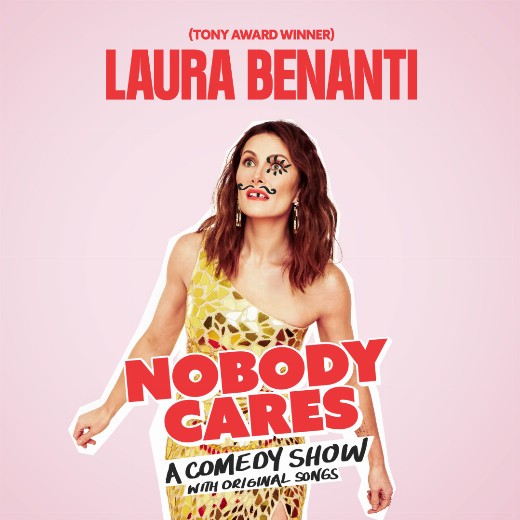
Laura Benanti: Nobody Cares Boston Center for the Arts (10/22-10/25) |
|
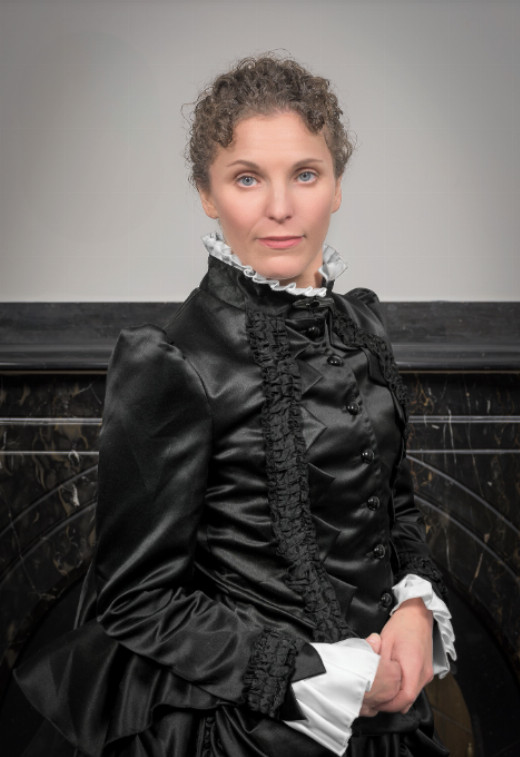
CIVIL SPIES™ MIT Endicott House (9/17-9/17) |
|
|
The Sound of Music Boch Center Wang Theatre (11/17-11/22) |

|
Celebrating Jewish Plays Tina Packer Playhouse (10/09-10/11) |
|
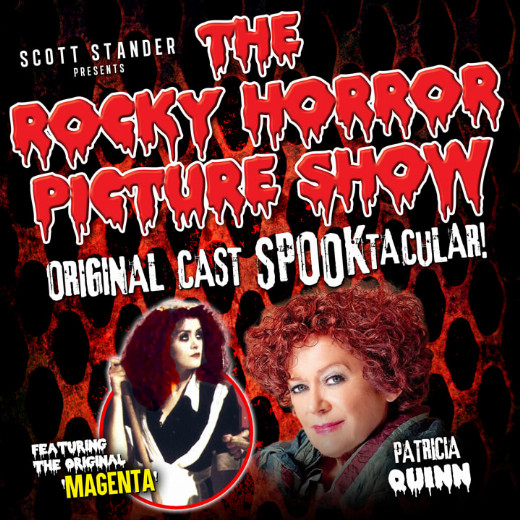
The Rocky Horror Picture Show Spooktacular Tour with Patricia Quinn Emerson Colonial Theatre (10/27-10/27) |
|
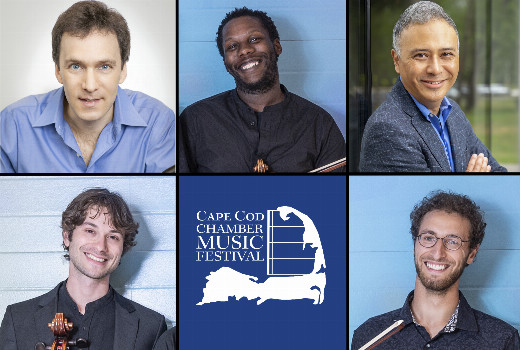
Festival Finale! Cape Cod Chamber Music Festival (8/21-8/21) |
|
Harper Lee's To Kill a Mockingbird Huntington Theatre (10/08-11/08) |