Workers Bear the Burden of Des Moines Metro Opera’s Ambitions
The 51-year-old opera company is under fire for its grueling work practices.
 Click for Tickets
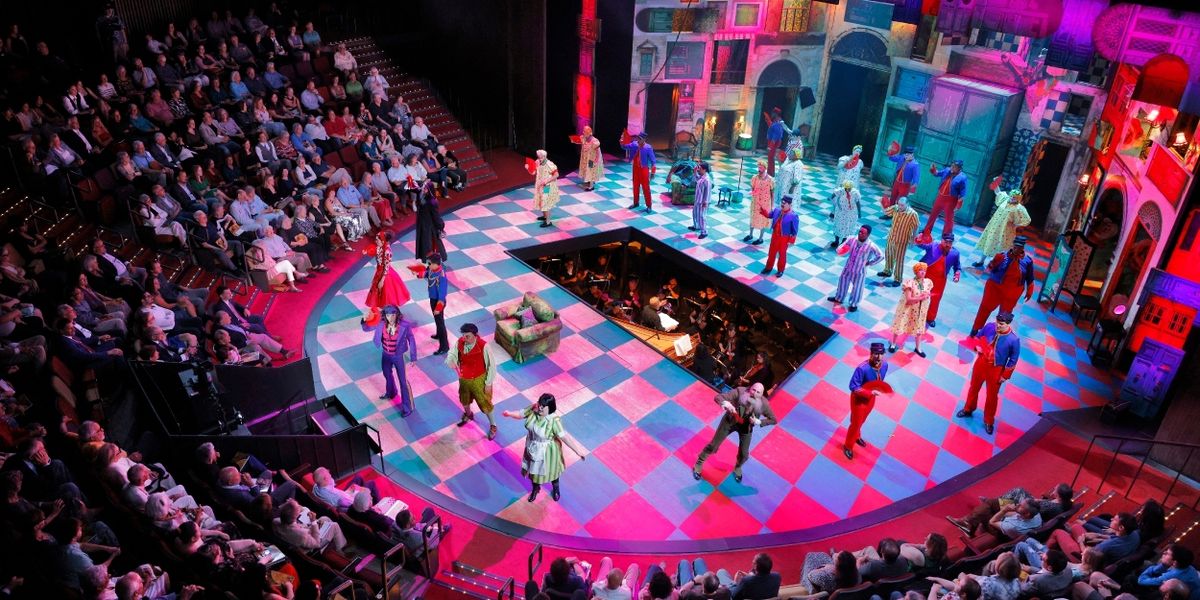
It sounds like boot camp. An 89.5 hour workweek. Back to back 14 hour days. Overtime pay a rarity (and lack thereof legally sanctioned). Working in a warehouse where temperatures exceeded 100. Bullying. An open pit with no proper safety barriers. An employee so depleted and delirious that a doctor asked whether they were a victim of human trafficking. People in tears. Others too stressed to sleep. Dozens of employees sharing a single kitchen, with one stove and one refrigerator.
But it’s not boot camp, it’s life at the Des Moines Metro Opera, a 51-year-old company that’s been praised highly by The New York Times. The paper presumably knew little if anything about the near-Dickensian work practices endured by staff, apprentices and interns, some of whom make only $75 a day for the privilege of being associated with the company.
The company’s practices were laid bare last week in a staggering series of six articles by Tyler Jett in the Des Moines Register, amounting to more than 17,500 words chronicling the growth of the company, its artistic achievements, and the grueling conditions – the word grueling is deployed more than once – over the course of its history, right through to the current season. Perhaps most remarkable is that Jett was provided with a recording of session in 2024 when the majority of production heads confronted the opera’s general and artistic director Michael Egel over the course of two hours.
From the audio, Jett reports that Egel’s responses included, “I can’t come up with solutions,” “I know very little about production,” and “I don’t know what goes into your job.”
Compare those responses to such incidents as an apprentice who recounted, in Jett’s words, “After he took a couple of steps inside the Simpson College apartment, he said, he collapsed. His head thudded onto the thinly carpeted floor, resulting in a concussion and a chipped tooth. He soiled himself and awoke to his girlfriend rubbing his back.” Or to a stage supervisor pinned under 20 sheets of plywood that tipped off the liftgate of a truck, requiring members of the football team nearby to help remove the weight. Or an intern who fell eight feet into the orchestra pit when flooring gave out – and who despite severe hip bruising was back at work the next day.
When safety concerns and workplace practices at the Williamstown Theatre Festival were revealed in 2021 by Ashley Lee writing in the Los Angeles Times, the festival stepped back from its decades-long reliance on intern and apprentice labor, ceasing production to reimagine its operations, emerging fully this past summer under new, presumably more humane systems. Jett’s series in the Des Moines Register should prompt a comparable reckoning at Metro Opera, though in the series members of the staff took defensive stances regarding work practices, talking about arts work as if it’s impossible to separate arduous labor from the act of creation. While at various times the opera has offered bonuses when the work became particularly heavy, the opera continues to rely on an exception in federal labor law for seasonal employees which permits them to bypass the standard of time and a half after 40 hours.
A limited number of employees Metro Opera are covered by collective bargaining and work rules through AGMA. It seems evident that broader union affiliation would benefit the backstage workers if enough employed by the festival at one time vote accordingly. While no one can be required to join a union against their wishes, in this case it would seem that the protections that could be offered would be more than sufficient to make affiliation appealing.
Like many summer theatre operations, Metro Opera grew out of a summer stock template where long days and low and unpaid labor was the norm, all in the name of experience. But when a company’s stature has risen to the point that national media is making the trek to seek it out, it’s time for that company to raise its practices to a professional level throughout its operations, rather than funneling funds onto the stage with little regard for people making the work itself. 90-hour weeks make clear that one person is doing the job of two; people crying and collapsing indicates that the demands are too great.
What will it take for Metro Opera to mend its ways? Perhaps it will have to pull back on its scale of production, possibly losing the NY Times but gaining a healthy work environment that functions within its means. If it can’t financially afford to produce as it has been while treating employees safely and fairly, then Michael Egel may have to set his sights slightly lower. In the meantime, he needs to learn how his staffs manage to do their jobs – and what they actually do – lest he ever answer complaints again by claiming ignorance.
This past summer, Jacobs Pillow Dance Festival suffered a death due to a workplace accident, forcing the festival to cancel the remainder of its season. Given Jett’s reports and the accounts therein, it seems lucky that such a fate has not befallen staffers at Metro Opera, though it seems that some of them may bear literal and emotional scars from their time with the company.
Much like the six articles in the Register, the workplace situation at Des Moines Metro Opera haven’t necessarily penetrated the consciousness of the major arts centers like New York, Chicago, Los Angeles and elsewhere. But Tyler Jett’s series should go on the syllabus of every arts management program in the country, as examples of what not to do when running an arts organization. But perhaps it can live on those syllabi with a coda of how it succeeded in cleaning up its act, if it gets on the ball now before launching into its 2026 season – and before anyone else suffers for Metro Opera’s art.
Following publication, the paragraph regarding union representation was revised due to imprecise language.
Photo Credit: Cory Weaver