Did You Know That Zombies Owe Their Popularity to Broadway?
Find out why without Broadway, there might be no 'The Walking Dead.'
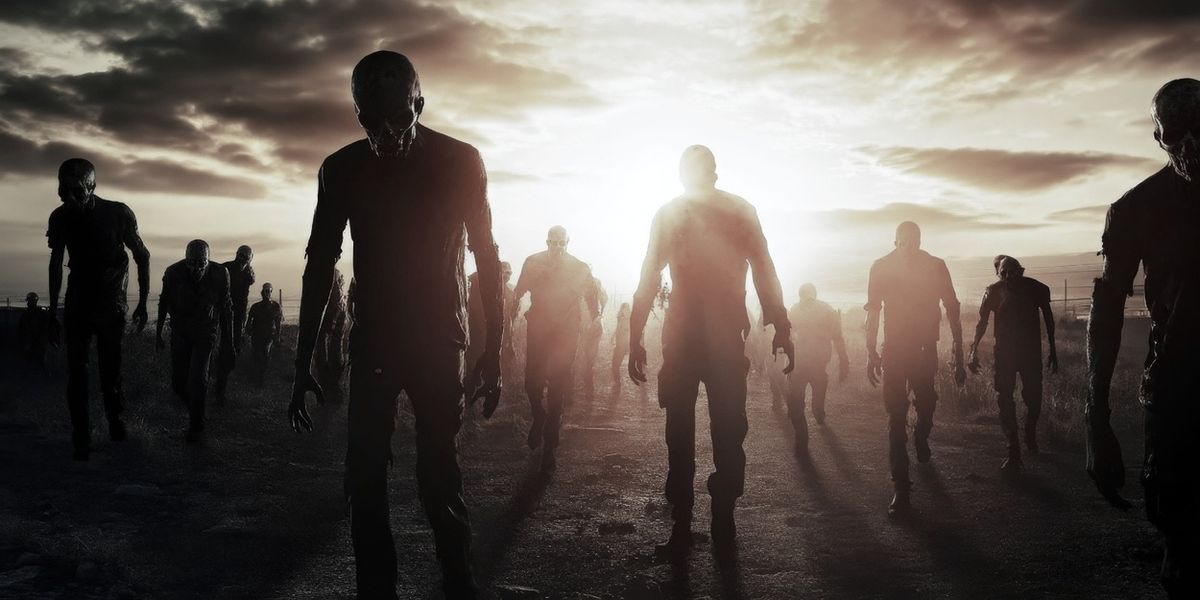
Dressing yourself, or a loved one, as a zombie this year for Halloween? Well you’ll be happily surprised to find that you are indulging not only in horror cosplay, but in Broadway historical cosplay as well.
That’s because the concept of the zombie in popular culture owes its legacy not to Night of the Living Dead or The Walking Dead, but to a long-forgotten Broadway play entitled, simply, Zombie, which ran for all of three weeks back in 1932. It is generally understood to be the first full-length portrayal of the undead in this manner in any dramatic form. The play was itself widely believed to have been inspired by the writings of adventurer and journalist – and possibly fabulist and, given the era, inevitably racist – Arthur Seabrook, whose popular 1929 tome The Magic Island purported to chronicle the religious practices of Haiti.
The zombies of yore were not flesh eaters, but blank-minded minions of voodoo (or vodou) practitioners placed into post-life servitude thanks to supernatural resurrection. Zombie focused on the conversion of a white plantation owner into the title role, and the play itself was practically DOA, never resurrected, with Time magazine declaring it “wretchedly acted” and “beset with deplorably written dialogue.” There is no evident corpse of the play, as the script is considered lost.
The New York Times was rather more indulgent of Zombie, with J. Brooks Atkinson (as the august critic was then bylined) asserting that zombification was “a bully idea for the cold-sweat school of drama.” Atkinson acknowledged that the play was “pretty loosely knocked together,” going on to say “Although Kenneth Webb has not turned the zombie's swan song into a work of art, the walking dead are not to be despised in the drama. When the zombies moved silently and rigidly across a darkened stage last evening, this department paid strict attention to business.”
Atkinson gleaned in the nascent dramatic device exactly what George Romero mined in his zombie oeuvre, the zombie as metaphor. “If zombies are those who work without knowing why and who see without understanding, one begins to look around among one's fellow-countrymen with a new apprehension,” wrote Atkinson. “Perhaps those native drums are sounding the national anthem.”
But if the run was so short, why does one brief forgotten Broadway play deserve credit for spawning a genre? Because just five months later, a low-budget quickie independent film starring the newly ascendent Bela Lugosi, White Zombie, flashed across the nation’s movie screens. It was widely seen to be derivative of Webb’s Zombie, enough so that Webb sued the filmmakers for copyright infringement, though he lost. The film cemented the concept of the slow-moving, blank eyed zombie that held sway in popular culture for decades, until it was upended by the “fast zombies” of Danny Boyle’s 28 Days Later.
Zombies did threaten Broadway once again in 1945, but only on film. The low-budget Zombies on Broadway, concerning press agents trying to feature a real zombie in a nightclub act, was wholly a cinematic exercise, one which once again pressed Bela Lugosi into service as a zombie-maker.
So if you trudge out to trick or treat or a Halloween party this week with a bit of a bluish or greenish tinge to your skin, or perhaps some faux flesh rotting off your face, know that you needn’t feel you’ve left Broadway behind. You’re paying homage to an influential flop of almost 100 years ago, keeping Zombie undead for another generation. To paraphrase Rent, “You are what you moan.”