


Review: LITTLE WILLY at Canadian Stage
Burkett's back with a wild ride through William Shakespeare
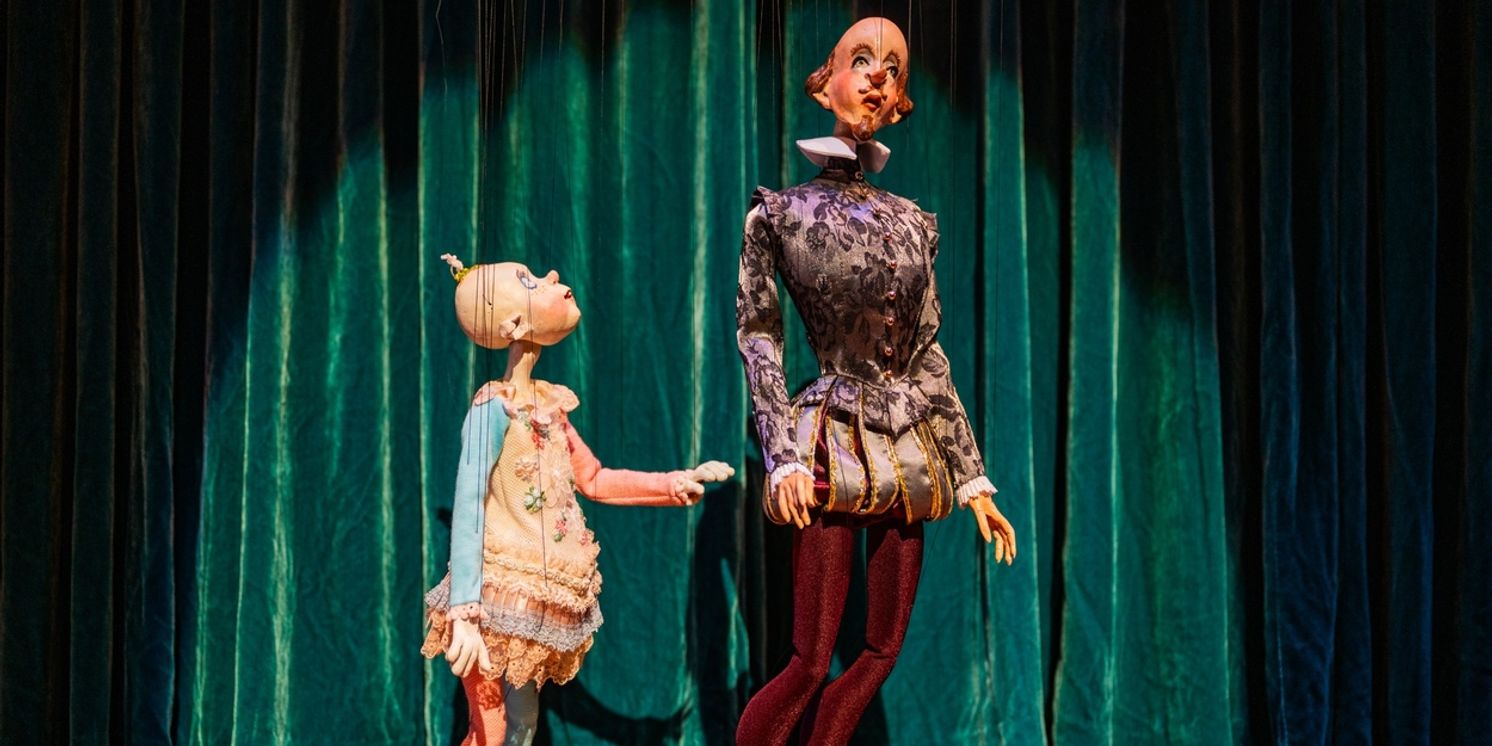
Master puppeteer Ronnie Burkett brings the beautiful handcrafted marionettes of the Daisy Theatre to Canadian Stage’s Berkeley St. location for a run of LITTLE WILLY, an anarchic riff off Shakespeare’s Romeo and Juliet in the same vein as 2022’s Little Dickens. Marrying the onstage shenanigans with as much backstage dysfunctional puppet drama as one could wish for, Burkett’s work is a delightfully ridiculous ode to the ups and downs of relationships of all kinds and a sonnet to the unique form of connection created in the theatre. While the show is particularly episodic even by Burkettian standards, it’s also wonderfully good fun. It's a love note to theatre that provides ample examples of its ups and downs.
LITTLE WILLY is constructed in the same vein as Little Dickens, including some set dialogue and songs, but otherwise comprised of a series of loosely organized beats that are partially improvised while following a general structure (Burkett will, for example, occasionally ask his stage manager, Crystal Salverda, what beat is next). This structured freedom allows Burkett to dwell on a joke that’s really landing or move past a moment that’s not resonating; as he tells the audience, the posted runtime is 105 minutes, but this Little Willy can go all night.
If you’ve never seen a Daisy Theatre show, bear in mind that the same characters appear in each work, but the types are so recognizable that all you might miss is an in-joke or two.
Here, the Shakespeare riff tackled by the puppet cast, including the Bard himself, is even looser than the skewering of A Christmas Carol in Little Dickens. That show had a clearer arc and purpose in following Esmé Massengill, an extremely volatile diva, as she played Scrooge and reflected on her own past behaviour.
Here, the conceit is that, due to an accidental advertising snafu, the cast must perform Romeo and Juliet rather than the show they’d rehearsed, and nobody knows who’s going to be able to play the parts. There’s no real line between backstage infighting and the performance, and most of the plot of Shakespeare’s work happens offstage, more of a hanger for jokes than a linear, thematic pairing. Luckily, those jokes come thick and fast.
The lack of a single main figure, and the fact that most characters appear for only a single scene, is great for a constant pop of variety. I found myself wishing we could return to more arcs instead of most scenes feeling like separate sketches, because Burkett creates such clear, memorable characters.
For example, there’s the plummy British major wishing to play Capulet whose exaggeratedly manly affect quickly loops back around to reading as queer; Burkett nails the Pythonesque character’s delivery (and his terrific costume change), but doesn’t return to this potentially interesting character arc. As well, a touching story of two nebbishy behind-the-scenes characters, pulled from paperwork to feel the magic of the stage so intensely that they fall in the tentative beginnings of love, would have been refreshing to revisit before the end of the night.
Where Burkett’s work shines is in the details, such as the (not improvised) subtly iambic pentameter opener and the incredibly expressive faces of each character—sit as close to the stage as you can to really appreciate each raised eyebrow or sneering lip. In an exhibition of puppet burlesque, the sheer dexterity and planning involved in creating a working striptease is fascinating and impressive to watch. And in between all the bawdy jokes, there’s some delicately observed comments about love, so essential to Romeo and Juliet; for example, Edna Rural of Turnip Corners, Alberta, assigned to play the Nurse and give romantic advice, carefully lowers herself onto a sizeable settee before delivering a monologue about how even the unfulfilling routine of a disappointing marriage can be missed when it’s gone.
Anything regarding show business, like very unsubtle digs at the Stratford and Shaw Festivals, is delightful; Lillian Lunkhead, an elderly character who spent decades treading the boards of regional theatres and gymnasiums alike and who dreams of playing Juliet, crows that for once she has a chance to live large on a stage unmarked by a free-throw line. Meta cracks about puppetry, such as how still the “actors” are able to stand when Burkett’s not at the helm, or a scene where two characters madly trade off between being a marionette and a hand puppet, also provide effective commentary on the genre.
Young fairy-without-wings Schnitzel, who may have inspired another of Shakespeare’s most-performed works, and who stands in stark contrast to the rest of the older characters, is the heart of the show, playing both Romeo and Juliet in the balcony scene and delivering Juliet’s speech about the malleability identity in a costume reminiscent of the trans flag (costumes by Kim Crossley with design by Burkett). Schnitzel gets past the constant cracks at theatre’s expense to an appreciative look at its soul, explaining its power to bring people together. The character adds a little sweetness to all the silliness, making things feel a little more meaningful even if we’re not sure how we got there.
Speaking of bringing people together, there’s a heap of audience participation in the show’s second half, which is where things really spark. Much of the time, the audience interaction is screamingly funny, whether it’s from Burkett’s improvised banter or the joy of seeing those on stage successfully manipulate some risqué marionettes or run the puppet orchestra.
There’s spark here, but also tension; in some moments, I found myself wondering distractingly about what constituted informed consent with those voluntold to come on stage, who are informed at the start of their scenes that “yes” is the only acceptable response. The pressure to smile and go along with Burkett’s demands is intense, particularly for the men, who are instructed to remove their shirts and face some groping, mostly but not entirely by puppet proxy.
The power of the theatre means that it’s also been a source of abuse of boundaries, and worrying about the potential discomfort of the participants took me out of the otherwise vitalizing interaction. I found this frustrating, because those few line-crossing interactions could have been avoided while keeping the atmosphere suitably ribald; Burkett ably demonstrates this with another volunteer.
Burkett’s work is fun, silly, charming, and unique. Despite the chaos and a few missteps, I’d say the Daisy Theatre pulled off a strong showing of this not-quite Romeo and Juliet.
Where there’s a Willy, there’s a way.
Photo of Schnitzel and William Shakespeare marionettes by Dahlia Katz
Reader Reviews

Videos