


Interview: Anusree Roy of THROUGH THE EYES OF GOD at Theatre Passe Muraille
Sequel to award-winning 2007 play sees its world premiere
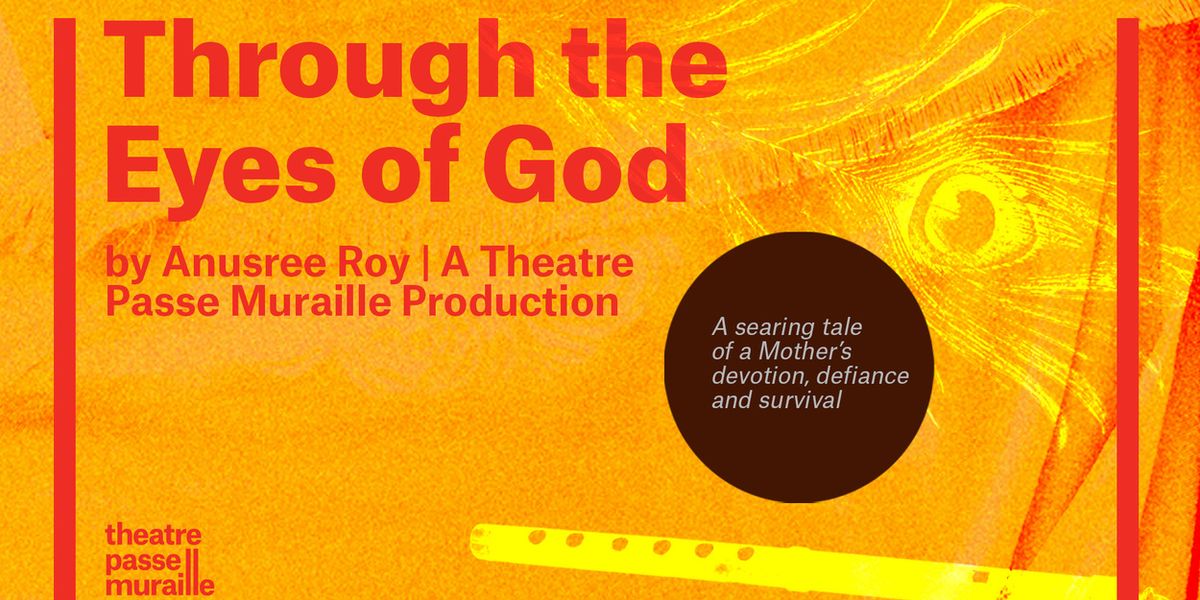
A new chapter in a story is a cause for celebration. When Anusree Roy’s Pyaasa (“thirsty,” in Hindi) premiered at Theatre Passe Muraille in 2007, it was a sensation, winning the playwright and solo performer Doras for Outstanding New Play and Outstanding Performance. The story of 11-year-old Chaya, an untouchable whose future in Calcutta looks bleak until her mother Meera asks a woman from a higher caste to give the bright girl a job at a tea stall, Pyaasa’s indictment of the caste system and poignant coming-of-age story resonated with audiences and launched Roy’s celebrated theatrical career.
This week, Roy brings Chaya’s story back to Theatre Passe Muraille with a new work, THROUGH THE EYES OF GOD, which revisits Chaya at 22, now a mother herself and continuing to survive with determination in a world where the odds are stacked against her. The solo show stars Gabriella Sundar Singh, recently seen on stage at the Shaw Festival and on television in Kim’s Convenience.
BroadwayWorld spoke to Roy about the play’s history, her fascination with writing complex women, and the possibility of a future instalment to make Chaya’s story a trilogy.

BWW: THROUGH THE EYES OF GOD is a play with a backstory. It's a continuation of the story that we saw in Pyaasa, which premiered in 2007. Do audiences need to have seen Pyaasa to understand the new play? What, if anything, do they need to know going in?
ROY: I am very happy and excited to share that the audience absolutely does not need to know anything about Pyaasa in order to see this play. This is very much a sequel, but very much a standalone. Any information or any kind of threading that the audiences would need to know is crafted in a way that just very organically presents itself in this script, so the audience is never out of the loop.
Story-wise, it's a standalone play, and that was really important to me, that not everybody would have seen Pyaasa from 20 years ago or is necessarily familiar with my work. When people come, they can just witness it as a brand new play. For touring purposes, too, I wanted to make sure that the audience gets a brand new show without needing context of what came before, so it's absolutely standalone.
BWW: The play centers around Chaya, who was also the main character of Pyaasa. What has changed for her since audiences saw her last?
ROY: She has grown up! She has found employment, she has made a life of her own. When we meet her right in the beginning, she's the cheeky, full of life, always hustling, wheeling, dealing character we met in Pyaasa, bright-eyed, full of energy, trying to see what she can get away with. She's at a police station, because she stole a fistful of rice. But Chaya being Chaya is trying to wheel and deal her way out of something she is now in. When we met her in Pyaasa, she was 11, and now 11 years have gone by, she's 22. We're meeting her just at a very different place in her life.
BWW: Your work often deals with themes of motherhood, the shared struggles between mothers and daughters and the fiercely protective instincts of mothers. For example, in Trident Moon (Crow’s Theatre, 2025), there were all sorts of mother-daughter relationships, from a character who was heavily pregnant, to mothers of daughters who were unable to speak for themselves for at least a portion of the play. In Pyaasa, Chaya has a strong mother figure in Meera. In this play, she's now a mother herself. How much is Chaya influenced by her mother, and how is the theme of motherhood developed in this play?
ROY: I think Chaya is heavily inspired by her mother, and for people that have seen Pyaasa, they will be able to see that. We always say we eventually turn into our mothers, or our fathers, unless you make a very conscious decision not to do so. There are very specific lines that she says that are verbatim what her mother said, so those are kind of little breadcrumbs for the audience, one of which made it to the poster back then: "Life is not easy, Chaya, but you have to believe in it." Chaya tells her daughter, Krishna, “Life is not easy, Krishna, but you have to believe in it.” There are such echoes of things that my mother has taught me that now live within me as my reality, you know? So I think Chaya is heavily inspired by Meera, although Meera is not present in this play.
I do think this play is a trilogy, so I'm excited to write the third part. I've never written a trilogy before. We're finding her at the center of the story, and I think where we are in the middle, at the heart. It ends with a sense that we want to find what's happening after that. It's a very satisfying ending, but it could go on. So I'm excited to write the third part of the trilogy.
I'm endlessly fascinated by motherhood and women's relationships with women. Women taking care of women, women betraying women. I find women to be more curious and more interesting than any other subject I've studied, and I was raised by the most complex and wonderful women, so it's had a huge impact on me. And I've had a lot of opportunity in my life just to observe really complicated women making really complicated choices in life. So that's impacted me as a woman.
BWW: It must be so satisfying to get to write this generational trilogy following that influence. I'm excited to find out that there's hopefully going to be a third one.
ROY: I haven't told anybody, actually. I think this is my first time talking about it being a trilogy.
BWW: Speaking of the potential for a trilogy, I know that this story has a long history at Theater Passe Muraille. In terms of trilogies, you did three different plays there from 2007 to 2010, Letters To My Grandma, Pyaasa and Roshni. What's it like to come back to Passe Muraille, and how are you connecting this show with your past with the theatre?
ROY: It's incredible. It's really, really incredible. It feels the exact same, you know, just the faces have changed, the people have changed, but the building, the history, my feelings while I'm inside of the building, there's profound comfort. I know every nook and cranny of that building, because I've spent so much time there. I know which walls I've prayed to, I know which walls held my secrets, I know which walls I used as a guiding light, light-guiding posts as markers, so I don't fall off the stage. Every bit of that space is mine, you know, as much as my plays belong there, and I have moments that come flashing through when I watch the show.
I think a thing that a lot of people don't know or realize is how lonely being a solo performer is. You're not alone, but you're lonely. You're not alone because there's a stage manager, there's lights, there's sound, they're your partners, and it's very highly choreographed. Thomas Morgan Jones' direction is extremely choreographed, and he's brilliant. He's one of the country's most brilliant directors, and I love working with him. I've also had the fortune of working with Nina Lee Aquino, so I keep consistently working with the country's most brilliant directors, but I say this to say, it's lonely. It's really, really lonely in a solo show, so that building, the things on that deck, on that stage, become your markers. You know, when you look, that beam is going to be there. And it's the beam you're talking to, that little crevice, that little dimple on the thing becomes the eye contact place for that character.
So those things are personal and super private. The stage manager will never know the exact spot that I'm using to do the conversation with Chaya's mom. Only I do. So when you go back into that space, it's incredible, it's emotional, it's moving, and I'm humbled by it. I'm grateful that that space is still there for me, as much as I have been there for that space. I'm a very loyal person, so that loyalty remains when I walk in.
BWW: You talked about how much you love working with Thomas Morgan Jones. I know that your process is collaborative. What has the process been like working on this play?
ROY: It's been the most different process from any other process. I've never been directed in any of my solo shows by someone else. It's always been Thom. So it's interesting to watch a solo of mine be directed by Thom, but I'm not the actor. That process has been endlessly fascinating for me to see. He's a highly rigorous, highly detail-oriented, extremely meticulous, hardworking person. And when you're witnessing the scene be created, it's a lot more impressive than when you're receiving that direction. Because when you're receiving that direction, you're doing everything possible to meet that level of expectation. The expectations are so high that you have to just do everything to stay there, because the work is so detailed.
But when I watch him do it, I can see why for the first time. Thom choreographs the actor's breathing in certain segments to make the audience experience a certain thing. If you want the audience to not be breathing because of a certain thing that's happening, he'll choreograph: Then breathe, go. Then one more breath, no breathing. End of the sentence, one breath. I did that in Pyaasa, I did that in Letters, I did that in Roshni. It's incredible. And a solo needs stuff like that, because there's no one else up there, so it has to be tight. But the experience on the inside, you can't get to flow state until it's really well rehearsed, almost opening night, then you're like, oh, everything is working. Up until then, it all feels like rehearsal.
But watching him work with another actor, you can see why it needs to be so, because when we're on the outside, I see if it's not working. If the breathing is in the middle of the line, it's feeling a bit off, the bottom is dropping out of the seat. I've had tremendous admiration watching him, and I'm always like, here we go, buckle up, Gabi! Watching her work has been wonderful.
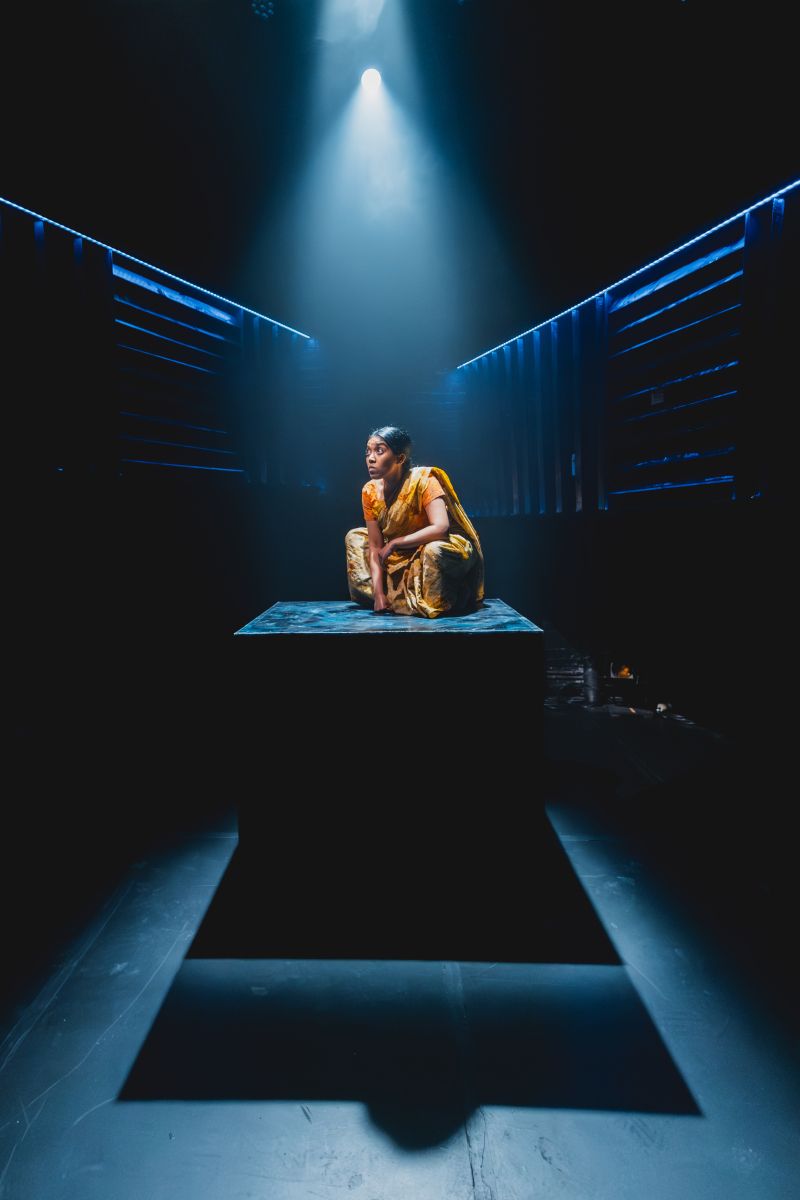
BWW: You've spoken to the experience of what it's like to perform your solo shows. What is it like to see Gabriella Sundar Singh take this on, and why did you decide to have another actor do the show?
ROY: Gabriella has been a part of the show right from the very first time we were looking for an actor to do a workshop. I saw her when she was in theater school, and I wanted to write for her. I just think she's an incredible actress, super smart, hyper-focused and extremely, extremely hardworking. We had her in our minds from the very beginning, and when it came time to do a workshop, Thom and I sat down and were discussing what actors to call, and I said that it has to be Gabriella, she's amazing. So we worked with her, and she's excellent.
What it feels to watch her, everybody has asked me this question. If I'm being really honest I have never wanted another's actor's success so much as I want her success. I have never felt this much commitment to wanting someone to be successful. You know, you want any actor who's doing your play to be successful. Of course you do, absolutely you do. But there is something different about my very first play that I know now is a part of a trilogy, and she's picking up the baton in the middle part. I have just cheered for her, and very, very consciously stepped away from the light to make sure she gets her flowers, because she deserves it, you know? It's her time, and it's her show. I've said this to Gabriella, it's my play, I wrote it, but it's your show, you know? It's not my show. And I want you to experience all of it that comes with it. I am so happy for her. It's amazing watching her.
BWW: It's almost like being a proud parent.
ROY: Older sister, yes. I feel like a proud older sister looking side by side, and going, let's walk together. And that's been amazing, because when I started, there were not a lot of Brown women working professionally, and so now watching the incredible talent out there, and then to have one of them in my solo show, in the show that started it all, is amazing. My prayer is to have all three shows play back-to-back in a day. That would be amazing, to have a festival of all of Chaya's life.
BWW: That would be fantastic. I wanted to go back to something that you were saying earlier about your fascination with writing complex women and how women treat each other. One thing I've noticed about your work is that it's so nuanced and detailed in how it explores relationships between women of different groups, of different classes, of different relationships to each other, particularly when we're looking at themes of victimhood, discrimination, divisions between class and groups.
In Trident Moon, for example, things were very split on religious lines, but something I really appreciated about the play was that no one person was only a victim or a victimizer. Power relationships were changing in an instant. And then we saw everybody come together when they were threatened by this outside force.
In a previous interview about Pyaasa, you've said that this was part of your experience, that you've experienced discrimination from both sides, both as the perpetrator and as the recipient. I was wondering how or if you brought these sorts of themes into THROUGH THE EYES OF GOD. And how you're working with them.
ROY: Yeah, and you'll see it when you see it. I'm endlessly fascinated by power dynamics. I was raised in a household of war survivors, it was very present at the dinner table. I was raised in a household of high-status, low status. I was raised in a household of people that employed maids and treated them really well, and then didn't. So I was there as an observer, as a child, in Kolkata until I was 17 and moved to Canada. That's almost an adult. Those impressions live within my being in a way that I won't be able to divorce them. And I think all my work will have those nuances, because I'm fascinated about where people get the power, and people who are powerless.
A doorbell man has no conceivable power, but on the day when they will not open the door for you, how will you get your power back? I often think about mundane things like visa officers, where they'll exercise their power. Or the bus driver who just drives away and makes sure the door doesn't open. Very nuanced, small things, anything to have agency.
I was raised in a household that was filled with the most loving, beautiful, incredible women, talented, educated, smart women, who fought to get their education, who fought to get their money, who did everything possible to make their place in society, and who are complicated. And are burdened by the patriarchy, and are burdened by performing womanhood, when they would rather do anything else. You'll see that in THROUGH THE EYES OF GOD. And you'll see very meticulous places where the power is either taken or given. Permission is another thing that I'm endlessly fascinated by. Who you permit to give away your power, and who just takes it away from you?
I think it's my life's work. I think when I die and or when I'm 85 and I look back on all the work I've done, one of the things I'll be most proud of is that I stayed loyal to my deep desire to explore womanhood and all that's in it. I might change, who knows? Long way to go. But at the moment, that's what I feel, that I've really stayed loyal to my craft, and I've stayed loyal to the women I write about. Not to say I don't write about men, of course I do. But there's something about women. The women in my family took up so much space, you know? More than the men in my family.
BWW: And women are still underexplored as a whole in media.
ROY: And will forever be so. Like, the changes are happening, but it's very, very slow. Ironically, I cannot be a mother. It's just ironic to me to have a woman who couldn't become a mother, so endlessly devoted to motherhood and complexity with women in her writing, and it's just such a cheeky way that life goes. It would have been fascinating to watch my own journey and my own writing unfold, if I were able to be a mother, and what kind of mother would I have been is something I can only think about.
There's such irony in life, you know? It's like the matchmaker who could never marry, the writer who's devoted to talking about complex women, and talking about motherhood, because she has an incredible mother who had an incredible mother, and my father's mother has had a bigger impact on me than any other woman I know, because she was a war survivor.
I always wondered what kind of mother I would have been, and to carry that forward. But as that chapter has closed, and the permanence with which it has closed, I'm now fascinated by my own grief, which manifests in almost a cruelty. A character's ability to be cruel in grief. Which is what I'm currently exploring at this particular moment in my life, with a loss of motherhood.
The women in my plays are quite cruel when they want to be and are pushed to be. I think it's an interesting exploration I find myself in this particular moment in my life. What that entails, and where that sits in my womanhood, at this particular moment in my life, to be forever changed, because it's not only a loss of a dream, but it's also a loss of an identity that could have been. And the possibility of what it could have been. I'm sure, as I go forward, it'll impact my work. It cannot not.
BWW: There's grief, and then there's that endless possibility that's made possible by the fact of not knowing. And knowing that you'll never get to know.
ROY: Absolutely. You'll never know. There's beauty in that, though, as a writer, you know? I find the place I am in, as harrowing as it is, quite beautiful, and in only a way that an artist can find beauty.
BWW: The thing about being a writer is that you can pour every one of those possibilities into something that you write. And so everything simultaneously exists and doesn't exist, as you write it so.
ROY: Yes.
BWW: I'm so excited to see the show, and I'm sure Toronto audiences will be as well.
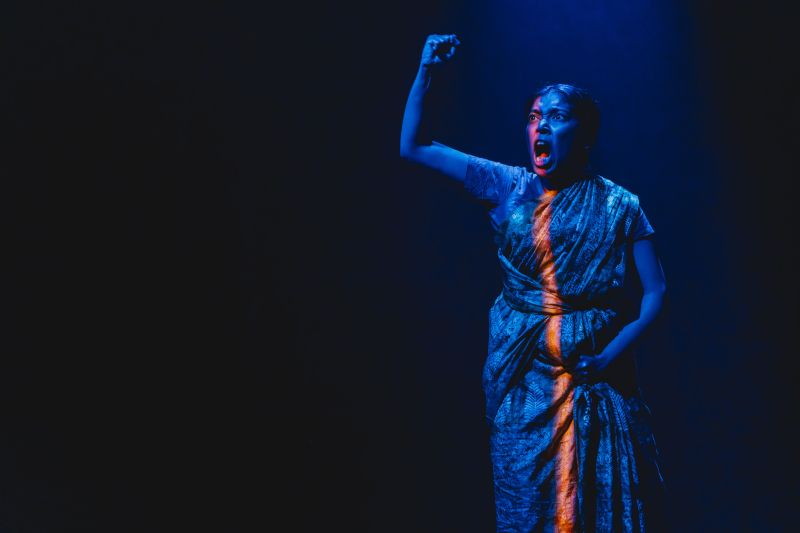
THROUGH THE EYES OF GOD runs until February 21st at Theatre Passe Muraille
Prefer BroadwayWorld in Google Search?
Add us as a preferred source so our stories show up more often in Top Stories and Google’s AI answers — for you.
Sign up for all the news on the Fall season, discounts & more...
|
Rogers v. Rogers Canadian Stage (11/08-12/13) |

|
HYPROV: The Hypnosis & Improv Comedy Experience – Live in Ottawa NATIONAL ARTS CENTRE - SOUTHAM HALL (11/12-11/12) |

|
Open Mic @ The Dot The Moonlight Lounge at TacoTaco (10/04-10/04) |

|
An Evening of Hypnosis & Improv with Asad Mecci & Colin Mochrie Kingston Grand Theatre (11/10-11/10) |
|
Common Ground Dance Days Lee Lifeson Art Park (9/25-9/26) |

|
Buster Canfield's Nutcracker Prince vs the Rat King Red Sandcastle Theatre (12/17-12/20) |
|
The Tempest Stratford Festival (4/28-10/24) PHOTOS |
|
Raised by Women Canadian Stage (3/27-4/11) |

|
The Roll Players Comedy Bar Danforth (6/30-12/29) |

|
The Rocky Horror Picture Show Spooktacular Tour with Nell Campbell Roy Thomson Hall (10/26-10/26) |
