Interview: MAYBE HAPPY ENDING Lighting Designer Ben Stanton on the Art of Collaboration
BroadwayWorld spoke with Stanton about the creative process of lighting a show that is equal parts futuristic and emotionally resonant, and more.
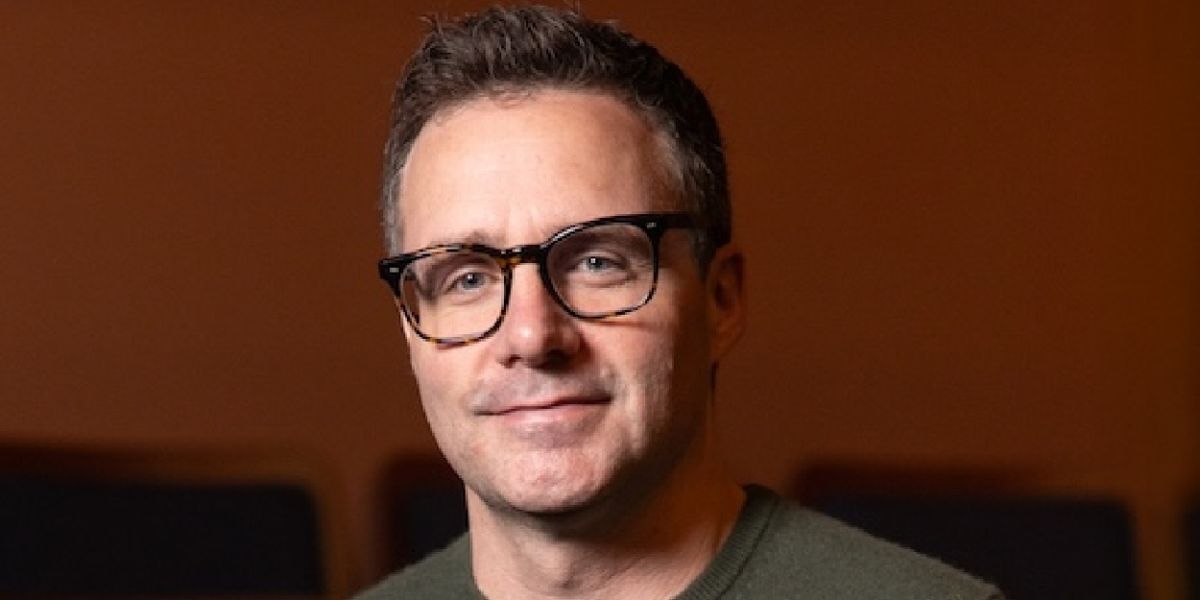
Lighting Designer Ben Stanton is currently nominated for his fifth Tony Award for his work on Maybe Happy Ending, starring Darren Criss and Helen J Shen. He was previously nominated for his work on the Broadway productions of A Christmas Carol, Derren Brown: Secret, Fun Home, Junk, and Deaf West’s Spring Awakening.
BroadwayWorld spoke with Stanton about the creative process of lighting a show that is equal parts futuristic and emotionally resonant, his inspiraton for the design, what the collaborative process looked like, and much more.
Maybe Happy Ending blends futuristic elements with an intimate love story—I’m curious about how you approached the lighting design to support both futuristic tone and the emotional core of the show?
When I first got brought on to the show, there had already been a production at the Alliance Theatre in Atlanta. And while I didn’t spend much time looking at footage of that show, the set design had already gone through several iterations, and there had already been a lot of trial and error with the set design in previous productions.
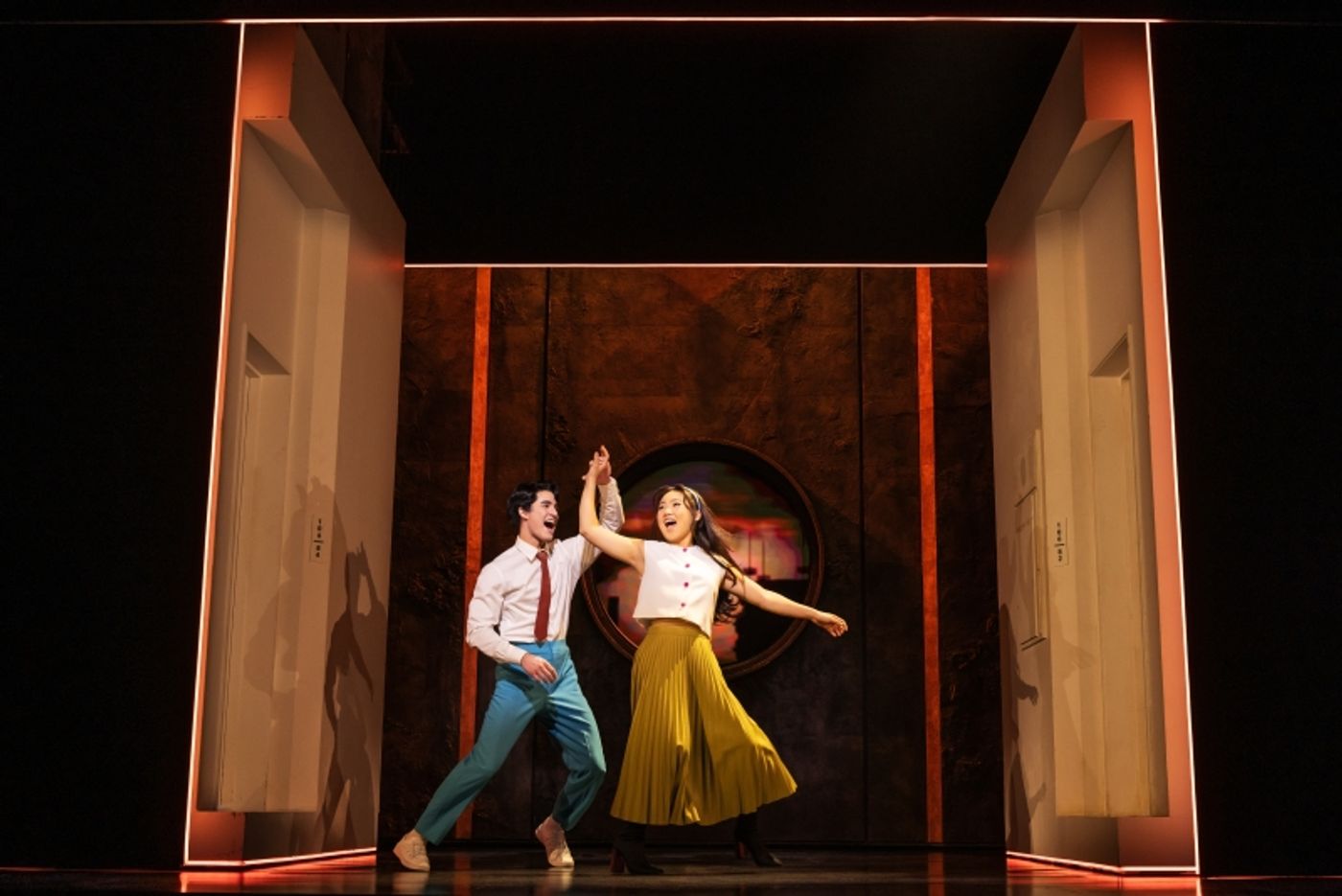
So, when I first signed on, Dane Laffrey [Scenic and Additional Video Design] showed me some really beautiful, very sophisticated-looking renderings that he had created for the whole piece, based on their prior experience. A lot of things stood out to me. One was that the set design was really complex, and geometric, and it was going to be challenging- there were walls and ceilings everywhere. And a lot of the play takes place, early on at least, in these small cubes that are the living quarters. So, I immediately sensed that there would be pretty significant challenges to lighting it beautifully, and articulating the emotional language of the play.
But, the other thing that I saw right off the bat was that all of these lines of light and geometric shapes reminded me a lot of some modern artists that I’ve been really obsessed with for a long time, specifically Dan Flavin, Olafur Eliasson, and James Turrell. They all use really bold color in their work, they use color to illuminate neutral white spaces in different ways to evoke different emotion. And I was looking at these renderings that Dane put in front of me, and I immediately thought of these artists and how this might be an opportunity to use some of those color palettes, some of those deep, rich colors to help tell a story that’s familiar and not.
We wanted this to feel like it took place in the future, so things didn’t look exactly like they look now, and I think the color palettes I was able to draw from really helped give it a futuristic quality. It gave you a sense that we weren’t quite in a space we were familiar with. The whole team got on board with these colors as we started teching the show. Using more and more color, it became a substitute for some of the things I couldn’t do, like use different angles of light. Because there was always a wall or ceiling in the way, or a video panel, I needed to rely on color in a way that was more muscular than I might need to in another production.
.jpg?format=auto&width=1400)
This is your fifth Tony nomination—congratulations! How does it feel to be honored for your work on this show?
It feels wonderful. Making theater is hard work, we all work so hard, my wife is a Broadway video designer named Lucy Mackinnon, and we are constantly navigating our life in the theater with our life raising kids at home. Every opportunity to work on Broadway is a gift, and each project teaches me something new. It’s always worth doing, and it’s always thrilling to be working on Broadway and designing Broadway shows, but it always comes with a bit of a sacrifice, particularly with Lucy and I and our family. The recognition from the larger community is a little bit of a validation that what we’re doing is important, and it’s resonating with other people, and that we’re helping to tell stories.
The other thing about being nominated for a Tony this season, in this moment, in this time, gathering together in community to listen to stories, and to tell stories, is more important than ever before. I think more and more of our lives are spent online, and in front of screens, and I think the act of coming together in person is becoming a little bit radical. I couldn’t be more proud to be a member of the theater community, a member of the Broadway community. To have been able to work on a show that is part of the conversation in this moment is really important.
How would you say that your design process evolved over the years, from your earlier work to now?
I learn something new with every show. I teach lighting design at Brooklyn College, and when I talk to my students about this career, and a life in the theater, and being a lighting designer, I describe it as a 30-year project. The things that you learn in school are just the beginning, just the core concepts of what we do. This idea of telling stories without words, using contrast, and visual language to tell a story is something that takes years and years to develop, and every designer speaks in their own voice.
So, my work is very different than it was a decade ago. There are throughlines, there are things that I think are present, and have been present, in my work for a long time that I feel work well, and I keep those things, and other things have evolved for me. My use of color has evolved a lot over the last 10/15 years. But other things that came naturally to me when I was younger remained.
Before I started studying theater, I was a musician, I was a jazz drummer in school, I got a scholarship to go to school for music. When I switched to becoming a lighting designer, I relied a lot on my music background. My understanding of dynamics, my understanding of how to shape a story without words came from my musicianship. And that element has always been present in my work and continues to be. I think it’s why even with a highly technical, highly challenging piece like Maybe Happy Ending, we were still able to work together as a collaborative team to make it flow like a piece of music, or a piece of choreography, which counteracts the technical nature of what we were doing. And that, I think, has always been a hallmark of my work.
What did the collaboration between you, and the scenic, and projection designers look like to get the effect that it has?
The set design was fairly far along in its development when I signed on, so early on there was a whole pre-production process where I worked really closely with Dane and his team to identify lots of little nooks and crevices where I could hide light inside the set. I realized that I would be sunk if all of my light was coming from front of house or the wings, because there were so many walls, and ceilings, and portals. It was sort of like each new scenic set up was a puzzle, and I had to figure out how I was going to get light into each one of those puzzles. And not just get light into it, but tell the story, light a song, light a scene, establish the dramaturgy of a scene.
The early part of the collaboration was really intensely problem-solving. We all understood what we wanted to do, what the emotion of the piece needed to do, and I think Michael Arden [director] was a very clear-eyed leader in terms of helping to articulate exactly what the world should feel like and look like. But once we were in the theater, it’s a little bit like jazz, like what I used to do as a drummer. I would start to explore color, I would start to explore angle to the best of my ability. The video designer George Reeve and I would be riffing off each other. I would put a color on stage and notice that the video would start to match the color. Or George would put an idea on stage and I would try to tune my colors and my angles to match the video so that we were always working in concert.
Every time the set moves there are 15 light cues responding to different elements of the set. Lights coming on, lights going off, tracking things across the stage. The light in all of the portals is manually tracked with the scenery, so any time they change the timing in any of the movement, we also have to change the timing in the lighting design. So it was a really technical process, but we all kept our attention on the story, and the movement of the piece, and how that would ultimately provide this sense of flow.
I was also thinking a lot about how to light the actors, how to pull the actors out of all this technology so that the audience could stay connected to the actor. We surround them with a lot of video, a lot of lighting, and a lot of moving scenery, and there’s only four cast members. So, I saw it as part of my job to make sure that we never lost our connection to the performer, and the performer always felt like the focus, and the predominant thing on stage.
.jpg?format=auto&width=1400)
What do you want to tell audiences who are going to come and see the show?
First of all, I want to thank them for coming to see the show. I think it’s so important that we gather together, I think it’s important that we support original musicals. One of the reasons that I’m so proud to be a part of Maybe Happy Ending is that it’s, as far as I’m aware, one of the very few original musicals that is nominated for a Tony that isn’t based on some other intellectual property. And I think we need more of those, we need more people writing musicals. I want audiences to know that they are supporting something that is a really important part of the development of musical theater.
Visually, I hope people take away from the show the complexity, but also how we overcame the complexity, and created a composition that shows what’s possible with really deep collaboration. If you can’t tell if lighting, or video, or scenery is creating an effect, that’s the goal. We want it to be as seamless a presentation as possible. And that came from all of us loving this piece, and being really open to one another’s ideas, and being open to working as hard as we could with the time that we had to create something magical.
I don’t want people to be thinking about the technical elements of the show when they’re watching Maybe Happy Ending, I certainly want them to be thinking about the humanity in the show, and the performances, and the music, and the things that we all go to the theater to experience, but hopefully, when they’re leaving the theater, they have a moment where they think, ‘Wow, that was really complicated, I’m not quite sure how they were able to pull that off,’ [laughs].

BroadwayWorld Merch
Shirts, mugs, phone cases & more


Powered by

|