
Interview: Ava Alavi of SOUND, Debuting at Undercurrents 2026
Alavi gives insight into Sound, a highly autobiographical play that fuses personal and political storytelling.
Ottawa's undercurrents festival is scheduled to kick off on February 4, 2026. Over ten days, Undercurrents will feature a vast selection of collection of contemporary plays, with something for everyone.
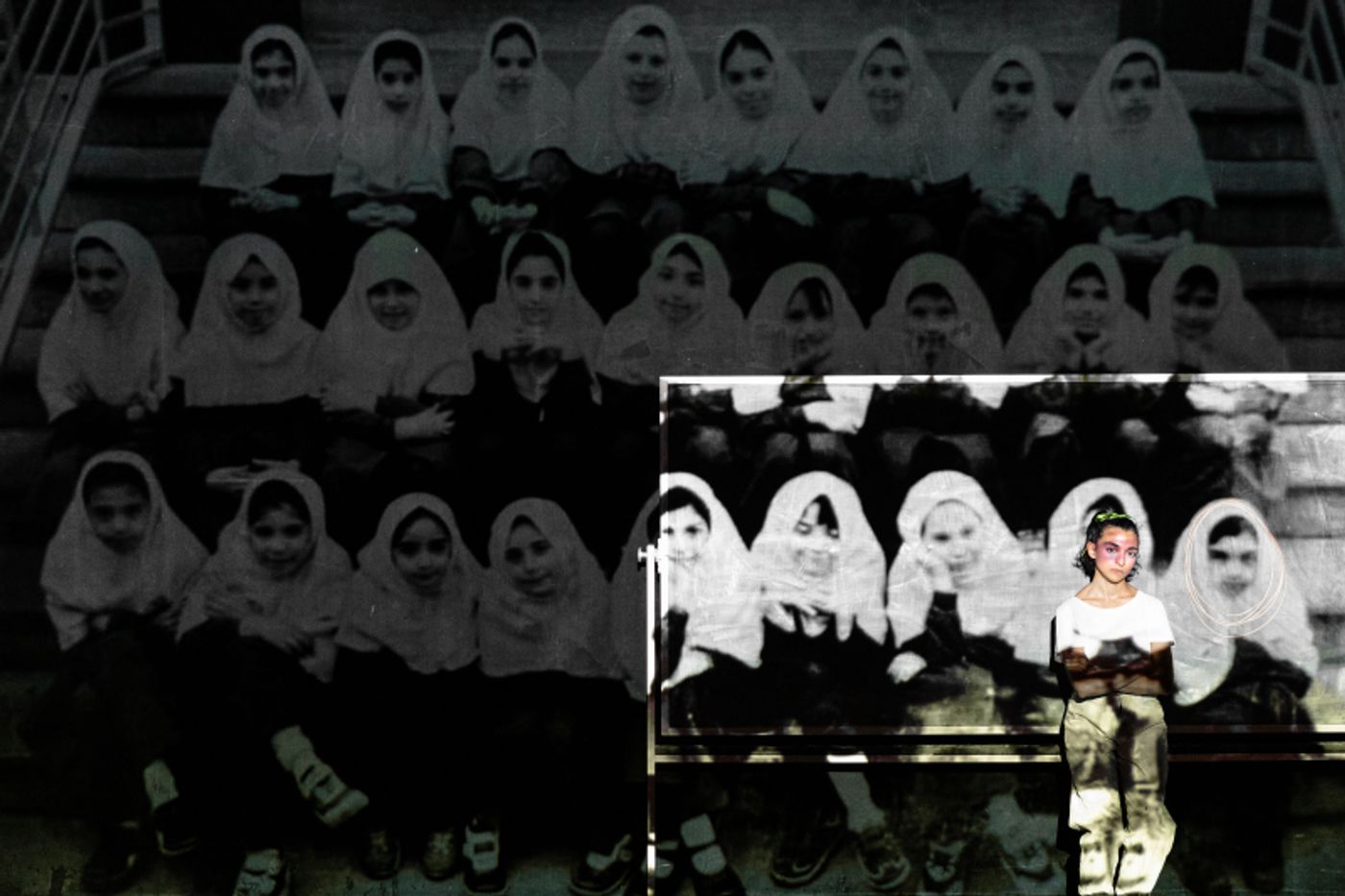
Making her debut with undercurrents this year is Ava Alavi with her play, Sound, produced by Skeleton Key Theatre. Alavi says that Sound is a highly autobiographical play that fuses personal and political storytelling. The Iranian-Canadian playwright's journey is documented in Sound, which "rooted in lived experience and the "collective resistance of the women of Iran".
The press release states that Sound weaves together universal experiences: a first crush, a dress chosen to impress a boy, an embarrassing first kiss and learning about sex. But interwoven with these familiar moments are experiences likely unknown to Western audiences: wearing hijab for the first time, being made fun of for wearing hijab, learning the expectations of “religious responsibility” as a child, witnessing violent political protests, navigating the ever-present threat of the “morality” police, and the terror of rampant serial acid attackers.
Alavi shared some of her background, more information about the play, and why she feels this story is so important to tell right now.
Can you tell me a little more about your background and the inspiration for the play?
I was born and raised in Iran, and I’ve been working in theatre for most of my adult life as a performer, director, and educator. In 2022, I moved to Canada to continue my studies, carrying with me not only my artistic practice but also the political and social realities I grew up inside of.
Shortly after I arrived, the Woman, Life, Freedom movement began. Like many Iranians living abroad, I watched from a distance as friends and family members were killed, arrested, injured, or disappeared during the protests. There was an overwhelming sense of helplessness, and an urgent need to do something; anything.
At first, I tried to write individual stories about the victims I was hearing about, but each attempt felt incomplete. No single story could hold the weight of what was happening, and I also struggled with how to make this reality legible to a Western audience without oversimplifying it. That’s when I began tracing the story backwards; looking at the historical and generational journey that led Iranian women to the streets in 2022. I went all the way back to the 1979 revolution, which my mother was part of, and began exploring this history through the experiences of women across generations. That process became the foundation of Sound.
The play is described as “deeply autobiographical” but also as something that transcends one woman’s story. Can you elaborate on that a bit? Are there any parallels between your life in Iran and your life in Canada?
While exploring why the Woman, Life, Freedom movement felt so personal to me -and why I know I would have risked my life had I been in Iran at the time- I realized how deeply my experiences growing up were shaped by simply being a girl. Many of those experiences are so common that, at a certain point, individual identity gives way to a collective one: the experience of being an Iranian woman.
That trajectory is reflected in the structure of the play. Sound begins with the previous revolution and my parents’ participation in International Women’s Day protests, moves through my own childhood and adolescence in Iran, and eventually expands into the collective experiences shared by Iranian women; experiences that are often overshadowed by larger national and global political events.
The parallels between Iran and Canada are embodied theatrically through the choice to use three performers to tell the story of my character: myself, a version of me living in Canada portrayed by a Canadian actor, and a version of me who is still in Iran, meant to appear via video call. This fragmentation reflects both physical displacement and the emotional split that comes with migration, exile, and distance.
Given the ongoing violence in Iran, do you feel a sense of urgency to tell this story now?
Yes, now more than ever! Sound was originally written as a reflection on the journey that led to the Woman, Life, Freedom movement. But over the past year of revisions, the reality has continued to shift. We began incorporating the impact of the recent war, and then, in the middle of rehearsals, new protests erupted.
During that time, we lost contact with our actor in Iran due to an internet blackout. We had to rework parts of the play in real time, without knowing whether she was safe, detained, or worse. That experience deeply shaped the final version of the piece.
Because of this, we feel a strong responsibility to tell this story now; not as a definitive account, but as a fragment that reveals the complex layers of social and political forces that have led people in Iran to this moment. It’s about bearing witness while the story is still unfolding.
What can audiences expect to see and feel from Sound and what do you hope they take away?
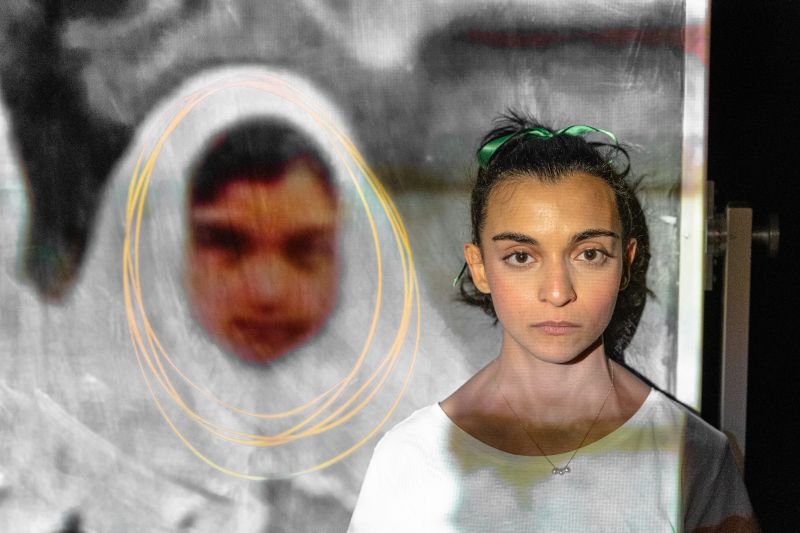
Audiences will see an honest glimpse into my own life as someone who, on the surface, appears quite ordinary; a person they might recognize as a friend, a colleague, or someone they work with or see every day. The play begins very personally, rooted in my lived experience, and gradually opens outward into a collective one, reminding the audience that what they are witnessing is not exceptional or distant, but something that could belong to anyone around them.
There are moments of laughter, tension, familiarity, and hope. At its core, Sound is about resilience and the fact that life continues to move forward, even under impossible conditions. I hope audiences leave remembering that what’s happening in Iran is not abstract or distant; that it involves real people with real lives. I also hope it serves as a reminder of how quickly the course of a country’s history can change when silence allows small injustices to grow into something much larger.
If audience members are moved by the show but feel powerless to do anything, what would you suggest to them?
One of our main intentions with this play is to remind audiences that the story is not ultimately about me or even about us on stage; it’s about the people who are still there, fighting for their lives. If you feel moved, be their voice. Talk about it. Share it. Refuse to forget.
Personally, the most important thing I hope audiences carry with them is the reminder not to get used to it. As humans, we have an incredible ability to adapt, which helps us survive; but it can also make us accept horrific realities as normal. I hope people resist getting used to large numbers of deaths, to constant violence, or to thinking of places like Iran as unsolvable problems. Not getting used to it is, in itself, a form of resistance.
Who should see Sound? Are there any age restrictions?
Sound addresses difficult themes, including violence, sexual assault, death, and drug use, so I would recommend it for audiences aged 14 and up. That said, anyone interested in history, social and political issues, feminism, or language and storytelling can find something meaningful in the play.
Is there anything else you would like to share with readers?
We are living in a time when incomplete or distorted information about Iran circulates widely. Internet shutdowns have repeatedly been used to suppress accurate reporting and obscure the scale of violence against civilians. What is happening in Iran constitutes ongoing crimes against humanity, and the lack of sustained international response has played a role in allowing this violence to continue.
On a larger historical scale, I believe this Islamic regime will ultimately be remembered as a dictatorial government that ruled through brutality for a few decades and killed many of its own people. But what it will never be able to destroy is Iranian culture. That culture lives inside us; in our language, our memory, our humor, our grief, and especially in our resilience and our insistence on freedom.
Iran and Iranians existed long before this regime, and we will continue to exist long after these dark times. That continuity is what we are fighting for; not just survival, but our homeland, our dignity, and the right to imagine a future beyond violence.
See Ava Alavi in Sound at Arts Court Studio during undercurrents from February 11 to 14, 2026. Tickets are pay what you will, starting at $10. Click the link below to buy tickets or click here for more information.
Videos
|
Macbeth at the Tower Maitland Tower (7/24-8/07) |
|
Pressure Ottawa Little Theatre (6/10-6/27) |

|
Fiddler On The Roof Tweed & Company Theatre (8/19-9/06) |

|
R&J and Joni St. Lawrence Shakespeare Festival (7/16-8/08) |

|
Come From Away Meridian Theatres (9/10-9/19) |
|
Legends The Gladstone Theatre (6/19-6/27) |

|
Paper Moon Theatre Presents: Rock Of Ages Hard Rock Hotel and Casino Ottawa (6/17-6/21) |

|
Spotlight Series Kinsmen Amphitheatre (7/21-8/04) |

|
Luke Bryan Canadian Tire Centre (8/27-8/27) |
|
The Great Gatsby National Arts Centre / Centre national des Arts (9/08-9/13) |
| VIEW ALL SHOWS ADD A SHOW | |