Here I Go! A MAMMA MIA! First-Timer Faces the Music
MAMMA MIA! is in performances now at Broadway's Winter Garden Theatre.

|
|
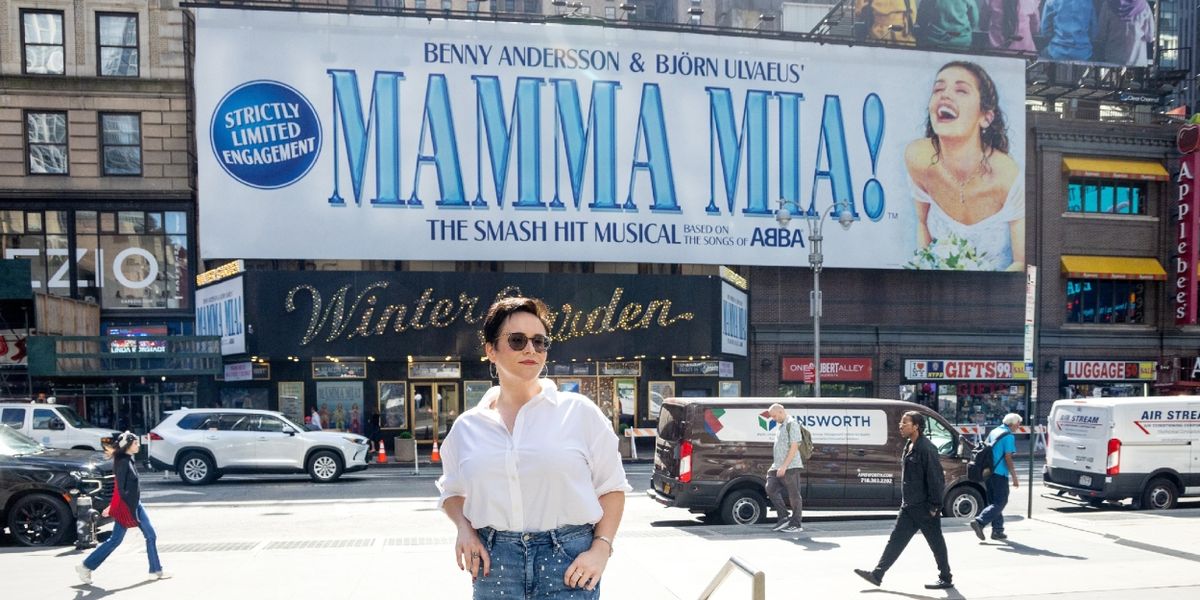
"I’ve never seen Mamma Mia!"
Have you ever seen a Zoom chat clutch its collective pearls? That was the reaction when I confessed this bit of trivia during our last BroadwayWorld editorial call. Mouths fell open in shock. Hands flew up to land on incredulous heads. A chill filled the chatroom.
As I scanned this Hollywood Squares of abject horror for an ally, I quickly found that the cheese stood alone, registering only shock, awe, and full-blown panic on the faces of my colleagues. It didn't take long to realize that the prevailing sentiment among my friends wasn’t judgment, but pity. Loving pity. A pity I’d soon understand as I volunteered for my first-ever trip to the iconic jukebox sensation.
I’m a Staten Island kid. Born to musicians, music and theatre were the language of our home, but money was tight. I didn’t see my first Broadway show until age 12. Raised on Golden Age musicals, I developed early tastes painted with a somewhat puritanical streak; the belief that musical theatre should aspire to the craft of its earliest incarnations, not the catharsis of glorified karaoke. Combining this with a New Yorker's habit of eschewing that which draws tourists, my palate was not geared toward Mamma Mia!. Snobbish, I know, but sadly not an uncommon reaction to any jukebox musical, then or now.
As for the group that inspired the show's creation: "Your father and I were never ABBA people," my mother shared with no further explanation. And so, outside of the occasional, "Dancing Queen" at a family Sweet 16, our house was an ABBA-free zone.
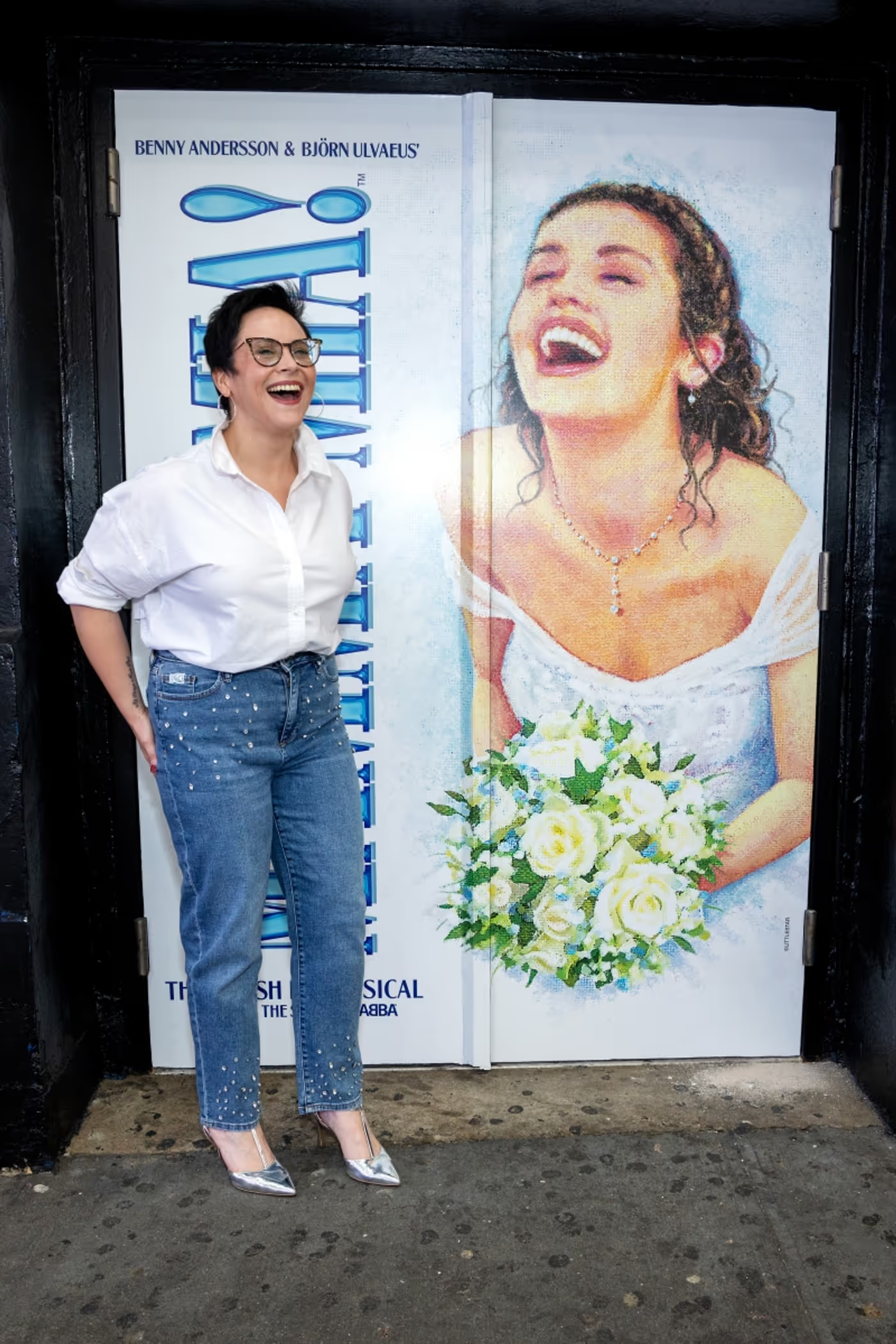 So while Mamma Mia! mania raged, I stood apart from the masses flocking to the beloved confection. I’ve said before: I have a fraught relationship with human connection. And though I'm pleased to report progress in this area- as well as a much-improved, hard-won relationship to joy- I remain a reluctant joiner.
Up until this month, I had managed to elude the beloved musical that so delighted tourists and diehards through its entire original Broadway run and two global box office smash films.
“I’ve never been drawn to it,” I admitted on the now-infamous Zoom call.
“No one is drawn to Mamma Mia!,” my colleague and friend, Chloe insisted. “You just have to experience it.”
So when the dates for press previews landed in my inbox, I accepted their kind invitation and submitted myself to my first-ever journey into the heart of this musical juggernaut.
At the Winter Garden, I arrived in full journalist mode. The press team, armed with knowledge of my secret, shook their heads in awed envy and urged me to embrace the joy of my maiden Mamma!. It might have felt cultish in a distinctly Midsommar way if it hadn't been so gosh darn sincere.
With nearly twenty years since the first film and over fifty since ABBA’s debut, this music now spans four generations. I marveled as grandmothers, mothers, daughters, grandchildren and some very game dads and granddads streamed into the theatre. With an entire segment of that audience having grown up with the film, the show has taken on an almost Rocky Horror level of devotion. I passed more than one young woman the sporting salty blonde beach waves and crocheted tops made famous by Amanda Seyfried’s Sophie in the film.
I’d hoped for a Saturday night crowd, thinking the weekend energy would reveal the show's mysterious magic. But from the first downbeat on that Monday in August, it was clear: there is no bad night to see Mamma Mia! on Broadway.
Infectious pop melodies blasted from the pit, the drum-forward mix bringing the sold-out house to life. The audience danced and clapped along with the overture, physically unable to keep from singing along. I grooved along with them, instantaneously grinning like a child as the experience began to unfold. I was immediately struck at how completely the show belongs to its audience. Before a single character spoke, the room was already alive with giddy anticipation. As the curtain rose on the show's iconic white Grecian facades and cool blue background, I found myself already drafted into an intergenerational sorority whose sole pledge was to fun.
The cornerstone of the show's success, of course, is the ABBA catalog which, in two words, f*ckin' slaps. The hooks are irrepressible, the arrangements inherently orchestral and choral, many making a seamless transition to the stage, others expertly deployed for optimal silliness. But it’s not just the music. I belly-laughed at the book and marveled at the show's ability to lean in to total absurdity while preserving its heart.
The show celebrates mother-daughter bonds and offers up realistic, joyful female friendships while centering Donna, a single woman whose independence and sexual viability remain rare in musical theatre. Three loveable potential dads, an adoring fiancee, and a gaggle of delightful chorus boys round out the ensemble with nary a moment's masculine posturing.
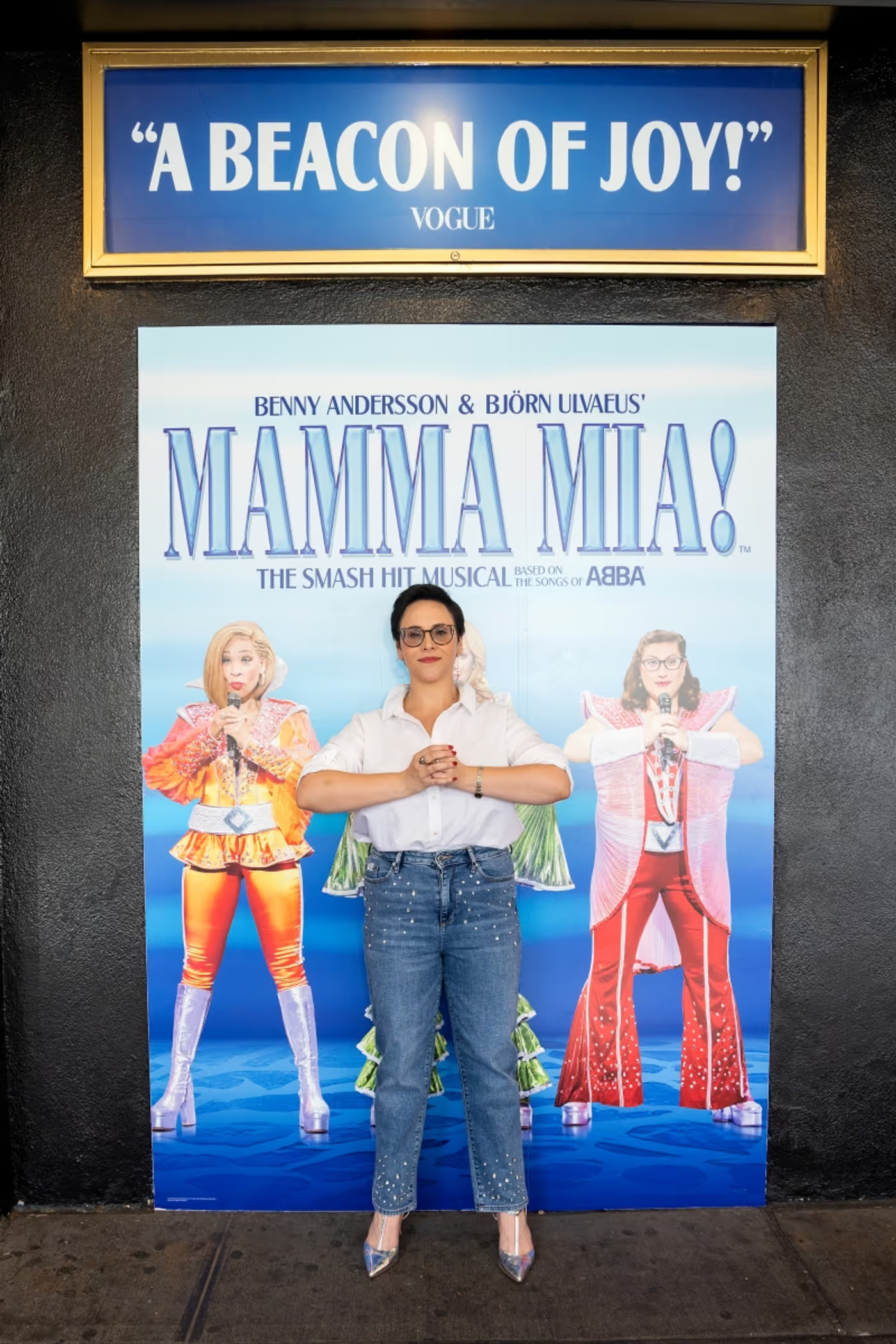 Midway through the first act, the show revealed its deep roots in the zeitgeist as I discovered that by some cultural osmosis I had subconsciously absorbed the “point and turn” choreography of “Dancing Queen.” Watching the exuberant, diverse ensemble bring the show back to Broadway, I found comfort in its accessibility. Where elite Broadway polish can sometimes create distance between actors and audience, Mamma Mia! closes the gap. You feel like anyone could join in. Every soul onstage feels like the star because the show itself is the star. Mamma Mia! doesn’t sit above its audience; it meets us where we are. And maybe that’s the secret: it feels like a place where we can all link up in the middle and party- snobs and superfans, cynics and joiners alike.
And is it plot-light? Yes! Does it gets weird? You betcha! From a flipper-and-snorkel dance break to an Act II opener that plays like a fever dream, the weirdness is part of the fun. It’s total escapism, and all it asks is that you come roll around in the sand.
And yet what makes it most miraculous is that its escapist joy isn’t empty calories. Its place in the musical theatre timeline is undeniable. The mischievous guitar and staging of “Money, Money, Money” carry echoes of Lloyd Webber’s musicals. Its gleeful absurdity anticipates cult hits like Titanique and Oh, Mary!. The familiarity of its simple plot and comic hijinks hearken back to the Golden Age musical comedies of Cole Porter and Richard Rodgers. It’s both homage and blueprint; a continuation of old-school musical tradition and the launchpad for much of what came in its wake.
Is it perfect? Far from. But when you’re having this much fun, who cares? The show’s effect is Swiftian (Taylor, not Jonathan): a total celebration of the coolness of the uncool, the simple joy of clapping on 1 and 3, and a no-frills happy ending.
In the end, Mamma Mia! isn’t trying to solve anything. It’s not wrestling with the state of the world or dressing itself in metaphor. And I know my Johnny-come-lately, "Turns out this decades spanning global phenomenon is actually good!" take isn't breaking news. But like Mamma Mia! I'm not here to prove anything. Fact is, finding myself surrendering to it feels like more than just a night at Broadway’s happiest disco. Finding solace in the action on stage AND the camaraderie of the crowd feels like tangible proof that joy and I are learning to meet in the middle, and that connection, while elusive, might not be so far off.
As the Mega Mix brought the adoring crowd to its feet for one last dance, I finally understood why this party never really ends.
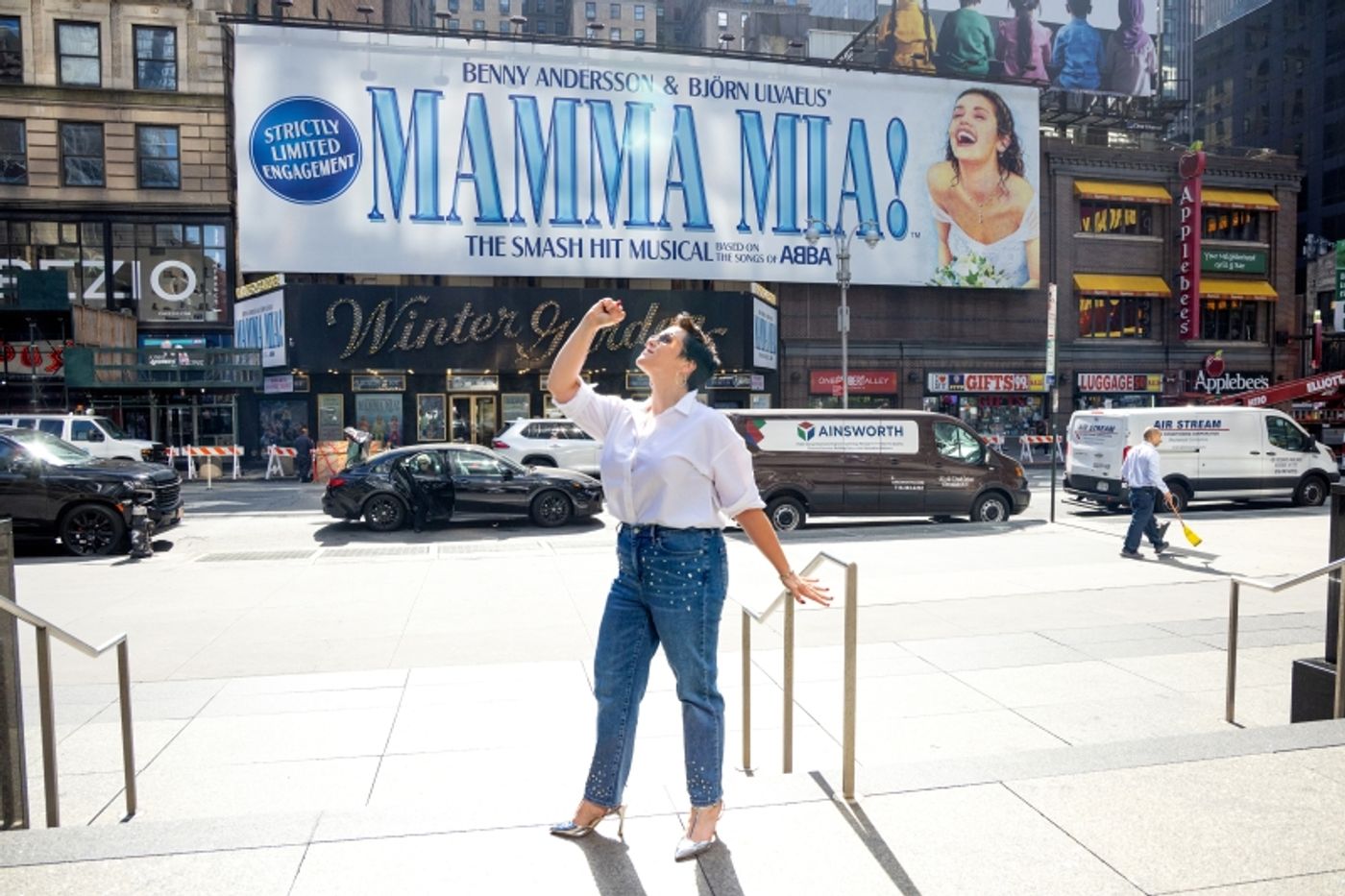
Photo Credit: Jennifer Broski