


Review: PORGY AND BESS at Kauffman Center For The Performing Arts
A Towering Display of Vocal Brilliance and Human Resilience in the Heart of Kansas City
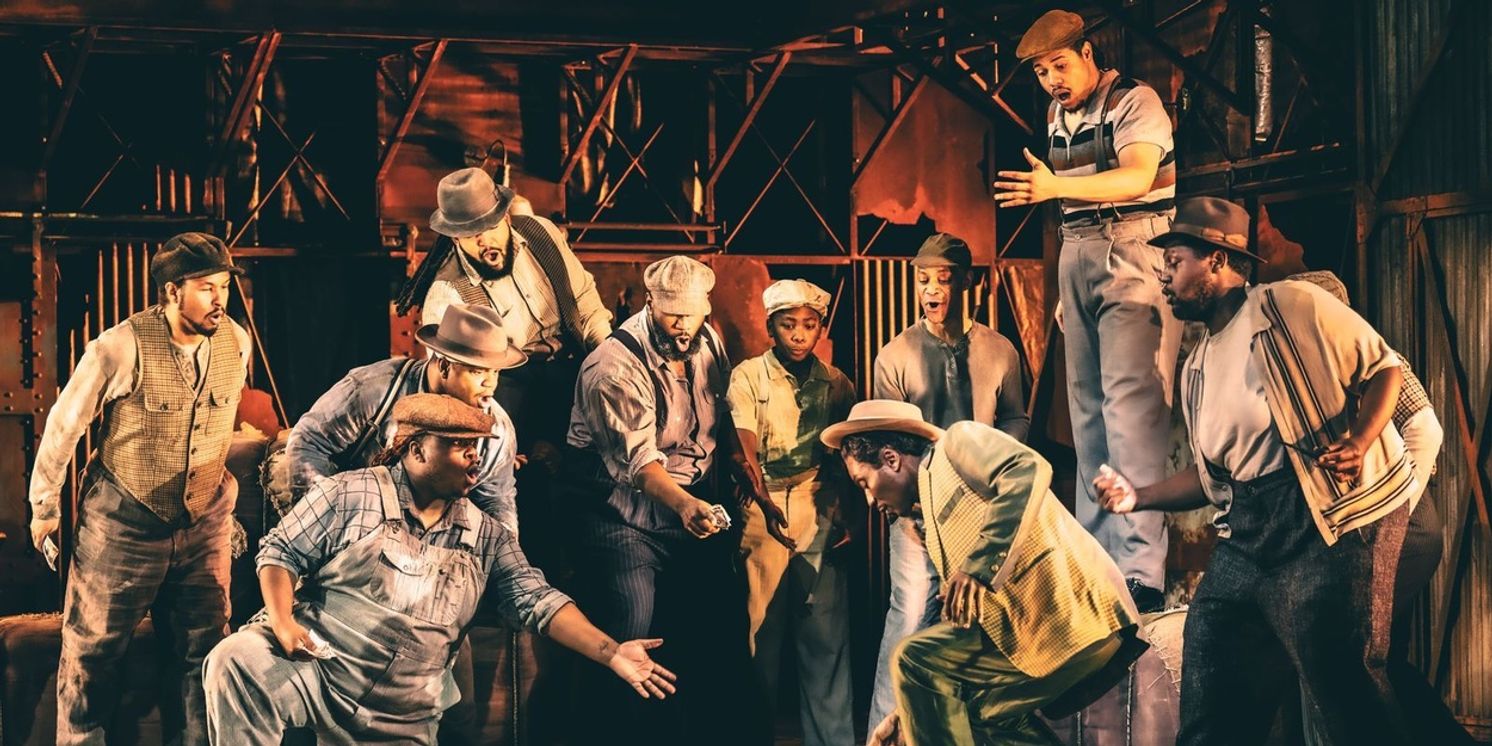
When audiences hear the opening lullaby, “Summertime… and the livin’ is easy,” it is tempting to imagine warmth and simplicity. But Lyric Opera of Kansas City’s production of The Gershwins’ PORGY AND BESS makes one thing unmistakably clear: life in Catfish Row is anything but easy.
It is turbulent, chaotic, breathtaking, prayerful, and symbiotic with generational trauma. Joy exists — but often only in flashes — like the selling of she-crab in the marketplace, or neighbors gathering to gossip at dusk.
This production does not romanticize Catfish Row. It reveals its fractures and its faith. And it does so through performances of remarkable technical excellence and emotional discipline.
Eric Greene’s Porgy: Grounded Strength and Vocal Authority
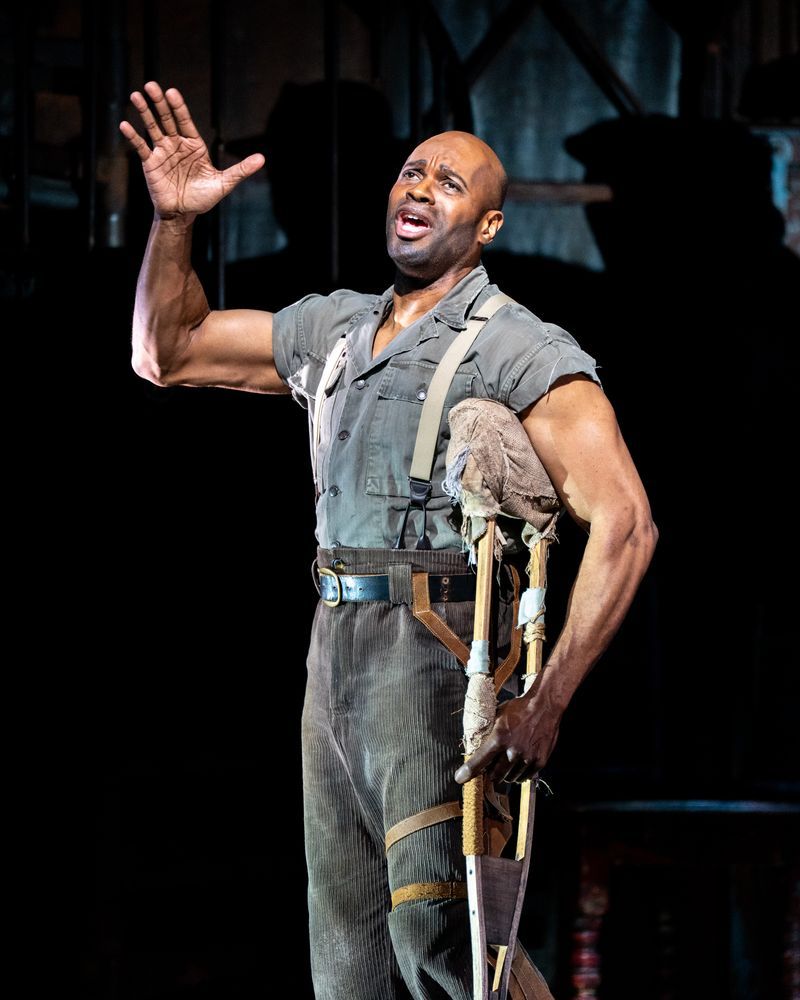
Eric Greene delivers a Porgy that is both musically commanding and physically meticulous. His baritone is rich, centered, and beautifully supported — each sustained phrase ringing with clarity and emotional intelligence. His musicality demonstrates not only vocal power but restraint; he understands when to swell and when to let stillness speak.
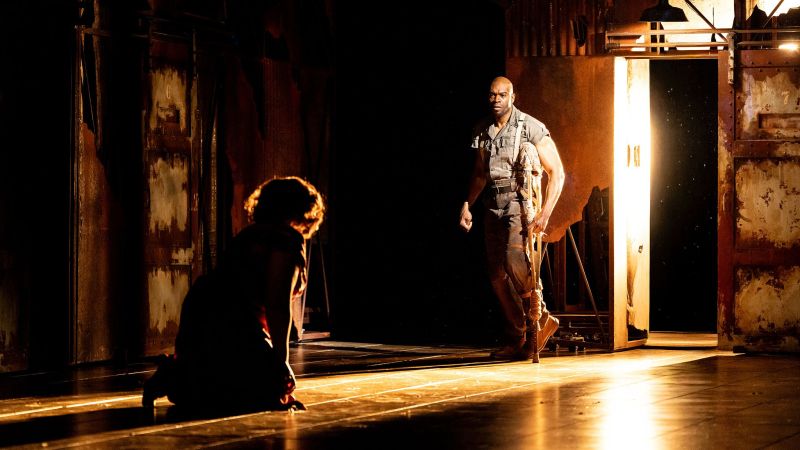
Physically, Greene’s embodiment of Porgy’s disability is astonishingly authentic. His relationship to the crutch, his shifts in balance, the grounded quality of his posture — none of it feels performed. It feels lived. Yet Porgy is never diminished. Greene portrays him as a pillar of integrity within Catfish Row — strong in spirit, unwavering in loyalty, and fully committed to defending Bess by any means necessary.
In the final moments, when Porgy learns that Bess has left for New York while he was imprisoned, Greene’s quiet devastation lands with profound impact. His resolve to leave Catfish Row and follow her transforms heartbreak into courage.
Michelle Bradley’s Bess: Emotional Precision and Vocal Fire
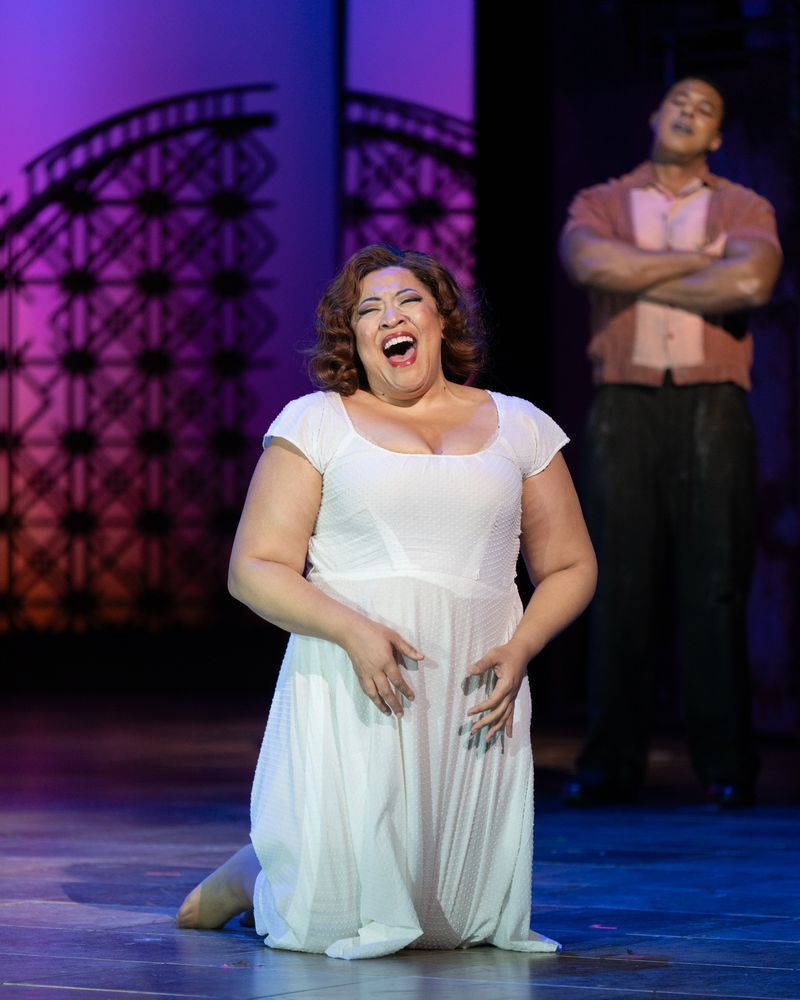
Michelle Bradley’s Bess is layered, vocally luminous, and emotionally complex. Her soprano soars with crystalline clarity through Gershwin’s sweeping lines, yet she never sacrifices vulnerability for volume. Bradley builds Bess from the inside out — a woman caught between addiction, survival, shame, and longing.
On Kittiwah Island, when Crown corners her and claims possession, Bradley’s physical and vocal tension merge into one of the production’s most harrowing sequences. Her phrasing tightens, her breath shortens — her entire instrument reflecting the character’s internal struggle.
Later, as Serena leads the prayer circle and Bess awakens healed, Bradley’s transformation is subtle and moving. And in Act II, when Sportin’ Life tempts her with “happy dust” and the promise of New York, her final decision is heartbreaking precisely because Bradley makes it human. She plays Bess not as weak — but as conflicted.
Donovan Singletary’s Crown: Power and Precision
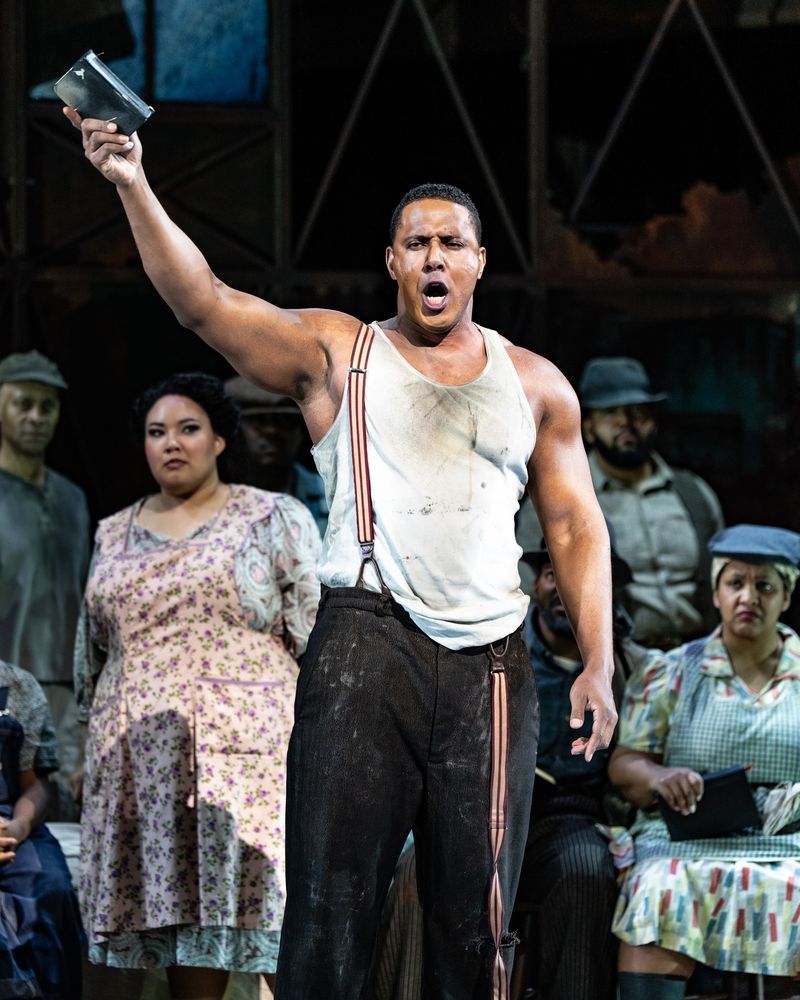
Donovan Singletary commands the stage with a bass-baritone that is thunderous yet controlled. His physical presence is formidable, and his vocal projection is equally imposing. From the opening craps game — where Catfish Row’s communal tensions first ignite — Crown radiates danger.
Singletary’s dynamic with Greene creates a compelling contrast: brute dominance versus moral strength. Their final confrontation is physically gripping and musically electrifying, executed with disciplined realism thanks in part to Fight Choreographer Martin English’s expert coordination.
Jermaine Smith’s Sportin’ Life: Rhythmic Magnetism
.jpeg "Review: PORGY AND BESS at Kauffman Center For The Performing Arts")
Jermaine Smith electrifies the production as Sportin’ Life. His tenor is agile and bright, perfectly suited to Gershwin’s syncopated rhythms. His physicality — fluid, sly, rhythmic — reveals deep choreographic awareness.
Smith embodies temptation itself. His performance is charismatic without caricature. As the purveyor of “happy dust,” he represents Catfish Row’s seductive escape from pain. His manipulation of Bess in Act II is chilling precisely because it feels effortless.
Katerina Burton’s Serena: The Spiritual Anchor
Katerina Burton delivers a Serena that resonates like a cathedral bell. Her vocal control in ensemble prayer sequences is astonishing — her tone expanding with gospel-rooted fervor that fills the theater.
During the funeral and hurricane shelter scenes, Burton’s voice becomes the spiritual backbone of the community. Whether or not one identifies as religious, the power of faith in those moments is undeniable.
La’Shelle Allen’s Maria: Authority and Protection
La’Shelle Allen’s Maria stands as the matriarchal guardian of Catfish Row. Her diction is crisp, her vocal projection focused and assured. She embodies a woman determined to shield her community from Sportin’ Life’s destructive influence.
Her performance radiates steadiness and moral clarity.
Supporting Voices of Remarkable Quality
.jpeg "Review: PORGY AND BESS at Kauffman Center For The Performing Arts")
Bernard Holcomb (Robbins/Crab Man) delivers vocal passages that reach skyward with impressive range and resonance.
Brandie Sutton’s Clara offers a luminous soprano that glows with warmth before the hurricane reshapes her fate.
The ensemble operates with extraordinary cohesion — particularly in the hurricane sequence, where fear and faith collide in choral brilliance. The vocal blend is seamless, the dynamics meticulously controlled.
Musical and Creative Leadership
Under the baton of Conductor Michael Ellis Ingram, the orchestra performs with crystalline precision. Balance between pit and stage is impeccable. Not a single phrase feels rushed or strained. The musical execution across the company is polished and confident.
Director Francesca Zambello — an internationally celebrated legend in opera—brings vision rooted in humanity. Her staging honors both the grandeur of the score and the intimacy of community life. Kansas City is indeed fortunate to witness her work.
Scenic Designer Peter J. Davison creates a Catfish Row textured with rust, age, and authenticity. The environment feels historically grounded and lived-in.
Costume Designer Paul Tazewell delivers period-respectful designs rich in texture and character. (With design credits including Wicked for Universal Pictures, his craftsmanship speaks volumes.) Each costume enhances identity without overshadowing performance.
Lighting Designer Mark McCullough sculpts emotional landscapes through shadow and illumination, guiding the audience from sunlit marketplace to storm-darkened chaos with expert sensitivity.
Sound Designer Joel T. Morain exercises admirable restraint—supporting the world without overwhelming it.
Martin English’s fight choreography is raw, believable, and meticulously coordinated.
Final Thoughts
This production of PORGY AND BESS is vocally commanding, physically disciplined, spiritually resonant, and artistically masterful. It honors Gershwin’s genius while foregrounding the humanity of Catfish Row’s residents.
The music may begin with “Summertime.” But what unfolds is a storm of talent, truth, and theatrical excellence.
The Gershwins’ PORGY AND BESS continues at the Lyric Opera of Kansas City through March 8 at the Kauffman Center for the Performing Arts. Tickets are available online at https://kcopera.org/event/porgy-and-bess/ or by telephone at (816) 471-7344
In a time when communities across our nation wrestle with division, uncertainty, addiction, displacement, and the fragile balance between faith and survival, Porgy and Bess feels urgently present. This is not simply an evening of extraordinary vocal brilliance — it is a reminder of resilience, of communal prayer, of standing up for love in the face of fear, and of choosing hope when leaving the familiar feels impossible.
Do not wait.
Do not assume there will be another opportunity.
Go witness it.
Let the music wash over you.
Let the story challenge you.
Let Catfish Row remind you that even in the storm, the human spirit sings.
Reader Reviews

Videos