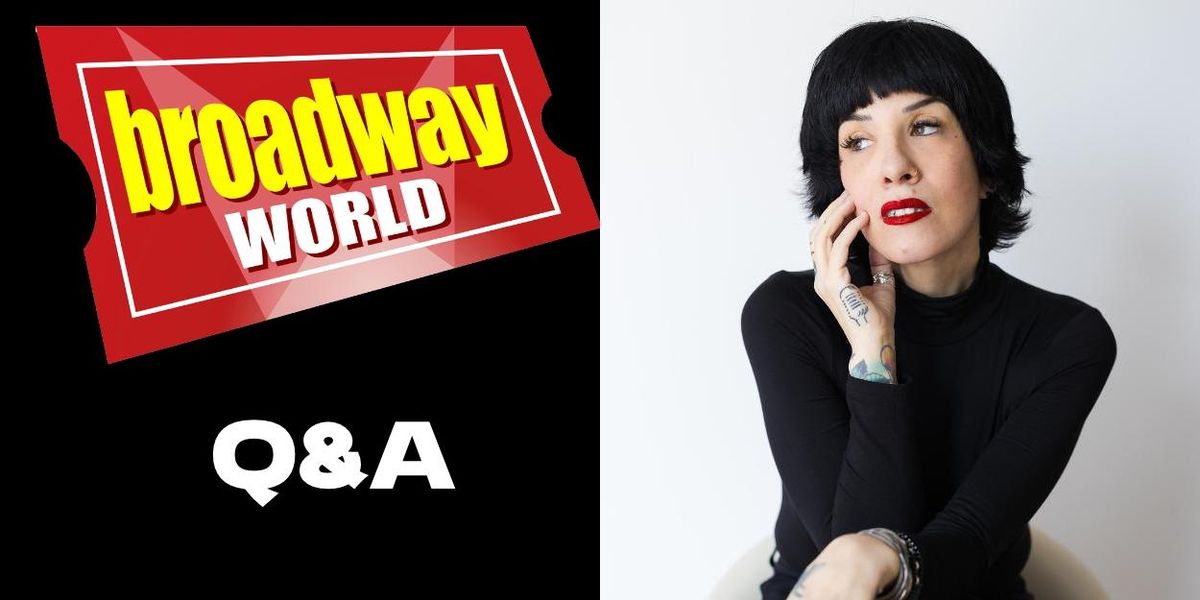
BWW Q&A: Jasmin Singer of END OF THE RAINBOW at CenterStage Theatre at the JCC
December 6–21, 2025
It’s December 1968 and Judy Garland embarks on what turns out to be her final concert tour. Addictions are taking control, creditors are knocking at her door, her fiancé and musical director do not see eye to eye…but the incomparable Judy Garland is still a force to be reckoned with! A look at the price of fame that Broadway and West End critics labeled “a masterpiece.” Featuring a dozen classic tunes.
CenterStage Theatre has been delivering spectacular performances that touch and inspire audiences for more than 40 seasons, including original plays and Broadway hits. We continue to open minds, start conversations, and delight theatre lovers, thanks to the support of patrons, volunteers, and sponsors.
The mission of CenterStage Theatre at the JCC is to entertain, enlighten and educate the Greater Rochester community by providing quality theatre that is relevant to the Jewish experience and has universal appeal.
Our focus is developing new works, presenting world and area premieres of America’s hottest new plays and musicals and re-imagining beloved classics. We love plays and musicals that spark conversations, celebrate world-changing people and events and bring the world closer together.
Jasmin Singer is thrilled to be playing Judy Garland in Center Stage’s production of End of the Rainbow. She was most recently seen as “Phyllis” in Body Awareness (Out of Pocket, Inc.). At Blackfriars Theatre, she appeared as “Bernadette” in POTUS—and is honored to reunite with intrepid director Kerry Young, who helmed that production and now leads this one. Other local credits include All in the Timing (Rochester Fringe Festival); the Hourglass Play Reading Series: NSFW (“Miranda”); The Dinner Detective Murder Mystery Dinner Theater; and a staged reading of Let’s Summon a Demon at Debbie’s as “Lucy” (McDonald Theatre, Gearan Center for the Performing Arts). Before moving to Rochester, she worked extensively in NYC and Los Angeles, appearing in national commercials and films, including the award-winning The Bra Mitzvah, and onstage in Exhibit This! (Midtown International Theater Festival), Sex, Relationships, and Sometimes Love (Michael Chekhov Theatre), and Mary Stuart (“Queen Elizabeth,” Pace Downtown Theater), among many others. She holds a BFA in Acting from Pace University, is the author of two books, and hosts Weekend Edition and Environmental Connections on WXXI, Rochester’s NPR and PBS member station. It is an honor to step into Judy Garland, to chase the crackle of her humor, grit, and grace, and to hold the whole human, not just the headlines at the end.
Directed by Kerry Young
Music Direction by Andy Pratt
Sponsored by LGBT+ Giving Circle
What inspired you to take on the role of Judy Garland in the Center Stage's production of End of the Rainbow?
As actors, we audition for all kinds of things that matter deeply to us, and most of the time, the answer is no, so when CenterStage said yes to me as Judy Garland, that felt huge. I have always felt a certain pull toward her. People have told me I look like Liza my whole life, so that whole family has been hovering at the edges of my imagination for years. Judy has always been this iconic but very sad figure to me, and I only knew parts of her story. The chance to live inside this very specific, difficult moment near the end of her life grabbed me right away. After I found out about the audition, I went back into voice lessons so I could prepare for the role with as much craft and stamina as possible. Around that time, I was in Los Angeles, and I went to the Judy Garland Pavilion at Hollywood Forever Cemetery, where she is now laid to rest, and I signed the guest book and just stood there and cried. It made the whole thing feel much less theoretical. This is not just a legend I grew up with; she was a real woman, and if I am going to borrow her name for a couple of hours a night, I owe her my full attention and respect.
How does your background as a performer and media figure influence your portrayal of Judy Garland?
My beloved Grandma, who was a soulmate to me, absolutely loved Judy, so I grew up with her voice and her movies around, and with this sense that she meant something very personal to people I loved. Several people in my life are real Judy people, and I feel like I am carrying their affection for her into the room as I try to tell this story about an incredibly difficult time at the end of her life. At the same time, my work as an author, radio host, and podcaster means I spend a lot of time thinking about public and private selves. I am used to shaping stories, deciding how much of myself to reveal and how much to protect. We all feel misunderstood sometimes, but most of us do not have to play that out in public the way Judy did. So in every scene, I am very aware of the gap between the Judy the world thinks it knows and the Judy who is just trying to get through one more night. That tension is something I know from my own life, and it feeds right into how I play her.
What has preparing for this role taught you about Judy Garland that you didn't know before?
Preparing for this role has taught me so much about Judy that I genuinely did not know. I did not realize just how funny she was, and how sharp and sometimes caustic her humor could be. We tend to think of her in those very sweet, innocent roles, but in real life, she had this dry, biting wit and could be hilariously funny in a way that feels very modern. I have also learned more about her as a mother and as a musician. The play does not really show the doting, protective side of her, but knowing how fiercely she loved her kids still informs how I hold her. I did not fully understand how much she loved jazz, and how much she wanted to sing more of it, even though the world kept asking her for the same musical theater standards. Working with my brilliant vocal coach, Deborah Norin-Kuehn, I have also come to appreciate how unusual and self-taught a lot of her vocal approach was. She does very particular things with consonants and with the way she lands on (or departs from) words. It is not always what you would teach in a studio, but it is a huge part of why she feels so emotionally direct. And then there is the addiction. I knew she struggled, but I had not previously grasped how deeply it affected her mental health and basic functioning. The more I learn, the more astonishing it is that she carried on as long as she did and continued to give the kind of performances she gave. She was also set up for this from a very young age, given pills as a teenager so she could work the hours and look the way the studio demanded, and that created a dependency that would have been incredibly hard for anyone to escape. For her, the idea of living without those substances must have felt a bit like being told she had to give up her legs and then being offered no help learning how to walk again. It makes you wonder, honestly, how any of us would have fared under those circumstances.
How do you plan to bring out the humanity and empathy of Judy Garland, especially during her darkest times?
I think it would be very easy to approach this script as two hours of meltdowns, but Judy and the writing are much more nuanced than that (thanks to playwright Peter Quilter). So when you do see an explosive moment, it has to be earned, as my incredible director Kerry Young keeps reminding me. It needs to grow out of all the little negotiations and bargains that build up over time, which is how addiction often looks from the inside. Being an addict did not, by itself, define Judy Garland. It is important to me to show the love, the care, the kindness, the lighter moments, the deep connection she has with her fiancé, however flawed that relationship is, and with her pianist, and with her audiences, whom she loved as much as they loved her. I try to remember that most of us are lucky that the worst moments of our lives are not being portrayed for an audience. None of us would want that. There is so much more to who she was than just these final days, and I try to let that fullness seep into every scene. I am also working with a very talented, dynamic cast who bring real complexity to their roles and are so generous with me. That ensemble helps keep Judy human and three-dimensional, not just tragic.
Can you talk about the themes of addiction and fading stardom in End of the Rainbow and how you relate to them as an actor?
Addiction is a fundamental issue of our time, so this story never feels like something that only belongs to the past. In Judy's case, it started very young. She was put on pills as a teenager so she could work the hours the studio demanded, long before she had any real say in the matter. She achieved this enormous fame, but she was also a victim in so many ways, taken advantage of by systems and people who benefited from her talent. By the end of her life, she was deeply in debt, and it is often said that Frank Sinatra stepped in to help pay for her funeral. Remembering that even someone that famous could be that vulnerable keeps me from treating her like a myth instead of a person. Fading stardom is really just talking about aging and the fear of becoming irrelevant, and that is a fundamental human issue, whether you are a Hollywood legend or not. I relate to those themes as a person living in a culture that is obsessed with attention and novelty. I understand the pressure to keep proving that you still have it, to stay visible, to stay shiny, even when you are exhausted or hurting. Though I’ve never dealt with fame, I can certainly recognize the feelings underneath it. Playing her lets me explore those questions, while also remembering that I get to step out of her struggle when the curtain comes down. She did not have that luxury.
How does Judy Garland's humor help you balance the darkness of the material in the play?
We have all been in an argument that got so intense you could barely breathe, and then someone made a joke, maybe even an inappropriate one, and suddenly all the air comes back into the room. Judy excelled at that. Her humor was a big part of how she related to the world and how she kept a little control over the chaos around her. As a performer, that humor is how I balance the darkness. In the play, the jokes are not just comic relief; they show how smart Judy is, how fast she is, and how hard she is working to keep things from falling apart. They also give the audience permission to laugh with her, and to breathe for a second. The more we let her be genuinely funny, the more devastating it is when the humor stops working and you see what it has been covering.
Why must audiences come and see the show?
Audiences should come and see this show because it honors Judy Garland's legacy without turning her into a cartoon. Too often, we see famous people as caricatures or as untouchable icons. This play is about a real person who had unbelievable success and unbelievable heartache, who was flawed and who was extraordinary. In these troubled times, it feels important to look at who we put on pedestals and what it costs them to stay up there. For people who remember her, it is a way of remembering her in three dimensions. For people who do not, or who just know her as Dorothy, it is a way of meeting someone who really was a star, not just because of the songs, but because of the emotional honesty behind them. In this CenterStage production, you get the familiar tunes, but you also get the stories wrapped around them, and you see a whole person rather than just a highlight reel. Every time I think about her now, after getting deep into this script, I well up a little. My hope is that audiences leave feeling that same mix of love, grief, and complicated admiration.
Love Theater in Central New York? Join The Community!
Whether you've got past experience writing about theater or just starting, the BroadwayWorld Community offers a unique opportunity to become a champion for your local arts community, helping raise awareness of local offerings and adding another local voice to the conversation at a time arts coverage is shrinking in the press across the continent. Join us and become a pivotal part of the movement that celebrates and promotes the arts in the digital age.
Learn More
|
Così Glimmerglass Festival (7/17-8/14) |
|
|
Così Glimmerglass Festival (7/17-8/14) |
|
Fellow Travelers Glimmerglass Festival (7/18-8/16) |
|
Madame Butterfly The Glimmerglass Festival (7/11-8/17) |

|
Oklahoma! The Glimmerglass Festival (7/10-8/17) |
|
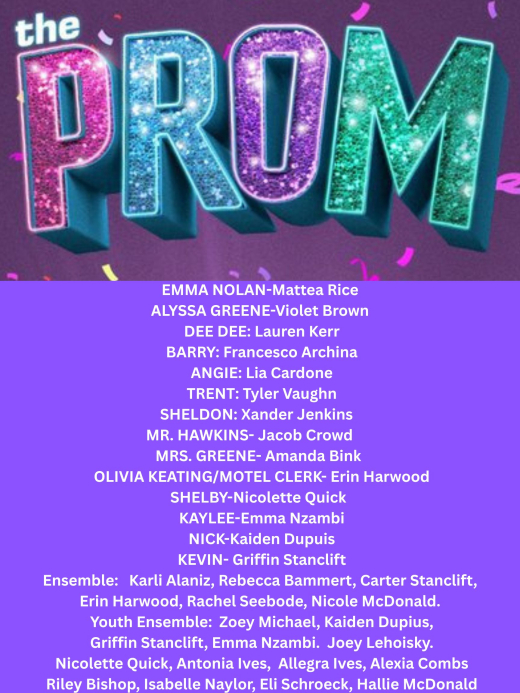
THE PROM The Wood Theater (8/14-8/23) |
|
Annie Jr. Foothills Performing Arts Center (7/24-7/26) |
|
OFC Creations Theatre Presents: The Witches of Eastwick OFC Creations Theatre Center (3/04-3/21) |
|
Two Strangers (Carry a Cake Across New York) The Longacre Theatre (11/01-11/01) |
|
A Dream (Role) Come True Don’t Tell Mama NYC (1/10-12/05) |