


Review: MISTERO BUFFO, Pleasance Theatre
Who's afraid of Tilly Norwood? Not the theatre industry, apparently.
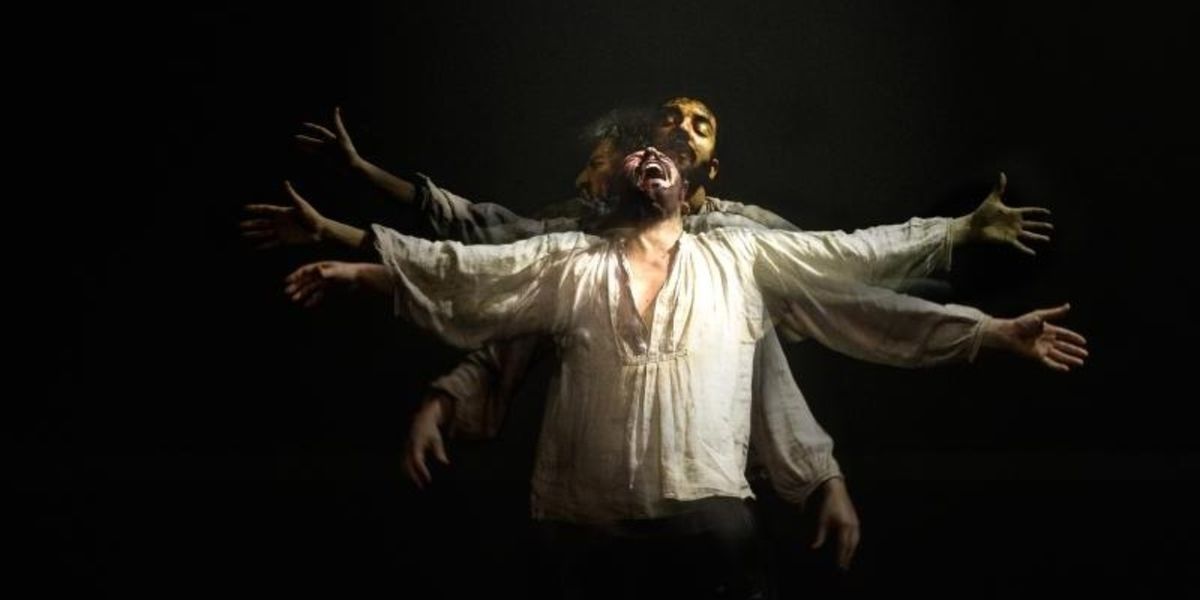
 Why has the arrival of Tilly Norwood, a virtual actor apparently on the cusp of actual agent representation, caused outrage among screen veterans but barely a murmur from their theatrical confrères? Julian Spooner’s take on the controversial Mistero Buffo offers one explanation why.
A quick catchup: last weekend, Eline Van Der Velden announced that she would be setting up Xicoia, a new AI studio which would create rounded characters using artificial intelligence software. Not only would they have their own individual appearance and voices but they would come with backstories, narrative arcs and personalities. And, rather than purely being eye-candy chatbots, they would be able to have unscripted conversations, orate a monologue and change their tone and references depending on their audience.
All of this has been promised since the dark, dark days of Microsoft Office’s Clippy (ask your parents). The chief difference here is that Xicoia’s first public project is not some clunky animation but, instead, a character with ambition: according to Van Der Velden, the studio is in talks with a number of talent agents interested in signing their first creation, AI actress Tilly Norwood.
Intended as a soft launch, the news provoked a hard reaction. A-list movie stars threw all their toys out of their prams, then went and ordered more toys and threw them out too. Celebrity outbursts ranged from the eloquently shocked (Emily Blunt: “No, are you serious? That’s an AI? Good Lord, we’re screwed. That is really, really scary.”) and the surprisingly reasonable (Whoopi Goldberg: “AI characters should be judged as part of their own genre, rather than compared directly with human actors.”) to the predictably pointed (Ralph Ineson: “F**k off”).
The international furore hasn't so far dented the theatre bubble, though. Industry bible The Stage has yet to mention Norwood and actors and creatives have largely ignored the issue on social media. Are they wrong to do so? ABBA’s incredibly successful Voyage has shown how all-singing, all-dancing avatars can be a winner, London’s longest-running immersive theatre experience The War Of The Worlds seamlessly incorporates virtual characters and VR episodes into their story, and legal action was threatened when a promised hologram of the King of Rock ‘n’ Roll didn’t appear in Layered Reality’s much-maligned Elvis Evolution. Are AI-generated stage actors a case of when, not if?
Barely known over here, Fo performed his solo creation Mistero Buffo ("Comical Mystery Play") himself over the last three decades of the twentieth century. As Monty Python did with Life Of Brian, it takes square aim at teachings of the Catholic church, re-imagining the New Testament in the form of a savage satire told in Buffo's case by a travelling jongleur. After a performance was broadcast on Italian TV, the Vatican dropped its typically restrained and diplomatic language to denounce it as “the most blasphemous show in the history of television”. Crikey.
Spooner with his company Rhum + Clay picked up Fo’s baton in 2018 and are still energetically running with this updated version. The jongleur is now a Deliveroo driver who directly questions audience members. Do they leave their delivery drivers a tip? If so, how often? And (more importantly) how much? It’s all part of a theme that underscores this adaptation: how the working class are often at the mercy of arbitrary decisions made by those with the money and power to make a real difference.
Beginning with how Jesus saves his life and then gives him the gift of the gab via a very long snog, our unnamed narrator takes us through alternative accounts of the Messiah’s most famous miracles. A drunken priest scares off a visiting angel before relating what really went down at the Marriage of Cana and just why the water was turned into wine. The resurrection of Lazarus is turned into a public spectacle with punters charged £15 for entry into the cemetery and then asked to pay extra for a seat and associated merchandise. Jesus’ crucifixion is described in gory detail through the thoughts and words of the soldiers who lift him onto the cross, blithely muse as they hammer the nails in and later gamble for his clothing.
While Fo performed his renditions largely by standing and walking around the stage, Spooner acrobatically jumps around as he takes on his motley crew of characters. He carries out two-sided conversations through sharp movement and convincing accents, plays out brutal gunfights with Peckinpahesque panache and deploys miming and physical clowning to bring intense scenes to vivid life. Director Nicholas Pitt speeds up then slows down the action expertly, making the most of his actor’s highly dynamic approach to storytelling.
With little in the way of props and basic sound and lighting, this is truly theatre of the mind. Seeing Spooner interpret this highly political masterpiece is to reach into the heart of what makes theatre special. Unlike what we have seen so far of Norwood and her virtual ilk, this is less about what we are watching as what we are seeing, and less about what we hear as what we feel. Carried along on a tidal wave of emotion, we are borne aloft here by a rich vein of drama told with immense elegance and urgency.
AI definitely has its own leading role to play in revolutionising theatre for the audience and industry alike (perhaps a topic for another article) but there will always be a place for productions like this.
Mistero Buffo continues until 11 October.
Photo credit: Rhum + Klay





Reader Reviews
To post a comment, you must register and login.