Interview: 'This Play Speaks To All Of Us': Actors Paapa Essiedu and Tom Glynn-Carney on NT LIVE's ALL MY SONS
'Ivo’s a confident director in the fact that he only gives you three weeks in the rehearsal room'
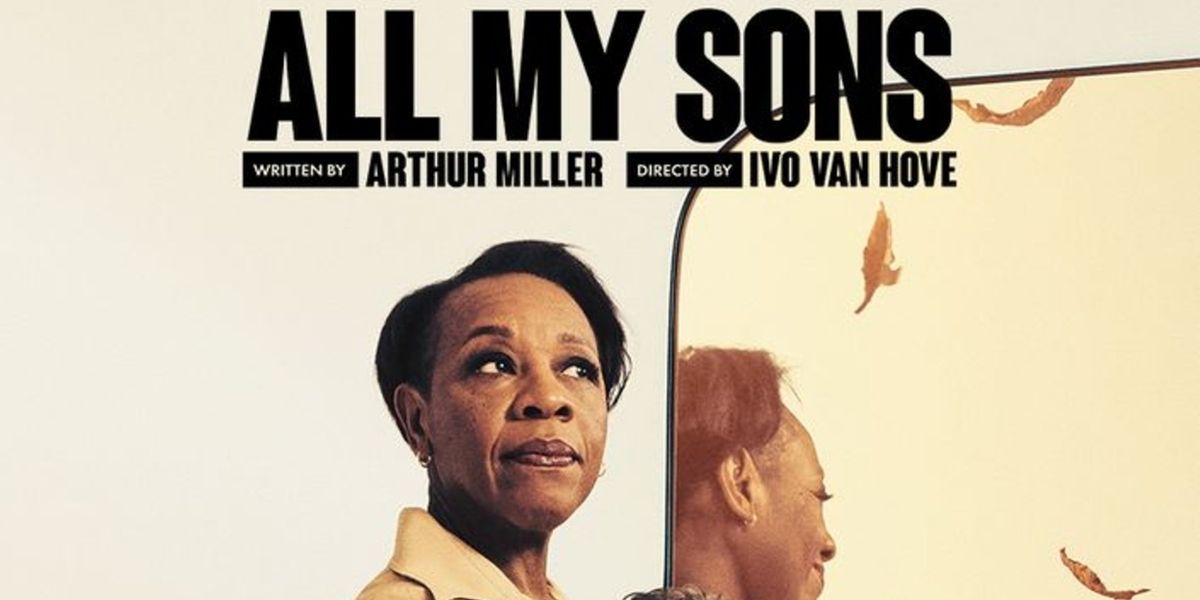
A polished NT Live filming of All My Sons arrives on screen as a compelling highlight of The National Theatre Live season on 16 April 2026, combining strong performances with assured direction. Led by Bryan Cranston and Marianne Jean-Baptiste, the play recording delivers emotional depth and tension layered in morality, which resonates far beyond the stage.
Director Ivo van Hove brings a clear and stark vision to Arthur Miller’s classic text, capturing both its emotional intimacy and its scale. Outstanding supporting performances from Paapa Essiedu, Hayley Squires and Tom Glynn-Carney add further nuance, while the technical design elements work seamlessly to enhance the drama without distraction.
Beautifully filmed from its West End run, with close ups timed at the perfect moments, this is a gripping and accessible interpretation that honours the original, while feeling immediate and relevant. All My Sons is a powerful and accomplished production which stands out as essential viewing. BroadwayWorld heard from actors Paapa Essiedu and Tom Glynn-Carney, as they were interviewed by journalist Hanna Flint, about their thoughts around the production.
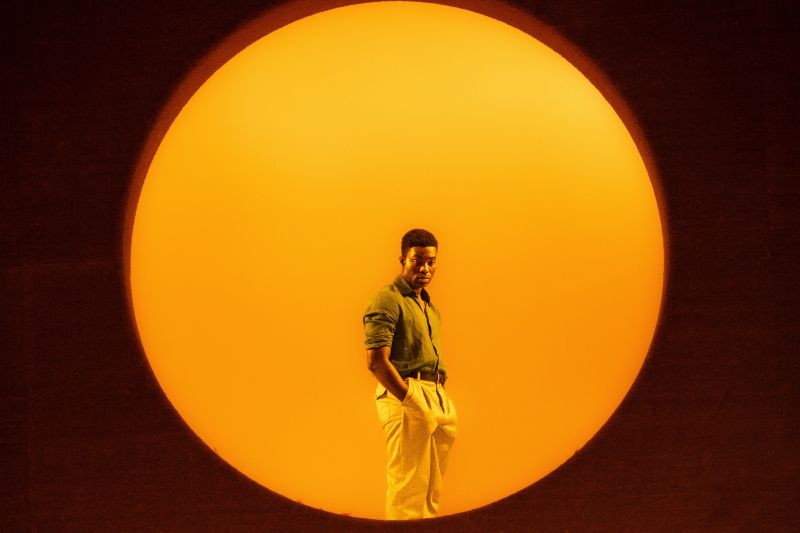
Photo Credit: Jan Versweyveld
What was your relationship with the play before you took on your roles?
Paapa Essiedu: I saw All My Sons (2010) when I was at drama school and it was on at The Apollo Theatre starring David Suchet, as Joe Keller, and Zoē Wanamaker, as Kate Keller and Stephen Campbell Moore (Chris Keller) and Jemima Rooper (Ann Deever). It was a very different production to what we did, it was way more traditional. But the players, obviously, so, I mean, as you're about to see, the play is incredibly clear and direct. And emotionally felt, and in that structure, it's really different. So for the players, me, very effectively. it's such a beautiful play. I actually also saw it in Catalan. I don't speak Catalan, but my friends in Barcelona are actors and that was also brilliant... So, I've got a long association with it.
Tom Glynn-Carney: I had no relationship to the play whatsoever before Ivo asked me to do it. So I did a lot of reading. I made a point of not watching anything that had been done before. I didn't want to kind of, I think I have a habit of being like a piece of velcro and if I experience something, I'll let it stick to me and then I'll regurgitate it in some way. So I wanted to go into it as clear as possible and just do our own version because I knew at this point that from speaking with Paapa and Ivo, I knew that he'd have a new way of visiting the play. And so I just wanted to go in with an open mind.
This revival felt so completely removed from what I've seen before and certainly with the way you perform each of your characters, Chris and George, they felt so unique. Could just give a little taste about your characters, a little bit about their journey in the play?
PE: I personally don't think there is any need to ever revive a play unless there's a reason to. I think you should only revive a play if it speaks to the moment in a way that feels relevant and specific to the circumstances and this play certainly does, considering, it's really about a man profiteering, from young men going to war for his own individual benefits. So I don't think you need to look far to see the resonances, but I feel Chris is a American, a dreamer, someone who signed up to the American Dream via his dad. and went to war himself and lost things, lost a brother, and lost a kind of innocence, a way of seeing the world and came back and was catapulted into real American capitalism, in a way that he finds really difficult to score off with, the way he wants to live his life, but also what is the other option. So I think that's a such a question that comes with his character.
TGC: I think it's interesting, because I feel like Chris and George's upbringings were relatively similar, not in terms of the level of wealth, but the social background and the environment that they inhabited as kids was, I mean, they were next door neighbours, so it was almost identical. And they both went to war, they both had the experience of, fighting for the country and watching comrades that they go into battle with fall amongst them and coming out with all that baggage.
But the difference was, I think, with George, is that he, to me, felt incredibly porous and I'm not saying that Chris wasn't, but the way that George dealt with it was. Well, he didn't deal with it very well at all. And I don't know what the kind of thing to compare it to is, because I don't know how other people played him in the past, but the way he read to me was that he came with this sort of, this history, this sort of, like, dead weight of baggage and of sort of psychological disturbance and, he'd become, he'd ostracised his father.
If the story he was led to believe is true, then he realises later on that it potentially isn't true, and I had to play to that charge, and it definitely wasn't true. Coming in with that level of conviction, at the point that I come in in the play, it's much later on. I feel from a writing perspective, from Miller's perspective, George is a vehicle. He is almost a Greek messenger in the way that he comes in and just sort of just work vomits, all the stuff he's been feeling. He's clearly very traumatised by what's happened. And there's a combination of subject matter, but also history, a backstory that sort of feels him. I had a lot of fun playing that and trying to change things up every night and find different ways of being that vehicle, that storytelling device. I feel like Chris and George, there's kind of parallel storylines, parallel journeys.
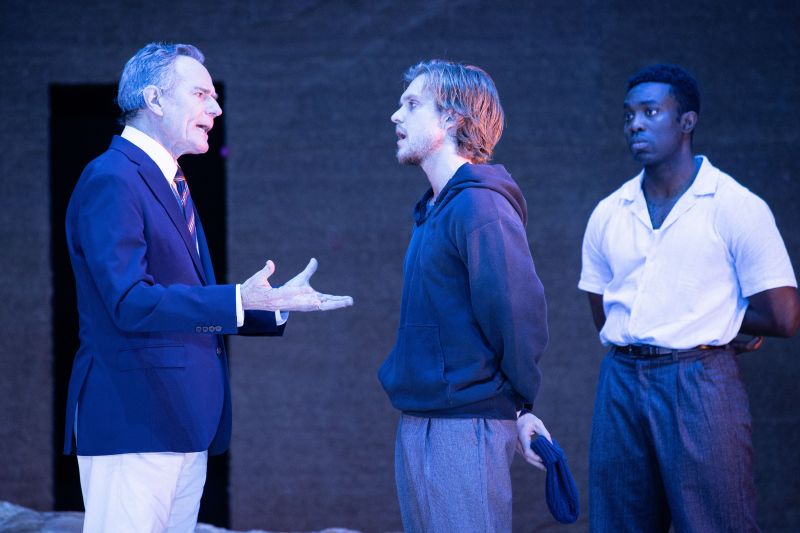
Photo Credit: Jan Versweyveld
When it came to the rehearsal, I read that Ivo wants you to be off book by the time you hit the rehearsal room. How easy is that?
PE: Ivo’s a confident director in the fact that he only gives you three weeks in the rehearsal room. It is intimidating to be looking at 15-16 days, to do a play like this, it's epic. But there's something actually incredibly freeing about his confidence and this approach, because he's not really interested in sitting around the table. He wants you to do the work and he wants you to come ready, and that's a call to arms that is very galvanising. I think it worked really well for us particularly.
I feel like me and Tom have got relatively similar processes, if you believe in such a thing. And we spent a lot of time talking about our characters and our histories mostly, but also about the dynamic between us. And from the beginning, it's great because I hate the thing of having to turn the page in the middle of a scene or whatever. It just allows you to really be connected and locked in from the jump and if I'm honest and I've said this to Tom before, I remember seeing his first reading, his entry into the space and his sharing of George. And from the beginning, you could put that on stage and it's been remarkable.
TGC: I'll pay you later! There's something also about that which frees actors to make big choices and grow into them. Thank you. I could have said the same for you. I mean (Paapa) from day one, was stage ready. It wasn't that wasn't the aim, really. It worked really well for me. I'm very dyslexic, so to try and read something and make choices and make decisions and lock in with other actors and have a level of connection that is really difficult for me. So I tend to try and be off book by rehearsals. And that's not necessarily to lock in a way that I'm going to do it, but it's to digest the dialogue and the text in a way that I can then be at a neutral level. And then make choices when we're in the space, and the other actors are throwing other things out here. You've got curveballs coming and it's your job there as an actor to duck and weave. So it was a really, really nice experience for me in that sense. But equally, I don’t think everybody should work like that. But I don't see any benefit in being in the space with a script in your hand, particularly because you're bound to it. If you're wondering about what the next line is, that means you're off the thought. There's no continuation with it, no arc, you don't feel like there's momentum in the scene. There's obviously pits and troughs there. You need to find those, and I think once you're off book, you can do that.
What do you think that this film play has to say about what message people take away from this production?
PE: The play was written in 1947, so two years after World War II. I think Arthur Miller himself worked in a weapons factory. And so there's a little bit about art imitating life, or at least the inspiration doesn't come too far from the lived experience. I think the brilliant thing this play does is (provide) quite a definitive ending. It's a play that asks questions instead of serving up a didactic answer.
I think it's pretty scathing on the impact of greed, particularly on how greed that's motivated by money can have on the human condition on the soul. It can erode away the thing that you love most and that is most foundational to you. In this case, it's family, and the question is asking about what would you do for your family. How much can be excused, what kind of actions can be excused if you're doing it in the name of a family. Joe himself says “I did it for you. It's all for you.” At the end of the day, you talk about people having real lives and people who lost their lives. I don't need to say anything. You just need to turn on the news, look at what's happening all over the world. There's a focus on a particular conflict at the moment. But there are conflicts that aren't as present in the media. I think this play speaks to all of us.
Watch a clip of the film with Paapa Essiedu and Hayley Squires here.
Read our 5-star review of the production here.
All My Sons NT Live will be in cinemas from 16 April
Sign up for all the news on the Fall season, discounts & more...