Interview: 'Everyone Carries Something Difficult': Actors Mark Addy and Jenna Russell on Joy and Bravery in THE UNLIKELY PILGRIMAGE OF HAROLD FRY
'Ultimately it is about love, forgiveness and redemption '
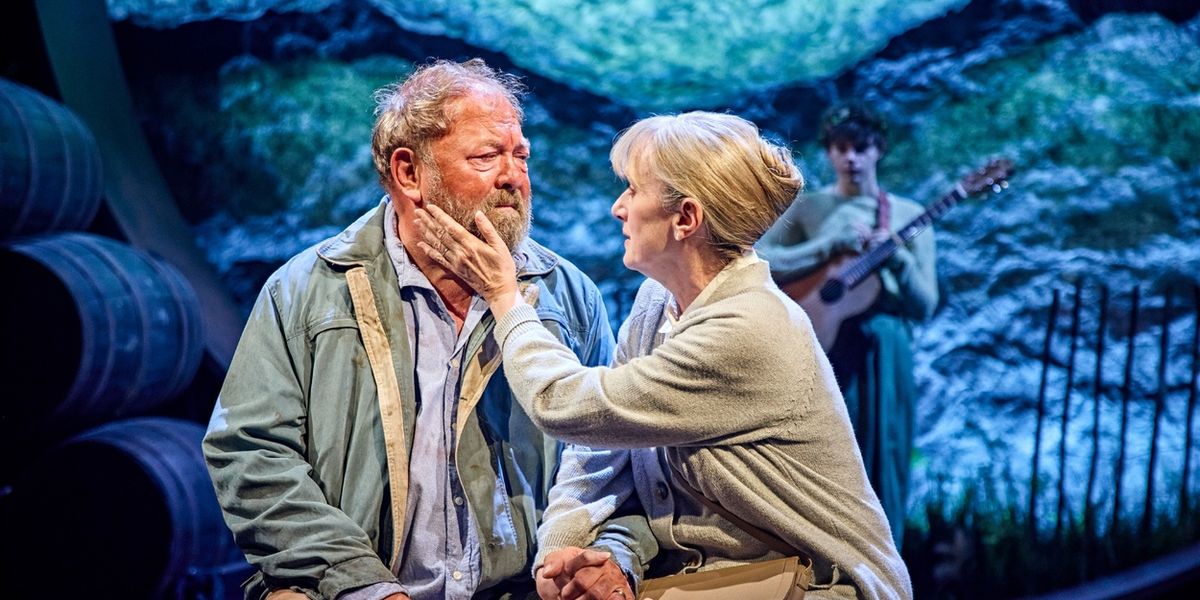
With a focus on the themes of redemption, resilience and second chances, the West End is getting ready for the arrival of The Unlikely Pilgrimage of Harold Fry. The musical, which debuted at Chichester Festival Theatre last year, is the tale of an ordinary man's extraordinary walk across England, adapted from Rachel Joyce's bestselling novel.
BroadwayWorld UK sat down for an interview with Mark Addy and Jenna Russell, who play the eponymous Harold and his wife Maureen respectively. We chatted about about joy, bravery and how special it is to be bringing the show to the West End.
Tell us what The Unlikely Pilgrimage of Harold Fry is about and why this story continues to feel so quietly wonderful and necessary?
Mark Addy: Well, it's a story about a very ordinary man who lives in a in a very boring house with his wife Maureen. And there are a couple that have been together for well, 45/50 years. We meet them and it's not the happiest household. They have issues which we'll discover later in the play.
Jenna Russell: It says in the script that it's a cold house, I think that's very true.
Mark Addy: And he gets a letter one day from a woman that he worked with 20 years ago, and she's in a hospice. It's a letter saying goodbye and he tries to write a reply, but it's not a great letter. He goes to post it and just can't bring himself to let go of this letter, because he knows it's rubbish. But he meets a girl in the garage, who serves him and they get chatting and she explains that her aunt had cancer and that you mustn’t give up on this person. It's all about belief, people can get better.
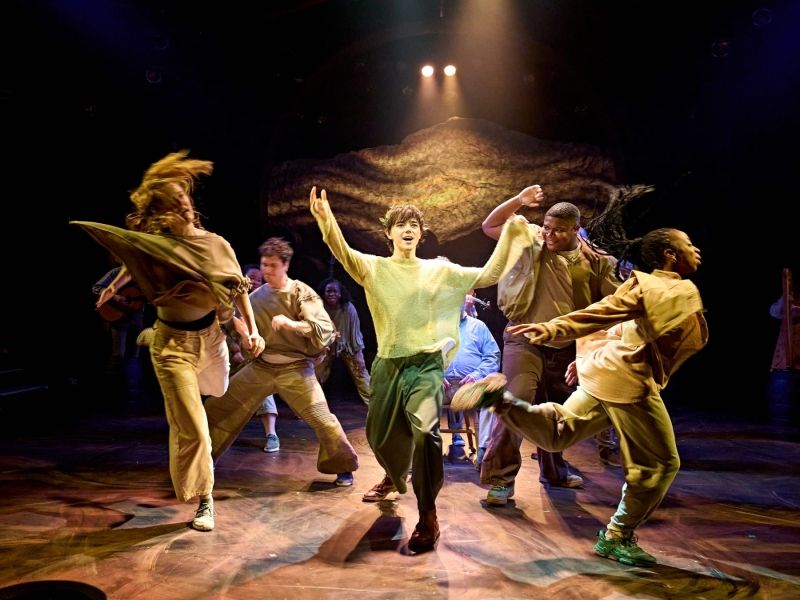
Photo Credit: Brinkhoff-Moegenburg
The character called the Balladeer that Noah Mullins plays, leads Harold on this pilgrimage. But he's forcing him to confront things from Harold's past that he's placed to the back of his mind and Maureen as well, to an extent. They're having to face up to events in their past that they haven't fully dealt with. They closed the door on their problems for 20 years ago and they've not looked at the issues, so there's a wedge in the marriage that they're ignoring.
Jenna Russell: We all have a history or things that have shaped us. Harold lifts his head above the parapet and sees everyone else struggling and getting on with it, or making choices to move forward and this inspires him, It's a very British tale, that's the beautiful thing about it. You will (the audience) recognise everyone that Harold meets. You'd recognise Maureen and Harold, and you'd recognise all the people they come across in their respective journeys
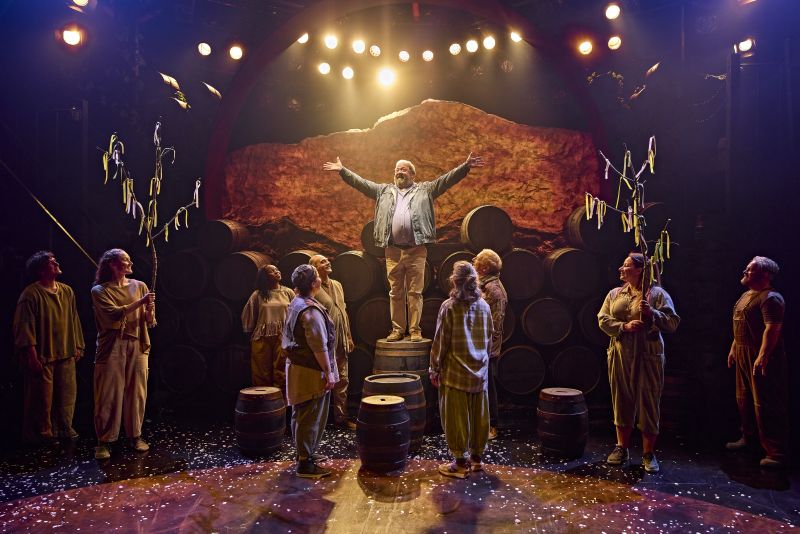
Photo Credit: Brinkhoff-Moegenburg
Mark, what drew you to Harold Fry the character? What made you want to return to him in the West End premiere?
Mark Addy: I'm not from the musical theatre world, so when I got sent a copy of the script and some demos that Passenger had recorded, I thought I'd better give these a listen. I listened to the songs and was just totally blown away by them. They weren't what I was expecting from a musical. And then I read the script and I was in in pieces by the end. Just reading it was the decision made for me, I have to do this. It kind of grabbed me and I wasn't going to let go.
Jenna, Maureen experiences a profound journey while remaining at home. How do you make the internal pilgrimage vivid and compelling on stage?
Jenna Russell: All I can do is just say the lines that are written and mean them. Our director, Katy Rudd and our designer Sam Wyatt and Tom Jackson Greaves, our choreographer, have such extraordinary imaginations. The way Katy Rudd directs things like Ballet Shoes and The Ocean at the End of the Lane. You just could not believe the imagination on the stage. So, Maureen's journey is very still but meaningful.
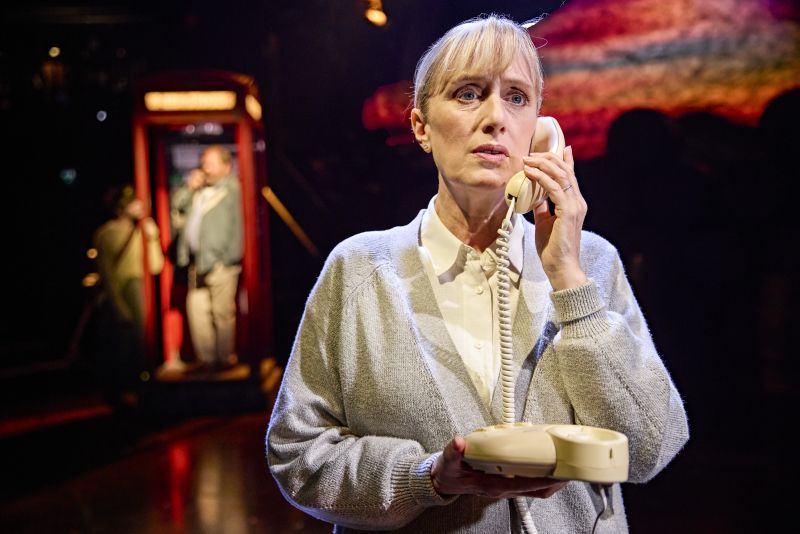
Photo Credit: Brinkhoff-Moegenburg
It's not as vivid a journey as Harold's, but she has a beautiful song. It's very touching and beautifully directed and choreographed. The creative team are an extraordinary bunch.
Mark, this musical moves delicately between humour and deep emotional resonance. How do you navigate those tonal shifts without tipping into sentimentality?
Mark Addy: Luckily, it's so beautifully written that you don't need to overdo anything. It's quite simple, it's there on the page, but it is quite a fine line to balance. There are amusing moments, there are funny parts, but it's also it takes the audience to some quite dark places that they may not expect, with these characters psyche and what makes them who they are.
Jenna, Passenger's lyrics give Maureen some of her most reflective moments. How do you connect emotionally with the music to express what remains unsaid?
Jenna Russell: I was thinking the same thing when Mark was talking about the script. Often as actors, we have to kind of wallpaper over the holes to create smoke and mirrors over that moment, or you invent something to detract (from difficult areas). But this script gets right to the point and it’s the same with the music. It's had a very big response from the audience in the room, just via the material itself. I think it's all so beautifully judged. Each song tells its own story in its own way. Mark's got a song called "The Girl in the Garage" which gets me!
Mark Addy: Both of us.
Jenna Russell: It gets to the root of someone's pain. So, so extraordinarily, and it's the quietest song. It's like in a monologue, it's so beautiful. Beautifully done by you Mark and beautifully written by Passenger. Jeremy Holland-Smith’s orchestration is off the charts. The show has a couple of ballads that are just utterly beautiful about loneliness. All of that coming together creates something that's quite magical for an audience, I think.
Mark, Harold's Pilgrimage is deeply physical. How important is movement, fatigue and stillness in communicating his transformation?
Mark Addy: Tom Jackson Greaves, our choreographer is brilliant. (The approach) is more about the movement telling its own story. The movement represents the passing of time, the seasons and travelling, but Katy Rudd said 'yes, it’s a story about a man walking 500 miles, but maybe taking one step and then arriving at your destination, so that the company do the swift movement, means that Harold is exactly where he was trying to get to.'
Jenna, how did Katy Rudd's direction and approach help you to uncover the delicacy and hope at the heart of Maureen's journey?
Jenna Russell: In all honestly, of all the directors I've worked with, I trust Katy probably the most, because I've seen how brilliant she is in terms of focus. I trust her implicitly and she's like a detective. We're looking at the clues and thinking, what order do I need to get everything in? And she never let’s go, she’s forensically focused. It's such a such a happy creative room to work in.
What does it mean to you to open this production at the Theatre Royal Haymarket?
Mark Addy: Lovely, it's very exciting. It's the right kind of space, as we started in Chichester at the Minerva, which seats 300. So now we're tripling our audience, but it still feels like an intimate evening, as intimate as it can be. You know, in some of the theatres you're so distant from the audience that you (worry) that they may not feel. I think the Theatre Royal Haymarket is the perfect theatre for it.
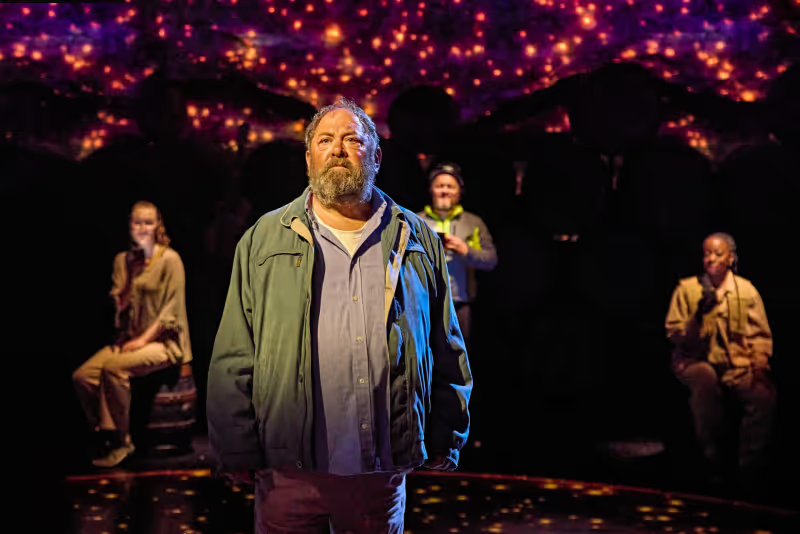
Photo Credit: Brinkhoff-Moegenburg
The story is rooted in redemption, resilience and second chances. Why do you think these themes resonate so strongly with audiences now?
Mark Addy: It's an age-old thing, isn't it- redemption? The couple are dealing with grief; how do we move forward? How do we continue to move forward in the face of adversity and pain and forgiving each other, or not? How do we do that? I think we all experience it at some point in our life.
Jenna Russell: There's a beautiful thing that Harold says about how walking, just walking down the street, not realising that everybody has a story and everyone carries something difficult. We should all be a bit more forgiving with other people. More willing to accept people as they are, with whatever faults and issues they have, understand that, take it on board and carry on with life. Life goes on and, I think there's a positive and hopeful message in the show that says it's never too late for a second chance.
What would you like theatre audiences to leave feeling about Harold's and Maureen's journey?
Mark Addy: Hope is the over overriding feeling. It's a good message to be putting out there at this time of where the world is. We're not in the best the healthiest situation globally, so to have a show that gives a positive [stance], takes you on a bit of a roller coaster ride to get there, but ultimately it is about love, forgiveness and redemption as well. It's full of positive vibes.
Jenna Russell: The musical is very funny in places, and I think it's a very particular British show and we don't have a lot of those, it's unique in that way. You (the audience) will recognise every person and it's just a little snapshot of our land and how we as a nation are. How we deal with things, but it's funny and hopeful. I love it, I hope you will too.
The Unlikely Pilgrimage of Harold Fry runs at Theatre Royal Haymarket from 29 January - 18 April
Main Photo Credit: Brinkhoff-Moegenburg

Sign up for all the news on the Fall season, discounts & more...
|
Powered by

|
.jpg?format=auto&width=300)