


Review: WHAT BRINGS YOU IN at Theatre Passe Muraille
Leslie Ting finds her voice through violin
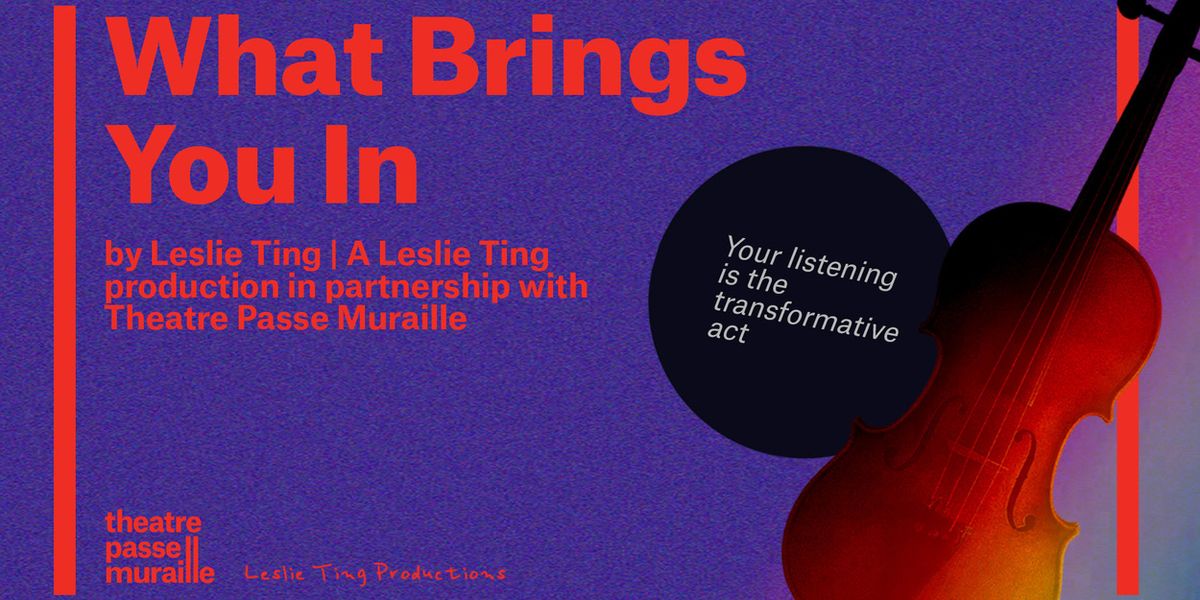
In therapy, “what brings you in?” is a common question. It’s a neutral way of saying “what’s wrong?” or “what do you want to fix about yourself or your life?”
Why did you choose to come here, now, to this space?
Violinist Leslie Ting, the writer/performer of WHAT BRINGS YOU IN at Theatre Passe Muraille, is no stranger to therapy, having tried different kinds at various points in her life. There’s the moment she needed courage to break it to her family that she was going to devote herself to music after six years of optometry school and starting a practice, choosing the ear over the eye. There’s the time she could no longer take being responsible for everyone’s schedule, precipitating couples’ sessions. And there’s the time she looked at the instrument she’d changed her life to practice, finding she could no longer play a note.
But there’s another, more philosophical meaning of “what brings you in?” It’s a question of what pulls you towards your passion, makes you lean forward in your seat at a show, grounds you, fulfills you? What makes you the person you are?
Ting’s performance art piece-cum-concert is part life confessional, part experimental violin recital, and part meditative state. A quiet, contemplative show when it’s not sending string sounds up to the rafters, it literally invites its audience to lie down and consider when we are the most ourselves with others, who we trust with this least-filtered version of identity, and how often we allow ourselves this state of being.
Opening more doors than it walks through, the show could use some additional dramaturgy to give us a better sense of Ting’s development while she finds her own answers to these questions. But Ting’s appealingly unaffected delivery, some unusual instruments, and a couple of violin-electronica showpieces effectively speak to the concept of self-acceptance.
We’re introduced to Ting’s musical taste and playing style as audience members in the front row are directed to hold up music while she traverses the space playing a movement of Linda Catlin Smith’s Dirt Road with accompaniment by Germaine Liu, consisting of mostly a single note played with different rhythms. The start here is warm but tentative; it feels coiled, restrained, as we wait for things to really begin.
Ting otherwise improvises or plays from memory, so her choice to visually examine a relatively straightforward musical line here feels like a metaphor, an indication that playing outward for an audience instead of for herself results in a sort of stasis or sameness. Indeed, Ting indicates that her constant pursuit of perfection for an audience has been detrimental to her progress as an artist and as a person, gradually unfolding a more and more virtuosic playing style as she achieves revelations in and around her therapy sessions. Philosophically, her structure makes perfect sense; artistically, it asks for patience and understanding before we know we will be secure in the artist’s hands, demanding a leap of faith that audiences may or may not be prepared to give.
Ting gives us a window into her forays with improvisation, testing the limits of her instrument with accompanist Liu. She tells relatable stories of stress and loss, and the pressure to define and improve oneself. Her conversational tone makes you want to lean in and listen, and with several audience members lying on cushions around her, things take on the air of a violin-themed slumber party, but the part where nobody’s slept yet and filters have started to break down. That Ting performs from the floor rather than the stage also increases the show’s intimacy (and decreases the audience capacity).
There’s no credited director on the piece, and while moments transition fluidly into the next observation, audiences may wonder how most of the stories actually end. How did the career-change conversation with her mother go, that worried Ting so? What happened once she released her frustrations to her husband about managing the household? It’s not that she has to tell us all her secrets, but the show pulls back, tantalizingly, before each potential resolution.
I also found myself wanting to know more about her collaborative process with Liu, whose solo on a kinetic “sand table” that makes electronic music when played with like a gravel theremin is a show highlight.
Two final pieces in Ting’s repertoire, commissions from Rose Bolton and Julia Mermelstein, may be what really brings you in. Both compositions are beautiful, complex and layered, and Ting’s violin duets with an electronic landscape of whispers and swelling tones. The more to the centre you sit (the more “in” you are), the more wrapped in the binaural, three-dimensional experience you become. Hanging from long wires, bare bulbs with glowing filaments from lighting designer Theodore Belc, glow brighter and dimmer at key points, accompanying the experience and encouraging an almost trance-like state.
WHAT BRINGS YOU IN is a convincing argument for the power of listening to the self instead of trying to fix it; as such, it seems churlish to suggest improvement. It’s a peaceful and refreshing 75 minutes with some fascinating new work from some of Canada’s most exciting composers that rewards thought and contemplation.
That is, if you bring yourself in.
Graphic provided by Theatre Passe Muraille
|
LA BOHEME Terminal Theatre (11/27-11/29) |

|
Improv Movie Night! The John Candy Box Theatre (8/14-9/24) PHOTOS VIDEOS |
|
Mt. Joy RBC Amphitheatre (9/21-9/21) |
|
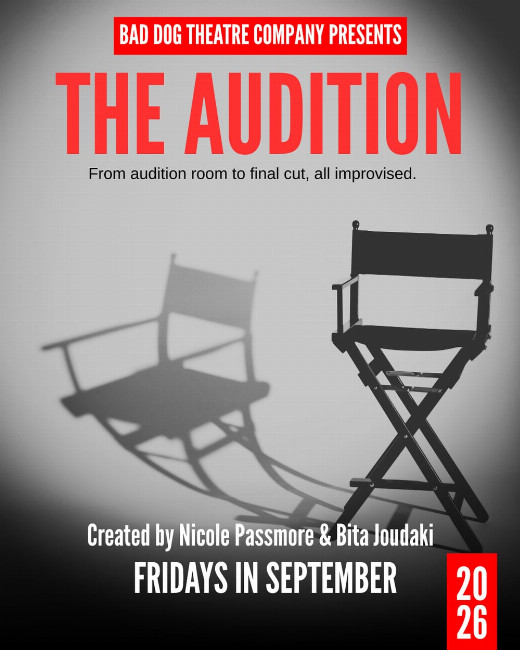
The Audition Comedy Bar (9/04-9/18) |
|
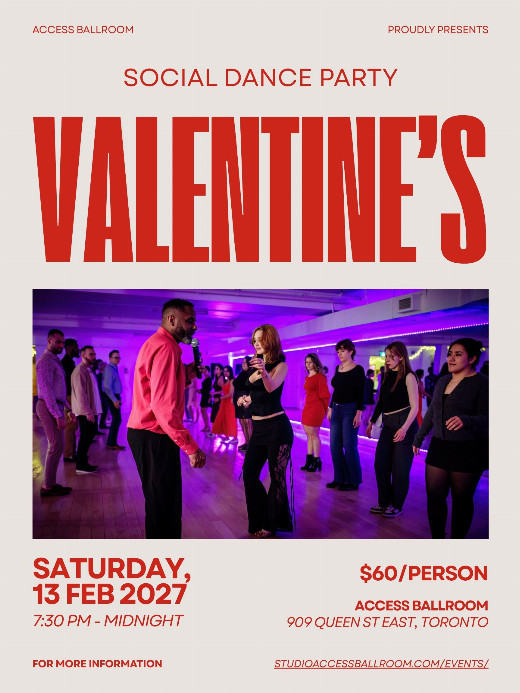
Valentine's Bachata & Social Dance Night | Access Ballroom Toronto Access Ballroom (2/13-2/13) |
|
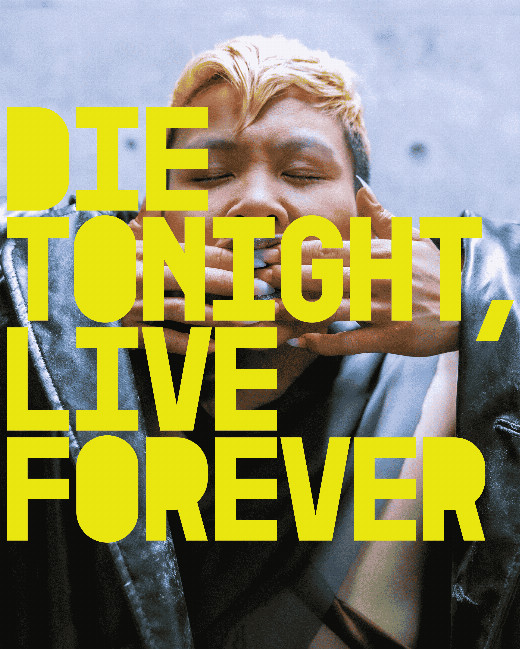
DIE TONIGHT, LIVE FOREVER or THE NOSFERATU PRINCIPLE Buddies in Bad Times Theatre (3/10-3/27) |

|
GRAHAM100 Terminal Theatre (4/30-5/02) |

|
A Midsummer Night's Dream Stratford Festival (5/01-9/26) PHOTOS |
|
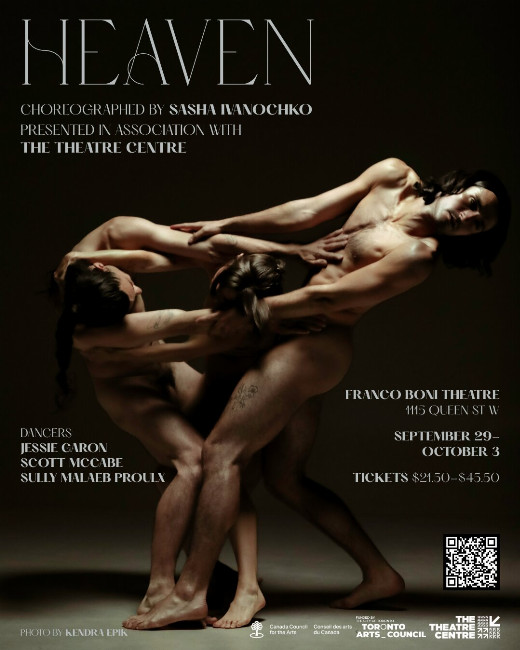
Heaven Heaven (9/29-10/03) |
|
Saturday, Sunday, Monday Stratford Festival (8/04-10/24) PHOTOS |
Reader Reviews
To post a comment, you must register and login.