


Interview: Aidan DeSalaiz of COMPANY at The Theatre Centre
Talk Is Free Theatre's immersive production takes on urban loneliness
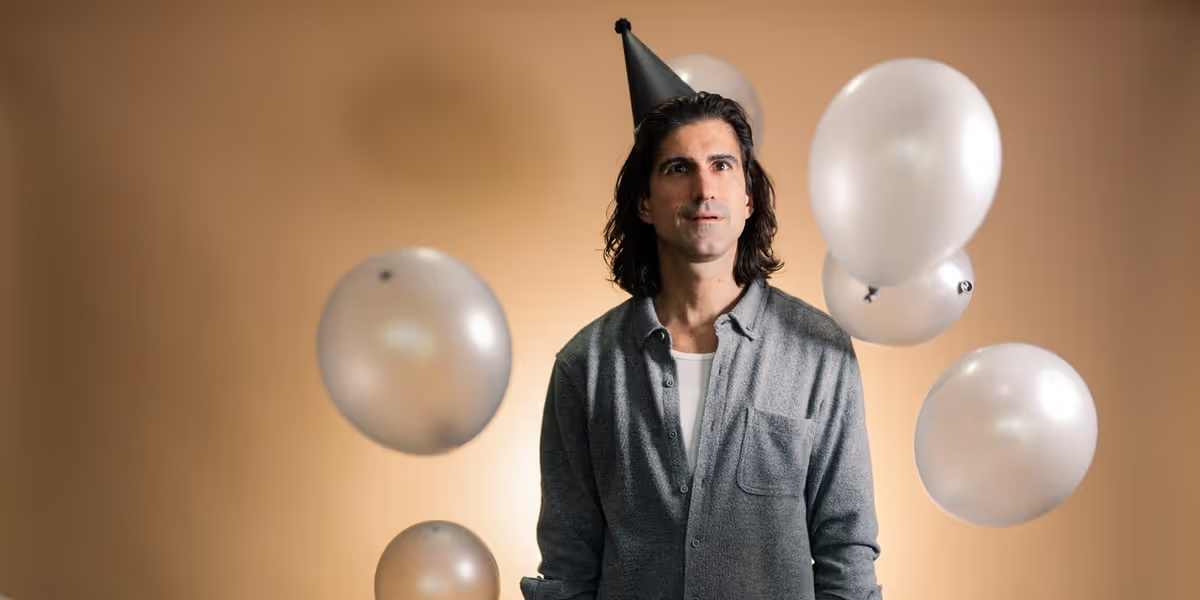
Phone rings, door chimes, in comes Company!
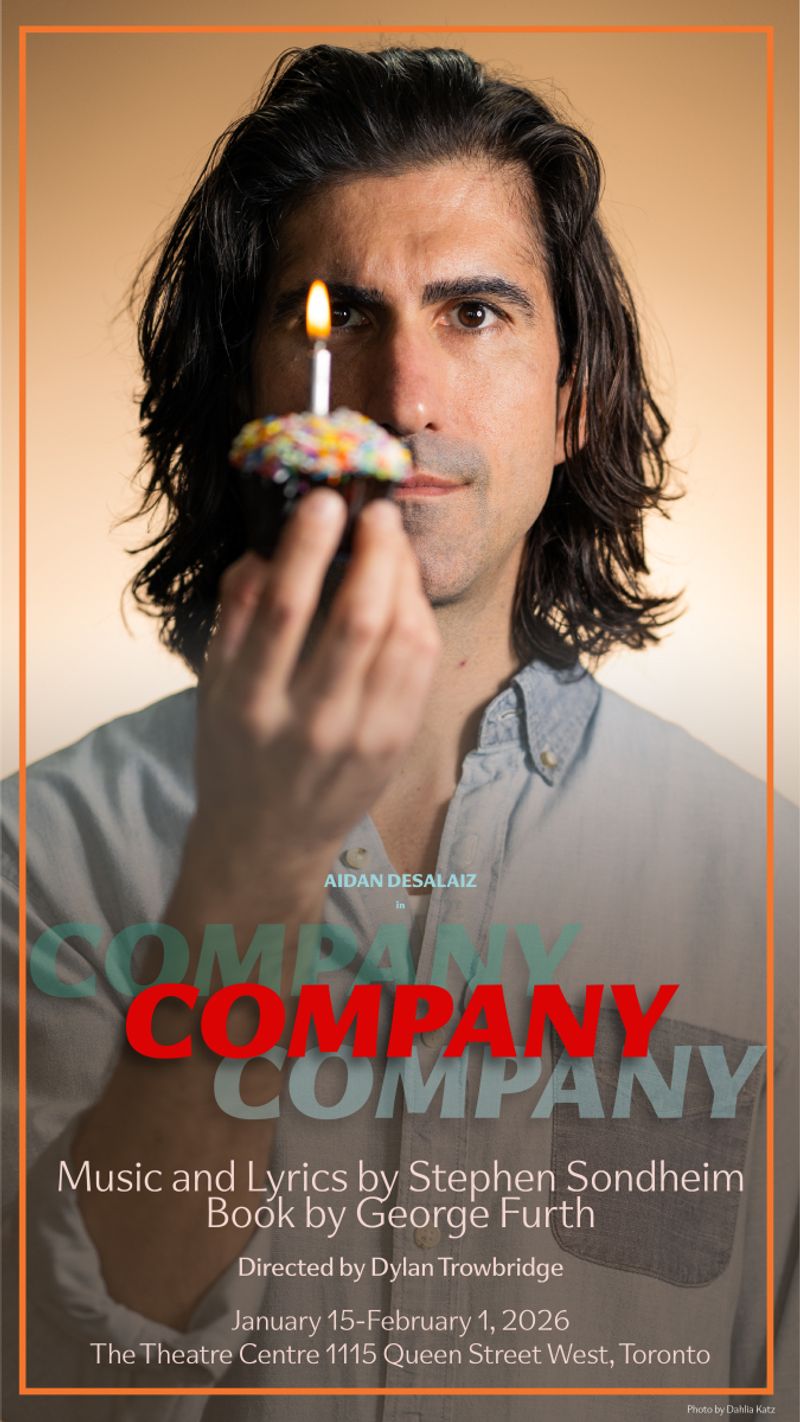
Talk Is Free Theatre brings Steven Sondheim and George Furth’s 1970 Tony-winning musical about urban detachment to The Theatre Centre’s Franco Boni stage starting January 15th. One of the first musicals to take on the state of modern marriage, dating, and divorce, Company’s main character Bobby greets his 35th birthday with a sense of ennui and trepidation. Bobby has allowed himself to stay solitary for a long time, but the insistent ringing of his doorbell won’t be denied—his paired friends have come to celebrate, check up on him, and perhaps even set him up with someone new. Of course, these couples have drama of their own to relate…
BroadwayWorld spoke to actor Aidan deSalaiz, who plays Bobby in the immersive production, about the show’s contemporary relevance, its fascinating and revealing contradictions, and the joys of connectivity in an increasingly isolating world.
BWW: What do you think inspired Talk Is Free to do Company now?
AIDAN: That's a good question. I can't speak for [TIFT founder] Arkady [Spivak] and the company itself, but I think it does feel especially pertinent in today's world, because Company is so much about a character, Bobby, who is isolated. Who's living a life of separateness, of isolation, of avoidance, of avoiding other people, because he thinks that it's going to protect him. He thinks of that as a safe way to live his life, to not engage, to disengage from those around him, from the universe, from anything that might affect him, and therefore probably hurt him. The more I've worked on this show, the more I've thought about the exact question you're asking.
I commute to work every day, across the city. And I don't want to judge, and I'm guilty of it all the time, but people are always on their phones, they're separate. I think we think in our life today that we're going to be safer somehow if we are apart, when in fact, I think we know that there's a deep need for unity and for other people to get through life. To survive this world, it's hard, and we can only do it together. And I do think that that's really part of the heart of Company.
So I would say maybe that's why we're doing it.
BWW: That's very much expressed with Bobby's song, "Being Alive."
AIDAN: Absolutely. And it's funny that you should say that. We just ran Act 2. I just did “Being Alive,” and that's what Bobby's realization is, that he, in fact, needs to open his heart to the elements around him, to other people, to the joy and the love and the beauty. But with that also comes pain and loss and terror and heartbreak and all that life entails. That's what being alive is all about, and it is scary, but we have this one life. We may as well go for it.
BWW: We see a lot of people choosing convenience over connection. And there is, like you say, that element of self-protection, that isolation, the fact that we can be an avatar if we want to. But in this show, Bobby's friends aren't going to let him do that, because they keep bursting in.
AIDAN: That's right. I think they recognize him, they see him, and they know him, and they know that his life needs to be saved. Because there's only so much separateness you can take. I experienced being that avatar through COVID, for sure, through the lockdown. Doing theatre on Zoom is excruciatingly difficult, but there's a certain degree of safety there, you know? To be private, to be separate, but ultimately it's not as much fun. Not as dangerous, you know?
BWW: So that's one big, relevant theme right there. Are there any other themes in this piece that particularly resonate with you, or that you think will resonate with audiences?
AIDAN: Taking a chance at love. It's as simple as that, too. I mean, there's all these big, huge issues for sure in the piece, that are deep and profound and deeply human, but it's also an entertaining show. That's what I really want to stress to audiences. It's brilliantly fun. It's exciting. As you know, Sondheim's notoriously difficult, so you come to the theater and you see these incredible performers that I get to work with doing extraordinarily difficult music beautifully, the harmonies, the discord, all of that. I think that's what it's about, too. It's the beauty and joy of great music and great storytelling. And there's love stories in it, too.
BWW: What are you enjoying most about working with this piece?
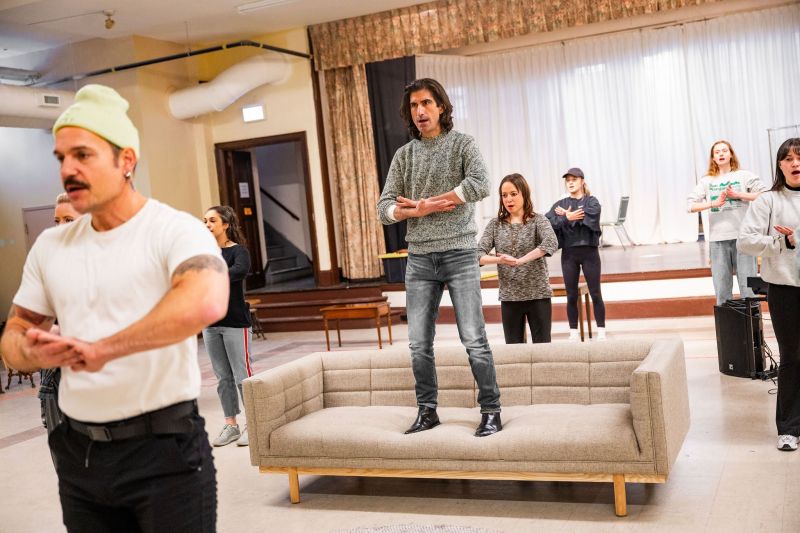
AIDAN: I would say everything that we've already covered, because I feel like I've related to Bobby's journey, for sure, in my own life. Being alive is scary and exciting and terrifying and beautiful and all those things. But then on top of that, I would say working with Dylan Trowbridge, our director, has been a deeply inspiring experience. Every day is a joy, and is discovery and excitement and moving forward. And also, the people I get to work with, I can't stress that enough. It feels like a giant group hug during the show. I know some people think it's about Bobby, but it's not. It's about everyone. It's about everyone in the show going through the journey of being alive and helping one another. It's a real ensemble piece, and I hope that audiences will see that, too and be taken along with the ride. It's a joy coming to work.
BWW: Talk Is Free has a reputation for these really intimate, site-specific productions. What can audiences expect from this production in that vein?
AIDAN: Well, without giving too much away, I would say that audiences are a part of the show. We can't do the show without them. The show is about them. It's deeply collaborative. We take them on a journey. It is entertaining and exciting and great music and amazing choreography, but it is also immersive. They are part of our show. I think there's going to be some surprises along the way.
.jpg?format=auto&width=800)
BWW: There are a lot of indelible portrayals of Bobby, from Dean Jones in the original cast to Raúl Esparza in the 2006 Broadway revival to the 2011 Neil Patrick Harris filmed version. When you were preparing for this part, did you take any inspiration from any particular portrayal? What was your process like?
AIDAN: There's a lot of soul-searching. I took myself on a lot of walks, a lot of walks in the forest. I get really inspired by nature, by trees. The wisdom of trees. And just kind of talking aloud. I probably sound like a crazy person, but it's how I process the thoughts that are circling around in my head. And so I go on a lot of walks, I talk to myself, I have conversations to try to make sense of what's going on. I do a lot of imaginative work. Then I do a lot of just learning music, because with Sondheim, as you know, I just have to drill it, so there's a sense of drilling the music over and over.
I tried to learn as much of the material as I could before I walked in the room, because I know we had very little time. And also because I was just so excited to get started; it's just such juicy, thrilling material to work on, so I lived with it by myself in my house in Stratford, just going over it and over it and over it, reading it, watching interviews, specifically with Stephen Sondheim talking about it, other performers who'd worked on the show, watching, as you say, other productions on YouTube. Just a bit, not too much, because I want to bring myself to the work. When I say I did soul-searching, I ask myself those big questions that, Bobby deals with, and I try to meet him halfway and see how that resonates, and then hopefully we sort of meld into one Bobby, that's me.
With Sondheim, I love exploring the paradoxes, the contradictions that he always brings to his work. I was really thrown by how much there is in Company—the pull of opposites. If you find that middle place, he's able to zone in on the truth of the human experience, really. Like no one else.
But then ultimately, there's only so much work I could do. I did as much as I could, but I had to be open to spontaneity and to the glorious people that I get to meet and work with every day, and what they bring, which then kind of shook me up, and made me question my own choices, and that's what playing's all about. I did a lot of prep, and then when I get in the room, I have to let some of that go and leave it to chance and risk, and daring, and jumping off that cliff and seeing what happens. There have been tons of surprises.
BWW: You mentioned these contradictions that you find in Sondheim's script. I agree that the contradictions are very appealing, and that's one of the reasons you can see a show like Company dozens of times and it never gets old. Was there a particular contradiction that resonated with you?
AIDAN: I would have to say most of the lyrics in “Sorry-Grateful”.
Here are some faves:
“Everything’s different, nothing’s changed, only maybe slightly rearranged”
“Good things get better, bad get worse. Wait - I think I meant that in reverse”
It’s fascinating to me how Sondheim is able to hone in on the truth of these human beings with such lean, concise thought and paradox. People are such complicated animals after all!
BWW: You said earlier that you want audiences to know that this is a fun show, despite all of the heavy existential questions that are going on. Do you have a particular message for audiences about why to see this show, or what to expect from the show?
AIDAN: There's a lot of humour. I hope that audiences will come to our show and be entertained, number one. I hope they'll feel a part of the journey of the characters, be taken on a ride, be surprised. And ultimately, leave the theater feeling more alive themselves. I hope you'll feel inspired. We want to make them feel more alive. That's our job.
Company runs from January 15-February 1st at The Theatre Centre (1115 Queen St. W)
Photos of the cast of Company by Dahlia Katz
Prefer BroadwayWorld in Google Search?
Add us as a preferred source so our stories show up more often in Top Stories and Google’s AI answers — for you.

Sign up for all the news on the Fall season, discounts & more...

|
Bee Gees Celebration Théâtre Capitole (12/16-1/02) |

|
Rogers v. Rogers Canadian Stage (11/08-12/13) |

|
Spring Awakening Soulpepper Theatre (9/10-10/04) |
|
Creditors Canadian Stage (4/09-5/02) |
|
The Tempest Stratford Festival (4/28-10/24) PHOTOS |
|
MrBallen: Lights out Live Meridian Arts Centre (10/04-10/04) |
|
THE ART OF SOUND CBC Glenn Gould Studio (6/26-6/26) |
|
Heist Theatre Aquarius (4/28-5/15) |

|
BE MORE CHILL Terminal Theatre (2/02-2/20) |

|
The Rainbow Fish Musical Wychwood Theatre (9/19-10/18) |
