


Frist Art Museum To Present SISTAH GRIOT: THE ICONOCLASTIC ART OF BARBARA BULLOCK
The exhibition highlights the work of the Nashville-based artist as part of the Tennessee Triennial.
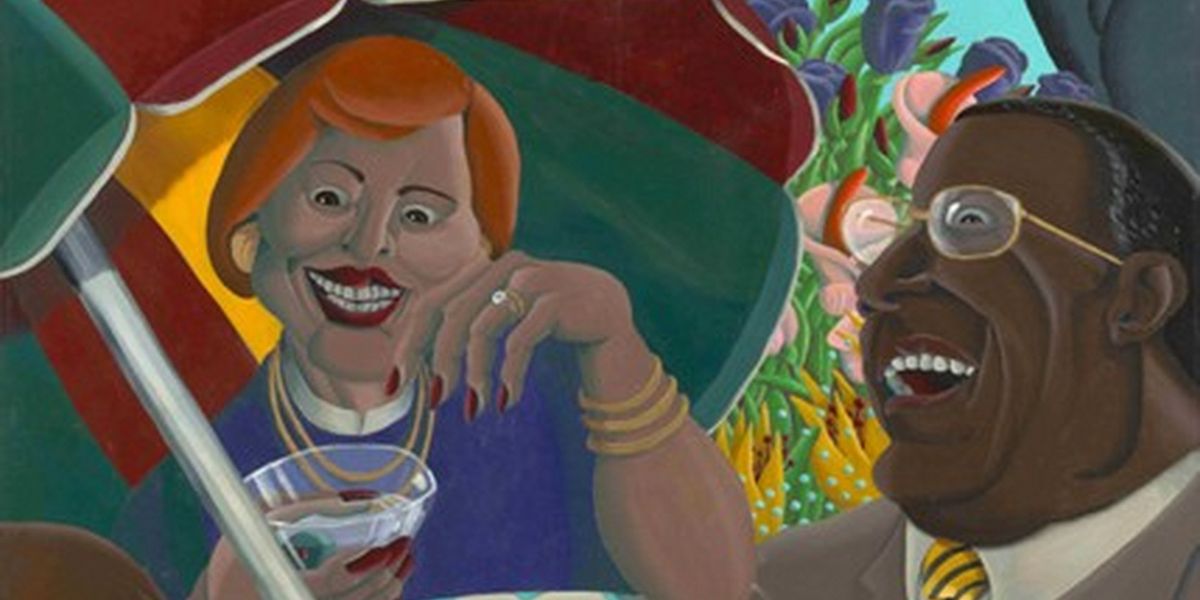
The Frist Art Museum will present Sistah Griot: The Iconoclastic Art of Barbara Bullock, an exhibition that showcases the incisive and still-timely work of Nashville-based artist Barbara Bullock (1949−1996).
Organized by the Frist Art Museum with guest curator Carlton F. Wilkinson, the exhibition is part of the Tennessee Triennial and will be on view in the Frist's Gordon Contemporary Artists Project Gallery from January 29 through April 26, 2026.
Known for her precisely rendered graphite illustrations and boldly colored paintings, Bullock was active in the Nashville art community in the 1980s and 1990s until she passed away from cancer in 1996. This exhibition features approximately 40 works from private collections around the country and is an opportunity for new audiences to learn about the influential yet undercelebrated artist.
"She influenced so many artists in Nashville with her fearless and candid disposition. Her legacy is one of radical honesty, spiritual awakening, and a commitment to healing through art," writes Wilkinson. "Many continue to see her as a griot, a West African term for an oral historian and storyteller, and her works continue to be relevant as visual representations of both personal and collective experiences." The imprint Bullock left on the Nashville art community lives on in her network of close friends and colleagues, some of whom are featured in the adjacent exhibition, In Her Place: Nashville Artists in the Twenty-First Century.
Barbara Bullock moved to Nashville in 1969 from Buffalo, New York, and studied art at George Peabody College for Teachers (now a part of Vanderbilt University). After suffering a debilitating stroke at the age of 35, she returned to full-time artmaking as part of her physical recovery to rehabilitate her hand-eye coordination. She began taking art classes at the Watkins Institute (now Watkins College of Art at Belmont University) and made detailed contour line drawings of wrestlers, street pedestrians, dancers, and performing artists. At that time, Bullock's style shifted considerably from precisely rendered graphite illustrations to boldly colored paintings that defy realistic spatial construction, influenced by both the double vision caused by her stroke and the work of M. C. Escher.
While her painting helped to heal her double vision and restore her fine motor skills, Bullock always maintained that the ultimate goal of her practice was to help heal the world of social inequalities. Shaped by lived experiences, her work critiqued racism, sexism, and classism, as seen in such paintings as Gentrification and The Hate that Hate Produced. In particular, Bullock offered satirical commentary on societal norms projected onto Black women born into upper-class families. She often featured herself as the main character in her paintings. In one such work, titled Falling or The Yellow Room, she expressed her discomfort with her privileged early life by depicting herself falling off the stairway balcony of her teenage home.
Bullock also painted friends, acquaintances, and her beloved cat, Lucy. Yet, as Wilkinson notes, her compositions were sometimes filled with symbolism and more complicated to interpret. "Barbara looked to history and mythology for inspiration, including the story of Egyptian deities Osiris and Isis, and related her struggles with her health to the ordeals of medieval saints and martyrs."
Wilkinson says Bullock found her creative home in Nashville and considered her time in the city as a creative renaissance. She embraced the organization N4Art (Nashville African American Art Association) as a creative community and was an inspiration to its other members, including Samuel Dunson and David Cassidy.
"She wanted positive change, although she often felt frustrated by the lack of humanity in what she had witnessed and experienced in her lifetime," writes Wilkinson. "She chose to engage with the structural challenges of society by rejecting the seemingly charmed life she experienced growing up. Living modestly was Barbara's truest form of spiritual awakening."
Program
Panel: The Life and Legacy of Barbara Bullock
Thursday, February 5, 6:30 p.m.
Auditorium
Free for members; $10 for not-yet-members
Registration required.
Guest curator Carlton F. Wilkinson will moderate this compelling panel discussion about the life, work, and legacy of Barbara Bullock. Featuring Henry Jones, Andrée LeQuire, and Aïssatou Sidimé-Blanton, the conversation will center on the exhibition Sistah Griot: The Iconoclastic Art of Barbara Bullock.

|
Five Finger Death Punch, Cody Jinks & Eva Under Fire FirstBank Amphitheater (10/08-10/08) |

|
Darren Knight -- A "Knight" with Southern Momma South Jackson Performing Arts Center (8/15-8/15) |

|
Gunhild Carling at City Winery Nashville City Winery Nashville (11/01-11/01) |

|
An Enemy of the People The Circuit Playhouse (9/11-10/04) |
|
Sister Act Hendersonville Performing Arts Company (5/27-6/13) |

|
Dial M for Murder Hendersonville Performing Arts Company (3/19-4/04) |

|
Purpose The Circuit Playhouse (2/19-3/14) |

|
The 49th Annual Art Auction Playhouse on the Square (4/24-4/24) |

|
The American Revolution (in 40 Minutes or Less!) Chattanooga Theatre Centre (9/01-9/30) |
|
Les Miserables Playhouse on the Square (5/28-6/27) |