


Review: The Music Makers & Dreamers of Dreams
This intimate musical - part history lesson, part good-humored satire, part nostalgic paean to all things Irish - is a tribute to the spirit of a people.
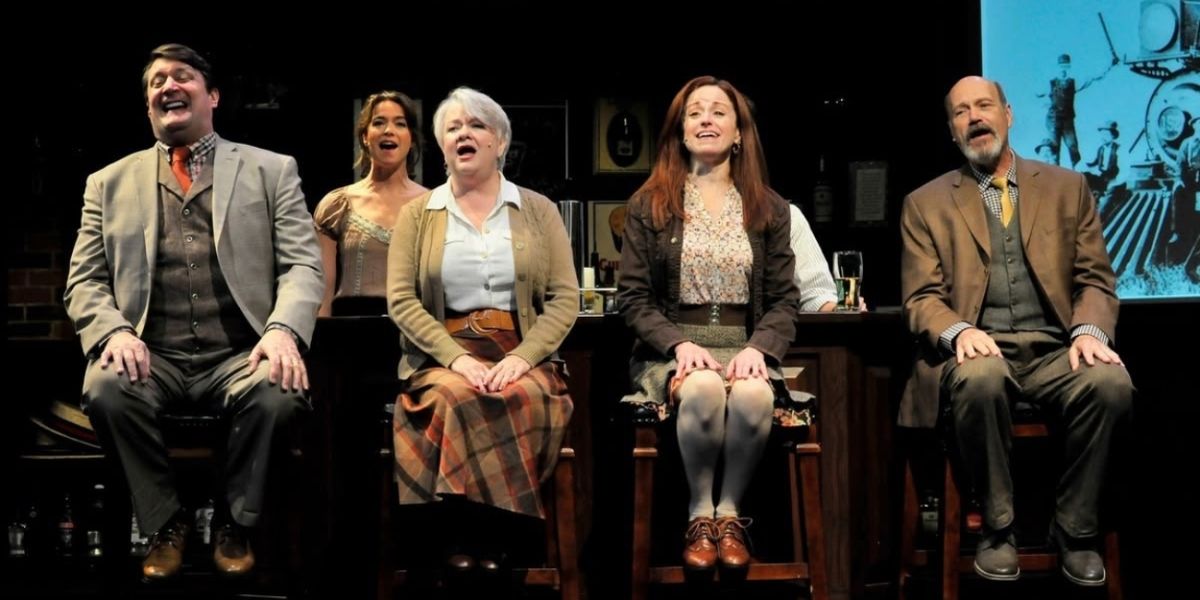
In the darkened theatre, pinpointed by four spotlights, fluid voices chant Irish poet Arthur O’Shaughnessy’s words, “We are the music makers, we are the dreamers of dreams,” and so begins the exquisitely poetic, heartwarming, gut-wrenching, and, yes, hilarious saga of the Irish experience told in vignettes and lilting song by one of Ireland’s own finest poets, the author of Angela‘s Ashes, Frank McCourt. This intimate musical - part history lesson, part good-humored satire, part nostalgic paean to all things Irish - is a tribute to the spirit of a people, their resilience, their dreams, and the overwhelming magical power of their music.
That MSMT chose to create this their co-production with Lewiston‘s Public Theatre is perhaps no surprise since every mounting of this play has met with huge public success. For the current production’s creator, Marc Robin, this is his fifth foray into the material, and for the current cast their second as an ensemble. It was previously presented in Maine at Portland Stage in 2017, then in two recent productions at Lancaster’s Fulton Theatre, and in its original staging at Chicago’s Mercury Theatre, where it ran for two years. And judging by the audience response on opening night here in Lewiston, THE IRISH.. is back in all its irresistible glory.
Director/choreographer Marc Robin sets the production in the context of an Irish pub where four friends are enjoying an evening of story and song, in contrast to Charlotte Moore’s debut staging with stools and bare bones props. Robin alters the production from its last incarnation at the Fulton, which was done in a black box with multiple stages and action in and around the audience, to a traditional proscenium approach where the opportunities for audience physical engagement are limited –(though the performers do come down into the audience a number of times), but there are some interesting possibilities to focus attention more intently on performers and special moments. Despite the fact that this is anything but new material for Robin and for the cast, they all manage to bring a freshness to the work. Part of this has to do with the amount of improvisation required of the cast, who handle those moments brilliantly. Robin crafts the entire evening seamlessly with a brisk pace and easy transitions that grow naturally out of McCourt’s flawless writing. And Robin does what he can always do; he calibrates the emotional journey so that it turns on a dime, flowing from the pathos of “Danny Boy” into the hilarity of the funeral, for example. His choreography punctuates the project with lively moments like a tongue and cheek tap dance for the tenor, a riotously funny Irish jig for the two women, or a vaudeville sequence that opens the second act.
The arrangements by Rusty Magee are performed by an excellent four-person, onstage instrumental ensemble, consisting of fleet fingered music director Jason Wetzel on the piano, Eric Landau on percussion, and Madeline Downs on the fiddle – largely responsible for some very poignant solos.
Courtney Smith‘s set design (Duck Bracey, Props) suggests a workaday Irish pub - its massive bar with wood paneling and dark green walls the focal point.
The lighting design by Michael Reidy is as fluid and briskly paced as the action, often serving to focus attention on individual performers, while Kevin Lee’s sound design balances the instrumental combo and voices skillfully.
Madison Queen coordinates the costumes: practical Irish tweeds in neutral shades that complement the décor. Stage Manager Adam P. Blais ably anchors the action.
The cast exudes a matchless chemistry born (in the case of the four principals) of years of theatrical collaboration and friendship, as well as a close connection to the material. Vocally, they harmonize beautifully, each bringing a distinctive timbre and vocal power.
Heidi Kettenring projects both gravitas, and mischief, and she delivers her narratives and songs with authority. There is nary a dry eye when she finishes “The Fields of Athenry,” and she lets loose with some soaring riffs in the U2 finale.
Charis Leos puts her signature comedic stamp on a series of characters from the superstitious old woman to the dim maid, to Queen Elizabeth I, but it is as the Widow Clancy that she and her chief scene partner Curt Dale Clark, as the tipsy reporter, dissolve the audience in non-stop laughter with their improvised drunken antics. Leos gets to showcase her vocal heft in songs like “Finnegan’s Wake” and her narrative ability to switch from silliness to chilling poignancy in contrasting segments.
David Girolmo brings both levity and dark melancholy to his characters in vignettes like the account of the Fitzgerald family’s drowning or powerful rhetorical skill in his delivering of Daniel O’Connell’s speech. Girolmo lends his rousing baritone to a witty account of “Mrs. McGrath” and a stirring rendition of “The Ghost of Molly Maguire.” And he adds his own side-splitting monologue to the funeral scene.
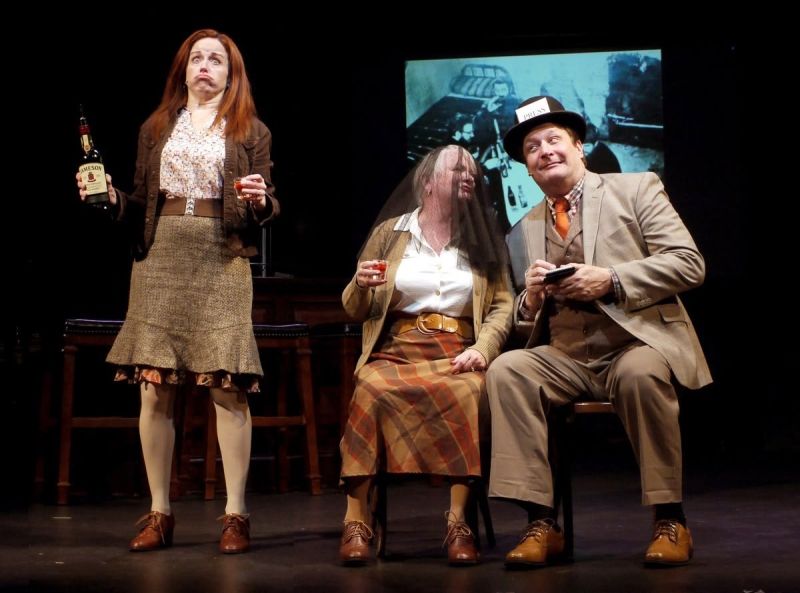 Curt Dale Clark gets to deliver some of the most touching narratives like “The Letter” and the bailiff’s account leading into “Skibbereen,” and he is blessed with music that sits perfectly in his impressive tenor range. He soars through “In the Rare Old Times” with potent fervor, sears hearts with a haunting “Skibbereen,” romps through the vaudeville songs and jokes of George M. Cohan, and meltingly croons Irish ballads like “The Anchors Aweigh” and “The Shores of Amerikay.” But it is his “Danny Boy,” which unfailingly brings down the house - sung in a creamy, seamless tenor that flawlessly executes the high notes, exquisitely phrases the poetry, and pulsates with subtle emotion that leaves the audience weeping and cheering. Quite simply, for this critic, it is the best rendition of this song you will ever hear!
Molly Frantzen and Will McPherson portray the bar staff and add their polished voices to the ensemble numbers, and McPherson plays excellent guitar.
As the slides of John F. Kennedy’s funeral melt away and the ensemble launches into U2’s “I Still Haven’t Found What I’m Looking For” with each cast member belting out a rousing solo, the audience is on its feet cheering, clapping, crying. Like James Joyce’s Bloomsday amble, Frank McCourt’s journey is circular and unending. But it is the sense of the communal, the emotional identification with the stories told and the hearts seared by music and poetry that is unforgettable. And perhaps that is the secret of why the show has audiences coming again and again to multiple productions, each time leaving the room uplifted.
We are the music makers; we are the dreamers of dreams. In the space of two short hours that “we” has come to signify not only the actors on stage, but also more the “we” who have ventured into their realm and been transformed.
Photos courtesy of MSMT & Lewiston's Public Theatre, Janet Mitchko, photographer
THE IRISH AND HOW THEY GOT THAT WAY runs from August 27-September 14, 2025, at www.thepublictheatre.org, 31 Maple Street, Lewiston, ME.
|
Come From Away Maine State Music Theatre (8/05-8/22) |
|
Æther and Unearthed Westbrook Performing Arts Center (9/19-9/19) |
|
The Producers OGUNQUIT PLAYHOUSE (8/27-9/26) |
|
|
Count Arthur Strong - And Its Goodnight From Me! Monmouth Savoy Theatre (3/05-3/05) |
|
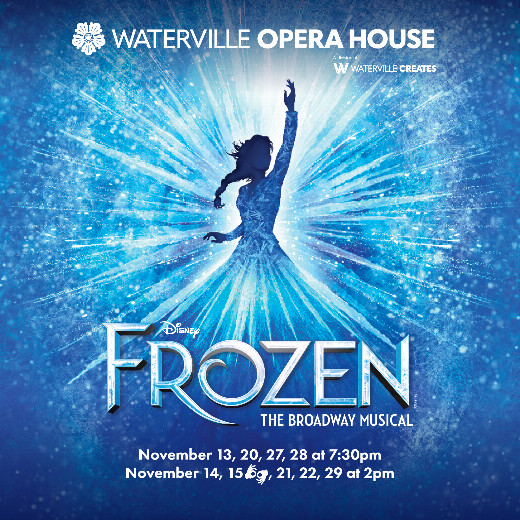
Frozen the Broadway Musical Waterville Opera House (11/13-11/29) |
|
Unabashedly Waterville Opera House (8/28-9/06) |
|
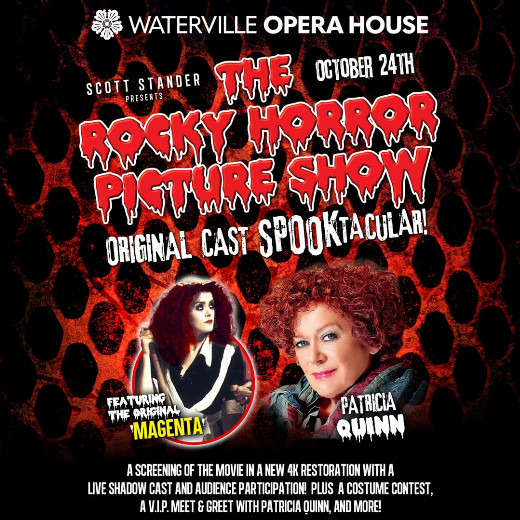
The Rocky Horror Picture Show Spooktacular Tour with Patricia Quinn Waterville Opera House (10/24-10/24) |
|
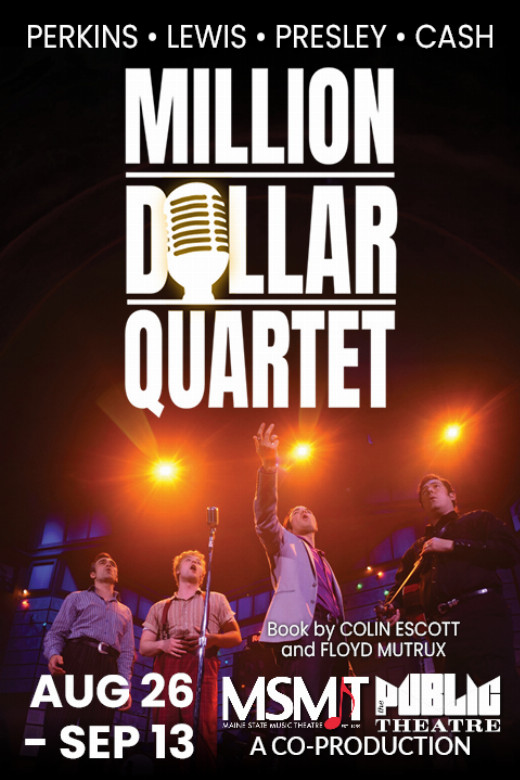
Million Dollar Quartet The Public Theatre (8/26-9/13) |
|
The Wizard of Oz! Community Little Theatre Corp (8/07-8/16) |

|
Disney & Pixar's FINDING NEMO: A 60-Minute Family Musical Children’s Museum & Theatre of Maine (6/27-8/23) |
Reader Reviews
To post a comment, you must register and login.