


Review: THE GREAT GATSBY at Kansas City Music Hall
Glittering Tour with Performers Who Carry the Dream
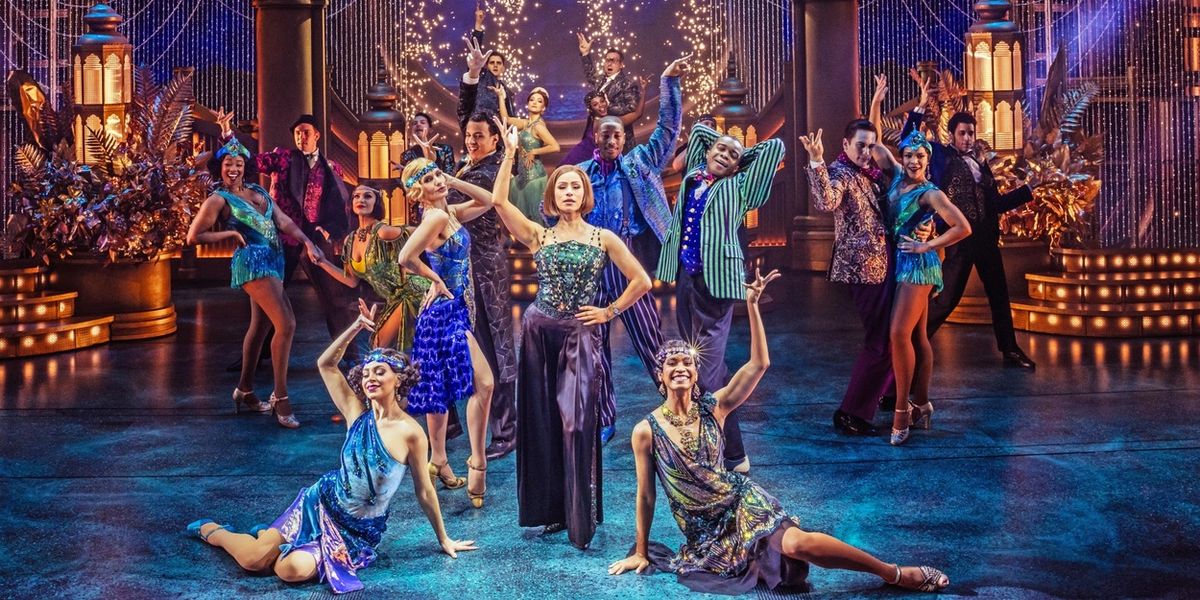
If Broadway’s Great Gatsby trades in spectacle, the first national North American Tour proves that its success on the road depends on something more grounded: a cast capable of sustaining the illusion night after night, city after city. This performance is pretty much flawless top to bottom.
This first tour cast appears incredibly excellent. The staging by Marc Burni and choreography by Dominique Kelly reach the highest Broadway standards. Sets, transitions, orchestrations, lighting, and costumes are all excellent.
.jpg?format=auto&width=800)
Photo by Evan Zimmerman for MurphyMade.
I had the opportunity to speak at length to Nick Carroway played by Joshua Grosso before seeing the show. Grosso explained the unusual involvement by the playwright Kait Kerrigan, the composer Jason Howland, and lyricist Nathan Tysen with this first North American tour cast. It shows big time.
Fortunately, this touring company rises to the occasion with a collection of performances that bring both polish and surprising emotional texture to a production that can otherwise feel dazzled by its own reflection.
Leading the company is Jake David Snith as Jay Gatsby, who wisely avoids imitation and instead offers a more introspective take on the mysterious millionaire. Jake David Smith’s performance is marked by restraint. His voice—lyrical and controlled—builds gradually across the evening, making Gatsby’s climactic declarations feel earned rather than inevitable. More importantly, he conveys the character’s isolation: this is a Gatsby who seems perpetually on the outside of his own party, watching rather than fully participating.
%20and%20Frances%20Mayli%20McCann%20(right)%20in%20the%20Original%20West%20End%20Production%20of%20The%20Great%20Gatsby_%20(c)%20Johan%20Persson.jpg?format=auto&width=800)
© Johan Persson
As Daisy Buchanan, Valeria Ceballos delivers one of the tour’s most compelling turns. Ceballos finds a delicate balance between charm and calculation, suggesting that Daisy is neither purely victim nor villain. Her vocals are bright but tinged with fragility, and in her quieter moments she reveals a flicker of self-awareness that deepens the character beyond the script’s limitations. Her scenes with Smith carry genuine emotional weight, particularly when the production allows stillness to interrupt its usual frenzy.
Nick Carraway, portrayed by Joshua Grosso, serves as a steady and thoughtful guide through the narrative. Grosso’s strength lies in his clarity—both as a storyteller and as an observer. He grounds the production with a sincerity that keeps the audience connected to the moral undercurrents of The Great Gatsby, even when the staging threatens to sweep them away. His narration feels less ornamental here, more essential.
%20%26%20cast%20%20in%20the%20Broadway%20Production%20of%20The%20Great%20Gatsby%20(c)%20Matthew%20Murphy%20and%20Evan%20Zimmerman.jpg?format=auto&width=800)
© Matthew Murphy and Evan Zimmerman
The evening’s sharpest edge comes from Leanne Robinson as Jordan Baker, who injects the show with wit and modernity. Robinson plays Jordan as coolly perceptive, her dry delivery cutting through the surrounding romanticism. Vocally, she commands attention, and dramatically she provides a counterpoint to the more earnest central couple—a reminder that not everyone in this world is chasing a dream.
%20Matthew%20Murphy%20and%20Evan%20Zimmerman.jpg?format=auto&width=800)
© Matthew Murphy and Evan Zimmerman
As Tom Buchanan, Will Branner leans into the character’s menace with an imposing physical presence and a simmering volatility. His Tom is less blustering aristocrat than barely contained threat, which adds tension to scenes that might otherwise feel perfunctory. Opposite him, Myrtle Wilson, played by Lila Coogan, is given a vivid, emotionally charged portrayal, her ambition and desperation rendered with a rawness that briefly pierces the show’s glossy exterior.
What distinguishes this touring company is not just vocal strength-though there is plenty of that-but a collective commitment to storytelling. Ensemble members do more than decorate the party scenes; they populate them with distinct personalities, lending texture to the world of East and West Egg. The choreography remains exuberant, the design elements impressive, but it is the performers who ultimately keep the production from drifting into mere pageantry.
%20Matthew%20Murphy%20and%20Evan%20Zimmerman.png?format=auto&width=800)
© Matthew Murphy and Evan Zimmerman
That said, the limitations of this adaptation remain. The musical still favors immediacy over ambiguity, romance over critique. Staging tends to reflect images from several the classic members of this genre.
Themes of class, moral decay, and the hollowness of the American Dream are present, but softened. At times, images that remind one of Guys and Dolls flash on the stage. At other times, one is reminded of Carousel. The Great Gatsby may have a diffculty with its own troublesome identity and complexity, Even so, this cast works diligently to restore some of the not quite achieved complexity, particularly in quieter, character-driven moments.
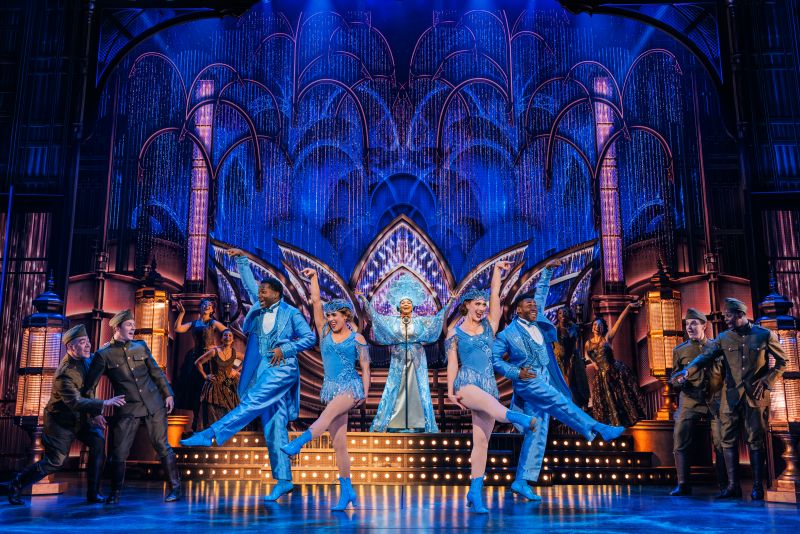
Photo by Evan Zimmerman for MurphyMade.Caption
In the end, the first national tour of The Great Gatsby may not fully capture the haunting depth of its source material, but it succeeds where it matters most for a traveling production: it engages, it entertains, and—thanks to a strong and thoughtful cast—it occasionally moves its audience. Like Gatsby’s parties, it is a carefully constructed illusion. But in the hands of these performers, it’s one that feels, at times, surprisingly real.
The North American tour of The Great Gatsby is currently playing at the Music Hall Kansas City from March 17–22, 2026. Tickets are available from Ticketmaster. If your goal is entertainment, you won’t be disappointed with The Great Gatsby.
Prefer BroadwayWorld in Google Search?
Add us as a preferred source so our stories show up more often in Top Stories and Google’s AI answers — for you.
Sign up for all the news on the Fall season, discounts & more...
|
'The Who's Tommy' Midwest Trust Center at Johnson County Community College (10/14-10/14) |
|
What iF Puppets presents 'How to Snag a Sea Monster' Midwest Trust Center at Johnson County Community College (10/07-10/10) |
|
Yamato Midwest Trust Center at Johnson County Community College (3/27-3/27) |
|
Take3 'Where Bach Meets Rock' Midwest Trust Center at Johnson County Community College (11/21-11/21) |
|
Anti-Hero: Revenge of the Swifties Unicorn Theartre (12/09-12/27) |
|
Blind Boys of Alabama Midwest Trust Center at Johnson County Community College (11/14-11/14) |
|
Ryan & Ryan 'Kickin' the Clouds Away' Midwest Trust Center at Johnson County Community College (10/25-10/25) |
|
The Phantom of the Opera Music Hall Kansas City (12/06-12/06) |
|
'The Billy Joel Legacy' Midwest Trust Center at Johnson County Community College (10/11-10/11) |

|
'Hold On To Your Butts' Midwest Trust Center at Johnson County Community College (3/12-3/13) |

Reader Reviews
To post a comment, you must register and login.