


Katyayani and Three Arts Club Bring DOUBT: A PARABLE to New Delhi in September
Performances are on September 4th & 5th, 2025.
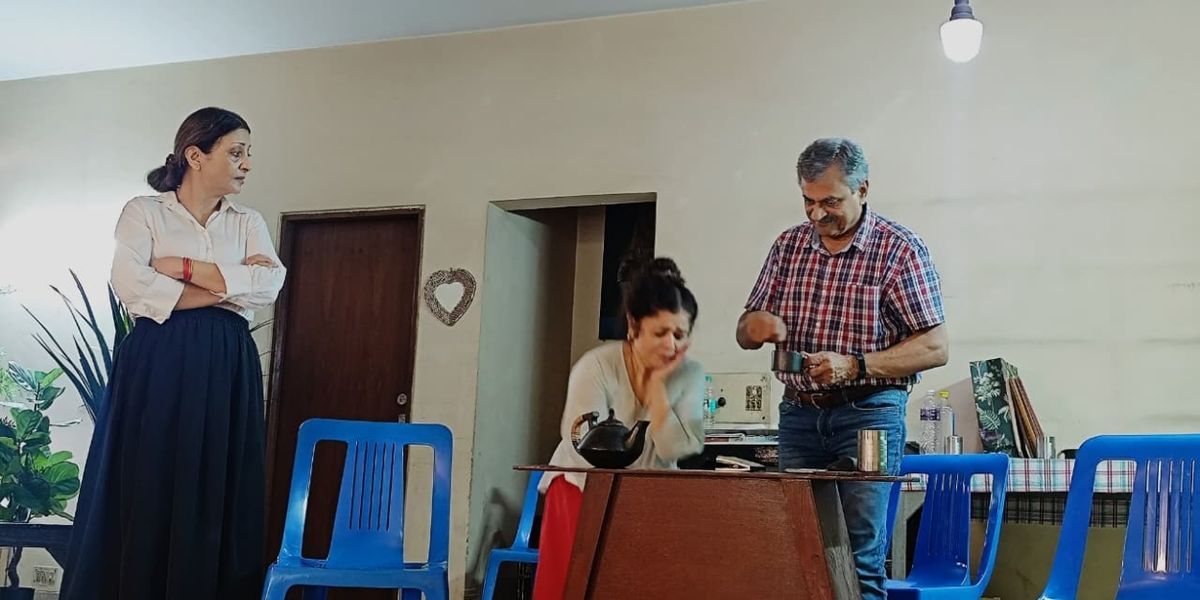
Doubt: A Parable, the Pulitzer and Tony award winning prize-winning Broadway play by Academy Award-winning screenwriter John Patrick Shanley, will be staged on September 4th and 5th, 2025, at 7:30pm at Stein Auditorium, India Habitat Centre, New Delhi. Presented by Katyayani in collaboration with Three Arts Club, Delhi's oldest theatre group, the production is directed by Sohaila Kapur and produced by Anuradha Dar. It features a stellar cast including Sanjiv Desai, Kavita Seth, Arti Nayar and Kritika Bhatia. Tickets are available on BookMyShow.
Set in the tense backdrop of a Catholic Church in 1960s America, during the civil rights movement, Doubt confronts themes of suspicion, power, and faith. When a priest is accused of inappropriate conduct with a young boy, his fate lies in the interrogation of an unyielding nun. Shanley leaves the audience to decide the truth, making the play as unsettling as it is timeless.
This gripping production resonates strongly today, in an age marked by distrust, intolerance, and global conflicts—a real-life “Game of Thrones,” echoing the play's central question: can we ever be certain of the truth?
Directed by acclaimed actor, journalist, playwright, and theatre personality Sohaila Kapur, the play is staged under a special license from CAA, Shanley's agents, for two exclusive performances in Delhi.
This presentation also marks a significant collaboration between Katyayani and Three Arts Club, founded in Shimla in 1943 and renowned for its pioneering contributions to Indian theatre. Revived in 2008, the Club continues its legacy of staging inclusive, socially relevant productions. Together with Katyayani, the initiative has brought acclaimed plays, dramatized readings, walking art presentations, and workshops to audiences across Delhi.
In the play, Sohaila Kapur shares, “After Anand Hi Anand, which celebrated relationships, I wanted to explore another layer—the role of suspicion and uncertainty in human bonds. Doubt is a play that transcends time and geography. It is as relevant today as it was in the 1960s. It is a mirror that reflects our insecurities and forces us to ask—do we really know the truth, or only what we choose to believe?”

|
gohealthypro gohealthypro (5/23-5/24) |

|
webodoctor webodoctor (8/14-11/20) |

|
BLR Emergency Care blr (5/21-10/10) |

|
taptoexplore taptoexplore (4/23-4/23) |