


Review: VERSAILLES IN PRINTEMPS Was a Magnificently Decadent Affair
The enchanting evening was part costume ball, part dinner party, and part classical concert
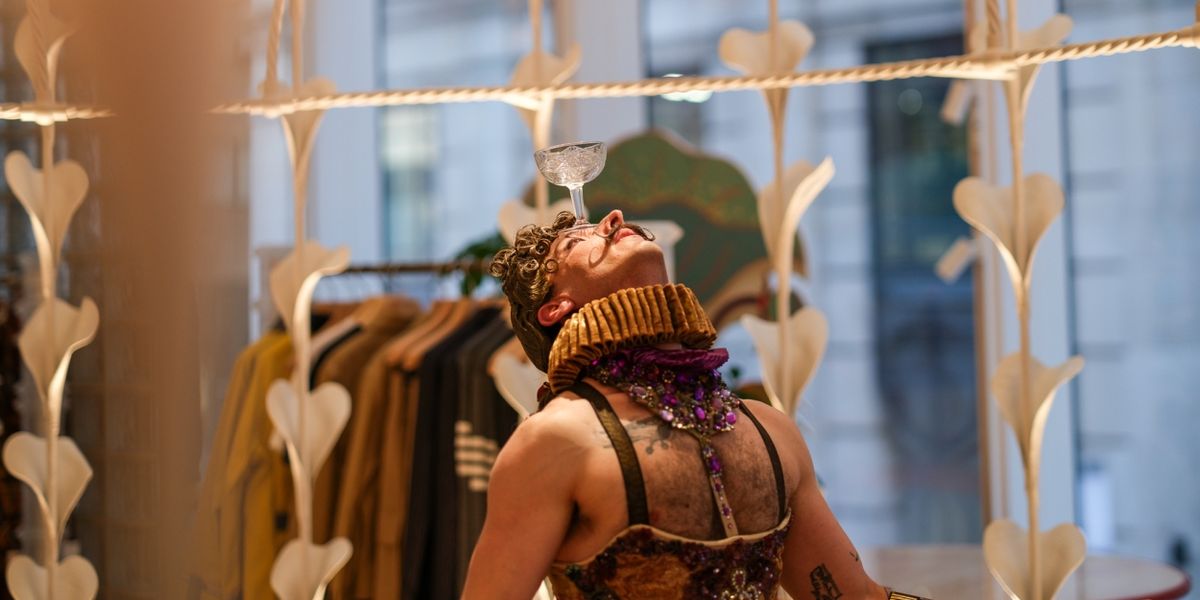
Death of Classical, known for bringing classical music outside of traditional venues, brought the Royal Opera Orchestra of Versailles to New York to play their North American debut, with a concert bookended by performers and interactive theater. The evening was loosely inspired by The Affair of the Poisons, a murder scandal from the court of Louis XIV. Appropriately, he was also the monarch who inaugurated the Versailles orchestra.
Andrew Ousley, who conceived, wrote, and directed the evening’s affairs, oversaw a magnificent event. Structured around the orchestra’s performance, there was much to do both before and after the main event, spread out through a sizable section of the building. Audiences were encouraged to wander around, take in the sights, observe (or interact, in some cases) with the performers, and enjoy wine from Bouchaine Vineyards and hors d'oeuvres from James Beard award-winning chef Gregory Gourdet. It was a splendid affair, with the audience experiencing the evening’s delights to the fullest.
Before the show, circus performers were stationed around the main hall, such as a bottle walker (performer Kylie Rose balanced on bottles of varying height while wearing heels, which was quite an impressive feat). Tarot readings are done, a burlesque dancer writhes between the pillars, and heavily-costumed performers talk to the guests in a bit of interactive theater. The costumes are all immaculate, evoking the splendor of pre-revolution French nobility. Powdered wigs, bright patterns, and big dresses could all be found wandering the hall before and after the concert.
The orchestra itself put on an incredible show. Conductor Stefan Plewniak has a theatrical freneticism, directing the musicians by leaping around and gesticulating wildly, whipping the room into a frenzy of strings and percussion. At times he takes up the violin himself, playing with a ferocity that matches his conducting style. The string instrumentalists work in tight unison on Pierre Rode’s violin concerto in D minor. Such a pitch-slide-filled composition is perfect for Plewniak’s style. The orchestra excels, with the second chair violinist in particular playing beautifully during the middle section of the performance. Appropriately, the concerto was written in the 1790s, during the French Revolution (and thus shortly after the reign of Louis XIV).
Franco Fagioli joined the musicians for a few numbers, most notably scenes from Semiramide and Tancredi, two operas by Giaochino Rossini that were both based on Voltaire’s writings. The Argentinian countertenor is an outstanding vocalist, occupying space between swelling string notes and masterfully keeping attention on both the emotional core of the piece as well as his own skill as a singer. His high notes are flawless, he switches between registers seamlessly, and his vocal control can be downright breathtaking. Ecco mi al fine in Babilonia (Finally, I am in Babylon), the selection from Semiramide, is a particularly masterful display of Fagioli’s talent and discipline. He brings a captivating intensity to the piece from start to finish, commanding the room up until the moment he exits the stage.
After the orchestra performed there were yet more festivities, namely a Black Mass in the basement. The Coup D’etat Quartet play a haunting tune as the guests mingle, with a viola and a cello underscoring dual violins. Creatine Prince, a drag opera singer, belts out a number from inside a circle of candles to the assembled onlookers. She wears a magnificent red dress, one that drags along for several feet behind her when she saunters in and out of the performers’ circle. Several dancers follow her performance, led by choreographer Liana Zhen-ai, all three of whom are graceful and meld with the string trio’s serenades. Lastly, a sword swallower performs. Gin (the performer’s stage name) has a few interesting tricks, most notably letting an audience member pull the sword out after she’s taken it in. It’s quite a maneuver to witness and got an appropriately rapturous reaction from the audience. The three sets of performers, all quite different, blended together to create an excellent atmosphere to close out the night.
Overall, Versailles in Printemps was an enchanting evening. Every piece of the event fit together flawlessly to create an incredibly unique and memorable experience. Death of Classical and Andrew Ousley staged a fantastic concert, assembled a great cast of performers, and threw an excellent party.
To learn more about Death of Classical and their upcoming shows, visit them online here.

|
Flame: The Songs of Brady & Browne 54 Below (8/23-8/23) |

|
DiGangi With A “G” The Green Room 42 (8/18-8/18) |

|
Troy: Crooner to the Stars The Green Room 42 (8/21-8/21) |
|
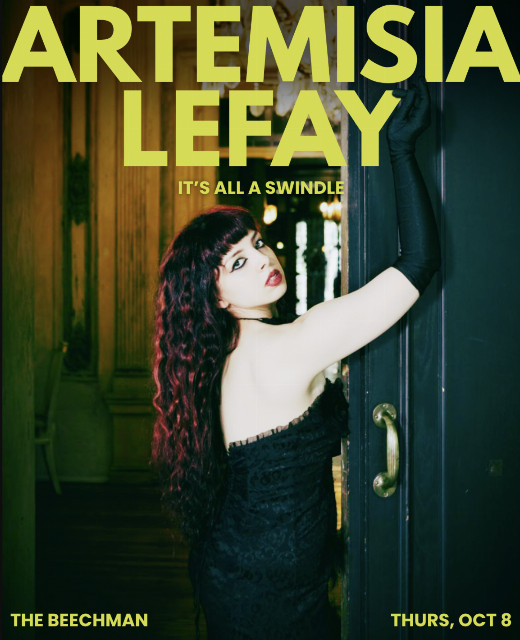
It's All A Swindle Laurie Beechman Theatre (10/08-10/08) VIDEOS |

|
Darwin Del Fabro Sings Torch Songs 54 Below (9/27-9/27) |
|
Vidura Bandara Rajapaksa: The Paradise Gothic Tour Joe's Pub (10/23-10/23) |
|
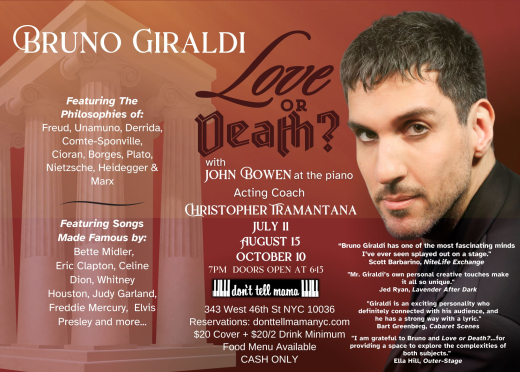
Love or Death? Don't Tell Mama (4/19-10/10) PHOTOS |
|
chocolate genius incorporated Joe's Pub (10/14-10/14) |

|
Habibi Festival 2026 Joe's Pub (10/08-10/08) |
|
Lionel R. Shockness: Awakening(s)…Mixologist to Psychologist Don't Tell Mama (9/27-9/27) |
Reader Reviews
To post a comment, you must register and login.