Exclusive: Musical Wizards John Powell and Stephen Oreumus Share WICKED: FOR GOOD Easter Eggs
Powell composed the score of the new film with Stephen Schwartz, and Oreumus, a longtime alum, served as the executive music producer.
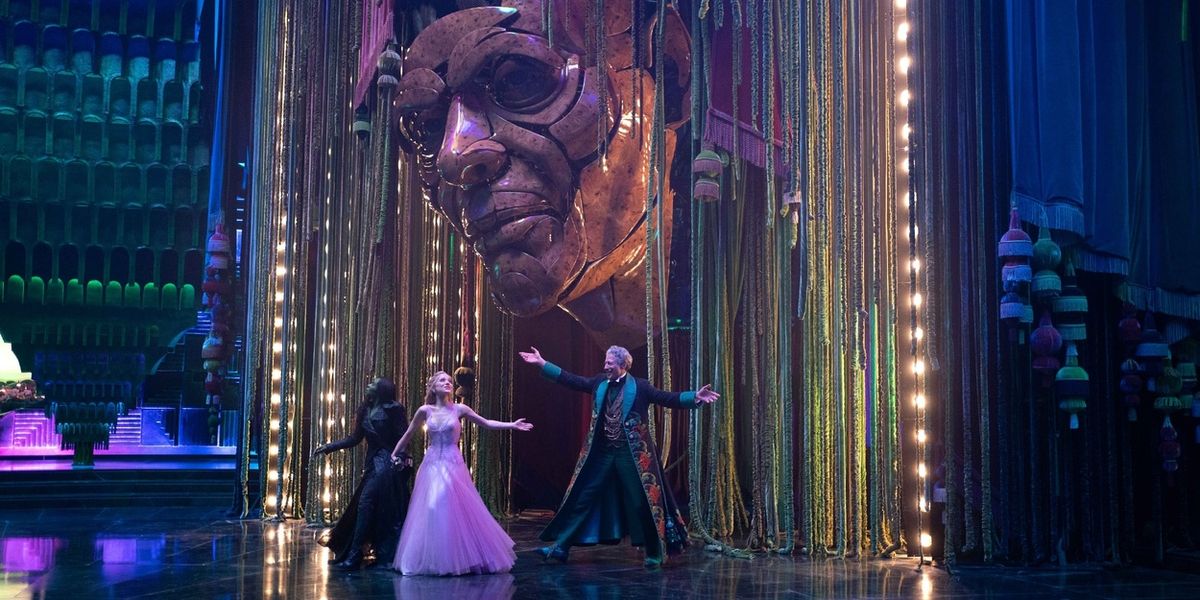
Other than Stephen Schwartz himself, Stephen Oremus might be more familiar with the music of Wicked than just about anyone. After all, the arranger and conductor has been working with Schwartz on the show since the very start of the development process, beginning with the first reading 25 years ago. The film adaptation, the second part of which is now in theaters, presented Oremus and the music team a unique opportunity to take the beloved material and turn it up to eleven.
"Don't forget, once we put it up on Broadway, we put it up all over the world, and we continued to refine the show," Oremus, who serves as the film's executive music producer, recently told BroadwayWorld. "What was really exciting for us was to really think outside the box and to revisit it in a whole new medium. And to revisit it on this scale was so extraordinary because it works very differently from a Broadway show."
On the other hand, composer John Powell, who adapted Schwartz's themes as orchestral underscoring, had never seen the stage show. "Marc [Platt] said to me, 'I like the way you do it sometimes, because it always sounds like it's from Wicked, but it isn't,'" the composer shared. With two Wicked movies under his belt, Powell's new melodies and musical motifs are now forever part of the identity of the musical.
.jpg?format=auto&width=1400)
Indeed, the score for the first film, written in collaboration with Schwartz, has proved popular since its release last year. The duo garnered a nomination for Best Original Score at the 2025 Academy Awards, and more recently received two nods at the Grammys, including one for the new tune "Train To Emerald City."
As Powell recalled, his first-ever experience with the story was in an edit room on a Tuesday in 2023. "I got to see film number one, and it had all the songs in it, but no temp score... and then I had to wait two days for the second part to know where the story was going. I spent two days wondering what the outcome would be of this story... In number one, I was definitely creating things that were part of the journey towards the end of number two."
Oremus noted one example of musical foreshadowing heard during the Overture in the first film that, undoubtedly, raised questions from viewers at the time. "People had reached out and said, 'What's that melody that happens before you get into 'Good News'? I've never heard that melody.' And it's part of 'No Place Like Home,' which you hear later in the film too."
Alongside Glinda's "The Girl in the Bubble," "No Place Like Home" is one of two brand-new musical numbers written by Schwartz especially for the second movie, Wicked: For Good. But most of the work from the music team involved bringing the familiar tunes from the stage show to the big screen.
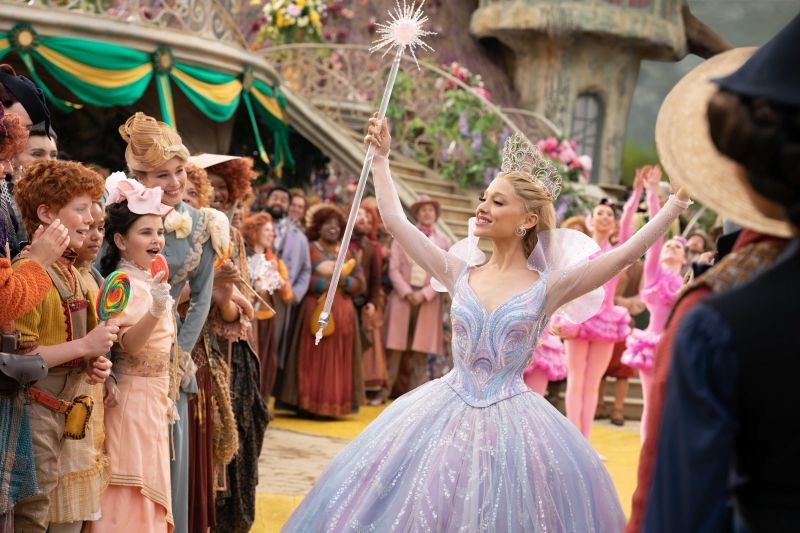
"I always loved 'Couldn't Be Happier'.... I loved the idea that Glinda had this song in the second film, which was about her misunderstanding her own world and her own place in it. So I did a lot in the first film, adapting that song," Powell explained.
In Wicked: For Good, one of the new pieces for Ariana Grande's character is a motif Powell calls 'Queen Glinda' that came out of the desire to further her musical identity. Still, the composer credits Schwartz with helping him maintain that familiar sound of Wicked, including his new material.
"Anything that isn't directly out of the original score is drawn out of Stephen [Schwartz] in some way. I would try and absorb his language as much as I could, and he would certainly give me a lot of ideas about what his preferences are," said Powell.
"The second half of the story, even on Broadway, is much more orchestral," Oremus shared, contrasting it with the "poppy" sound from the first half of the story, when our heroines are still students. "There are so many cool elements of how [John] was able to use stuff from the first film. [In] the scene where they're taking Fiyero away and they're starting to beat him up and everything, you'll hear this dark version of 'Dancing Through Life' that kind of creeps in for a moment... It's really a testament to these incredible themes that Stephen Schwartz has given us...that we were able to turn them inside out and use pieces of it to continue to build it emotionally."
However, because of the abundance of new material, Powell admitted that it was an ongoing challenge to ensure that the placement of his themes was narratively effective for the viewer. "If you got the wrong theme in the wrong place... it would pull [director Jon M. Chu] out of his storytelling, and then I'd basically get knocked back on those things," said Powell. "So the ones that remain are the ones that either he didn't notice, or felt right and didn't catch his attention."
And then there’s the now-famous closet scene where Glinda and Elphaba are seen sobbing on opposite sides of the door before Elphaba's melting. “That proved to be very hard because we had this moment that was iconic, and we knew it was coming, and we'd just had 'For Good,'" Powell recalled. “I couldn't move one, and I couldn't move the other... We almost had 'No One Mourns The Wicked' [there] but we were about to have it again... so it became this moment that had to work and sound as if it was part of everything, but wasn't."
As in the stage show, Wicked: For Good marks a major departure from the first part of the story, with the characters and plot points tying directly in to The Wizard of Oz. "I have to say, surprisingly, we needed a lot fewer musical Easter eggs because there were so many visual ones," said Oremus. "There are musical Easter eggs in the Broadway show. When Fiyero comes in as the Scarecrow, the music that we had playing was literally, 'If I Only Had a Brain,' minus one note."
Still, eagle-eared listeners are in for a treat when discovering those easter eggs that do remain. In one example, a choir can be heard singing material reminiscent of the "Oh-we-oh" chant from the 1939 film during the opening moments of "March of the Witch Hunters." And another was added by Powell. "When you first see the Cowardly Lion appear at the end of 'No Place Like Home,' I managed to get a very dark, little bit of a minor version of [If I Were] King of the Forest."
Both Oremus and Powell emphasize that, at the end of the day, the process of bringing Wicked to the screen was about telling the best possible version of the story, even if that meant deviating from the stage show. "We did take some of the material and change it... What was important to Stephen Schwartz was story," said Powell. "Every question was about 'What are we doing for the story?' And these are the masterclasses that I've been able to watch from him. I know he'd just done all these ASCAP ones for people, but I got to see my own version of it."
.jpg?format=auto&width=365)