


Review: MAGGOTS, Bush Theatre
A tender play about death and systemic failures.
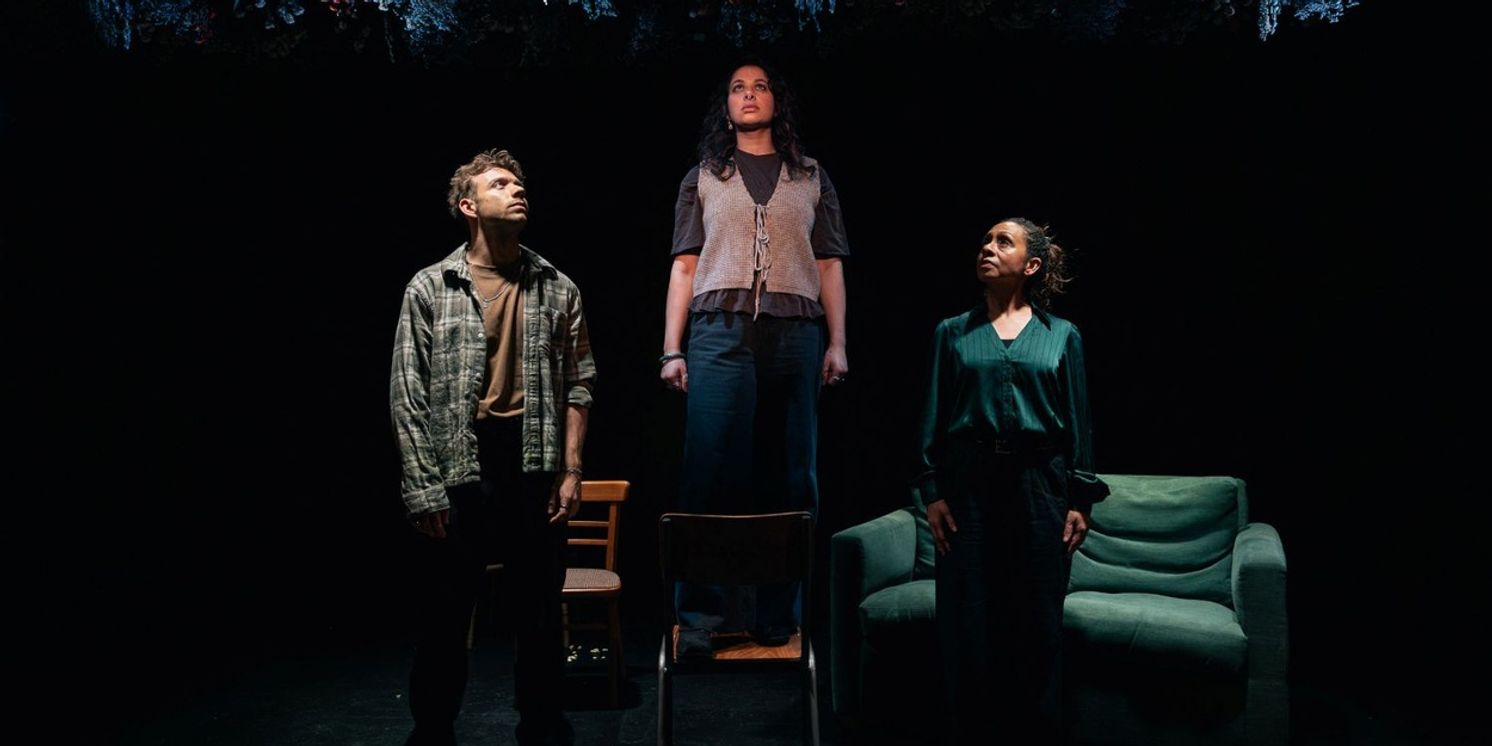

If you input “what does death smell like?” into Google, you’ll get a variety of results saying that it depends on the conditions of the body. That’s what Linda searches after she hasn’t seen her neighbour in some time. Life at Laurel House will never be the same; loneliness kills in Farah Najib’s tender play. In essence, Maggots covers the systemic failure of those in power. When the housing service finally shows up, it’s too late for the tenants in the building.
Structurally, the piece is pure storytelling. Najib relies on the tried-and-tested meta-theatrical formula of introducing the actors as such and making them tell a story directly rather than strictly depict characters. It works well. By putting distance between the performers and the plot, the moral of this cautionary tale hits harder. Director Jess Barton doubles down and levels the ground between Sam Baker Jones, Marcia Lecky, Safiyya Ingar and the audience. There’s no fourth wall, no conventional separation.
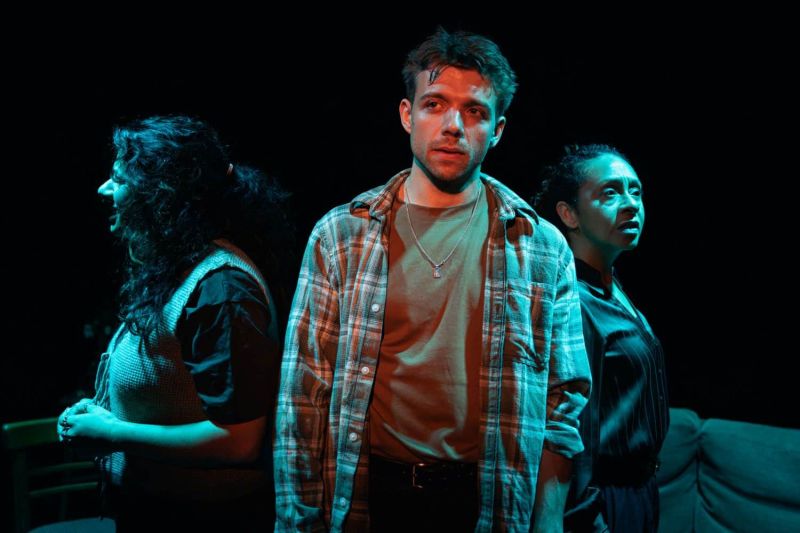
Najib’s conversation script emphasises this angle and allows the trio to fumble freely here and there. Any mistake comes off as endearing, fitting well within the personal tangents of the characters they portray. The outcome is a collection of eclectic performances, with Baker Jones, Lecky, and Ingar juggling multiple roles with refined ease and specificity. They blend humour and drama seamlessly, handling the sudden shifts in tone with deft adaptability.
The demands of the narrative are fairly challenging, and Barton treats the subject with meticulous sensitivity. Her direction is tranquil and unrushed, featuring gorgeous sound design and original compositions by Duramaney Kamara. Kamara’s contribution highlights the beats of the play, making its presence known and its absence even more so. There’s a precise moment when all the elements of the production come together so flawlessly it leaves you breathless: music accompanies the climb to a perfectly crafted climax, then stops altogether at the tension break, almost withdrawing in mourning.
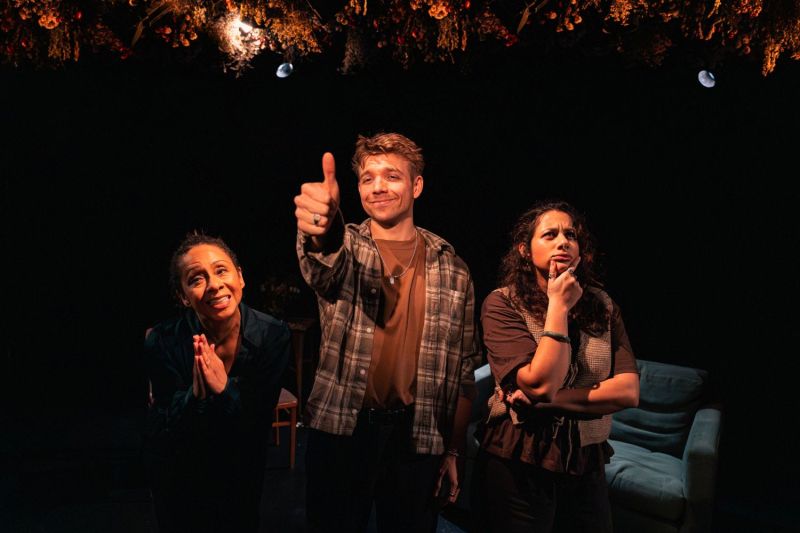
What transpires from the project is Najib’s prowess to describe the concept of sonder (the strong realisation that everyone you see has their own life story in which they are the most important person). The residents of Laurel House might seem disengaged and selfish, but they’re all wrapped up in their own individual tragedies. Their existence goes on in the face of death. It’s a touching account of reality, a memento mori of sorts, a reckoning that it’s very easy for a life to amount to nothing.
Besides the human aspect, Maggots also summarises the ineptitude of the system. It takes Linda an endless number of calls for the administrators to show up and check on her neighbour. After all, she’s been paying her rent all along, so why should they care? They further refuse to intervene when her payments stop and her mail piles up. The welfare checks also fail. By the end, nobody’s held accountable. Shirley’s death might have meant very little to the world, but it brings perspective to the building – and to us.
Maggots runs at the Bush Theatre until 28 February
Photo Credits: Tristram Kenton
Reader Reviews
Videos