


Review: AMERICAN PSYCHO, Almeida Theatre
Rupert Goold brings back the show for his last season at the Almeida Theatre.
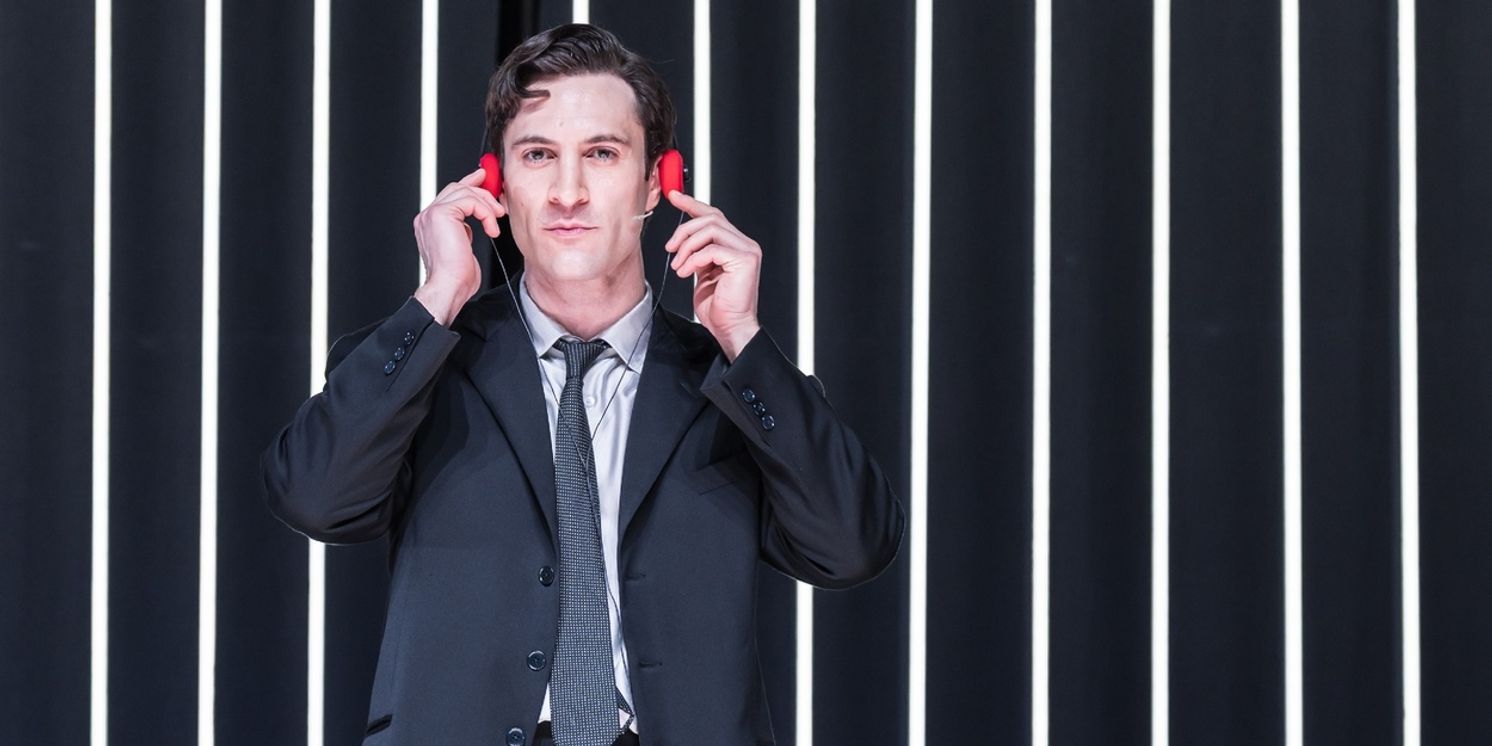
 Patrick Bateman has entered the universal psyche as a biting commentary on modern capitalistic consumerism and toxic masculinity. A character made popular in the year 2000 by Mary Herron’s adaptation of Bret Easton Ellis’s 1991 novel of the same name, he is the picture of narcissistic conformity. Christian Bale’s iconic performance cemented Patrick Bateman’s status. As it happens with many cinematic phenomena, commercial theatre wanted a piece of that success.
So, Duncan Sheik (music and lyrics) and Roberto Aguirre-Sacasa (book) wrote a musical, which Rupert Goold directed at the Almeida in 2013 and then on Broadway in 2015. Now ready to round up his tenure at the venue, he brings back a revised revival, a victory lap to celebrate his artistic direction. Just like its source material, this is a severe test in satirical exegesis and media literacy. Set at the turn of the century in Manhattan, it’s big, bold, and deliciously sinister.
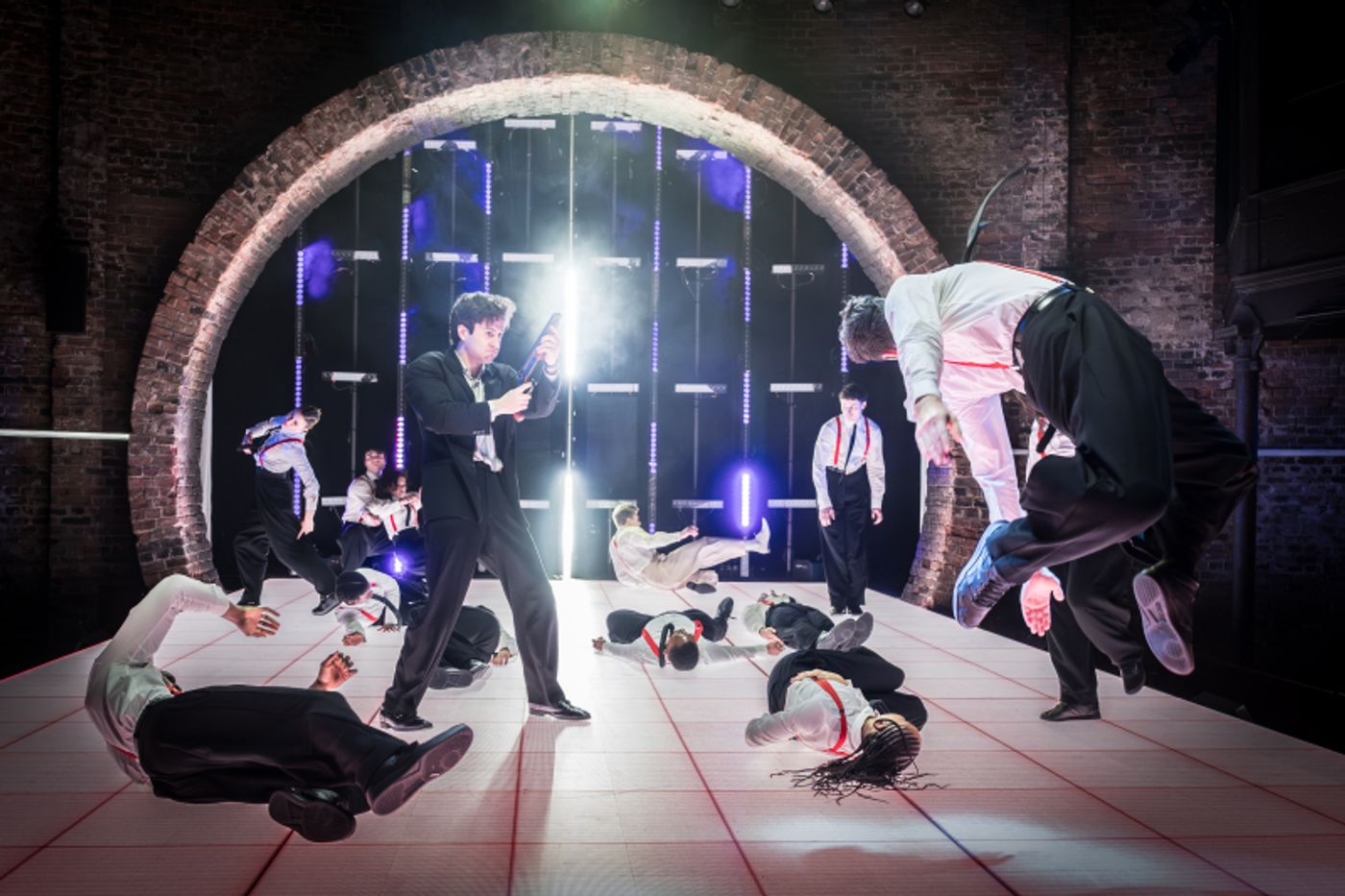
Make no mistake, the writing is dated and it’s far from being a masterpiece, but the production does something that’s so specifically disturbing that it’s difficult to ignore. Bateman’s raison d’être is unnerving to begin with. Once you combine this archetypal psychopath with a jaunty synth-heavy score and a glitzy choreo, watching our executioner dance maniacally with a cleaver becomes a spectacle in itself and a lesson in absurdity.
The black comedy of the film is upped to the max for the stage, instigating a provocative cognitive dissonance with roots in the manosphere. The horrors of corporate America, the obsession with youth and luxury brands, the fear of anonymity — they all come to the surface in the characters’ shallow existence. Goold makes the audience snicker and immediately asks them why they laughed.
.jpg?format=auto&width=1400 "Review: AMERICAN PSYCHO, Almeida Theatre")
Arty Froushan is exquisite as Bateman. A psychotic glint in his eye and steely arrogance make him the quintessential finance bro. He makes his inability to get a table at the exclusive Dorsia restaurant the driving force of his homicidal streak, filling his nights with violent sex and murderous escapades. The musical spells out Bateman’s contradictions, and Froushan revels in them.
He is overcome and overwhelmed watching Les Mis, but doesn’t hesitate to plunge a knife into the chest of a homeless man. He has feelings for his secretary, Jean, but dissociates and proposes to Evelyn. He murders in cold blood, but respectfully keeps the remains of the women separate from the men. The dehumanisation brought on by capitalism is evident in his outward compliance to the strict bylaws of wealth. Caged and shackled by those with more power than him, Bateman rebels, his misogynistic hatred never hidden nor veiled.
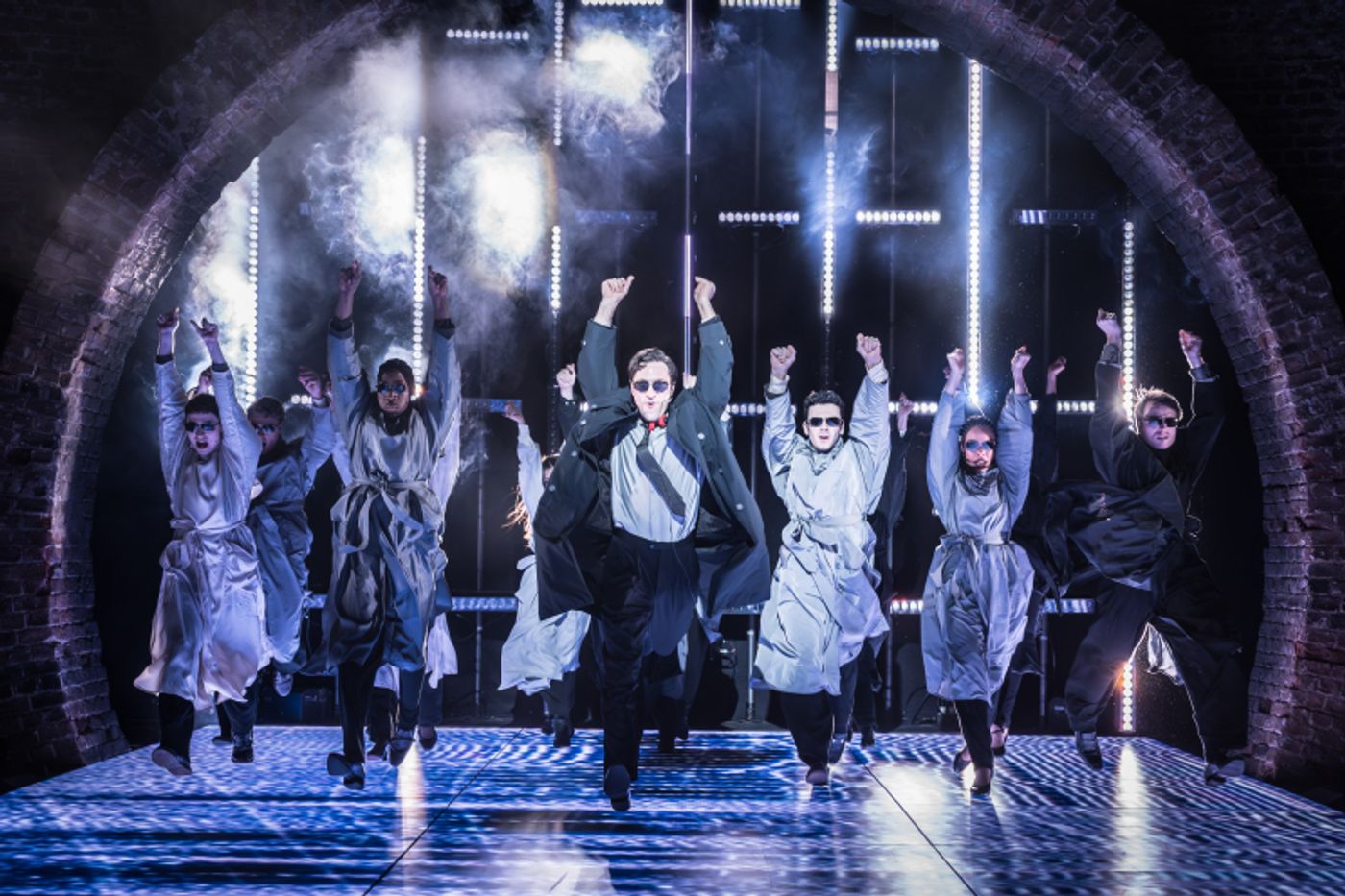
A cohesive company surrounds Froushan, each member of Bateman’s inner circle representing a defined trait in his personality. Oli Higginson is wonderfully awful as his Best Friend Tim Price. He materialises Bateman’s existential dread, hilariously hoovering coke off a toilet sink and doing a cracking impression of Trump. Emily Barber offers an extravagant, remarkable take on the vapid nature of relationships as Evelyn, his ditzy girlfriend, who personifies his obsession with appearances.
Then there’s Jean, Bateman’s frumpy and bespectacled secretary. Anastasia Martin’s performance may be understated, but she leaves her mark. From throwing subtle, forlorn glances at her boss to interrupting his savage psychosis with a firm hand, she excels. Another highlight in the cast is Kim Ismay’s imperious Mrs Bateman. She morally towers over her son, reigning him in with a mere look. “A Nice Thought” becomes a moment of respite where we receive an entirely different, complex version of Bateman from her and Jean. We never reach the core of his trauma, so Bateman’s actions stand as unjustified acts of brutality.
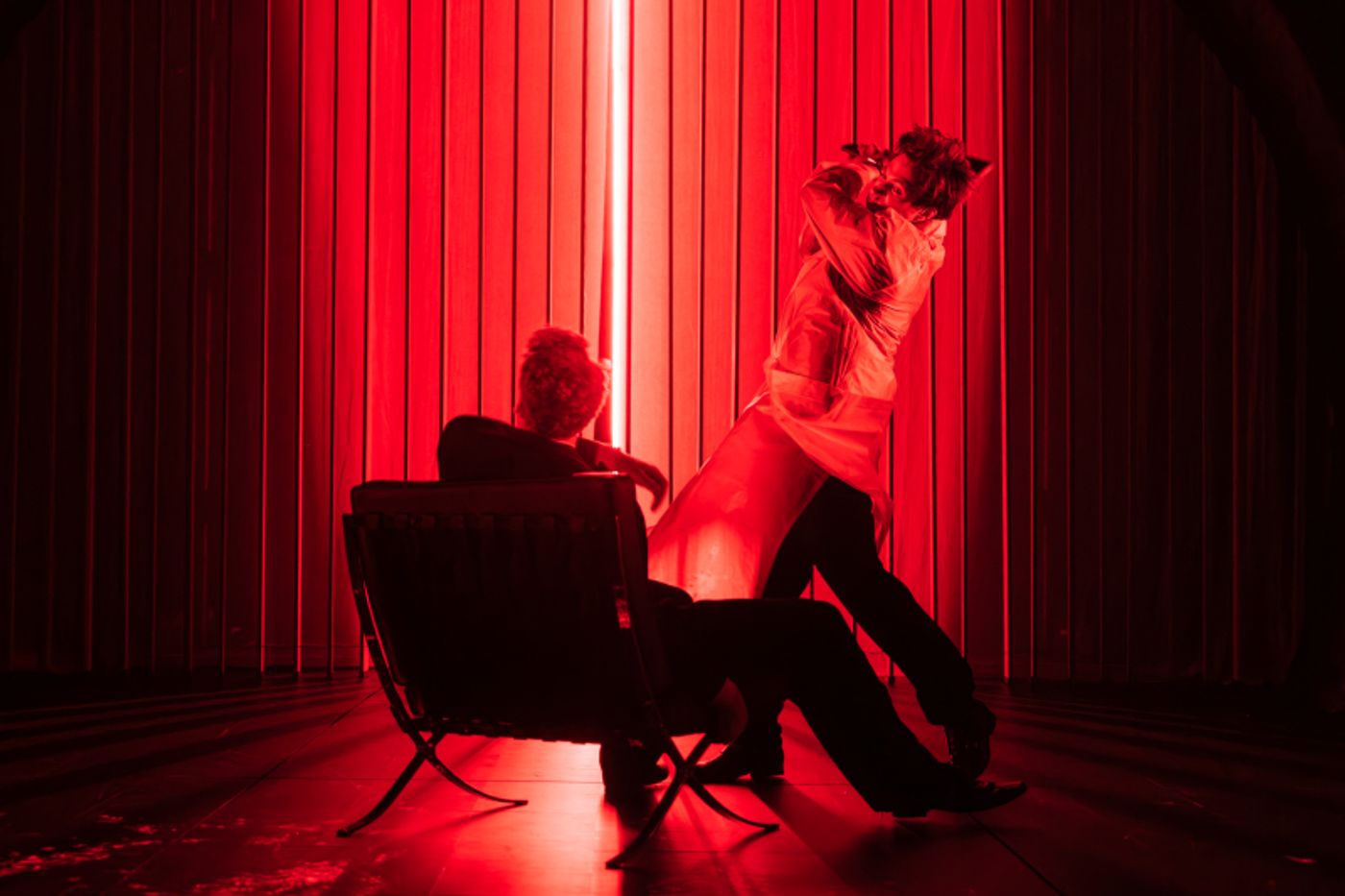
The corpses pile up in orgiastic and filthy tableaux washed in red lighting. Goold’s direction is sophisticated; he accentuates the aesthetic materialism of the story, establishing this solid sense of unease from the very start. He gives Bateman a rockstar entrance, introducing the perfect anti-hero. Es Devlin’s design couldn’t be more minimal. A large thrust stage made of screens is the main event, while a brick arch blends it to the natural architecture of the Almeida, giving it a gritty and underground look.
A few set pieces rise on a central lift, but the space is either left bare or filled to the very edge with bodies. Graphics on the floor accompany each scene, determining locations or elevating the songs with video effects that turn the scenes into music videos. It’s a very visual show with plenty of detail.
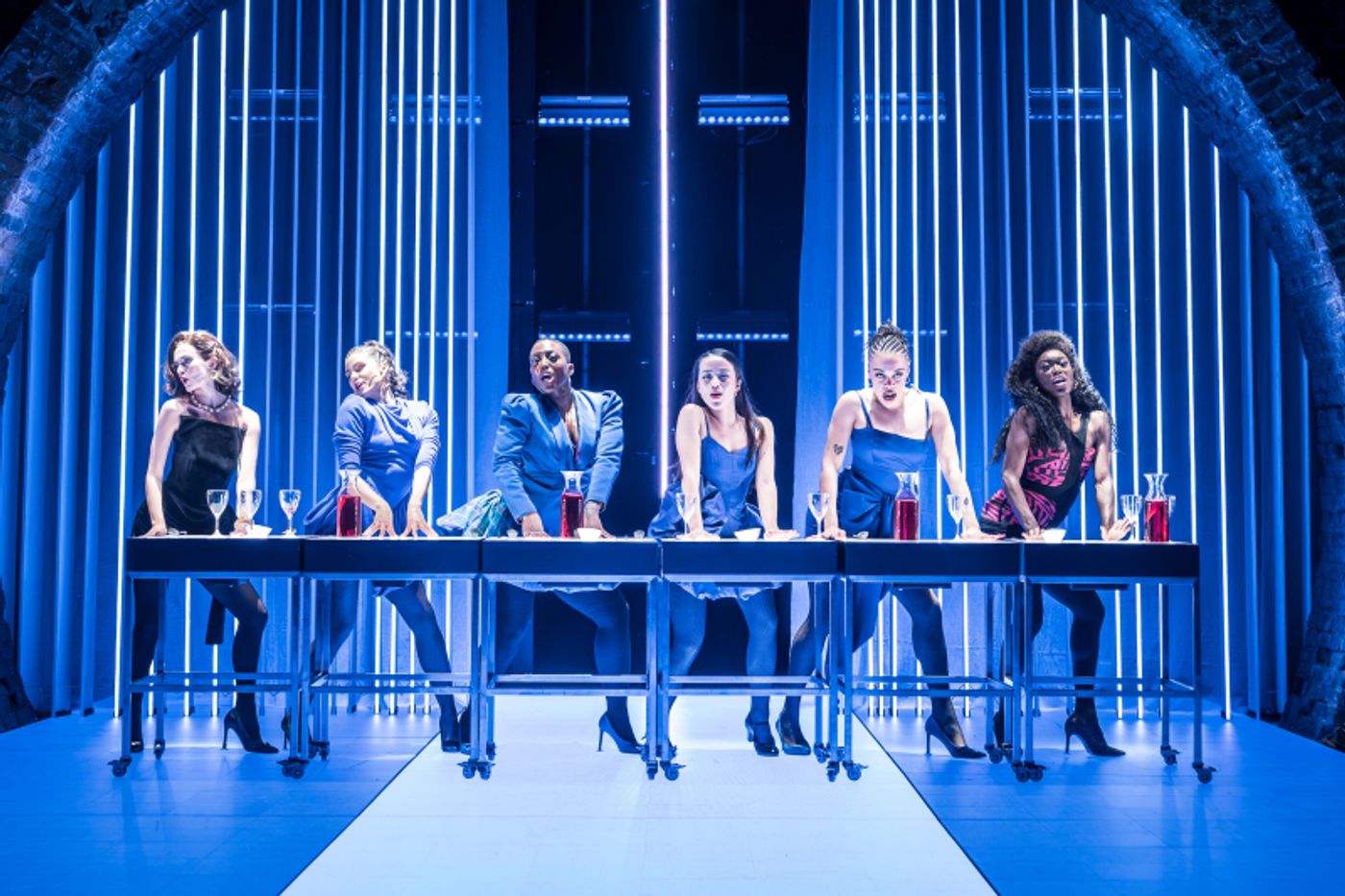
Asha Parker-Wallace, and Tanisha Spring in American Psycho
Lynne Page’s choreography is a hip-thrusting electronic frenzy, with a certain boyband slant given to some of the numbers. It’s energetic and hypersexual in all the right moments, stressing the carnality of Bateman’s actions and his continuous efforts to blend in. Mostly, it’s unafraid of making the character appear a little silly here and there, exacerbating this contrast with his crimes.
All in all, American Psycho is a baffling IP to turn into a musical, but it remains pertinent. Patrick Bateman would find the preachings of Andrew Tate and Joe Rogan utterly charming. The idolatry for Trump’s enterprising skills as well as the adoration for his The Art of the Deal (which Bateman doesn’t want to read, he just wants to own) also fit our ugly time. As our protagonist loses his grip on reality and the world around him bends, he muses: “Patrick Bateman is beyond time, beyond comprehension”. It’s a jarring truth.
American Psycho runs at the Almeida Theatre until 14 March
Photo Credits: Marc Brenner
Reader Reviews
Videos