Interview: Sound Designer Marc Salzberg on Sound, Space and Storytelling in Theatre
Salzberg's philosophy on mixing and designing sound for the theatre: "I prefer that the audience lean forward a little bit, and they become part of it."
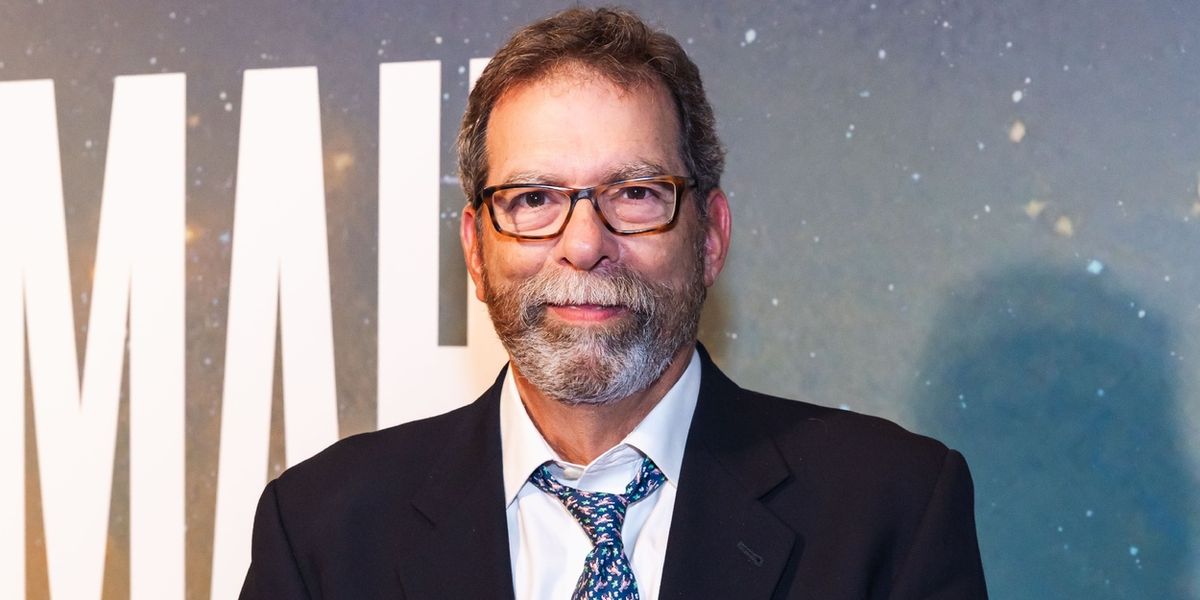
Sound designer and mixer Marc Salzberg has shaped the worlds of Broadway and beyond for decades, with credits including Oslo, Camelot, Intimate Apparel, and My Fair Lady, and more! Most recently, he designed the sound for Lincoln Center Theater’s Amahl and the Night Visitors. BroadwayWorld spoke with Salzberg to discuss his philosophy in sound design, the unique acoustic challenges of different theatres, and much more. He also reflected on collaboration, evolving technology in the theatre, and what it takes to sustain a long career in theatre sound.
You recently designed the sound for Amahl and the Night Visitors at Lincoln Center Theater, which was a piece that lived at the intersection of opera, theatre, and holiday tradition. How did you approach honoring this show that premiered in the ‘50s while still making the sound feel contemporary, and for an audience of all ages?
I have to start with what I think a sound designer’s job is: The sound designer is responsible for what everyone in the theatre hears, how they hear it, and what it sounds like. Speaking with Kenny Leon, he said he wanted ‘mystical’. That’s the only word he used for me, was ‘mystical’. Because it’s such an intimate house, you don’t want to be super loud, you want everybody to hear. So, how do you do all that and make it 'mystical?; So, I approached it from the sound of the oboe. And I tried my best to make that sound mystical.
Other than that, it was about everybody being comfortable onstage, which is difficult for opera singers in a house like the Beaumont or the Newhouse, which don’t have a lot of sound coming off the back wall. When somebody’s singing, it’s almost like they’re singing into a void. And for opera singers, and any performer, it’s very difficult. So, it’s all about how I’m getting everybody on stage comfortable, getting the mystical sound that we wanted, and putting that altogether!
I felt that everyone outside the house was part of the magic, and inside the house was the real world, at least until the miracle. To simplify, that means effects (reverb) on the outside events, and completely dry (no reverb at all) for the events in the house. We did our tech rehearsals and maybe even first run through that way, and I was thrilled with the result; it was exactly what I wanted. I was brought to earth by our brilliant leading lady, Joyce DiDonato, who told me she wasn’t feeling the support she needed from the house (as I said, the Newhouse gives the performers very little acoustic feedback). My grand artistic decision went out the window, and I added some reverb to all of the singers, the result of which was relaxing the singers, and letting them be comfortable in their performance.
For some reason, sound is also responsible for video-not the projections the audience sees, but the cameras and monitors needed for everyone backstage to see what they need to do their jobs safely. The cast needs to see the music director if they’re offstage, automation needs to see that everyone is clear before moving a set piece, etc. We are also responsible for backstage communications, which is another can of worms.
.jpg?format=auto&width=800)
How much does your process change based on the theatre that you’re in?
A lot! Every theatre has its own really special kind of needs. The Newhouse and the Beaumont have so little sound that comes back to the stage, that you have to give the performers a little something of themselves, which we do not like to do in theatre. So, if you’re in a theatre like the Lyceum, as opposed to the Beaumont, you don’t have to worry about things like that.
Also, the configuration of the Newhouse in that three-quarter-round thrust means that every audience member has a different need, in the five seating sections. The people in house right need to hear differently than the people all the way in house left. I spent so many years working at the Beaumont, and you always have to think about it in a very different way, as five, separate little theatres that each have to have their own needs taken care of.
Your career has spanned decades and has included plays, musicals, revivals- an awesome mix of shows. How has your philosophy of sound design evolved from the beginning of your career to now?
My philosophy, to tell the truth, has not changed. I don’t like shows sounding over-mic’ed, I really don’t like it. It detracts from the experience, it pushes the audience back. I prefer that the audience lean forward a little bit, and they become part of it. I think it’s better for the audience, it’s better for the show, if they’re not assaulted by the sound. And I’ve felt that from the beginning.
My first show was in 1978, and in those days, it was just like, ‘Make it loud enough to hear.’ That’s all they wanted. And I’ve never really changed that, what’s changed is the technology that lets us do it better.
.jpg?format=auto&width=800)
If your philosophy has stayed true, I’m curious how much your approach and process of designing the sound for a show changes from show to show- based on the creative team, based on what the director wants, based on the word ‘mystical’ being your direction!
I approach the show first from a technical direction, ‘Let’s get a sound system that’s going to do what we want it to do, that’s proper for the theatre.’ And then from there, everything is based on what the director wants. The director is the boss, and if the director wants to do something you don’t want to do, you kind of have to do it! Or convince them that they’re wrong, which, you can’t! [laughs].
How do I approach it? Most of the time the directors, they’re thinking about so many other things, their first thing is they don’t want to have to worry about sound. That’s sort of the first thing. It’s rare for a director to say ‘mystical,’ which was actually kind of wonderful, because it really made me think about more than just the art-slash-science of having everything sound really good. It made me go a little further into what would the audience think is mystical? What would feel mystical? So, that was an interesting thing!
I’m almost surprised that that is rare!
I’ve mixed shows from 1978 to 2017, and the design thing is kind of new for me. Most of, if not all of the shows I’ve designed have been with Bartlett Sher, and Bart and I never really had conversations ahead of time. The plays that I’ve done for Bart, Peter Still did all the effects, I did the sound system, the reinforcement, so we didn’t really have an artistic thing to talk about.
And for the musicals, I know he trusts me to get everybody heard. I shouldn’t put words in Bart’s mouth, but he really wants sound just not to be in the way. When we do the musicals, I mixed South Pacific and the King and I, Scott Lehrer designed them, all he wanted was a realistic sound, that the audience didn’t think about sound. And that lets the director do what he has to do without us getting in his way.
.jpg?format=auto&width=800)
It has to be pretty cool to have developed a relationship over so many years, and so many shows, with a director.
It’s wonderful! This [Amahl] may be my last show, it may not be my last show. If the phone rings I’ll answer it again. For me, even when I was mixing, the best part of the show is being in that room with all those people and making it work. And it is such a collaborative effort with all the creative staff, and it’s such fun when it all comes together. Even when one little thing works that’s not my department, we’re all in it together, and it’s a lot of fun. And to work with the same people over and over again, you develop a language.
Part of any new production, when you first sit down to tech, is coming up with a vocabulary, and it’s not just so it works, it’s, ‘What is this show going to look like? What’s it going to sound like?’ And the whole process is making all of that happen. And that, to me, has always been the most fun. I have a short attention span- when I was mixing a show, after a two months it was, ‘Oh no, it’s going to run for a year, I have to watch it for a year!’ And some shows I could watch forever, but still. What’s most fun for me is making it work.
What advice would you give to people trying to do what you do- emerging sound designers or mixers, hoping to build a long, successful career in theatre like you have?
I would say one thing I really suggest for anybody working in sound, is to learn something about music. Even if you’re doing plays, it’s really important to understand that words are music too. And if you’re doing sound effects for a play, even if it’s crickets, everything is music. And when I was mixing a show, 'Okay, the sound cue is supposed to be 10 seconds, but the actor is a little fast today, so we’ve got to do it a little faster.' You always have to go with what the actors are doing, the music of that. Even if it’s a play. Everything is musical. So, the technical end is incredibly important these days, but not to forget there’s a lot of art involved in it. And you have to know something about music. Even if the effects are crickets, and dogs, and airplanes.
Sign up for all the news on the Fall season, discounts & more...

.jpg?format=auto&width=365)