Guest Blog: Tempering Tragedy with Comedy- Ken Ludwig on Adapting Agatha Christie’s DEATH ON THE NILE
Death on the Nile will open on 26 September at the Lowry in Salford.
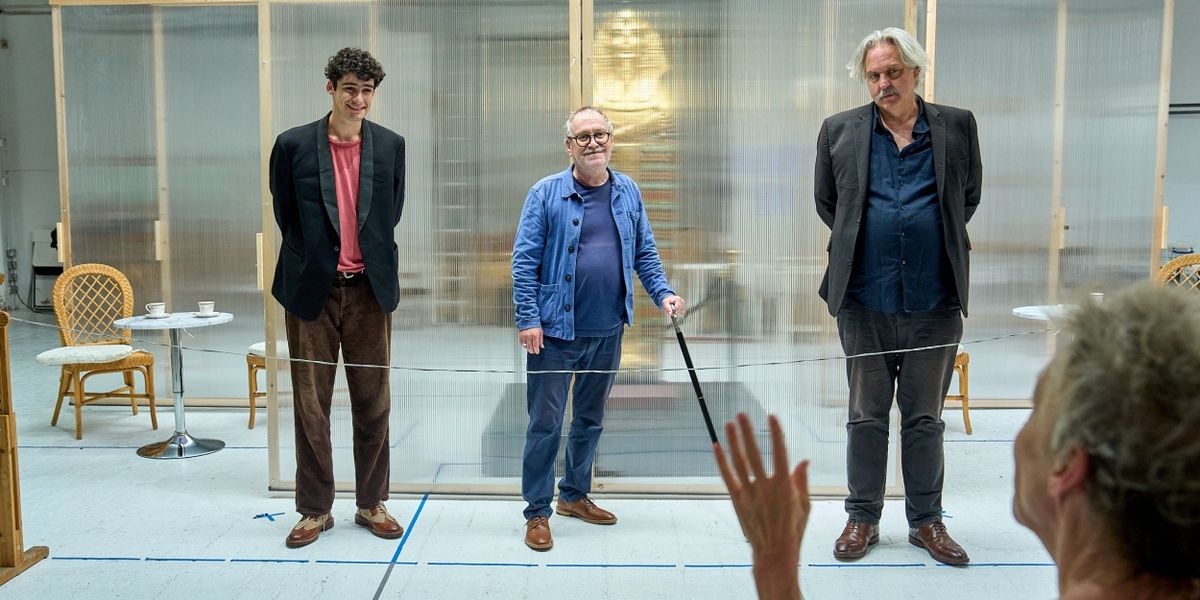
As a playwright who has spent a lifetime crafting optimistic, muscular comedies like Lend Me a Tenor and Moon Over Buffalo, I now find myself in the company of Agatha Christie’s most beloved crime-solver, Hercule Poirot. As Poirot himself might say, “Alors, how can this be?”
I’ve spent my life reading and writing stage comedies, and I am happiest in their optimistic worlds. Yet I’m now premiering my second adaptation of a Christie mystery, Death on the Nile, a tale of jealousy, greed, and murder. It seems an odd marriage, but it really makes all the sense in the world.
Mysteries—at least the cozy mysteries of writers like Agatha Christie—are structurally akin to comedies. They begin in a state of order, which is soon disrupted by obstacles and the competing desires of the characters. Then, just as it seems that the world is so muddled it can never be set to rights, everything falls in place and the world once again makes sense. It’s like a jigsaw puzzle that is thrown in the air and returns to the table with the pieces locked back together. I love mysteries for precisely the reason I love comedies: they reassure us that we can overcome the chaos of life.
There is no shying away from the darkness in a murder mystery like Death on the Nile. But as a playwright who has built a career creating a joyful atmosphere for audiences, my challenge is to balance that darkness with light. As I have Poirot say in the play, though tragedy may strike at any time, life itself is actually a comedy when we strive to make sense of it.
In seeking this balance, it was vital that I retain the heart of Christie’s beloved tale—its exotic setting, its murder and intrigue, and, of course, Hercule Poirot’s quirky genius. I hope that audiences familiar with Christie’s novel will feel that I’ve honored it in my adaptation.
In this spirit, I looked on my task not as rewriting the core of Christie’s story, but reshaping the world around it. Sometimes my choices were out of dramaturgical necessity: in 2025, no theatre wants to stage a play that requires dozens of actors, so I pared down the suspects just as I had done in my previous Christie outing, Murder on the Orient Express. Sometimes, though, I simply felt that the emotional turmoil at the center of the plot needed the fresh air of comic voices. The comedy allows the audience to breathe, even as the story is at its darkest.
Certainly, Deah on the Nile is one of Christie’s darkest tales. But that was one of its draws for me. Not because I enjoy wallowing in dark worlds—I’d see a thousand productions of Much Ado About Nothing before a single Titus Andronicus—but because I believe that the mingling of the tragic with the comic makes for a truly great night at the theatre.
This production of Death on the Nile, like the production of Murder on the Orient Express that toured the UK and Ireland last year, is directed by the great Lucy Bailey. Lucy has been rightly celebrated for her work on many of Shakespeare’s tragedies, and her vision as a director makes the ideal foil for mine as a playwright. She keenly understands the shades of darkness in Christie’s characters and how to build a thrilling, tense atmosphere on stage. Our collaboration thrives in the tension between her ability to examine the tragic darkness and mine to shine a comic light onto the same world.
If you come see the show—and I hope you will—you will find that it offers exactly what we need today: laughter that tempers dread, hope in the face of sorrow, and order that overcomes the inexplicable chaos of life.
The UK & Ireland Tour of Death on the Nile will open on 26 September at the Lowry in Salford and finish on 23 May 2026 at Plymouth Theatre Royal.
Photo Credit: Manuel Harlan
Sign up for all the news on the Fall season, discounts & more...