


Review: BORIS GUDUNOV, Royal Ballet And Opera
Boris is back: this heavyweight Russian opera isn't for the faint of heart
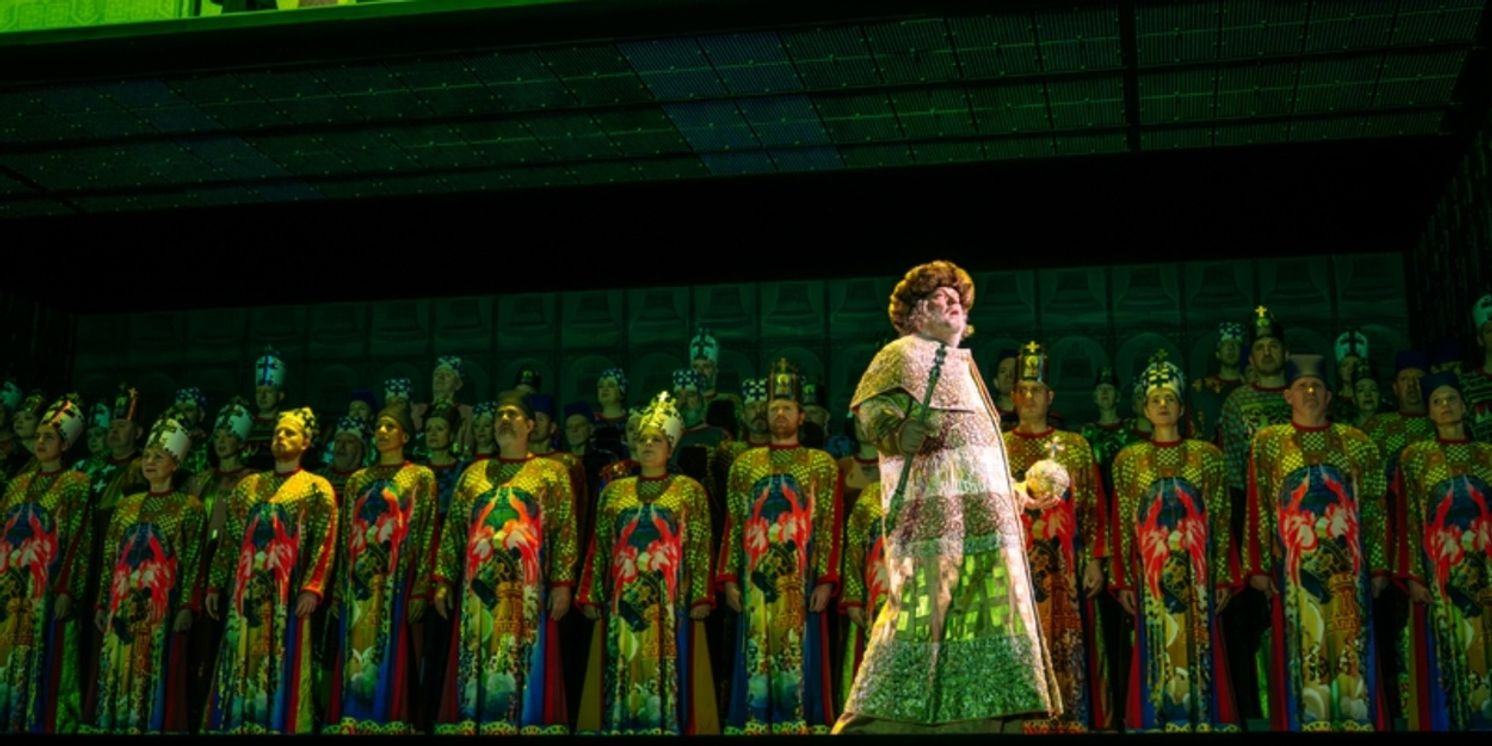
 If Modest Mussorgsky’s Boris Godunov were a dinner date, Richard Jones’s Russian-language revival at the Royal Opera House would be one where you arrive bright and curious and leave questioning your life choices, nursing a neat whisky in a corner. This is not an opera that gives up its secrets like a West End musical handing out catchy tunes. It is, in its original 1869 incarnation, seven tableaux of conscience-stripped torment, political intrigue and chorus lines that hammer their point home with power and precision.
The production team reads like the A-team of heavyweight opera craftspeople. Jones’s direction is focussed on the historical aspects and the human cataclysm at this work's heart in the manner of someone who has decided that nods to the current resident of the Kremlin may possibly be overrated but the possibility of polonium is definitely underrated.
Set designer Miriam Buether’s two-tier effort allows us to peer into the tsar’s inner horror as he relives over and over the murder of a child while lighting design from Mimi Jordan Sherin is nominally chiaroscuro but covers a real range of moods from haunted introspection to conspiratorial gatherings.
Nicky Gillibrand’s costumes cover this cast in both gloom and glam: within minutes, the chorus switches from being serfs dressed in more shades of grey than a charity bookshop to nobles attired in blazing red and gold. Conductor Mark Wigglesworth keeps the orchestra lean and mean, conjuring Mussorgsky’s stark Russian textures without resorting to unfocused romanticism.
At the centre of this maelstrom is Bryn Terfel as Boris Gudunov, a boyar (aristocrat) who leads the country after the untimely deaths of the Tsar’s children. A Welsh bass-baritone, his phenomenally affecting acting and strident voice bring real dramatic ballast to a production that isn’t always dramatically convincing. Terfel’s Boris doesn’t merely sing; he ruminates aloud as if every phrase were a dark prophecy scribbled on a bar bill when not sharing tender moments with his family. Terfel has been here before, but this run feels like returning to a favourite book only to find new footnotes in the margins of madness.
Supporting him are some of the most intriguing voices on the London operatic scene. Adam Palka’s Pimen and Alexander Roslavets’ Varlaam are standouts, the latter arriving with the boozy swagger of someone who once made a deal with the devil and regretted every brilliant idea since. American tenor Jamez McCorkle brings a fresh cheekiness to Grigory, a pretender to Boris’ throne. Then there is an excellent John Daszak as the scheming Shuysky, the politician who pulls the strings behind Gudunov’s fall from power.
Now, to the elephant in the chandelier. The current run of Turandot has seen protests outside the venue objecting to singer Anna Netrebko’s nationality and past political associations but, two nights ago, the anger was inside the auditorium. The audience experienced what could be dubbed “Nessun Dormageddon”, with the head of music dressed in street attire leaping into the breach to cover for a sick tenor. Despite a 50% refund, assorted patrons booed at the final curtain as if at a football match. In contrast to that unexpected cameo of management in trainers, Boris feels like an opera that is absolutely not in the business of instant gratification. In fact, Jones’s staging seems to taunt those who came for star turns and missed arias.
Those walking in expecting something cosy and lyrical might, like some of the audience members emerging from Turandot, find themselves longing for Nessun Dorma to break out at some point. But this Boris doesn’t give you cheap fireworks. It gives you rumination, weighty gravitas and the sense that history is a heavy garment best tried on with trepidation. Under Jones and Wigglesworth, and with an essential assist from Jordan Sherin, even the quiet moments feel like an interrogation under stark lighting.
In short: this is no dinner date, no easy conversation followed by a snatched snog illuminated by a streetlamp. It is an archaeological dig into the human psyche, with a cast and creative team excavating Mussorgsky’s original score with commitment and intellectual rigour.
If that sounds exhausting, it probably is. At two hours with no interval, some may be understandably twitching in their seats by the end. But it is also, for all its Russian gloom, unexpectedly nourishing theatre. And after all the Turandot chaos, it feels like a reminder that opera at its most formidable, like life, rarely hands out comforting answers.
Boris Gudonov continues until 18 February.
Photo credit: Mihaela Bodlovic
Reader Reviews
Videos