Thayne Jasperson Celebrates a Decade With HAMILTON: Reflections From the Last Original Cast Member
HAMILTON is currently celebrating ten years on Broadway at the Richard Rodgers Theatre.
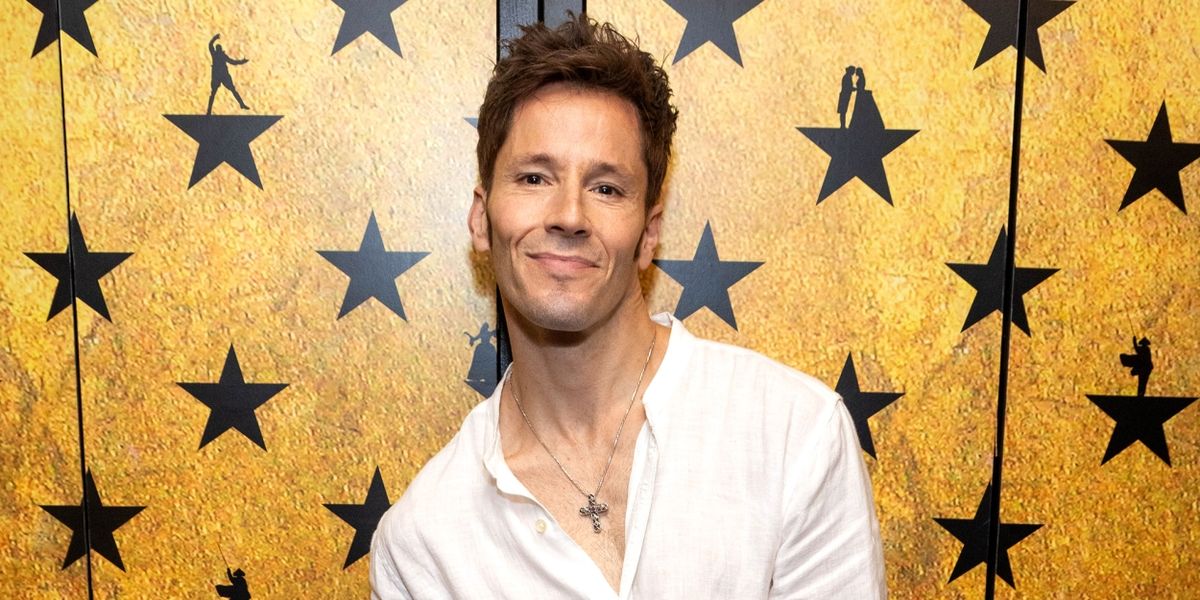
In a decade-spanning global phenomenon like Hamilton, longevity is rare. With its tongue-tying lyricism, punishing pace, and demanding schedule, the show has proven a challenge for even the most seasoned performers. But for longtime original Broadway cast member Thayne Jasperson, the journey has been nothing short of extraordinary. From stepping into the very first workshop in 2013 to reuniting with the original cast onstage at the 2025 Tony Awards, Thayne has not only witnessed the cultural explosion of Hamilton- he’s lived it every night.
As the only remaining original Broadway cast member, Jasperson originated the role of the delightfully prim and panicked conscientious objector, Samuel Seabury, and has now spent a full decade presenting “free thought on the proceedings of the Continental Congress.” It’s an awfully long time to be shaming revolutionaries from a soapbox, but for Jasperson, the experience is still rich with discovery, joy, and meaning.
In our conversation, Thayne opens up about rapping for the Cabinet in a four-person audition room, the height of Hamiltonmania, and what it takes to get inside the room where it happens- and stay there. With humor, humility, and deep reverence for the show that changed his life, Jasperson reminds us all why Hamilton still hits as hard as ever.
Photo Credit: Jennifer Broski
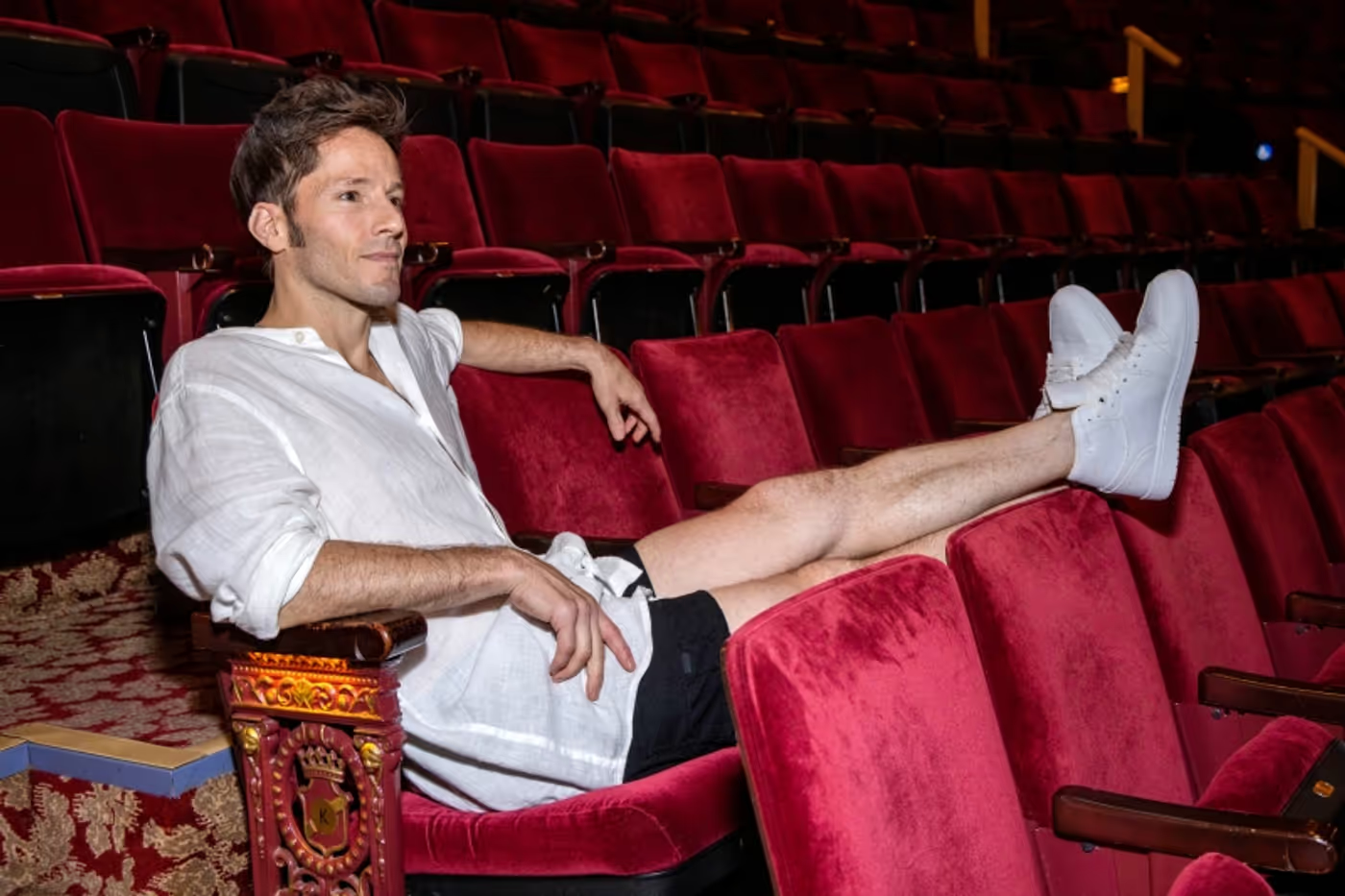
Hamilton has been on Broadway for 10 years, but I believe you've been with the show even longer than that. How and when did first become involved with it?
I was in Matilda at the time, and they were auditioning for this new show called Hamilton Mixtape. That was in December 2013. But then I got into the first workshop in January 2014. They were doing a workshop of just singing, they wanted to hear the music altogether and hear the storyline. So I had to go in and rap the Mulligan/Madison section from “Washington On Your Side” and I also had to sing “Dear Theodosia.” It was in front of Lin, I’m pretty sure, and I think the director, music director, and a casting director were there. A couple days later, Lin was like, “All right, he’s Samuel Seabury. Let’s put him in.” So they put me in that first workshop, which was just singing, this huge book of songs, even longer songs, even more songs, for like a month. We did that in January 2014.
What was your first impression of Hamilton? Did the material give any indication of what was to come in those early stages?
Yes. I’d be lying if I said no. I mean, not to the degree that it became like, with the President or Beyoncé showing up at the show, but to the degree where I knew it was good. Because you hear the concept and you're like, okay, that sounds kind of strange. But what did sound enticing to me was the team. I knew they had done In the Heights, and I was like, “I would love to work with this team.” Then, as soon as I started learning the material, I was like, “Whoa, this is actually fantastic.” And I loved the storyline. You hear “rap” and you might prejudge it, but when you start to hear the wordplay, the rhythm, the storyline- it hits different. When we did that first workshop, I remember singing through it and thinking, “This is amazing.” I knew it would be epic. Just not to this degree.
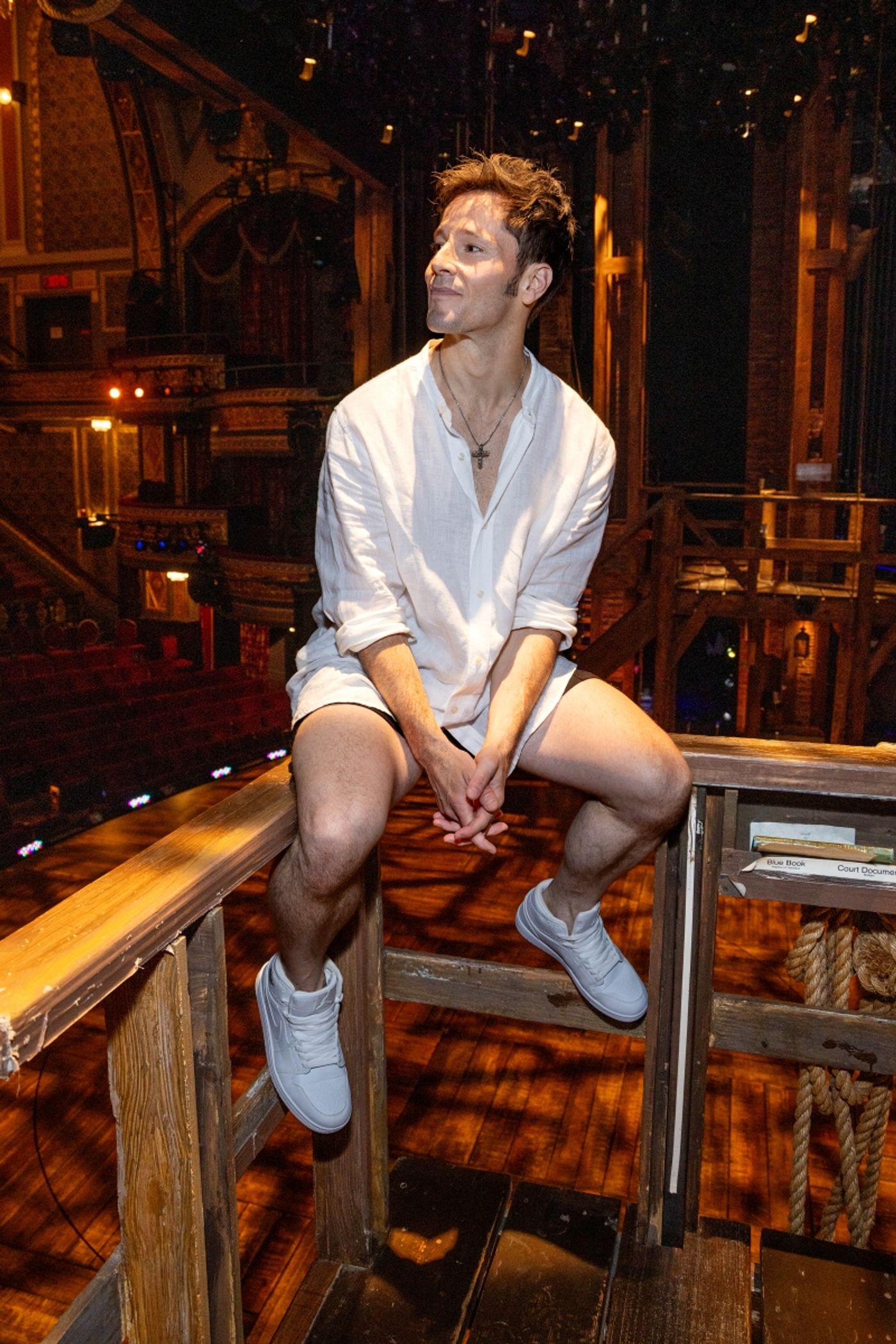
As a member of the original company, you were in the thick of Hamiltonmania. What was it like to suddenly find yourself at the center of a global cultural phenomenon?
Truly an experience that few will ever have in musical theatre. It’s rare. I never take it for granted. I always recognize what a blessing it was. First it was this secret. We were holding onto that. In our second workshop, a few people got to come in, small audiences. And it was still a secret that was boiling, waiting to explode. You could feel the energy. The energy was swirling. You knew it was about to spread. And when we took it Off-Broadway and started sharing it with the world...that’s the time I miss the most. Nobody knew the lyrics. Everyone came in with their mouths open, eyes wide, hanging on every word and syllable. Every movement. Every concept. It was beautiful. And then, as it exploded there were times I look back and wish I had picked myself up more when I was tired. We were doing so many extra things. And I’d be like, “I can’t, I’m tired.” But now? I’d do every single thing. Everything. Because when you get that opportunity, it doesn’t come around again.
Especially for theatre actors who signed up to do a job and suddenly became rock stars.
Exactly. And doing the Tonys recently? It felt like rock stars again. It was the coolest moment- being with the entire original cast, 10 years later, doing the same material. It felt like stepping into this glorious moment. I’ll never stop realizing what a blessing it is. I’m so grateful.
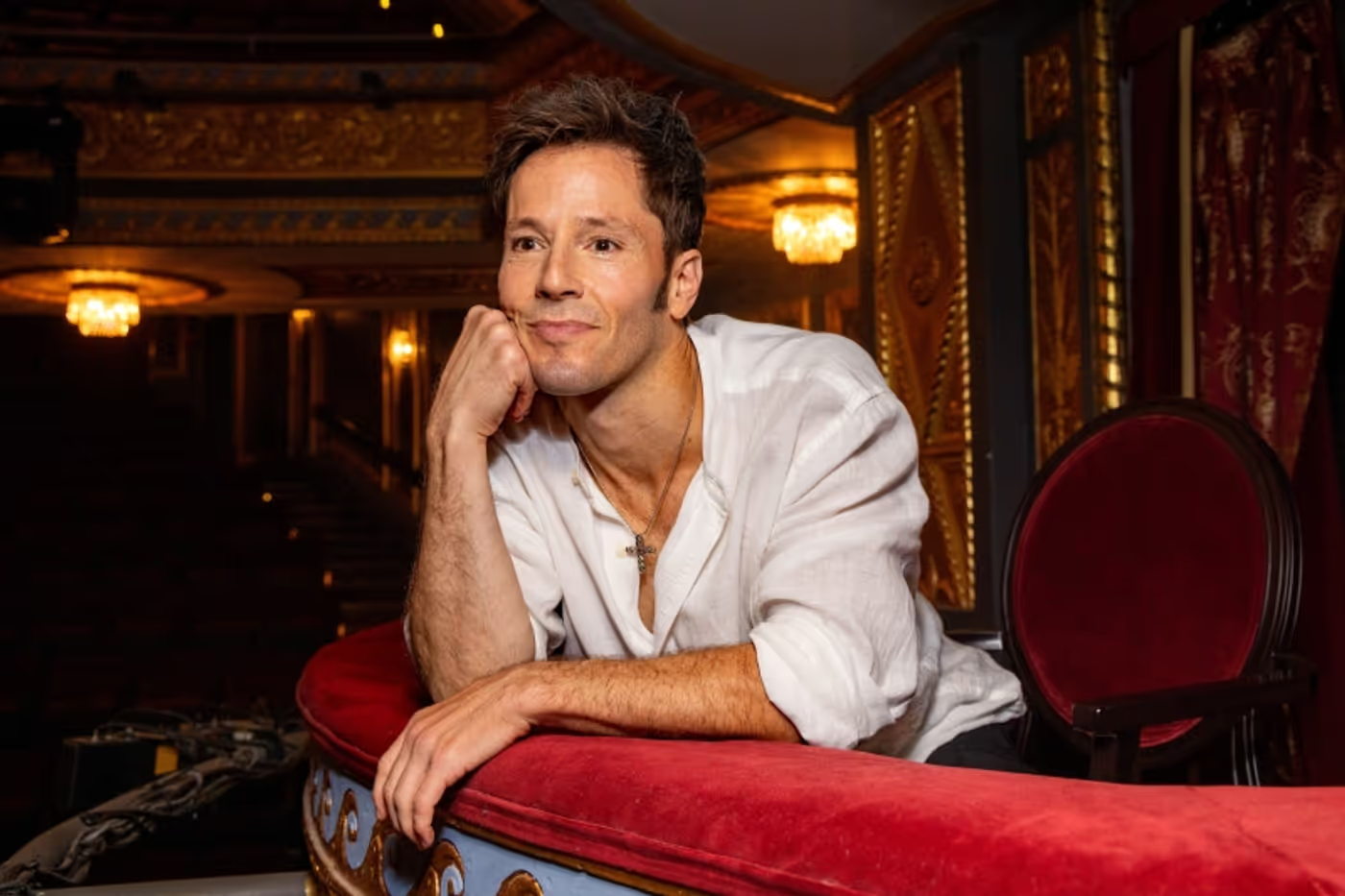
It was a thrill to watch you all perform together again. What was it like coming back to the rehearsal room and reliving that camaraderie?
I cannot tell you how much I was anticipating walking into that room and seeing all those beautiful faces I’d missed. I had sobbed over every single one of them when they left. It was like my family went away. And I had to come to a place of acceptance, like, “It’s okay, this is how it works, new people come in.” But walking in? I felt like a golden retriever. I was so excited. My tail was wagging. I wanted to hug and kiss everybody and cry at the same time. Funny things happened too, anytime someone new came in late, we’d all go wild. Like a full-blown family reunion. Chanting, dancing, stomping toward them. People would fall on the floor receiving all this praise. It was the cutest. I tried to soak up every second. I didn’t take one moment for granted.
You originated the role of Samuel Seabury. How has your relationship to him evolved over time?
You know, I was so honored and excited when I got to have a named role. I hadn’t heard of Samuel Seabury before, so I looked him up. He was an Episcopal bishop, and I was raised very religious, so I thought, “Okay, I can tune into this.” Fearful of what a ruler might do, that tracks. It was about diving into that fear. What do we feel as humans when we’re afraid of change? There’s a lot there that’s relatable. And also, getting to play the guy who’s not loved? I love that. I’m generally a positive, smiley guy, so people are like, “Put him in the nice role.” But I loved getting to be this kind of annoying guy. [laughs] I remember having dinner with a family once, and this boy, maybe nine or ten, asked, “What role do you play?” I said, “Samuel Seabury.” And he goes, “Samuel Seabury? I hate him.” [laughs] But I kind of loved it! I was like, yes! That means I’m doing my job.
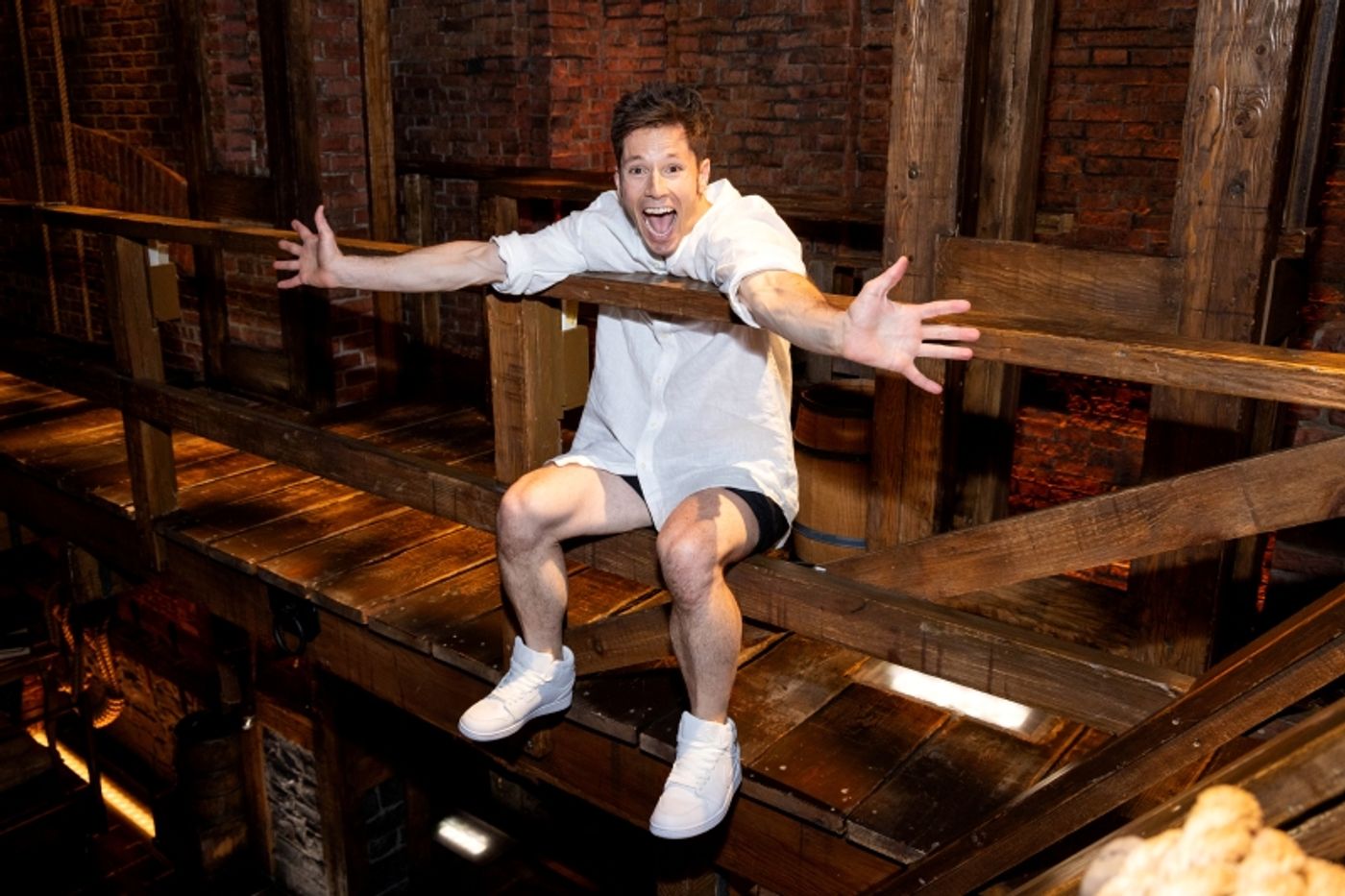
It's such a hilarious and beloved moment in the show. What was it like building that interaction with Lin? How much were you able to bring to the character outside of what was written?
That’s what I miss most, the original cast really was a family, collaborating to create the experience. So your thoughts mattered. I remember thinking, “I’m gonna stand on my chair,” because clearly, Seabury feels above everyone. So I did. The director [Thomas Kail] liked it and said, “Yes, let’s put him on something.” That moment sparked the idea to build the box for me to stand on. I even grabbed a piece of paper and held it up, like I had a pamphlet. We built the physicality of the scene together. Lin would come around and I’d push him away, he’d try to stand up, it was a push-and-pull dynamic we developed collaboratively. Even musically, I remember the “For shame! For shame!” part used to stay on the same note. But I thought, “Why not modulate? He’s literally talking about changing the key.” So one day I took it up in performance and the music director [Alex Lacamoire] said, “I like that choice. Let’s keep it.” That’s the kind of input we had. You could shape your character.
The ensemble in Hamilton is the foundation of a lot of the storytelling and the pace relentless, in spite of how effortless you all make it look. How have you kept yourself physically and mentally in shape for 10 years?
It is relentless. It’s not a show you can just phone in. I’ve done ensemble in other shows—like Matilda, which I loved, but I had downtime there. In Hamilton, you're pushing the wheels of the story. You’re driving the whole thing. Andy Blankenbuehler, what I love about him is he doesn’t want the ensemble to be background. He wants you to be part of the superstars. He wants specificity, intention, acting choices. It’s hard to leave a show that’s so fulfilling. There’s so much to find every day.
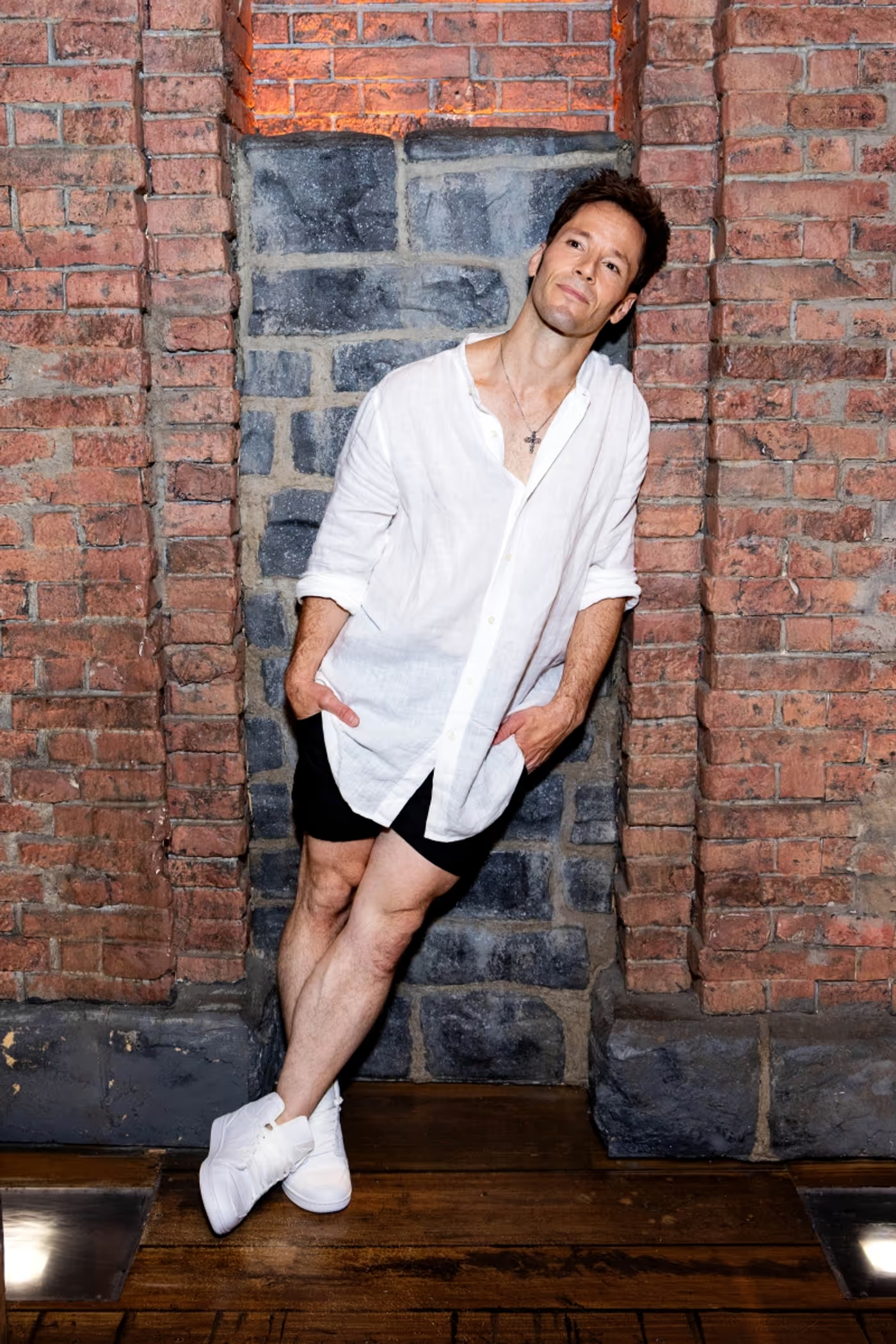
People ask how I’ve done it for 10 years and honestly, I don’t know! I thought I’d stay for two years, but I haven’t wanted to leave. I find new places, new motives, new ways of moving that ignite a fire in me. Small differences, not enough to throw off choreography, but enough to make it feel new for me. There’s always intention behind what we’re doing. Nothing is ever just movement. It’s storytelling. Meryl Streep came to our show once and said, “I love the ensemble. You’re not just dancing—you’re actors.” And I was like, Meryl Streep said I’m an actor. I’m an actor!
As someone who knows Hamilton inside and out, do you have any advice for dancers who dream of being in the show?
To book Hamilton, I’d say the main thing is to have a strong point of view. Be an actor first. What the creative team is going to want to see is someone who tells the story truthfully, historically, and with your own unique voice. That’s huge in this show. Yes, technique matters. Yes, you need to be able to handle the style. But the acting comes first. That’s something I love about this piece. And in terms of staying in it? I think it’s about remembering that this is a gift. There’s a quote, it was a dancer who worked with a legendary choreographer, I think Fosse. She was always being told, “Again, again, again,” and she was exhausted. But years later, after her career had ended, she said, “What a gift to do it again.” That hit me so hard. So I try to keep that in mind. There will be a time when I look back, when I’m older, when I physically can’t do this anymore, and I’ll wish I could do Hamilton again. As tired as I might have been in the moment, I know I’ll want that feeling back. So I remember that this is a gift. And my job is to bring light to whoever’s in the audience, whether it’s their first time or their 30th. Always give it everything.
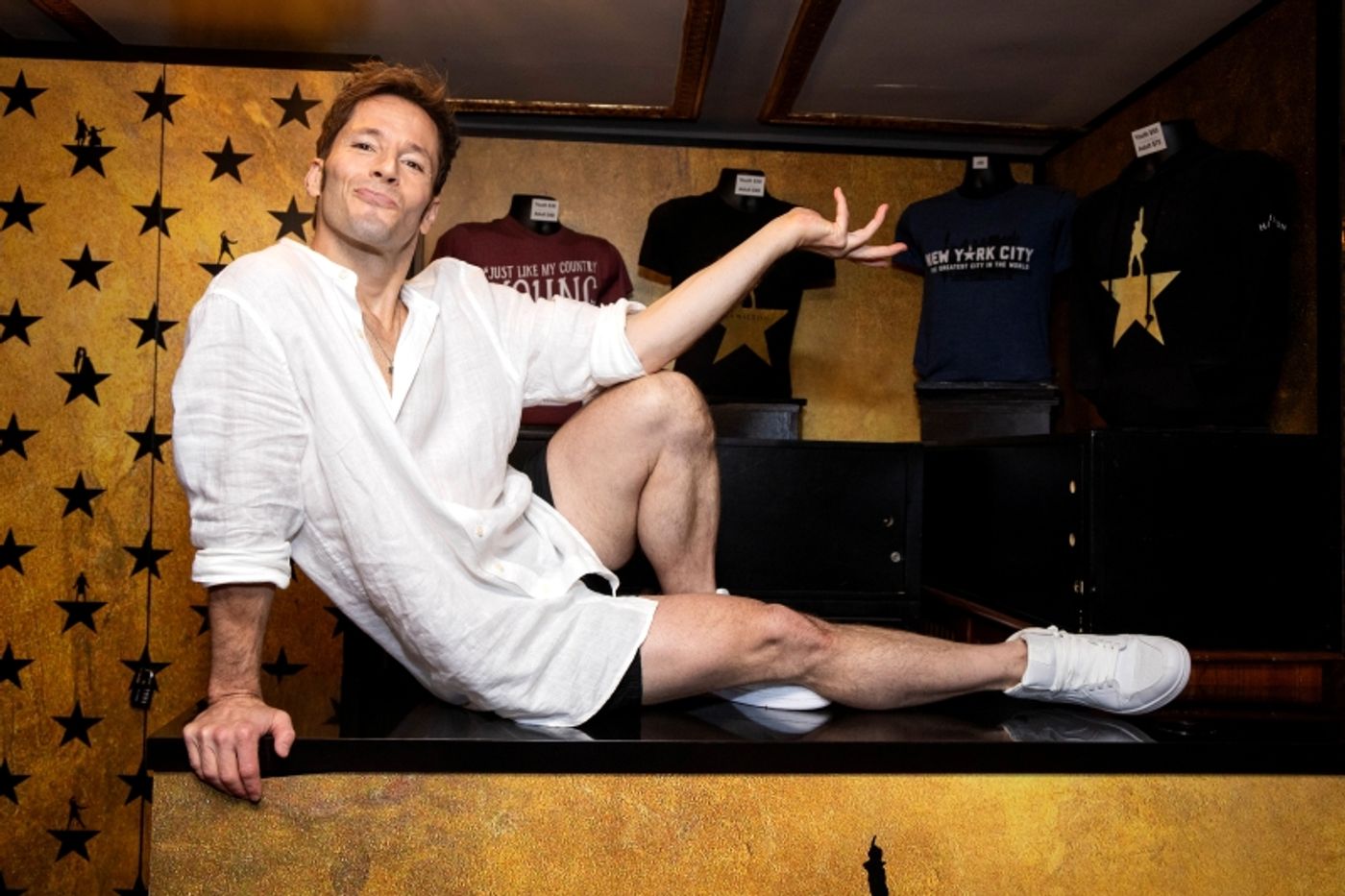
Hamilton has been so inspiring to so many people. Are there any lines or any Hamilton wisdom that you've taken out of the theatre with you?
Yes, for sure. The one that always stands out is: “When my time is up, have I done enough?” That line has always hit me in a deep way. I had a friend who passed away suddenly. We went to Iceland together, and then three weeks later, she died out of nowhere. She was young, in her thirties. It really made me realize: you never know when it’s your time. And when that time comes, what will you think? Will you look back and feel like you did enough with your life? I think about that a lot. Have I lived fully? Have I given anything to others? Have I shared my light? Or was I selfish and scared and small? I hope I’ve given something. I want to live my life so that I come sliding into home base- scraped, bruised, exhausted- knowing I did everything I could. I don’t want to get to the end and realize I was afraid of taking risks. I want to fulfill everything I possibly can.

BroadwayWorld Merch
Shirts, mugs, phone cases & more



Powered by

|