
Carnegie Hall Unveils UNITED IN SOUND Festival 2026 Partner Events
The United in Sound festival highlights the extraordinary musical riches that have evolved and flourished in the US throughout the country's history.
Carnegie Hall has announced its schedule of partner events presented by leading cultural and academic institutions across New York City and beyond from February through July 2026 as part of the Hall's United in Sound: America at 250 festival.
The United in Sound festival highlights the extraordinary musical riches that have evolved and flourished in the US throughout the country's history. With a wide variety of performances exploring diverse voices and influences that have shaped American identity, the festival offers a multifaceted musical reflection of the United States, 250 years since the signing of the Declaration of Independence.
As a major centerpiece of the Hall's 2025–2026 season, the festival features more than 35 concerts at Carnegie Hall. Performances include film music, jazz, R&B, rock ‘n' roll, hip-hop, country, bluegrass, Broadway, and classical music as well as programs that blend various musical genres, showcasing the very best of the American spirit through music.
Beginning in February, the United in Sound celebration extends beyond Carnegie Hall across all five boroughs to include events that celebrate different facets of American music, including influences from abroad, hosted by festival partners citywide. For highlights of festival partner events, please see below.
At Carnegie Hall, among the upcoming performances from January through July 2026 are Timo Andres and Aaron Diehl (Jan. 28); Brooklyn Rider (Jan. 29); Ruckus and Davóne Tines (Jan. 30); Dover Quartet (Feb. 10); Joyce DiDonato and Time for Three (Feb. 19); An Evening with the Grand Ole Opry (Mar. 20); The Knights as well as Boston Symphony Orchestra with Renée Fleming and Thomas Hampson (Apr. 9); Kronos Quartet (Apr. 25); Harry Connick Jr. (May 22 and 23); Marin Alsop leading The Philadelphia Orchestra and Jazz at Lincoln Center Orchestra with Wynton Marsalis (May 29); Karina Canellakis leading the National Youth Orchestra of the United States of America (NYO-USA) featuring pianist Kirill Gerstein (July 31); and many others, plus free concerts presented in New York City neighborhoods as part of the Carnegie Hall Citywide free concert series.
Across New York City, music-focused events presented by festival partner organizations range from concerts, exhibitions, and talks to dance, theater performances, film screenings, and more. Programming includes cultural and community influences from abroad—including contributions from elsewhere in Europe, Latin America, the Caribbean, and Asia—that have shaped and reflect the US musical landscape: The New Series: The Hill We Climb Project, a five-movement suite commission for viola and piano inspired by Amanda Gorman's inaugural poem, presented by The Juilliard School; events by The Folk Music Society of New York including The Voice of the Mountains—Songs from Appalachia that celebrates the unique culture, stories, and singing style of Appalachia; YIVO Institute for Jewish Research's Yiddish Theatre, George Gershwin, and the Birth of an American Sound and other events that explore Jewish musical heritage in the US and its influence on American music; events that explore the cultural dialogue between Italy and America through music presented by the Italian Cultural Institute of New York including the screening of the documentary Enrico Caruso, The Greatest Singer in the World, followed by the opening of an exhibition of rare photographs and historic recordings of the legendary singer; a concert by Toomai String Quartet: From Duke Ellington to La Lupe, presented by the Cuban Cultural Center of New York, that explores the relationship that the US jazz scene has had with the Latin American diaspora; and The Metropolitan Opera's summer recital series featuring musical selections that highlight the history of American art song and opera.
“This season, we celebrate the extraordinary contribution that American music has made to world culture,” said Clive Gillinson, Carnegie Hall's Executive and Artistic Director. “Its impact is felt across a wide range of genres—from jazz, pop, and gospel to film, Broadway, and the world of classical music. Through the United in Sound festival, we will explore music that reflects the American experience and the stories it tells about our nation. As we have planned this festival, it has also been wonderful to see the enthusiasm from partner organizations across New York City and the dynamic range of events across multiple artistic disciplines that they've programmed for this celebration.”
More than 35 upcoming United in Sound festival concerts will be presented from January through July across the Hall's venues—Stern Auditorium / Perelman Stage, Zankel Hall, Weill Recital Hall, and the Resnick Education Wing.
Festival concerts at Carnegie Hall in January and February include:
- Brooklyn Rider presents Citizenship Notes which looks at the string quartet as a microcosm of democracy and includes a unique spin on a Civil Rights-era classic by Bob Dylan, and New York premieres of commissions by Don Byron, Ted Hearne, and Angélica Negrón exploring questions of citizenship and democracy in the 21st century. (Jan. 29, Zankel Hall)
- Intrepid early music band Ruckus and pathbreaking bass-baritone Davóne Tines present a modern reimagining of America's earliest revolutionary music that contextualizes the 250th anniversary of the Declaration of Independence as part of the ongoing revolutions in our nation's history, while giving a platform to voices who are calling for change. The program features songs, hymns, ballads, and newly commissioned works by Tines, featuring a special appearance by the Lavender Light Gospel Choir. (Jan. 30, Zankel Hall)
- Music director Yannick Nézet-Séguin leads The Met Orchestra—joined by mezzo-soprano Isabel Leonard in “Somewhere”—a favorite from Bernstein's West Side Story and Barber's Knoxville: Summer of 1915. The program also includes Dawson's oft-neglected Negro Folk Symphony and Bernstein's Fancy Free—the composer's first collaboration with choreographer Jerome Robbins. (Feb. 4, Stern Auditorium / Perelman Stage)
- Acclaimed multi-faceted musician Damien Sneed leading a special concert that blends the rich heritage of gospel music with the grandeur of classical symphonies, the soulful rhythms of jazz, and the infectious energy of soul music to create a musical experience that transcends cultures, faiths, and generations. Featuring the visionary Orchestra of Tomorrow and special guests, Sneed brings his signature blend of technical mastery and heartfelt emotion to the stage. (Feb. 13, Zankel Hall)
- The New York Pops—led by music director Steven Reineke—present If I Ain't Got You: The Best of R&B, featuring timeless love songs and empowering anthems featuring Aisha Jackson (The Great Gatsby) and vocal powerhouse Avery Wilson, who earned a Grammy Award nomination for Best Musical Theater Album for The Wiz's 2024 Broadway cast recording, as special guests. (Feb.13, Stern Auditorium / Perelman Stage)
- Mezzo-soprano Joyce DiDonato and genre-crossing Time for Three trio present the New York premiere of Kevin Puts's Emily—No Prisoner Be, a highly anticipated semi-staged song cycle based on (and featuring) the poetry of Emily Dickinson. (Feb. 19, Stern Auditorium / Perelman Stage)
Festival concerts at Carnegie Hall in March and April include:
- Violinist Kristin Lee and pianist John Novacek in a program that captures Lee's heartfelt sentiments for the country she now calls home, featuring works by American classical trailblazers like Henry T. Burleigh and Amy Beach, to ragtime and jazz pioneers like Scott Joplin and George Gershwin, to contemporary genre-blenders like Kevin Puts and Lee's recital partner Novacek, offering a distinct and recognizable snapshot of American music and its rich history. (Mar. 12, Weill Recital Hall)
- Jazz supergroup Artemis—comprised of instrumental virtuosos each a renowned leader in her own right—perform an exciting program that includes the world premiere of a new Carnegie Hall-commissioned work by music director Renee Rosnes. (Mar. 13, Zankel Hall)
- Nashville's legendary Grand Ole Opry makes a rare visit to Carnegie Hall for a special night of country music. Celebrating 100 years of unforgettable performances this season, the Opry continues to honor the past, showcase the present, and shape the future of country music through one-of-a-kind live shows. Featured artists include Opry members Scotty McCreery, Rhonda Vincent, and Henry Cho plus Grammy Award-nominated duo The War and Treaty. (Mar. 20, Stern Auditorium / Perelman Stage)
- Principal guest conductor Marin Alsop leads The Philadelphia Orchestra joined by rising superstar pianist Hayato Sumino as soloist in Gershwin's blues-infused Concerto in F, marking Sumino's debut as orchestral soloist at Carnegie Hall. The program also features a New York premiere by iconic American composer John Adams, co-commissioned by Carnegie Hall, and more. (Mar. 31, Stern Auditorium / Perelman Stage)
- Music director Andris Nelson leads the Boston Symphony Orchestra—joined by soprano Renée Fleming and bass-baritone Thomas Hampson and the Tanglewood Festival Chorus for selections from John Adams's Nixon in China on a program that also includes Adams's The Chairman Dances and Dvořák's glorious “New World” Symphony. (Apr. 9, Stern Auditorium / Perelman Stage)
- A semi-staged, multisensory musical triptych by Kronos Quartet that explores the history of Indigenous, Gullah-Geechee, and Chinese American communities in the United States with new works by Laura Ortman, Charlton Singleton, and Dai We, featuring pipa virtuoso Wu Man. (Apr. 25, Zankel Hall)
Festival concerts at Carnegie Hall in May, June, and July include:
- Acclaimed singer-songwriter and multi-instrumentalist Rhiannon Giddens and special guests explore the history of early American music from the birth of the banjo in the early 1700s through its prevalence in minstrelsy and the rise of the early recording industry tracing artistic connections from Nigeria to the piedmont of North Carolina, from the Congo to Louisiana and beyond. Giddens embodies a boundless curiosity that explores untold stories and reclaimed musical traditions that have shaped—and continue to shape—American identity. (May 8, Stern Auditorium / Perelman Stage)
- Genre-crossing, convention-spurning trumpeter Keyon Harrold pays tribute to Miles Davis during the legendary trumpeter's centennial. Harrold's wide-ranging credits include his own Grammy-nominated projects and fusions; collaborations with Beyoncé, Gregory Porter, and Mary J. Blige; and recording all the trumpet-playing heard in Don Cheadle's Grammy-winning Miles Ahead biopic. (May 16, Zankel Hall)
- Grammy Award-nominated surrealist blues poet and activist aja monet, a frequent collaborator with many of today's leading voices in jazz and soul music, makes her Carnegie Hall debut with a program that highlights her critically-acclaimed linguistic gifts. (May 20, Zankel Hall)
- The great artist and entertainer Harry Connick Jr. performs back-to-back concerts for his long-awaited Carnegie Hall headlining debut. The program features solo performances, small-group and big-band jazz numbers, original storytelling, and a brand-new orchestral piece that honors the birthday of his late mother, Anita, who dreamed that one day he would perform at Carnegie Hall. (May 22 and 23, Stern Auditorium / Perelman Stage)
- The Philadelphia Orchestra and principal guest conductor Marin Alsop are joined by the Jazz at Lincoln Center Orchestra with Wynton Marsalis for the New York premiere of Marsalis's Symphony No. 5, “Liberty” on a program that also includes Beethoven's Symphony No. 7. (May 29, Stern Auditorium / Perelman Stage)
- The National Youth Orchestra of the United States of America (NYO-USA), led by conductor and violinist Karina Canellakis, performs a program that includes the overture to Samuel Barber's The School for Scandal, Op. 5 and Gershwin's Piano Concerto in F, featuring guest soloist Kirill Gerstein. (July 31, Stern Auditorium / Perelman Stage)
From February through July, events presented by festival partner organizations across all New York City's boroughs—ranging from concerts, exhibitions, workshops and talks, to dance, theater performances, and film screenings—extend the scope of the festival. Among the participating partner organizations are: Afrofuturism Art and STEM, AILEY, Apollo Theater, Belongó, Black Speculative Arts Movement, Hostos Center for Arts and Culture, The Joyce Theater, The Metropolitan Museum of Art, The Metropolitan Opera, Museum of Broadway, Museum of Chinese in America, New York Film Academy, North American Indigenous Center of New York, NYU Steinhardt School of Culture, Education, and Human Development, Society of Illustrators, WQXR/New York Public Radio, and the YIVO Institute for Jewish Research. For a list of United in Sound festival partners, click here.
Among the festival partner highlights in February, March, and April include:
- Orchestra of St. Luke's Chamber Ensemble performs an evening celebrating three defining American composers that features Leonard Bernstein's Clarinet Sonata. The program also includes Samuel Barber's evocative Dover Beach and Serenade for Strings, plus select songs by Stephen Sondheim performed by baritone John Brancy. (Feb. 25 at Weill Recital Hall, 154 West 57th St., New York, NY)
- The American Musical Modernism: Revolution in Sound course offered by the Brooklyn Institute for Social Research that explores the music of Charles Ives, Ruth Crawford Seeger, George Gershwin, Duke Ellington, Aaron Copland, Leonard Bernstein, and others, examining their role in the rise of a distinctively American form of modernism. (Mar. 4, 11, 18, and 25, Online: thebrooklyninstitute.com/current-courses)
- Hirschfeld's Sondheim—a talk and book signing with Al Hirschfeld Foundation Creative Director David Leopold who will take the audience on a tour through Stephen Sondheim's career as seen and drawn by artist Al Hirschfeld in celebration of the release of the author's book Hirschfeld's Sondheim. All of Sondheim's best-known works will be featured—West Side Story, Follies, Sweeney Todd, Merrily We Roll Along, Sunday in the Park with George, and more. (Mar. 12 at Society of Illustrators, 128 East 63rd St., New York, NY)
- New York City Center's production of The Wild Party with The Encores! Orchestra and Guest Music Director Daryl Waters features an assortment of New York City's most colorful characters for a night like no other in the dark underbelly of the city at the end of the 1920s. Michael John LaChiusa (The Gardens of Anuncia) and George C. Wolfe (Jelly's Last Jam) bring Joseph Moncure March's notorious narrative poem to life in their jazz-infused musical adaptation. Nominated for seven Tony Awards in its original run, this musical directed by two-time Helen-Hayes Award winner Lili-Ann Brown is full of irreverence, exuberant madness, and joyful defiance. (Mar. 18–29 at New York City Center, 131 West 55th St., New York, NY)
- From Dublin to New York—Macdara Yeates in Concert, presented by The Folk Music Society of New York, features Dublin balladeer Macdara Yeates who presents songs of Irish emigration, love, humor, local narratives, and revolution with rich insights on the history of the songs and their collection from the wave of Irish immigrants into New York City in the 1800s driven by the Great Hunger. (Mar. 20 at St. Paul & St. Andrew United Methodist Church, 263 West 86th St., New York, NY)
- Klezmer and Other Displaced Musics in America—a lecture with scholar and performer Walter Zev Feldman that explores the vibrant yet largely concealed musical culture of the klezmer revitalization in New York, Philadelphia, and other American cities in the 1960s. Drawing from his new memoir, From the Bronx to the Bosphorus, Feldman reflets on how he was instrumental in creating the klezmer revitalization in the US after learning from Greek immigrant musicians and then from the eminent klezmer Dave Tarras. (Apr. 6, Online: yivo.org/Displaced-Musics)
Festival partner event highlights in May, June, and July include:
- Members of Orchestra of St. Luke's, joined by baritone Joseph Parrish, in Finding an American Voice—a celebration of the friendship between Harry T. Burleigh, the pioneering Black American composer, and Antonín Dvořák, the renowned Czech composer. Their collaboration, rooted in spirituals and folk music, helped shape a distinctly American sound. (May 7, 14, 16, 17, and 18, Multiple locations across all five New York City boroughs, 5bmf.org/event/osl-and-joseph-parrish)
- Italy and America in Dialogue featuring Trio Hermes in a program that explores the exchange between Europe (with a focus on Italy) and America through three composers—Ildebrando Pizzetti, Mario Castelnuovo-Tedesco, and Leonard Bernstein—whose works embody a cultural dialogue across the Atlantic. Pizzetti was firmly rooted in Italian tradition, lyricism, and counterpoint; Castelnuovo-Tedeco was forced to immigrate the US in 1939 because of the infamous fascist racial law, bringing with him the voice that later flourished in Hollywood; and Leonard Bernstein was an American composer shaped by European and Italian models who reimagined them with uniquely American energy. (May 8 at Italian Cultural Institute, 686 Park Avenue, New York, NY)
- Octogenarian Women of Jazz—featuring a trio of legendary women in jazz for an evening of beloved jazz standards and originals, including pianist Bertha Hope's “Da Las Senidras,” recently published in Terri Lyne Carrington's New Standards: 101 Lead Sheets by Women Composers. Singer Keisha St. Joan, often compared to the late great Sarah Vaughan, will add her colorful vocals to the band's sound, and the evening will also include some brief oral history as well as a Q&A with the artists. (May 8 at Flushing Town Hall, 137-35 Northern Blvd., New York, NY)
- Music from Juneteenth: Freedom Has No Borders by composer, playwright, and poet Darrel Alejandro Holnes celebrates the soundscape of emancipation in Texas and beyond, tracing the journey from bondage to liberation through spirituals, gospel, zydeco, norteña, Creole/Cajun traditions, contemporary theater, and popular music. The program honors America's 250th by reframing the founding promise of liberty through the voices of those who completed it: the communities who forced emancipation in Texas, transforming June 19, 1864, into Juneteenth. (June 19 at Joe's Pub, The Public Theater, 425 Lafayette St. and Online, New York, NY)
- The Clarion Choir Performs the national anthems by David Lang, the Pulitzer Prize-winning composer who studied the national anthems of all 193 UN countries to uncover shared themes about the fragility of freedom, inspiring this five-movement meditation on love, violence, and collective ideals. Originally co-commissioned by the Los Angeles Master Chorale and Berlin Radio Choir, this powerful work will be performed at intervals on July 4th offering The Met's visitors a striking, immersive reflection on our shared hopes and fears. (July 4 at The Metropolitan Museum of Art, Englehard Court in the American Wing, 1000 Fifth Ave., New York, NY)
- Mark Morris Dance Group in a live music and dance program entitled Dances to American Music featuring selections by George Gershwin, John Luther Adams, and more. (July 14–18; 21–25 at The Joyce Theater, 175 Eighth Ave., New York, NY)
UNITED IN SOUND ON Carnegie Hall+
On-demand streaming on Carnegie Hall+—Carnegie Hall's premium video-on-demand channel—adds additional layers to the United in Sound festival by curating concert films and documentaries celebrating American music presented on the greatest stages around the world. America's enduring contribution to film music is featured in a series of Film Music Gala concerts that pay tribute to legendary composers including John Williams, Randy Newman, Henry Mancini, and others through the acclaimed Hollywood in Vienna series. The American Songbook is celebrated in a special program by Michael Feinstein with the Carnegie Hall Big Band paying tribute to Tony Bennett, as well as concerts from Dresden (New Year's Eve Gala: Broadway to Hollywood) and the BBC Proms (Stage and Screen: A Tribute to Bernstein at the BBC Proms and BBC Proms: The Warner Brothers Story) featuring music by Bernstein, Gershwin, and Porter. The acclaimed documentary The Conductor, takes you behind-the-scenes with renowned conductor and MacArthur “Genius” Prize–winner Marin Alsop, documenting her pioneering journey on the podium to become the first female music director of the Baltimore Symphony Orchestra, the São Paulo Symphony Orchestra, and the Vienna Radio Symphony Orchestra.
ABOUT THE UNITED IN SOUND FESTIVAL
Since its opening in 1891, Carnegie Hall has been a cornerstone of American musical life, hosting landmark premieres and performances that have shaped the nation's cultural identity. Carnegie Hall continues to embrace the full spectrum of American music genres, reflecting the country's diversity and innovation. This evolution underscores the Hall's enduring role as a cultural crossroads, where diverse traditions and groundbreaking artistry continue to define the American musical experience.
The Hall's 2025–2026 season offers a multifaceted reflection of the United States as the country marks the 250th anniversary of the signing of the Declaration of Independence. From January through July 2026, Carnegie Hall's citywide festival United in Sound: America at 250 highlights the extraordinary musical riches that have flourished in the United States, exploring diverse voices and influences that have shaped American identity.
In more than 35 concerts at the Hall, festival programming features jazz, rock ‘n' roll, hip-hop, bluegrass, classical, Broadway, film music and more, showcasing the very best of the American spirit. Among the eminent American composers featured in this festival are Leonard Bernstein, Duke Ellington, and George Gershwin, as well as previously underrepresented composers such as Amy Beach, William Dawson, and Florence Price. Additionally, Carnegie Hall has partnered with a range of American composers, ensembles, and artists to commission more than 20 new works that will be premiered as part of the festival; commissioned composers include John Adams, Don Byron, Ted Hearne, George Lewis, Angélica Negrón, Kevin Puts, Caroline Shaw, and Jerod Impichcha̲achaaha' Tate.
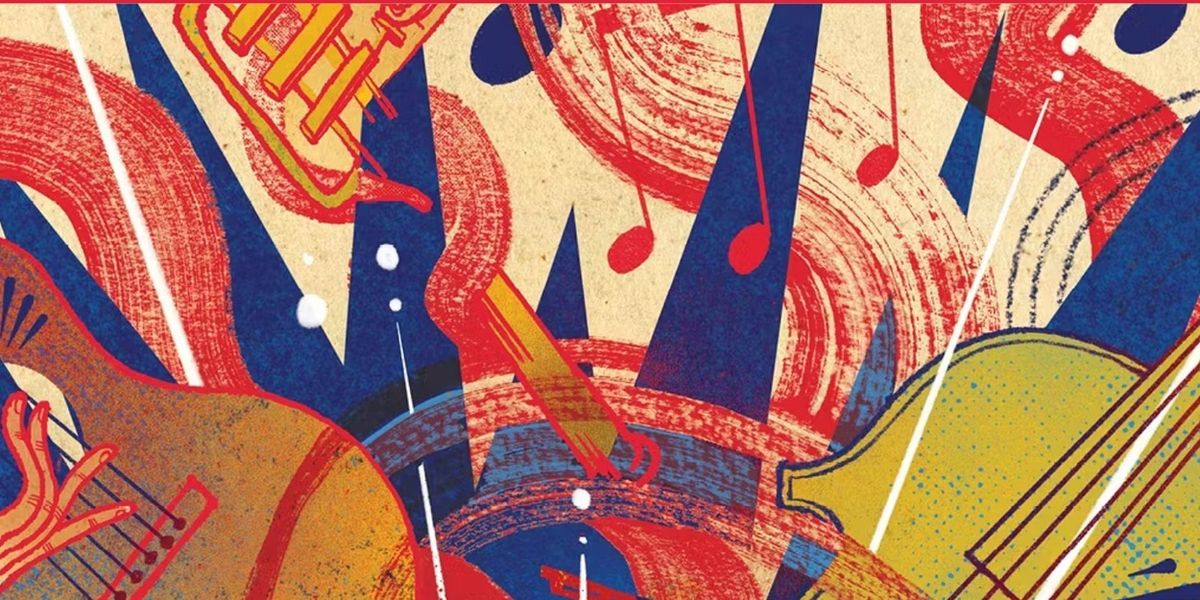
Continuing its tradition of commissioning artwork for its citywide festivals, Carnegie Hall engaged illustrator David Habben as the fourth visual artist to create a new work inspired by the festival theme. To learn more about the festival's artist and his signature artwork Together We Rise, click here.
For the most up-to-date information on festival performances and events at Carnegie Hall and partner institutions, visit carnegiehall.org/UnitedinSound over the coming months.
Prefer BroadwayWorld in Google Search?
Add us as a preferred source so our stories show up more often in Top Stories and Google’s AI answers — for you.
Sign up for all the news on the Fall season, discounts & more...