


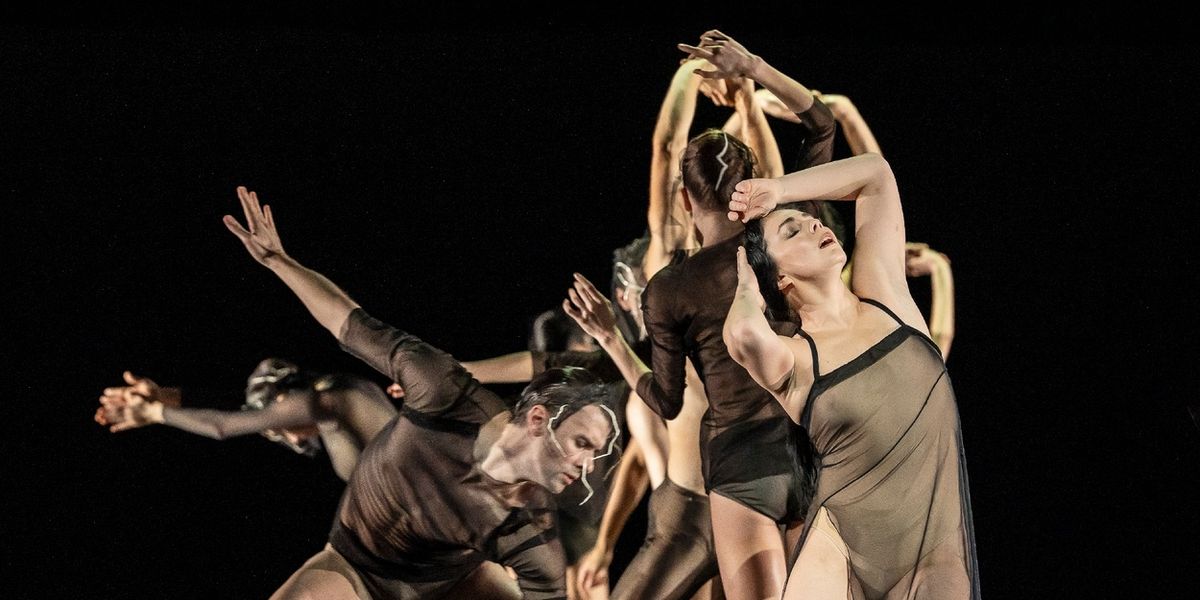
 Sir Wayne McGregor is a titan of the dance world - and a divisive one. For some he's the next Messiah, for others, the Emperor's new clothes. Normally I'm veering towards the latter, but his 2015 triptych Woolf Works is perhaps his most successful work to date.
Why? It was a departure, seeing McGregor attempt a full-evening work, and one that uses narrative. However, don't expect a literal story - far too obvious. No, McGregor, with the support of dramaturg Uzma Hameed, used the writer Virginia Woolf as their inspirational anchor and three of her works - Mrs Dalloway, Orlando and The Waves as narrative foundations.
What's truly interesting about the work is the reality/fiction crossover. The main role, danced by Natalia Osipova, is credited as Virginia Woolf/Older Clarissa in the first piece; I Now, I Then. So immediately, the boundaries of real and otherwise are blurred between Woolf’s actual life and the worlds she creates. This is a seriously interesting concept.
The piece explores numerous characters from Mrs Dalloway and flirts with the notion of time travel, which continues after the interval. The angular set by Ciguë is soon engulfed by swirling emotion and McGregor’s language is rich in connections and reminiscing. It's also the first time we hear Max Richter's diverse score, which for me is the absolute linchpin to the evening's success. Haunting melodies, atmospheric sounds and excerpts of Woolf's own musings - it's the gift that keeps giving.
The second section is called Becomings and uses Orlando as its premise. I remember being somewhat floored in 2015, and that feeling hasn't left. Lucy Carter's lasers piercing the fourth wall and Richter's intergalactic direction are absolutely the stuff of time-travelling hugeness. And the Royal Ballet dancers do McGregor proud. Full of conviction and physical prowess they devour the extreme bodily demands with both grace and sass. Becomings is absolutely an event if one doesn't overanalyse what's potentially missing in relation to movement phrasing and choreographic structure.
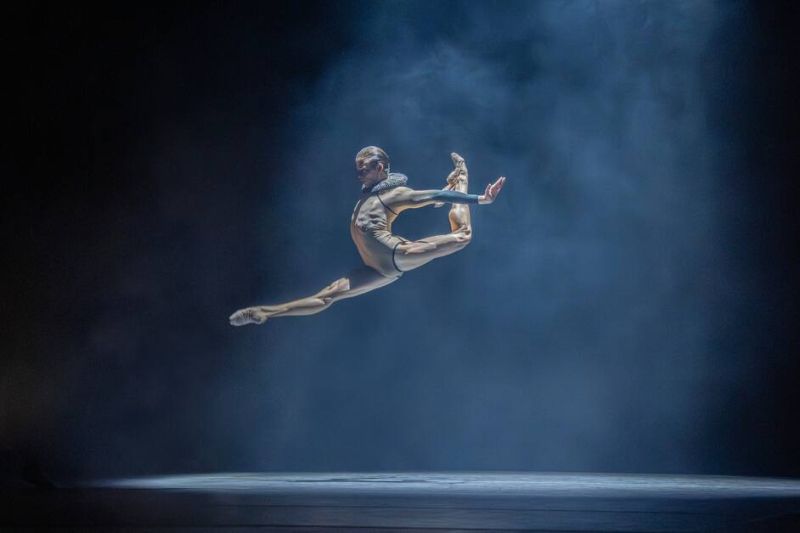
Marco Masciari in Wayne McGregor's Becomings
Photo Credit: Johan Persson
Closing the evening is Tuesday (from The Waves) and here we reconnect with Woolf the individual. The piece opens with her suicide note being read (by Gillian Anderson), and I've come across some people who find this fact incredibly offensive. Personally I don't, and it gives such insight into Woolf’s life and where she was at the end. The work is a study of emotion, specifically depression, shown through movement, be that the ebb, flow and swell of water or the physical exhaustion of a person who suffers the brutality of the black cloud swallowing them up.
McGregor absolutely succeeds at conveying the above state of mind, but as we all know, Osipova doing slow-mo anguish is hard to beat. In 2015 she created the lead in Becomings, and 2026 finds a very different dancer. For a while now, Osipova has been moving towards her actress/dancer phase. What I mean by this, and it's inevitably where any serious artist ends up, is that the how of what a dancer does is superseded by the why. Intention is everything and the dancer literally becomes method. This approach has strengths and weaknesses, but I could watch Osipova emoting till the cows come home. Sue me.
In closing. If you haven't seen Woolf Works you should. I don't believe there's anything similar around, and as already confirmed - the Richter score is the absolute making of it. Take of the final comment what you will.
Woolf Works continues at Royal Ballet And Opera until 13 February
Photo credits: Johan Persson





Reader Reviews
To post a comment, you must register and login.