


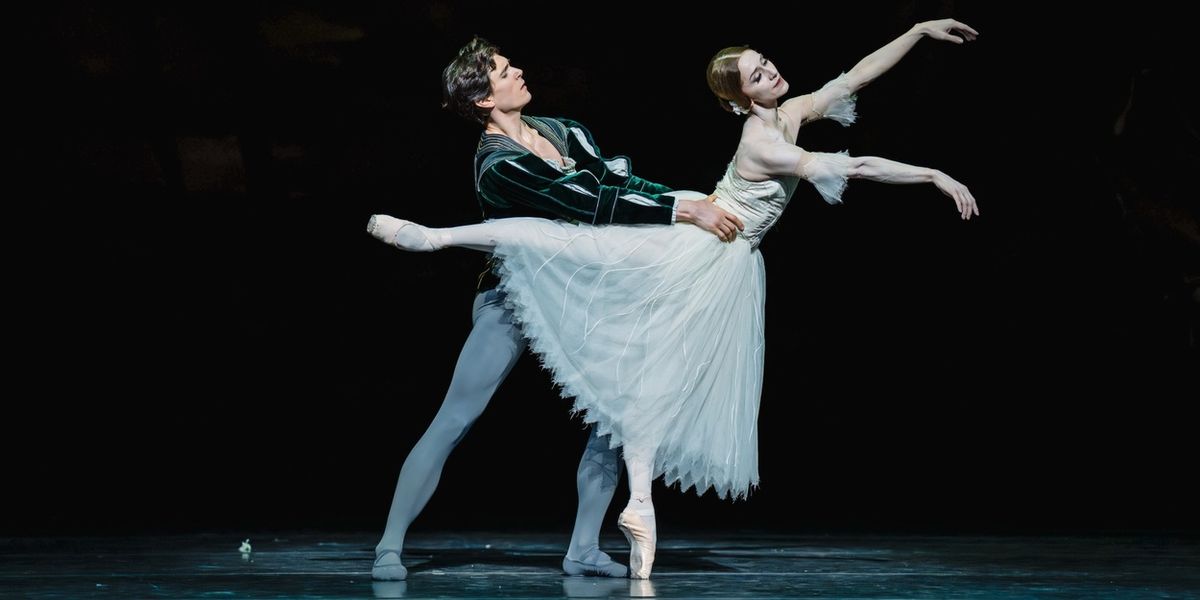

Giselle is a difficult ballet to get right. The balance between the “reality” of Act 1 and the Gothic otherworldlyness of Act 2 can be extremely hard to find, and the responsibility falls on all those involved.
The Royal Ballet opened another run of Sir Peter Wright's production and I left the performance in two minds. The opening night cast was Marianela Núñez and William Bracewell. Surprisingly this is Bracewell's Albrecht debut, which seems a bit late for him - but these matters are so often about circumstance rather than anything else.
Until now I never really had a problem with the Wright production, but Act 1 seems to have got a little too carried away. It felt oversaturated with both choreographic and artistic license embellishments, which ultimately took away from the storytelling and just blurred matters.
Strong points include the extremely high level of mime/characterisation from both Elizabeth McGorian as Giselle's Mother and Christina Arestis as Bathilde, Giselle's nemesis, and the dancing of the corps de ballet. Every double tour I saw was executed with clarity and speed, and the group dances had an effervescence that truly brought the environment alive.
Act 2 is overall much more successful, and though already appreciated in Act 1, the sets and costumes by John MacFarlane and lighting by Jennifer Tipton (re-created by David Finn) really come into their own. Depth and atmosphere abound. I'd also like to acknowledge the work of Samantha Raine as one of the stagers. I can only assume she's primarily responsible for the setting and rehearsing of the Willis, and the ladies of the company were fantastic. Military-esque and as cold as ice, there's nothing quite like a lineup of Willis telling whoever to talk to the hand!
Claire Calvert as Myrthe, Queen of the Willis is a woman before a dancer, and this lends brilliantly to the role. Maturity equals presence and power, and these are the characteristics that a good Myrthe is built upon. The beginning of her execution requires a tad more physical sturdiness but her characterisation is already in a good place at the beginning of the run. That said, all Willis could amplify the fierceness within the Act. At times one craved more obvious rage.
Lukas B. Brændsrød did a fine job as Hilarion to the point I wondered what is Giselle thinking? But hey - love is complicated. Bracewell is an archetypal Albrecht and his first performance didn't look like a debut. He had a palpable connection to Giselle throughout and his dancing in Act 2 was riveting, especially when in battle with the Willis.
Núñez in Act 2 is a force to be reckoned with. Her technical skill is so assured that as an audience member you can completely revel in her performance as there's just no question she won't execute everything perfectly. During her adagio solo she performed the most perfect entrechat six (a jump with three leg beats) and her overall interpretation is reminiscent of the great Russian ballerinas one has seen on old footage. Her emotion exudes through projected line and dramatic travel through space - and it works.
Her Act 1 Giselle communicates a confidence and maturity which isn't textbook, but actually benefits her interpretation. And during the mad scene she found stillness within all the chaos which really spoke beyond the stage. My concern, as mentioned at the beginning, is that matters have moved quite far from the original choreographic score. Be that the production or artistic license, at times the dancing felt unmusical and overly busy.
Nobody wants to see a performance that's rigid, or without personal interpretation, but there's also something to be said about finding intention within the choreographic score itself. I'd argue this approach isn't boring or generic - it can actually offer an honest framing, which is exactly what Giselle needs. Authenticity.
Giselle continues at the Royal Ballet and Opera until 20 March
Image credit: Helen Maybanks

.jpg?format=auto&width=365)




Reader Reviews
To post a comment, you must register and login.