


Review: MEDEA, Coronet Theatre
A searing Japanese adaptation of the Greek tragedy
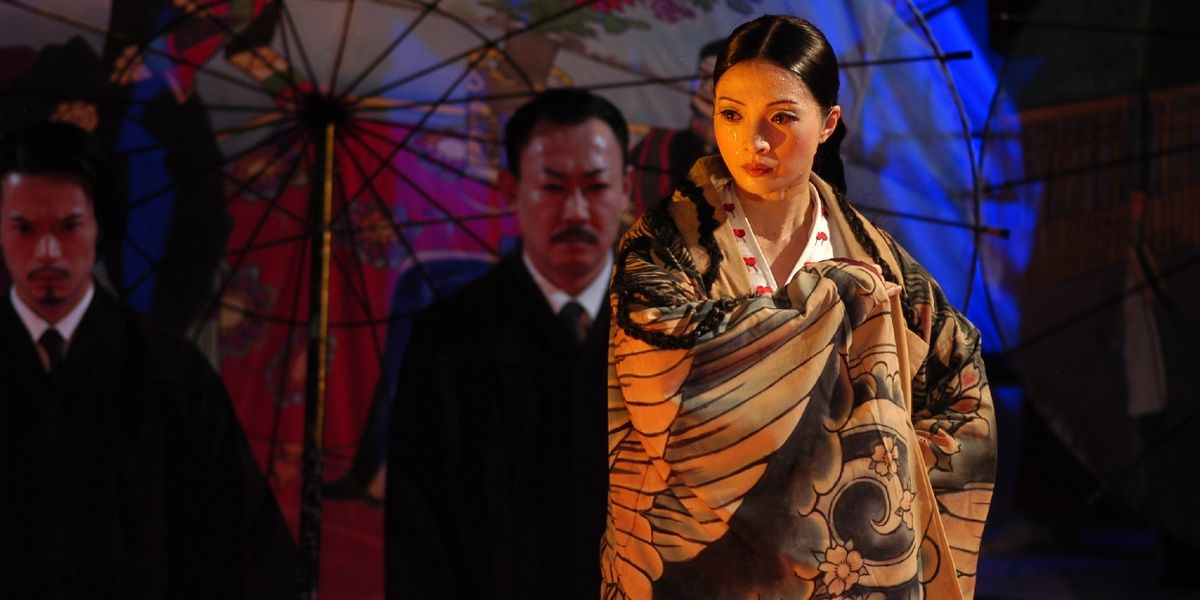
 It’s a curious feature of Euripides’ great revenge tragedy Medea that in a story so intimately tied to a woman’s sense of isolation in a foreign land, the omnipresent Greek Chorus is a group of handmaidens who empathise with the child-killing Medea throughout the play. Modern productions have puzzled this out in various ways, some centring a sense of feminine solidarity, others doing away with the Chorus altogether. The Shizuoka Performing Arts Center’s version of the play takes a different tack – here, the Chorus is entirely made up of men.
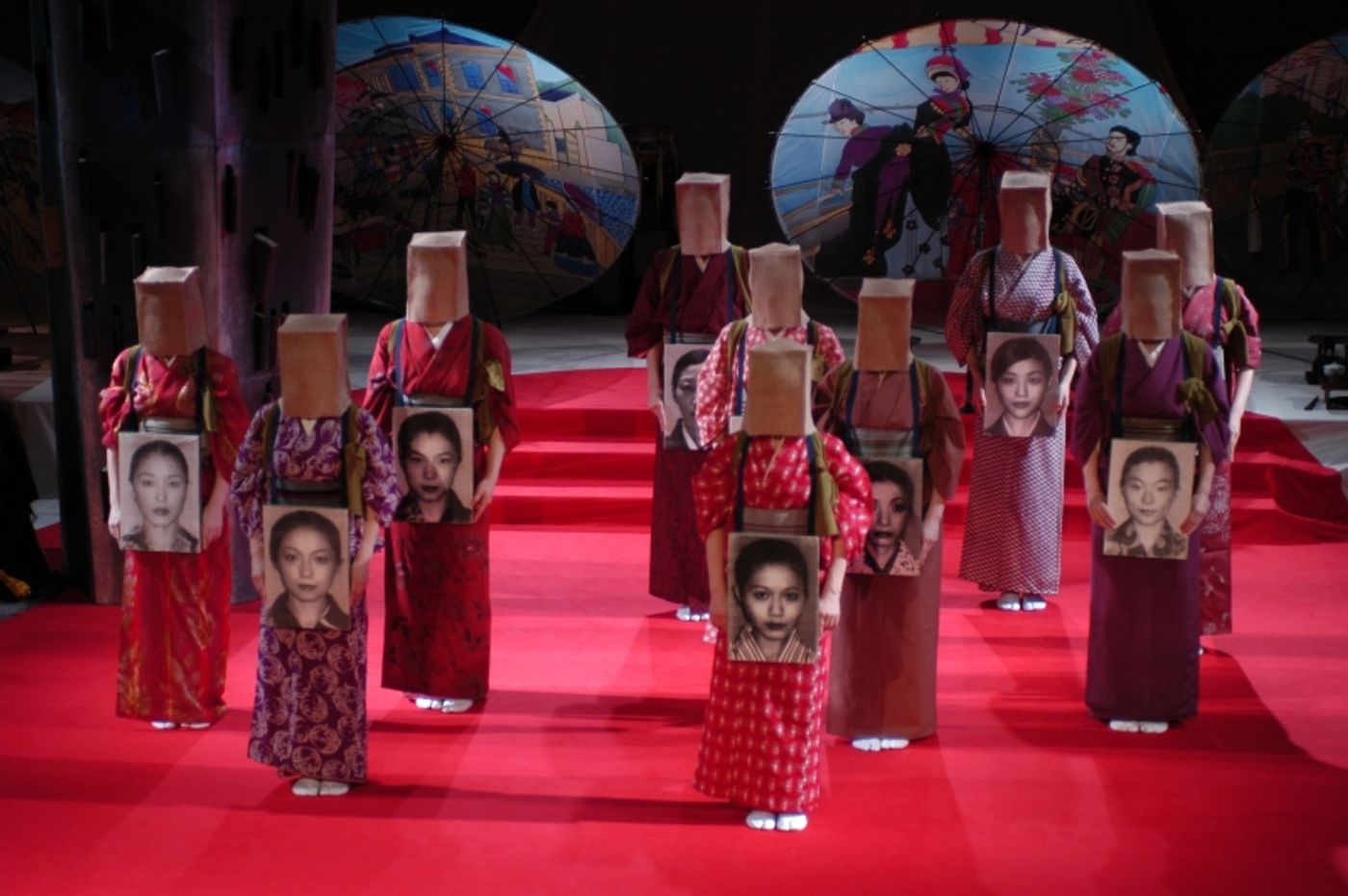
Indeed, this is not the only innovative spin Satoshi Miyagi’s Japan-based company has put on the classic play. The action is transported to a traditional Japanese restaurant (rendered beautifully by set designer Junpei Kiz) where, in a scene oddly reminiscent of a boisterous secondary school drama club, a group of rowdy male patrons choose which of the demure hostesses will perform in a production of Medea. As a result, each character in the play-within-a-play – both male and female – is played by two actors, a female movement performer and a male speaker. Each male guest sits for dinner, giving voice to the silent women he’s paid to perform for him.
This could easily be a theatrical gimmick, but Miyagi has landed on an interesting contrast between Medea’s understated grace and grimacing resolve as she plots against the husband who abandoned her, and her voice actor’s (Kazunori Abe) wailing, kabuki-inspired lamenting. While the men’s voices conjure up a sense of self-conscious artifice, as though Medea’s life is a distant fairytale for them, the female performers – even (or especially) when playing male characters – feel achingly authentic in their emotions.
An all-male Chorus (made up of the dinner guests not performing individual roles) invoking the goddess Hecate to help Medea write women into the history books shouldn’t work, but it does, and it manages to shed an entirely new light on a 2500-year-old speech – no mean feat in the deluge of “contemporary” West End versions of Greek tragedies. Korean actress Micari as Medea seems to physically vibrate with the masculine energy she’s absorbed from the Chorus, with the desire for prestige that will eventually drive her to infanticide, while also seeming dwarfed by the force of their words.
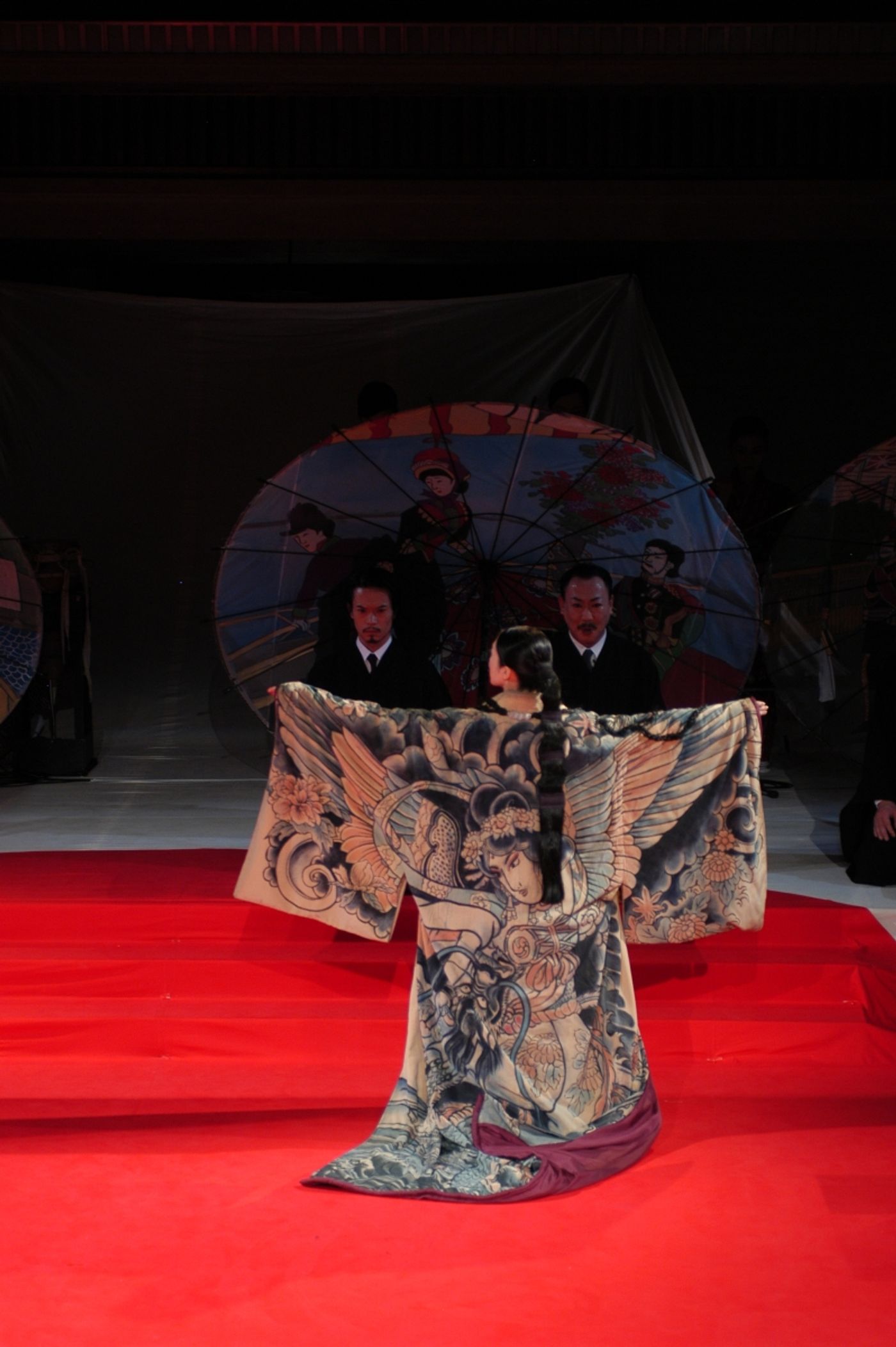
There are also some intriguing colonial implications to be teased out here – Medea, traditionally from Colchis in modern day Georgia, is defined several times as an “Asian” woman in Europe, and rails against Jason stealing “our” golden fleece. At the same time, we’re told (in the sometimes over-explanatory surtitles, which unfortunately also miss some of the more rapid Japanese dialogue) that this is set in 1900, at the tail end of the Meiji era, when Japan was settling into its modernisation and beginning to expand its Asian colonial empire. Accordingly, there’s a heavy sense of decadence throughout the production, of a country teetering between its past and its present and never coming to a firm conclusion.
This lingering sense of decay eventually dissolves into some very explicit blurring of lines – between genders, between characters and actors, and between actors and audience, as well as a literal deconstruction of most of the set. The denouement, with a death count significantly higher than the source material, feels more Tarantino than Euripides, and lacks some of the subtlety and intricate gender politics on display earlier in the production. By contrast, a woman dressed as a beggar and hunched in the corner of the stage – an aged Medea? – feels like an under-explored visual and narrative device.
Nevertheless, the overarching conceit here is a stroke of brilliance. This Medea feels at one with its ancient origins, with Athens’ strict patriarchy and fractured psyches and desperate quests for glory, while also injecting a risk-taking dose of dread and brutality – the result is uncomfortable, confronting, and undoubtedly memorable.
Medea plays at the Coronet Theatre until 21 June
Photo credits: Takuma Uchida






Reader Reviews
To post a comment, you must register and login.