


Review: LEE, Park Theatre
This fictionalisation of Lee Krasner's later years makes its world premiere
 Lee Krasner has now received her flowers, with major retrospectives at the Barbican among other European galleries in recent years, but it wasn’t always that way. Cian Griffin’s new play Lee does more than merely drag her out from behind her husband Jackson Pollock’s shadow, but uses her story to inspire compelling reflections on the notion of artistic legacy.
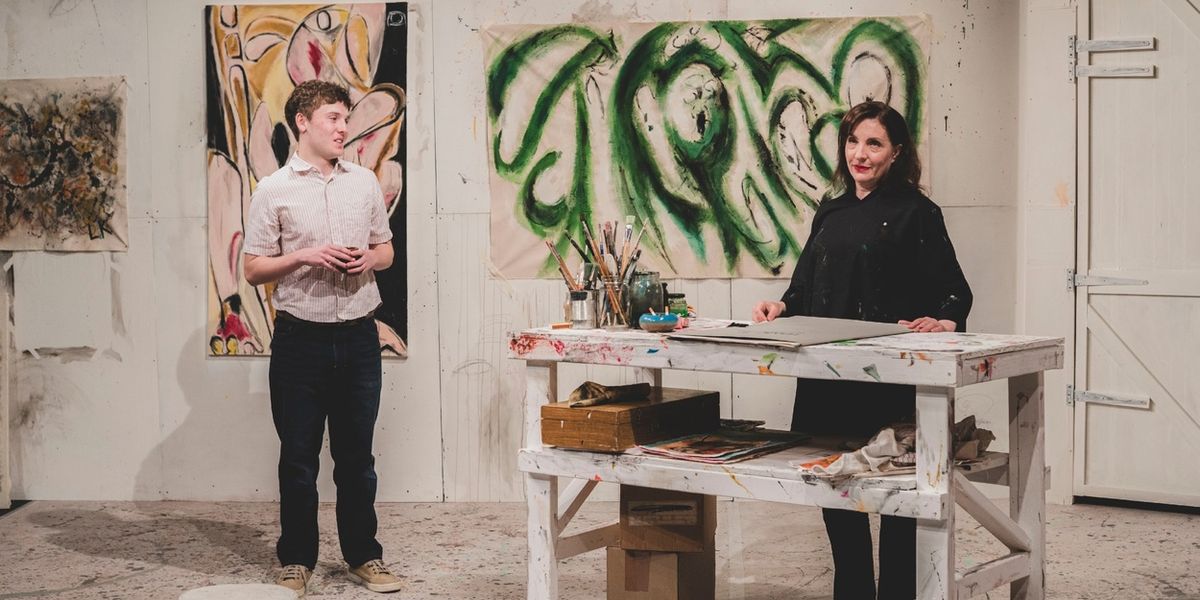
The conceit here has something of the Frost/Nixon about it, except Krasner’s interlocutor is not a seasoned journalist, but a wide-eyed delivery boy named Hank who’s just finished his first year at art school. Among his own rudimentary sketches is a mysterious painting bought by his deceased father, cautiously attributed to Pollock but with the artist’s signature cut out. Lee claims her husband, who recently died in a car accident aged 44, would never do this to his own work.
The (heavily fictionalised) revelations to come ought to be fairly obvious from that summary, but far more important than the flimsy plot here is how Griffin conjures this acutely painful moment in Krasner’s life. Caught between wanting to claim her own place in the art world versus helping bring modern art to the masses through her husband’s work, this version of Krasner is a contradictory mix of reclusive cynic and reluctant mentor to the young Hank.
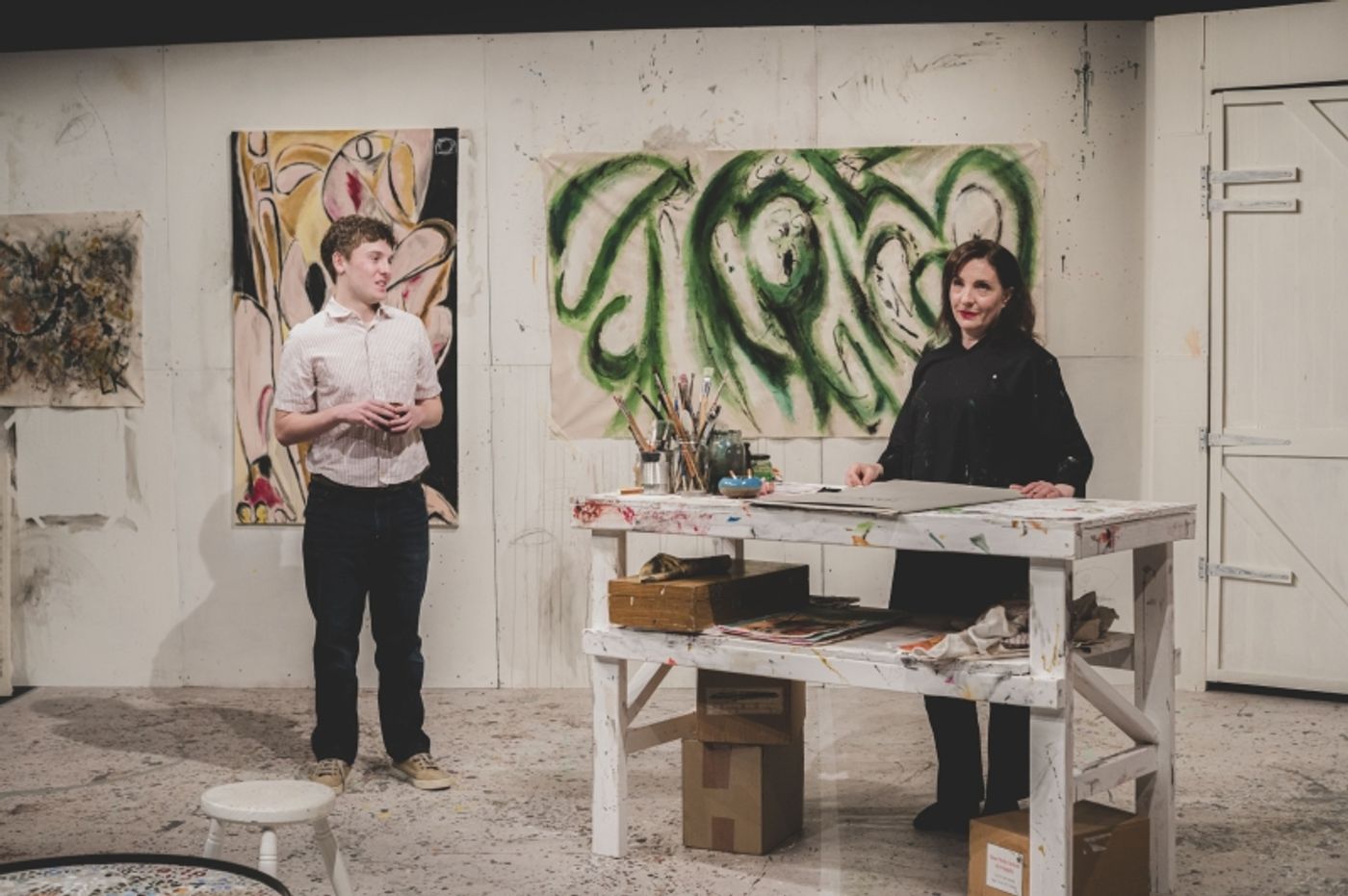
Photo credit: Giacomo Giannelli
Ian Nicholas’s set, depicting Krasner and Pollock’s Long Island studio, is covered in paintings in varying stages of creation. We’re never allowed to forget that much of these characters’ lives depend on how we see art, and the assumptions we make about it – “how do you know it’s a she?”, asks Krasner at one point, gesturing to one of her abstract nudes.
The fresh-faced young artist Hank (Will Bagnall) is gregarious to the point of naivety and sometimes ignorance, and so the use of him as a structural device doesn’t quite work. It’s hard to believe that the no-nonsense Krasner would really be so tolerant of a twenty-something asking her if she’d been to MoMA. Even more disturbingly, Hank’s bare minimum empathy for Krasner by the end of the play eventually gets him a deeply unearned fairytale ending.
This hardly matters, though, when the titans of American art at the centre of Lee are imagined so vividly. Helen Goldwyn imbues Lee Krasner with plenty of bawdy New York Jewish humour, but there’s also a sense that much of this bravado is a front against her insecurity, her secret doubts that the ways she has always approached her life and art have been wrong.
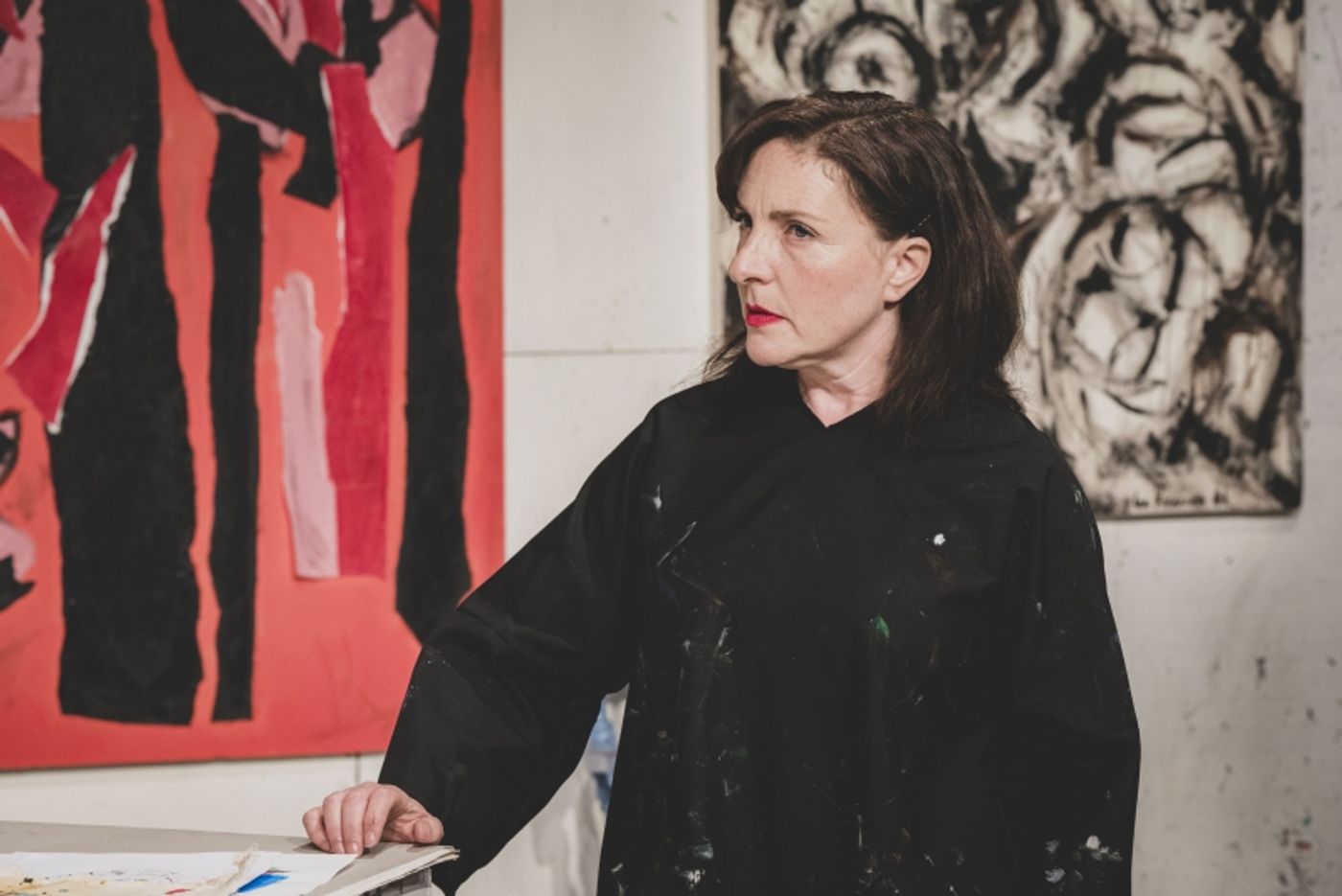
Photo credit: Giacomo Giannelli
Pollock, played by Tom Andrews, recurs sparingly as a ghostly figure, somewhere between a dream and a flashback. He has all the arrogance you’d expect from an alcoholic husband who stole ideas from his wife, but also provides an interesting foil to her artistic principles – in this conception, she is the artistic visionary committing her own thoughts and ideas to canvas, while he is somewhat less egocentric, the anonymous conduit of some higher artistic power.
A play that sought only to celebrate Krasner’s legacy as a female artist in a man’s world would have felt patronising. Griffin has gone a step further here, putting her life in its patriarchal context while also letting her have a complex, and not always flattering, relationship with Pollock and with her art.
Lee plays at Park Theatre until 18 October
Photo credits: Giacomo Giannelli





Reader Reviews
To post a comment, you must register and login.