


Review: IN THE PRINT, King's Head Theatre
Story of seismic industrial change is weighed down by a lack of drama
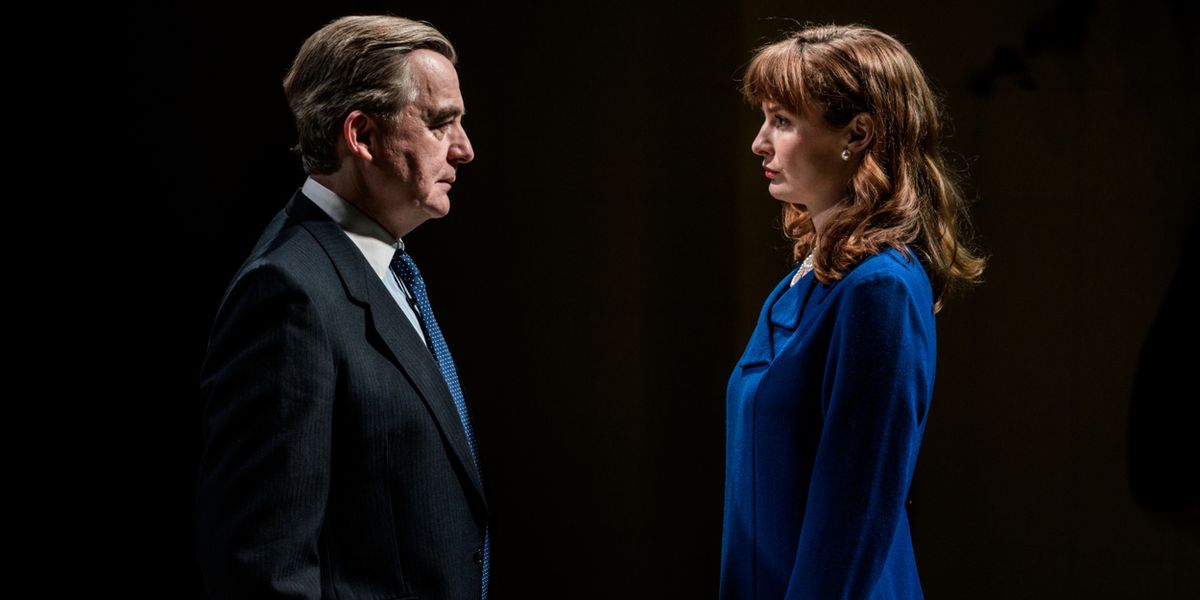
 If history is written by the winners, one of the consequences is that history tends only to remember the winners too. I asked my son if he knew of Rupert Murdoch - he did of course. Asked about his would be nemesis, Brenda Dean, his face went blank and even Arthur Scargill (once dubbed King Arthur and capped ten times on Question Time) was unknown. This short play goes a long way to telling us why.
We open on the Dirty Digger (™Private Eye) plotting his derailing of the Fleet Street gravy train, reliant on the long-established newspaper industry’s restrictive practices that had delivered high wages and high profits (not to mention high entry costs for competitors and a closed shop for unions) to mutual benefit. Every now and again, one side or the other flexed their muscles, but the printers did a tough job well (for the equivalent of a £200k salary in today’s money for a 16 hour week, so…) while Murdoch had his cash cows at The Sun and The News of the World and his prestige broadsheets at The Times and Sunday Times. It wasn’t quite cosy but it was comfortable enough for both sides of the struggle between workers and owners.
The Australian tycoon was infected by the greed and thirst for power that drives all such men and he wanted more - and, being both ruthlessly amoral and instinctively cunning, he knew how to get it too. Fleet Street, with its archaic hot presses and tortuous obstacle course standing between journalist and paper, was to be lain waste and his weapon of choice was technology.
Three miles east of the noise of clattering machinery and the smell of ink, in Wapping, vast metal sheds had appeared on disused land, inside of which there was no hot metal, just silent computers and state of the art presses. The words were written on one computer and printed by another. No humans, no salaries, no bother.
Well not quite.
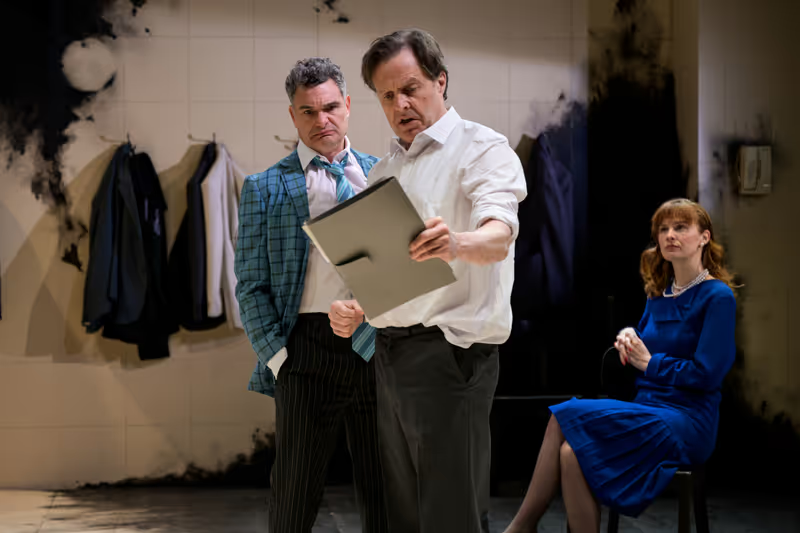
Brenda Dean, the country’s first elected female trade union leader - just the six years after a woman was elected actual Prime Minister - responded with the last thrashings of organised labour’s full-throated resistance to capital's unfettered freedom. She didn’t realise that the unions had been broken, inarguably, just 12 months earlier at the end of the Miners’ Strike of 1984-85. Its twitching corpse would soon be as dead as Monty Python’s Norwegian Blue a decade earlier.
This central conflict has the scope and weight of a Shakespearean tragedy, so it’s a slightly baffling decision by writers, Robert Khan and Tom Salinsky, to compress the story into just under 90 minutes all through, particularly as they showed how skilled they are with such material in the excellent The Gang of Three last year.
That rushed quality is exacerbated by an uncomfortable volume of slabbish exposition, probably inevitably so, but that necessity does require the characters to hold conversations that sound more like extracts from the blurb on a popular history book’s dust jacket than words even these people would say. The play works better as an illustration of a world at once forgotten but also still resonating across time, than it does as a drama.
That’s no fault of the cast. Claudia Jolly lends a Northern briskness to Ms Dean, without ever toppling into caricature. Though plenty sharp, she’s inexperienced and facing enemies within the movement (the blizzard of abbreviations for unions representing different occupations or even factions within the same occupations, will stir memories) as well as without. Media moguls were just about to go truly global and into television where these old parochial enmities would be small beer indeed.
Though Alan Cox’s Murdoch is the adversary in front of her, they get on reasonably well, the personality types of managers and union reps often gelling, something to which I can attest personally. Even the Australian’s self-mythologising and sheer chutzpah in casting himself as the billionaire underdog (sound familiar?) charms the audience too. Lurking in the background, often interjected by Georgia Landers in a thankless role as an advisor to Ms Dean, is the real adversary, Mrs Thatcher’s anti-union laws, and the quasi-paramilitary policing model tried and tested at Orgreave and elsewhere, that enforced them.
There’s room for some multi-rolling from Alasdair Harvey, Jonathan Jaynes and Russell Bentley as various Murdoch men and union leaders, but their characters are barely fleshed out. That noted, I would nevertheless like to say that it was refreshing to see Kelvin MacKenzie portrayed as something a little more human than his usual monstrous pantomime villain - but I can’t.
There’s no getting away from the fact that Dean and her members were played (as the play asserts) across an attritional dispute that dragged on for over a year and resulted in changes that were all but inevitable and, within a decade or so, unravelled irretrievably as the internet set an incendiary device under ink and tree media. She fought, as so many of The Left have done in my lifetime, the previous generation’s battle with the previous generation’s weapons under the previous generation’s rules. Capitalism, its eager embrace of The New securing the means of production and guaranteeing the dissemination of its favoured narrative, won out then, as it does now.
But that chilling realisation is not why my (admittedly high) expectations were not met. The key problem for productions like this was not really addressed - the need to build jeopardy in an environment in which we know the outcome of the final act. For all the technical skills on stage, the often acerbic putdowns and the occasional laughline for a 2026 house with 20/20 hindsight, the drama, unlike the TNT lorries rumbling out of Wapping past the protestors and off to distribution centres overnight, never really gets going.
In The Print at the King's Head Theatre until 3 May
Photo images: Charlie Flint
Sign up for all the news on the Fall season, discounts & more...







Reader Reviews
To post a comment, you must register and login.