


Review: HEDDA, Orange Tree Theatre
Tanika Gupta's fascinating take on Ibsen's classic is unexpected and powerful
 Content warning: use of offensive racist language
There can be a tendancy to eye-roll at the prospect of a new interpretation of a classic play. However, Tanika Gupta's new take on Ibsen's Hedda Gabler at the Orange Tree Theatre is a genuinely innovative and fascinating take on the tale of the destructive nature of manipulation and the complexities of marriage.
Gupta takes us to 1948 and a post-war London still coming to terms with the impact of both the war and Indian independence, with its new class and social rules. Hedda is a reluctantly retired actress, living in an immaculate mews house in Chelsea with her new nice-but-dim husband George. The surface is glossy, but the veneer is thin with Hedda's restlessness constantly bubbling to the surface.
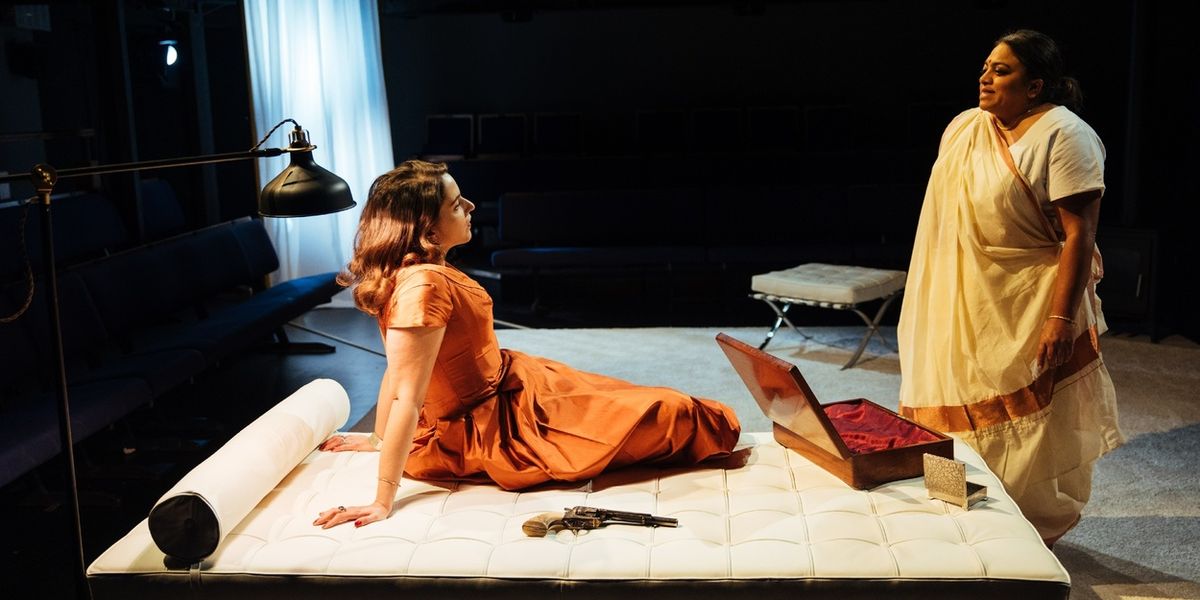
So far, so obvious. But there is real intrigue when Gupta introduces the secret that Hedda is mixed-race; 'passing' as white by virtue of her late father having been an acclaimed British general serving in India, but hiding the fact that her Indian mother was not only her ayah, but also lives with her, acting as her maid.

Photo Credit: Helen Murray
Hedda's heritage is unknown to her husband, the film industry and society. She knows that revealing it would be end to her marriage, standing and any hope of her returning to her beloved career, as 1940s England is a place where it is acceptable to refer to Indians as coons and that mixed race people are either mongrels or half-caste. Gupta was inspired by the story of Anglo-Indian screen legend Merle Oberon, who also hid her ethnicity to further her career.
The concept of 'passing' as white runs throughout, with subtle hints such as Hedda's insistence that the curtains do not let light in, presumably to not expose and darken her skin and maid Shona's careful application of light powder to her face. There are mentions of her dark eyes and 'exotic' look; the risk exposure and the danger of discovery are ever-present.
In our pocket of multicultural London, it can be easy to assume that we have moved away from the narrow-minded racism and prejudice of the past. However, in a world where some politicians enable and even espouse these mindsets, Gupta's play reminds us we still have a long way to go.
Gupta retains the characters of Ibsen's play, but makes them relevant to her plot. Eilert becomes Lenny, a brooding playwright who is trying to deal with the traumas of the war. He is mixed race himself and knows Hedda's secret from their shared childhood in India. It is that secret that he uses as inspiration for his new play, which Hedda realises she needs to destroy before it destroys her.
Pearl Chanda is an excellent, stylish Hedda, poised yet rippling with regret and boredom. Her small yet purposeful moves away from her new husband George speak a thousand words and her capricious and casually cruels whims are easier to explain by her fear of being exposed.
George, an aspiring film director, is a nicely effusive Joe Bannister. Never quite aware of any subtext from his wife, he blithely continues to bumble along. Milo Twomey is affable, yet slightly sinister as film financier John Brack who edges between flirtation and threat towards Hedda. Jake Mann brings despair and anguish in equal measure to the doomed alcoholic Leonard.
Caroline Harker is effective as George's aunt Julia; longing for her life in India before the war, her nonchalantly racist language is all the more shocking as it is dropped in so casually.
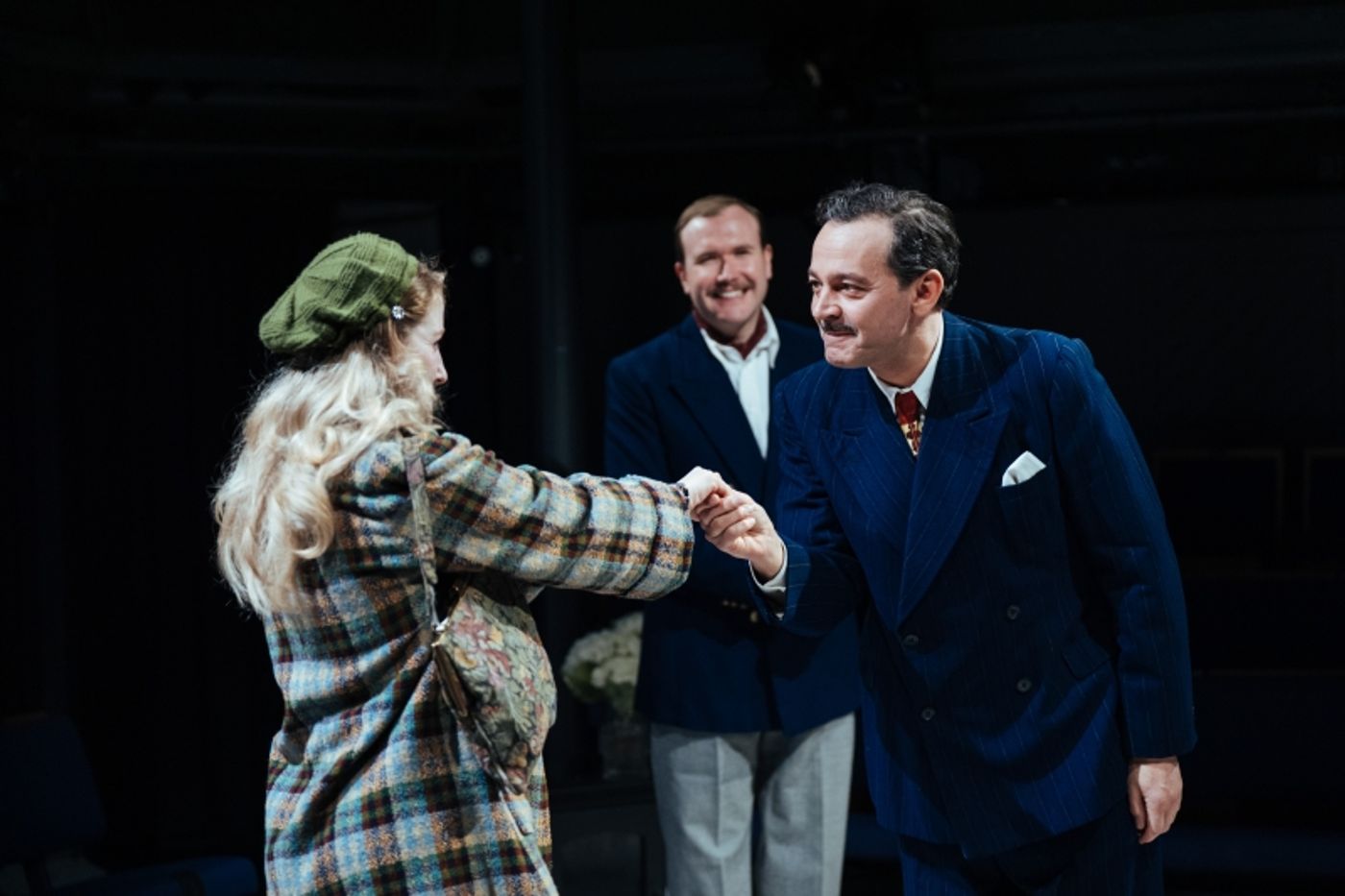
Photo Credit: Helen Murray
Bebe Cave is a simpering and needy Alice, in love with Leonard and acting as an aid to his writing, she is more of a threat to Hedda than she realises. Rina Fatania is wonderfully straight-talking as Shona, bringing such insight and sense to Hedda's fractious moods that you wished she was on stage for longer.
Simon Kenny's immaculate set features a white Barcelona-style chaise and footstool, an angled lamp and a woodburning stove. Its austere, flawless look is a good reflection of the façade Hedda is desperate to maintain and that white is, and should be, the dominant shade in polite society. A subtle, yet very poignant, design decision.
A production in the round is always a challenge and Hettie Macdonald's direction could do with more movement, as some scenes feel rigidly static. The tension of the final moments is also not given quite enough time to build, but nevertheless, this is an eloquent and incredibly clever take on Ibsen's play that is both thought-provoking and deeply meaningful.
Hedda runs at the Orange Tree Theatre until 22 November
Photo Credits: Helen Murray






Reader Reviews
To post a comment, you must register and login.