


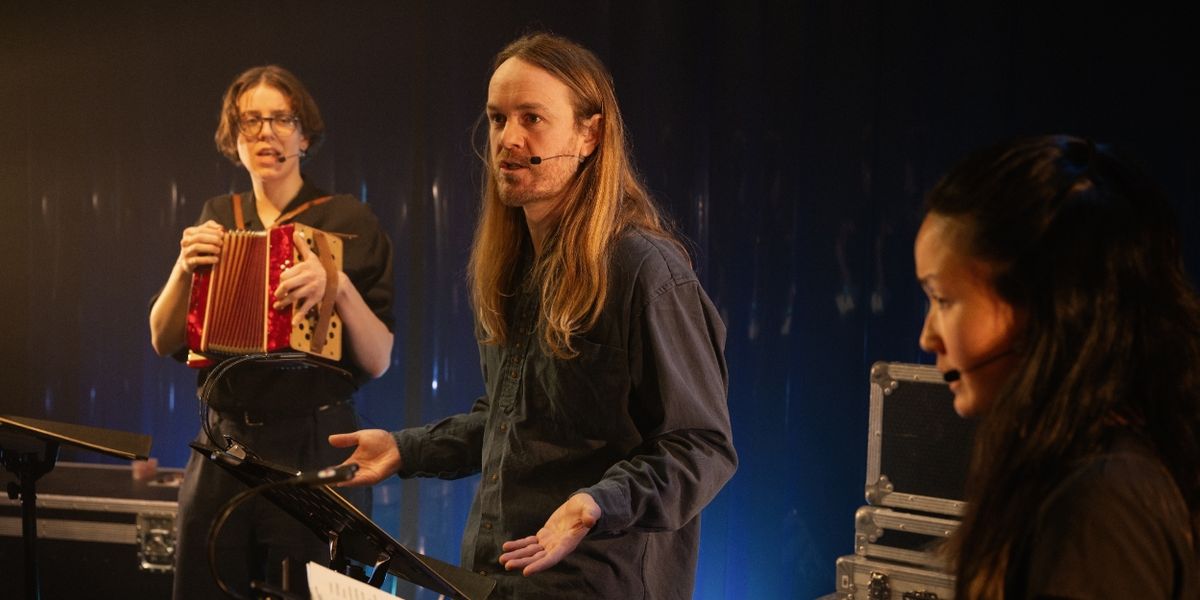
 Unlike the object it is named after, Container studiously avoids fripperies like classical forms and categorisation. With nods to immigration, social media, California fires and the ongoing deluge of news from every angle, this is a work that merrily crosses thematic boundaries like a jaywalker after a fun night out.
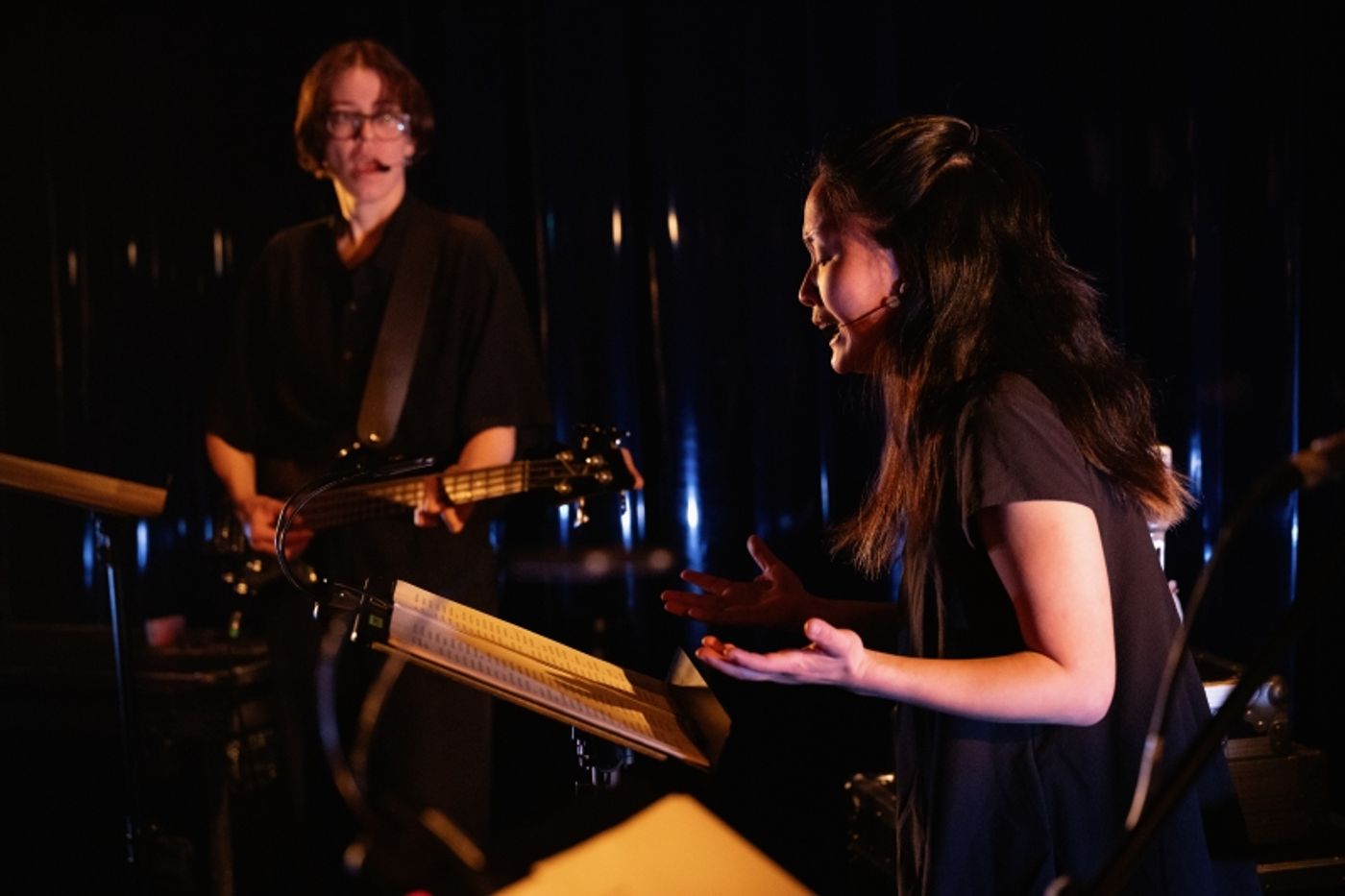
Written, directed and performed by Alan Fielden alongside co-devisers Tim Cape (Bastard Assignments), Emergency Chorus’ Clara Potter-Sweet and Ben Kulvichit, and Jemima Yong (JAMS), it uses the “polyphonic” approach to construct a series of abstract vocal pieces influenced by “O Superman” writer Laurie Anderson and Robert Ashley’s television operas.
There’s more than a fair few nods to the “maximalist minimalism” style of Phillip Glass who - thanks to My Neighbour Totoro director Phelim McDermott - is being dragged back into the zeitgeist. McDermott has worked on a number of Glass’ operas, most spectacularly Akhnaten for the English National Opera which proved a winner on both sides of the Atlantic.
As part of its controversial move to Manchester, the ENO and McDermott are working together on another Glass epic. The five-hour Einstein On The Beach is more a portrait rather than a biography of the scientist and it is this opera that Container most resembles with its lack of throughline and its use of themed vocal sections and musical intermezzos.
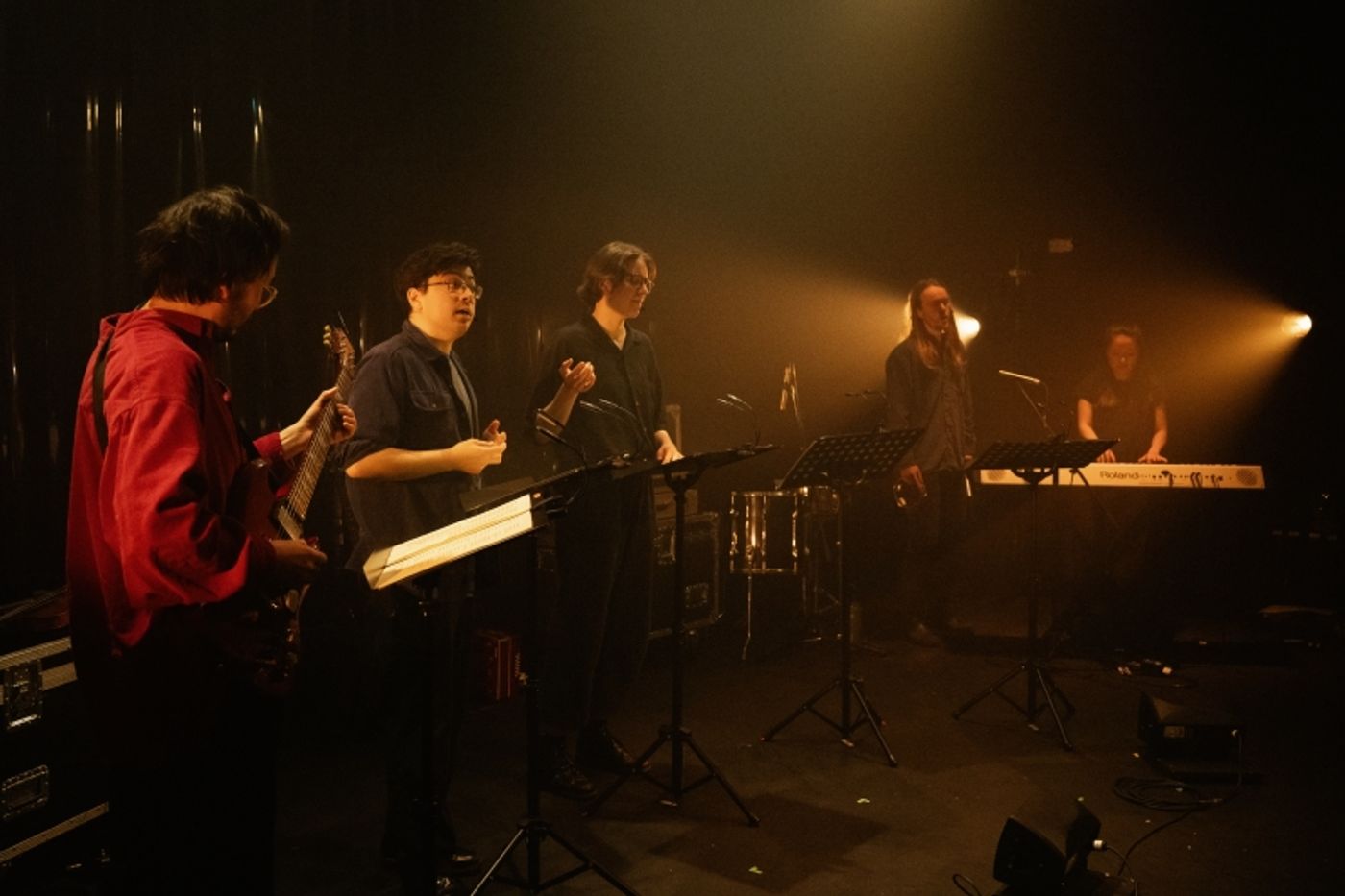
Minimalism may now be a dirty word that even its high priest Glass dislikes, possibly because it invokes thoughts of the kind of plinky-plonky muzak best suited to corporate lifts and Muswell Hill dinner parties. Fielden embraces the Glassian ethic, usually sticking to a few core ideas in each segment but playing with them, turning them inside and out and forcing us to examine their schizophrenic natures.
At one point, he evokes the mixed messaging around new arrivals to this country: “welcome to my country” is overlaid with “get out of my home”; the pair of phrases are then inverted as “welcome to my home” and “get out of my country”. It’s a power alignment that, while hammered home for a little too long, makes a valid point.
As much about furiously overlapping voices as the power of studious silence (albeit broken up by faint background patter), Cape’s musical direction is carefully crafted to suit the wide range of aural techniques. The lighting design from Kulvichit adds a spectral aura while Diana Damian Martin’s dramaturgical input is felt within the individual pieces, building up the stories from bare bones and fleshing them out as the tempo rises.
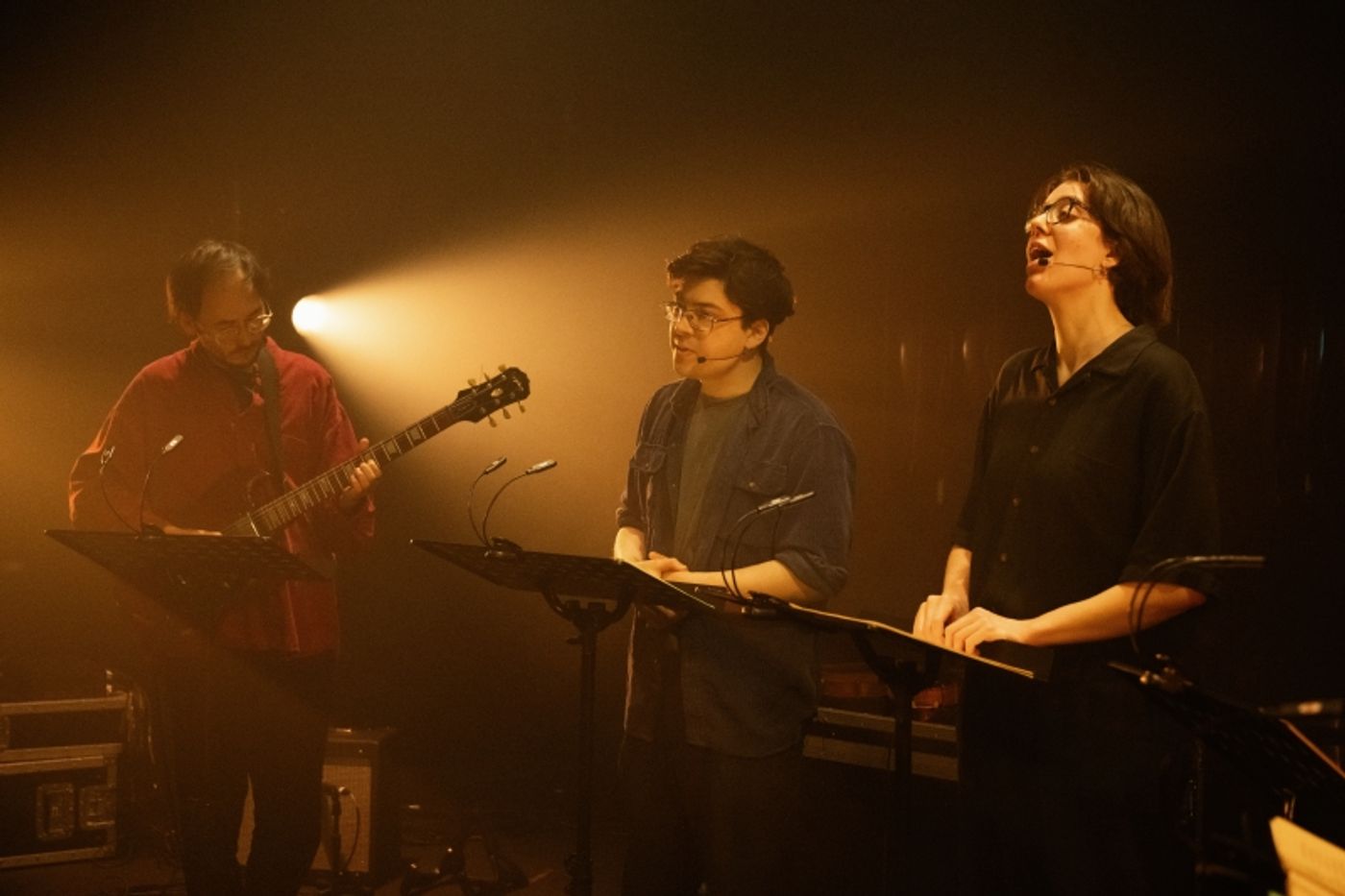
Container is, ironically, at its best when “contained”, or at least working within this kind of loose context. Hearing the deliberate murmuring of the artists - off-stage but with their mics still on - has potential but ultimately frustrates in its lack of coherence and relevance. It never quite crosses the line from polyphony to cacophony but its a close call at times. Minimalism is in some ways like a sword: less about whether it has a point and more about the sharpness of the edge; with some pieces, the over-repetition of words and phrases dulls whatever clever concept was at its heart and blunts the overall appeal.
Container continues at New Diorama Theatre until 12 April
Photo credit: Camilla Greenwell






Reader Reviews
To post a comment, you must register and login.