


 Click for Tickets!
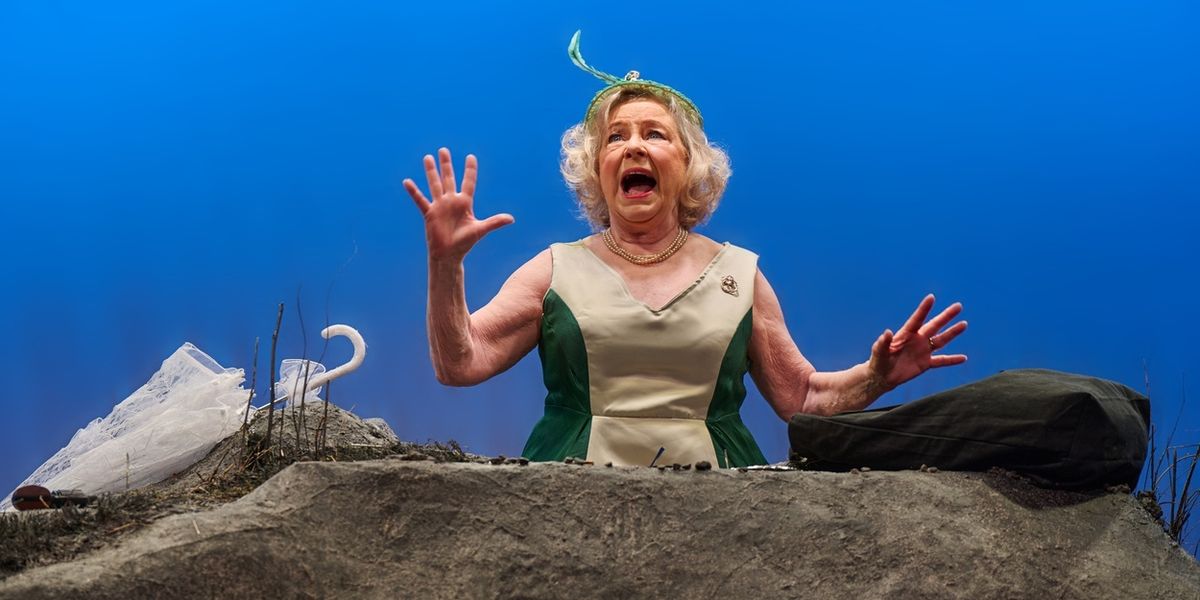
Winnie, the central character in Happy Days, a middle-aged woman encased up to her waist in a mound of dirt, does her best to stay active and positive despite her unexplained entrapment. Her efforts grow ever more ironic during the two acts of the 90 minute play. She has nothing nor no one to toast with (“Happy Days” = an Irish toast), and FDR's Depression-era campaign song “Happy Days are Here Again” (with which Alan Wade's fine production begins) does not appear in Winnie's songbook. She wants to sing the song in her music box, “The Merry Widow Waltz”--an ironic choice because she doesn't seem to be very happily married. The Merry Widow in Léhar's 1905 operetta was a liberated woman in her day (more irony). But Winnie talks a blue streak and seems as content as someone stuck in a mound of dirt can seem Happy Days provides metaphorical sanctuary for today's audiences—also stuck in a mound of dirt. Irish playwright Samuel Beckett was not necessarily clairvoyant. Purveyors of literature (he won the Nobel Prize for it in 1969) create works that work forever.
Winnie (played by the masterful Lynn Steinmetz) approaches her near-solitary life with a chipper attitude and and overdeveloped ability to talk. Language for Winnie is both a companion and a guide to getting on with the day. Naming the contents of her bag, reading the writing on her toothbrush, repeating herself creates structure and environment; Winnie demonstrates human proof that nature abhors a vacuum. Her husband Willie (a disappointed disappointment) mostly grunts and rarely sees her; she says that it helps her to have him to talk to and regards a day when he speaks as a happy day. (Matty Griffiths ably fills in as Willie for Bill Largess—a tiny yet demanding role.) Denigrating Willie is also part of Winnie's day, but he doesn't seem to hear a thing.
The situations of Winnie and Willie change a little in Act II, but not their condition. Getting through days is the mission; resolution is not part of Beckett's nor Winnie's mindset. Steinmetz is everything but stuck. Behind all that language flows an ocean of thought. Winnie's bag of things forms a cornucopia for Steinmetz—each object becomes more than itself in her hands, as do ideas in her head and words in her mouth (though a wee bit more vocal energy would help the occasionally restless audience not miss a syllable). Steinmetz captures Winnie's idiotic optimism (remember, mound of dirt), and this is great theatre. Answers to life's questions—not so much—but literature doesn't really do that, now does it? Great plays follow Chekhov and make it their business to ask questions.
Happy Days runs Thursdays through Sundays through February 22 at the Undercroft Theatre, 900 Massachusetts Ave. NW, WDC.
(Photo by DJ Corey photography)


Sign up for all the news on the Fall season, discounts & more...
|
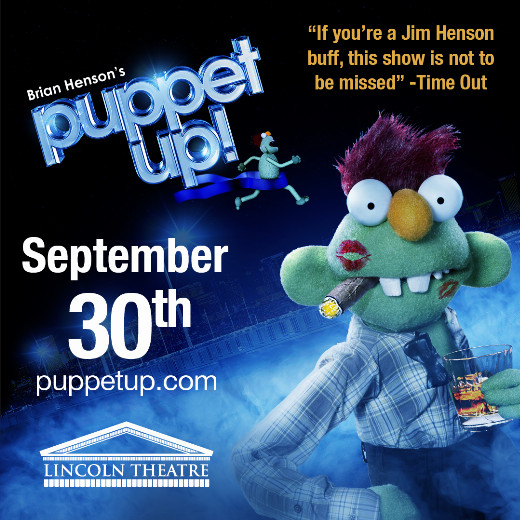
Brian Henson's Puppet Up! Lincoln Theatre (9/30-9/30) |
|
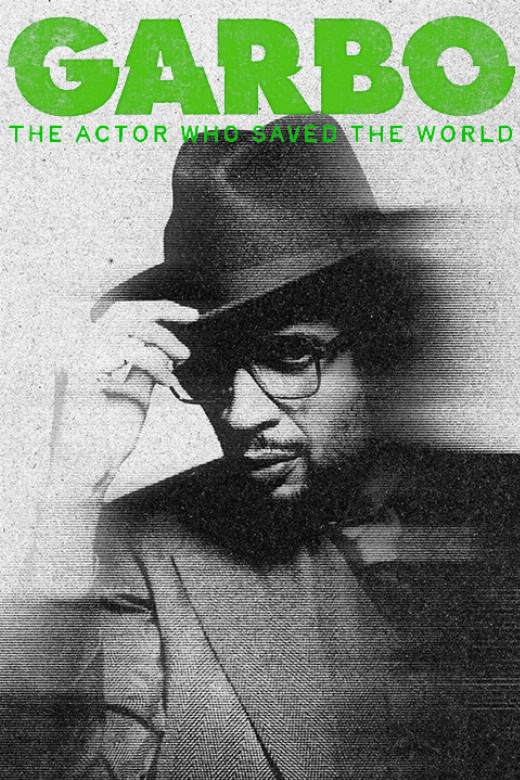
GARBO: EL ACTOR QUE SAVÓ AL MUNDO (Garbo: The Actor Who Saved The World) GALA Hispanic Theatre (9/03-9/27) |

|
Mr. Burns: A Post-Electric Play Clarice Smith Performing Arts Center (10/09-10/18) |

|
Special Event: ARTS By George!: Jeff Goldblum and the Mildred Snitzer Orchestra Center for the Arts (10/03-10/03) |

|
The Second-Best School Shooting NextStop Theatre (9/17-10/11) |

|
Coming to America: An Immigrant Cabaret ExPats Theatre (9/30-10/18) |

|
Monsters of the Villa Diodati Creative Cauldron (10/08-11/01) |

|
Some Like It Hot Bernard Family Theatre, Olney Theatre Center (9/18-11/08) |
|
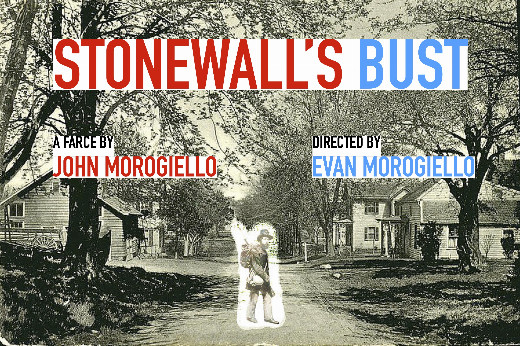
Stonewall's Bust The Writers Center (10/09-10/25) |
|
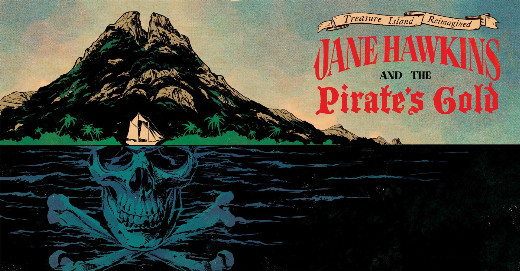
"Treasure Island Reimagined: Jane Hawkins and the Pirate's Gold" The Alden Theatre (10/13-10/13) |

Reader Reviews
To post a comment, you must register and login.