


Museum Of Anthropology To Present World Premiere ExhibItion ENTANGLED TERRITORIES: TIBET THROUGH IMAGES
Exhibition runs November 20, 2025–March 29, 2026, exploring Tibet’s cultural heritage through the voices of the Tibetan-Canadian community.
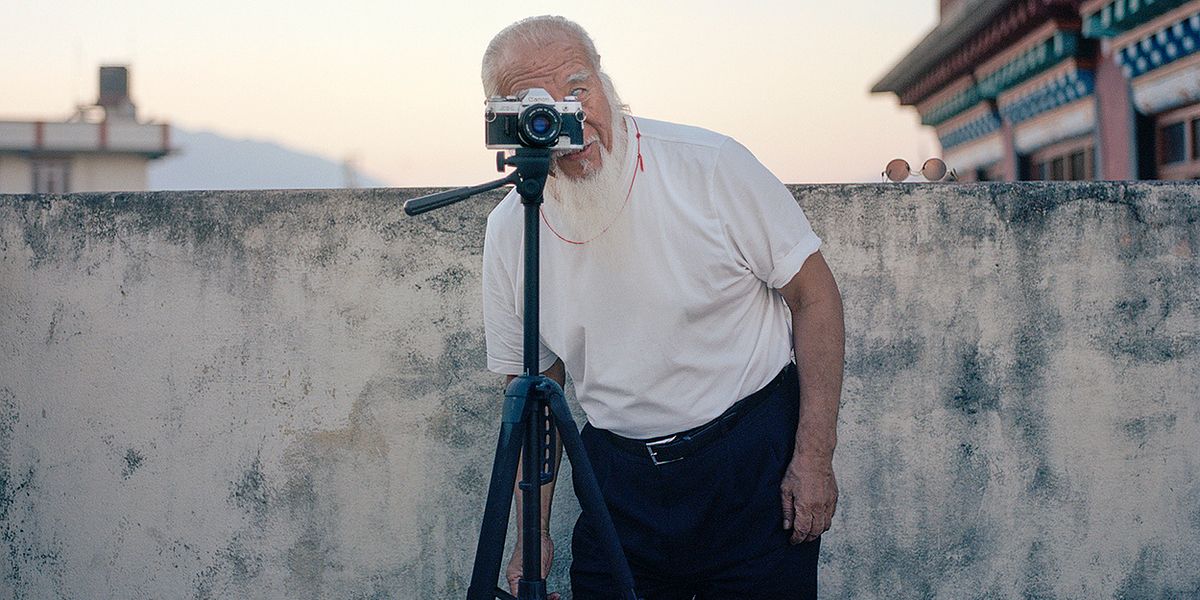
The Museum of Anthropology at UBC (MOA) will present the world premiere of Entangled Territories: Tibet Through Images, on view November 20, 2025–March 29, 2026. Curated by Dr. Fuyubi Nakamura, Curator, Asia at MOA and Associate Professor in UBC’s Department of Asian Studies, in collaboration with Tibetan-Canadian community members and artists, the bilingual exhibition examines Tibet’s cultural heritage and contemporary political context through the lens of the Tibetan diaspora.
The exhibition highlights the Tibetan-Canadian community’s ongoing efforts to sustain cultural identity and memory amid displacement following China’s occupation of Tibet in 1951. Featuring historic photographs, letters, and personal objects from a pre-occupation Tibet, alongside contemporary photography, installation, and short films by Tibetan-Canadian artists Lodoe Laura and Kunsang Kyirong, Entangled Territories considers how Tibet’s past and future are reimagined through diasporic experience.
“Canada is home to one of the largest concentrations of Tibetans outside of Asia, including an active community in Vancouver,” said Dr. Nakamura. “Entangled Territories explores the lived experience of Tibetan-Canadians, for whom the location and status of their homeland remain pressing issues. The exhibition reveals how young Tibetan-Canadians reshape identity and self-image while maintaining connections to their ancestral heritage through practices such as dance, language, and spirituality.”
Exhibition Highlights
Entangled Territories features works from MOA’s collections and archives, including items from the Eric Parker Archival Collection, comprising letters and photographs from British Lieutenant Colonel Eric Parker, who trained Tibet’s newly formed army between 1918 and 1921. Parker’s correspondence with members of the Tibetan government, including the 13th Dalai Lama, offers insight into early 20th-century Tibet. Parker’s daughter, Mary Noble, donated the collection to MOA in 2005.
Three textiles from MOA’s Yuthok Collection—two robes and one blanket—will also be displayed, accompanied by reflections from Tibetan-Canadian secondary students. The Yuthok family, descendants of the family of the 10th Dalai Lama, donated these heirlooms upon migrating to Canada to help preserve awareness of Tibet’s cultural history.
Toronto-based artist Lodoe Laura, of mixed Tibetan and British-Canadian heritage, contributes several works addressing ancestry, identity, and tradition. These include Colonized/Colonizer (2015), which juxtaposes colonial histories within Tibet and Laura’s own experiences as a diasporic artist in Canada, and selections from 169 (2025), a portrait series memorializing 169 Tibetans who self-immolated in protest over recent decades. The portraits are printed with handmade charcoal ink created from incense used in Tibetan smoke-offering rituals.
Additional photographic works include Pala (2016), created during the artist’s time living with her father in a Kathmandu monastery, and Pala and Me (2016), a series depicting father and daughter in a location from which Tibet is visible on clear days.
Vancouver artist Kunsang Kyirong contributes two films. Letters from Tibet, developed through support from the Rubin Museum of Himalayan Art, draws on MOA’s Parker archives and intercuts historical images with scenes from Frank Capra’s 1937 film Lost Horizon to examine how Tibet has been documented and imagined. Yarlung (2020), an animated short, tells the story of three children in a rural village who find solace after loss through their connection to the Yarlung Tsangpo River, blending fiction with autobiographical elements from Kyirong’s family history in India.
Opening and Public Events
The opening of Entangled Territories: Tibet Through Images will take place Thursday, November 20, 2025, from 6–9 p.m. at MOA. Admission is free, and students from the Lodoe Kunphel Tibetan Language School, BC will perform a traditional dance to welcome guests.
For additional information and related programming, visit moa.ubc.ca.
About the Museum of Anthropology
The Museum of Anthropology at the University of British Columbia is one of Canada’s leading museums devoted to world arts and cultures. Located in an Arthur Erickson-designed building overlooking the mountains and sea, MOA houses more than 50,000 cultural objects and artworks from Asia, Africa, Oceania, Europe, and the Americas, with a focus on the Pacific Northwest. The museum’s Multiversity Galleries: Ways of Knowing provide access to much of its collection, while the Audain Gallery and O’Brian Gallery host major exhibitions developed both in-house and in partnership with institutions worldwide.
|
An Evening of Comedy & Hypnosis with Jonathan Mangum & Asad Mecci Sagebush Theatre (9/05-9/05) |
|
Murder for Two Anvil Theatre (10/02-10/04) |
|
Hamilton (Angelica Company) Queen Elizabeth Theatre (5/26-6/13) |
|
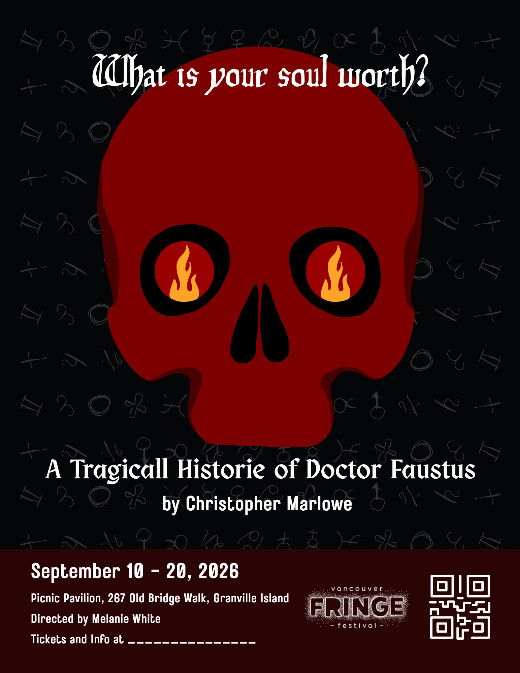
Doctor Faustus Granville Island Picnic Pavillion (9/10-9/20) |
|
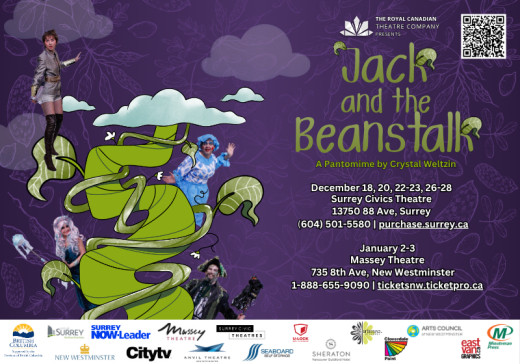
Jack and the Beanstalk Massey Theatre (12/31-1/03) |
|
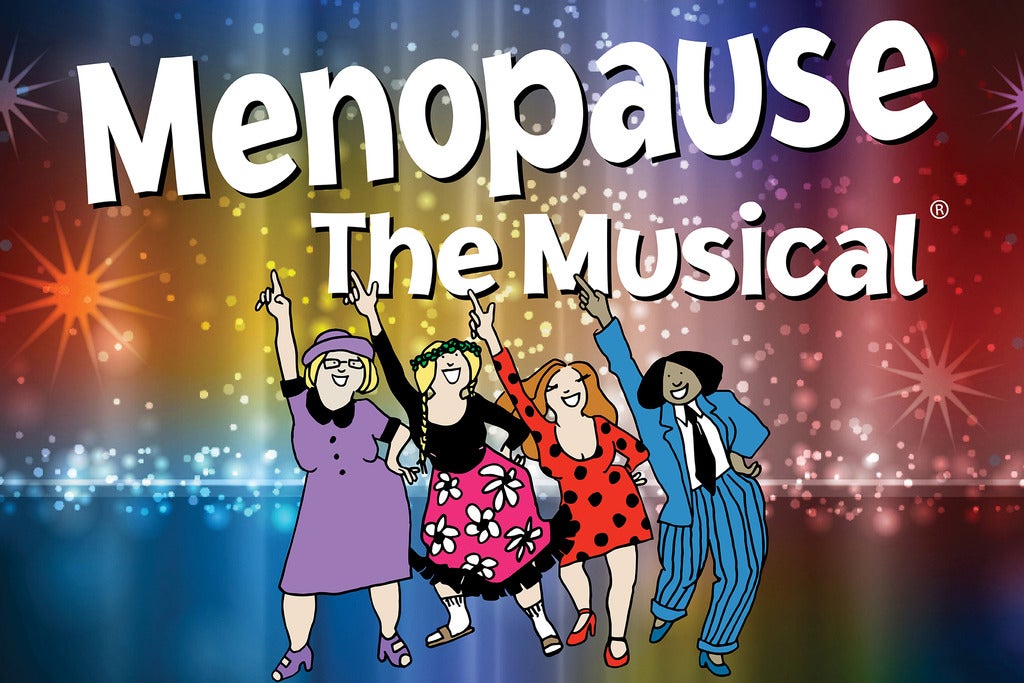
Menopause The Musical Great Canadian Casino Vancouver (9/22-9/22) |
|
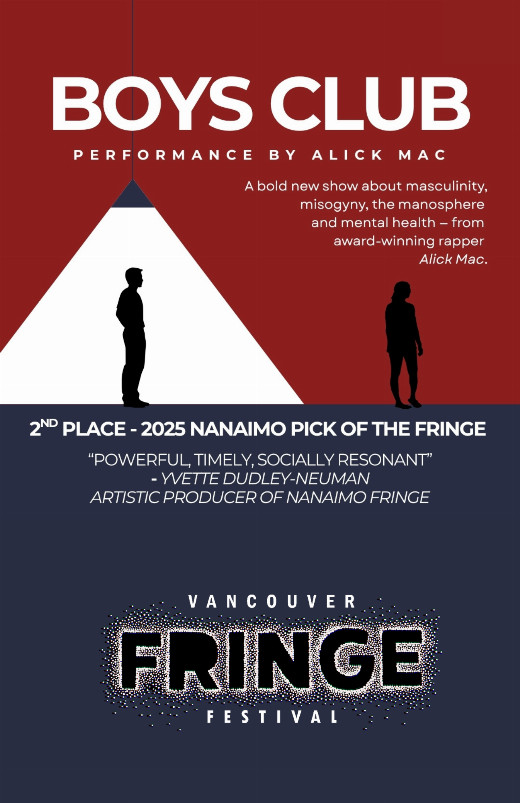
Boys Club Arts Umbrella (Scott Studio) (9/10-9/19) |
|
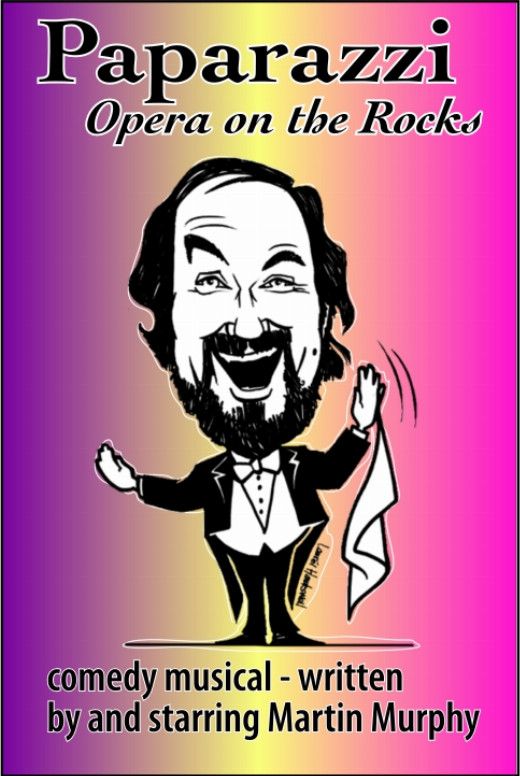
Paparazzi - Opera on the Rocks Deep Cove Shaw Theatre (9/03-9/12) |
|
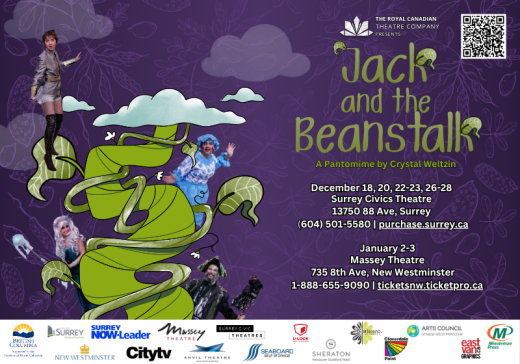
Jack and the Beanstalk Surrey Arts Centre (12/18-12/27) |
|
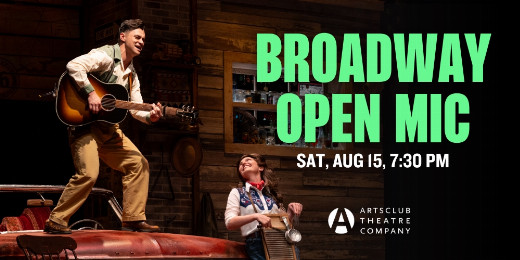
Broadway Open Mic Olympic Village Stage at the BMO Theatre Centre (8/15-8/15) |