


Review: MILLION DOLLAR QUARTET at Rubicon Theatre Co.
A momentary meeting of giants in a Memphis recording studio in 1956
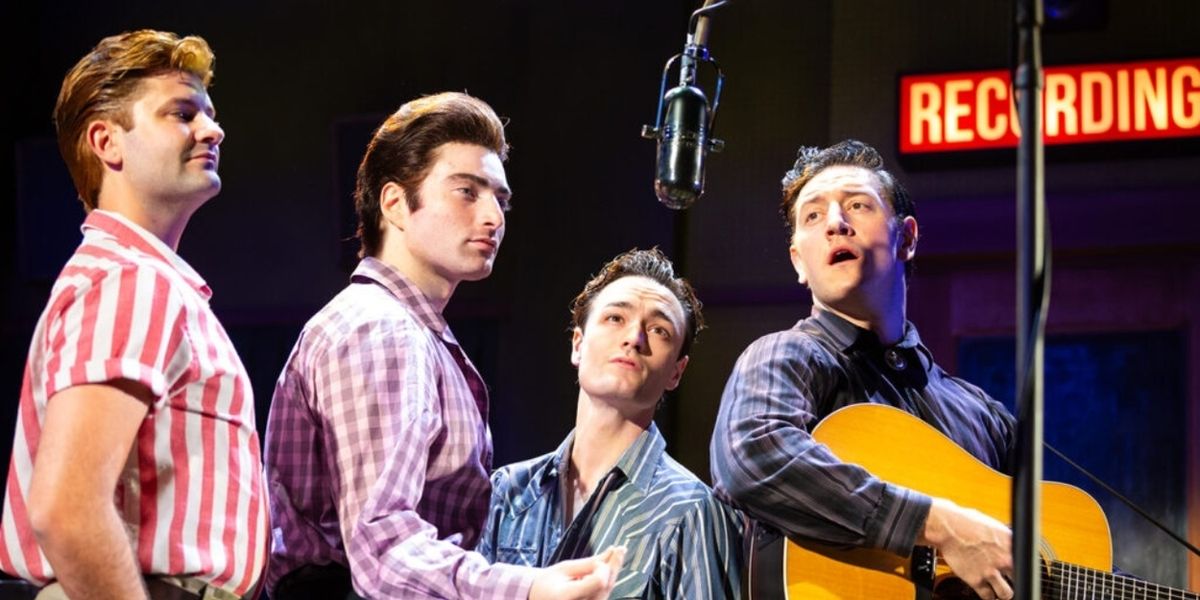
On Tuesday, December 4, 1956, a chance meeting in a recording studio in Memphis resulted in a landmark event in rock ’n’ roll history. The incident was instigated by Sun Records owner/producer Sam Phillips, who was looking for his star Carl Perkins to follow up his recording of the rockabilly classic “Blue Suede Shoes.” A young dynamo from Ferriday, Louisiana named Jerry Lee Lewis, a recent signee, was sitting in on piano as Phillips rolled tape when in strode Elvis Presley, a former Sun artist but now a star for RCA Victor. Elvis was in Memphis, cruising with a friend and a Las Vegas dancer when, on a whim, he decided to revisit his old haunt. Recognizing a publicity opportunity when he saw it, Phillips got on the phone with his current star, Johnny Cash, and told him to hustle down to the studio, also contacting a reporter and photographer from the Memphis Press Scimitar to document the event. With Elvis at the piano, the group spent about an hour singing spirituals and favorite country songs, as well as a few current hits like Chuck Berry’s “Brown Eyed Handsome Man.”
Flash forward 54 years. A new musical arrives on Broadway using the impromptu Sun session as its setting. Its title, Million Dollar Quartet, came from the story published by the Memphis Press Scimitar. The musical was nominated for three Tony Awards and is currently being staged by the Rubicon Theatre in Ventura in a run that goes through November 9.
One can view Million Dollar Quartet two ways: as a historical document or as sheer entertainment. Viewed in the latter context, it is a joyous celebration of the early years of rock ’n’ roll led by four of its founding fathers, but as a stage musical, it leaves a lot to be desired, with a clunky book, no real plot, and many sloppy anachronisms.
The story, such as it is, was created by writer/director Floyd Mutrux and music historian Colin Escott, the latter a Sun Records expert who had no experience writing for the stage. Escott’s meticulous research provided some nuggets of historical fact but the production takes liberties with the playlist, which only includes three of the actual songs recorded that day, as well as compressing the characters' professional timelines.
Most audiences, however, will have no problem with this and simply enjoy the youthful good humor and superb musicianship of the performers, all of whom play their own instruments. Alexander LaPlante plays Lewis as a spoiled, uncontrollable brat, but is an outstanding musician, doing everything to a piano that one can do, pounding and raking the keys with hands and feet, and mounting it like a bucking bronco. Visually, LaPlante has reddish hair, which should have been dyed blonde to have had a greater effect. His performance comes off more goofy than arrogant.
Will Riddle's Carl Perkins is the least effective of the four leads, coming off more like Marty McFly than the rockabilly guitar pioneer. The slightly built Riddle (Perkins was actually 6' 1") needs to listen to Perkins' clean, precise rockabilly guitar playing but relies more on volume and distortion, something that was not part of Perkins' sound. Riddle has played Perkins before; his last appearance in Ventura County was in 5-Star Theatricals' staging of the show in Thousand Oaks in 2024 but it is clear he got the part for his superb artistry on the guitar, not for any resemblance to Perkins.
As Elvis, Alessandro Gian Viviano (what a name!) enters, accompanied by his companion, a black female named Dyanne (Andrea Fleming), a casting stretch that requires suspension of disbelief since no such occurrence would happen in the South in 1956 without comment. In reality the girl on Elvis' arm was a white, 19-year old Las Vegas dancer named Marilyn Evans who Presley had been squiring around. They only saw each other for a few weeks before breaking up. The character of Dyanne was thus entirely fabricated from thin air, as Evans was little more than a spectator at the session instead of the "rising star" who sings Little Willie John's "Fever" and Smiley Lewis' "I Hear You Knocking." Viviano's Elvis is as if it were AI-generated, he has all of Presley's gyrations down cold but no visual presence. Elvis should dominate the scene; instead, he's merely a rhythm guitarist. His voice barely approximates Elvis' husky baritone and his ludicrous greaser haircut makes him look more like Sha Na Na's Jon "Bowzer" Bauman.
Johnny Cash is probably the most difficult character to portray, but Blake Burgess does a passable job, with an effective approximation of Cash's granite-like voice and stage presence. He actually does a fine job on Cash's "I Walk the Line," a current Cash hit, with Burgess borrowing a dollar bill from Sam Phillips to dampen the strings of his guitar to create the unique rhythmic sound Cash wanted.
Possibly the best performance of the show is turned in by Jonathan Fisher as Sam Phillips, with an effective good-ol'-boy Southern accent and physical stature that reminds one of the late character actor Ned Beatty.
The only real drama in the show comes when Cash, Lewis, and Presley reflect on losing siblings early in life and when Cash and Perkins inform Phillips they have signed contracts with Columbia Records (in actuality, neither left until 1958). There are other factual slip-ups in the show, most likely ones that Escott fought against and lost, such as Sun Records being formed in 1950 (Phillips' business was initially called the Memphis Recording Service, producing sessions for other labels like Chess and Modern. The Sun record label didn't release its first record until 1952). In a bit of dialog between Phillips and Cash, Cash responds to a query about where he's been by saying "I've been everywhere," referring to the laundry list song of American cities that Cash made famous. In reality, the song wasn't written until 1959 and its first appearance didn't come until Hank Snow's 1962 version. Cash did not record it until 1996. Jerry Lee Lewis pronounced Louisiana "Loo-zee-anna," not "Louise-ee-anna," as LaPlante says it. And a cheap joke is made about Elvis’ “terrible movies” but in reality, by the end of 1956 he had released only one film, the well-received “Love Me Tender.”
Carl Perkins' bandmates, brother Jay on bass and W. S. "Fluke" Holland on drums are played by brothers Jordan and David Lamoureux, respectively and do a fine job backing up the singers. The Rubicon's set perfectly approximates the intimate Sun studio, with a Union Avenue street sign placed just outside of the set. The quarter-round seating configuration of the Rubicon theater, however, enables only a few audience members to have a direct view of LaPlante's exceptional work on piano, which is located on the left end of the stage.
Audiences would be best advised to think of “Million Dollar Quartet” more as a throwback concert than a historical document. For that, it’s worth seeing.
Photos by Veronica Slavin
For a schedule and ticket information, visit rubicontheatre.org
|
GFour Productions presents Menopause the Musical® Fred Kavli Theatre- B of A Performing Arts Center,Thousand Oaks (9/30-9/30) |
|
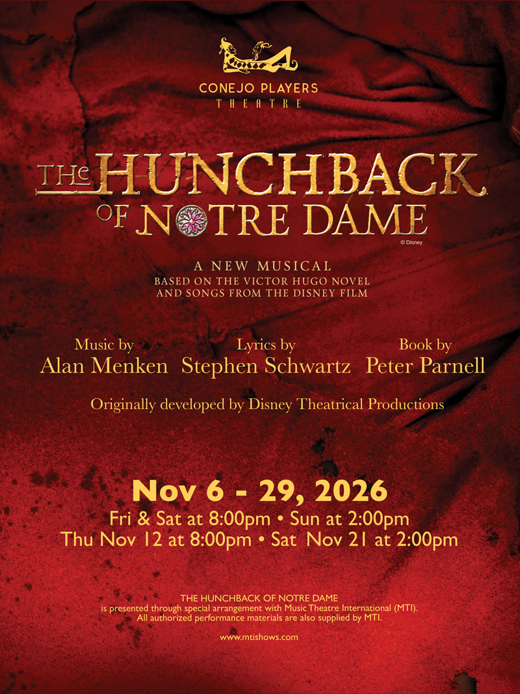
The Hunchback of Notre Dame Conejo Players Theatre (11/06-11/29) |
|
Mötley Crüe at Shoreline Amphitheatre Shoreline Amphitheatre (9/24-9/24) |
|
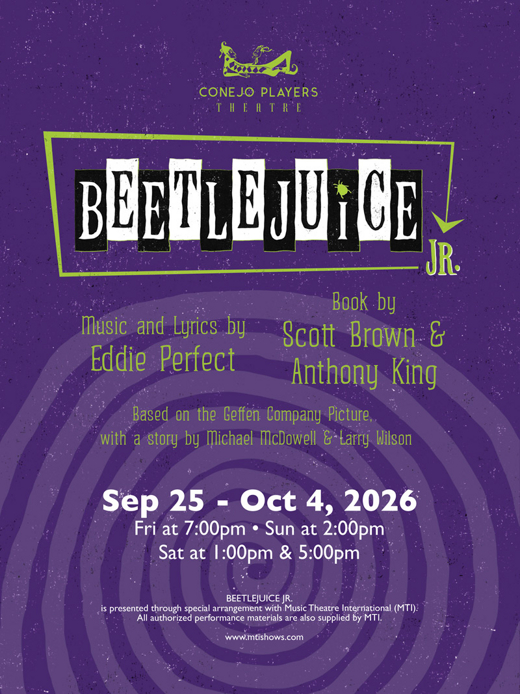
Beetlejuice JR Conejo Players Theatre (9/25-10/04) |

|
Gunhild Carling at The Grape The Grape (9/04-9/04) |
|
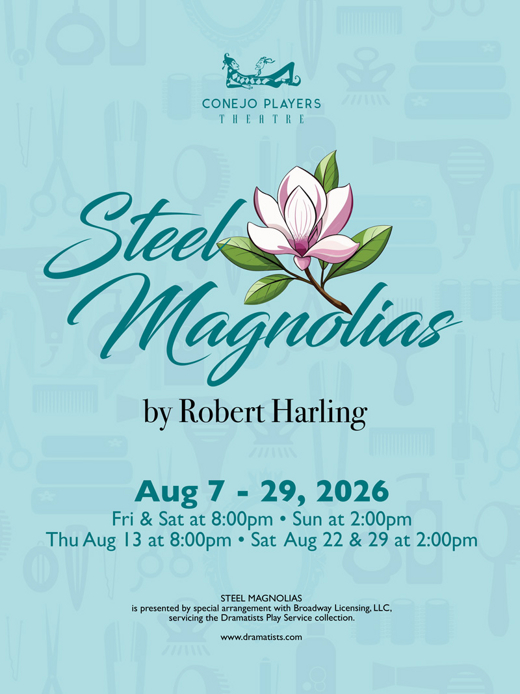
Steel Magnolias Conejo Players Theatre (8/07-8/29) |
|
|
5 Star Theatricals presents Les Miserables Fred Kavli Theatre- B of A Performing Arts Center,Thousand Oaks (10/09-10/18) |
Reader Reviews
To post a comment, you must register and login.