


Review: THE SCHOOL FOR SCANDAL at Clayton Community Theatre
Sheridan comedy of manners played October 9 - 19
 Click for Tickets
The School for Scandal, by Richard Brinsley Sheridan is a brilliant 18th century comedy of manners. It has received a very lovely production by the Clayton Community Theatre under the inspired direction of Heather Sartin, whose production of Twelfth Night last season showed the same theatrical virtues: a sweet understanding of the play and how it works, a great love and respect for the text, and a delicious, economical theatricality to the whole thing. Sheridan would be pleased to know that his satire breathes happily on a stage today without any updating or transposing or any new “concept”. Some things, you know, (like our appetite for salacious gossip) never change.
School for Scandal opened in 1777, so it’s not, strictly speaking, a “Restoration Comedy”. It is, however, commonly referred to under that genre. The Restoration was when, after the long closing of the theaters and the dismal rule of the Puritans, Charles II (“the Merry Monarch”) was placed on the throne. Theaters opened and the “lascivious mirth and levity” which had caused their closing returned with a bang. What’s more: female roles could now legally be played by actual women!! The comedies of the period typically dealt with who is being seduced by whom—and how that project is progressing. Characters tend to be of the nobility—and shallow, wicked, and brilliantly witty.
By the time the Hanoverian Georges came to the throne English comedy had mellowed. Goldsmith’s She Stoops to Conquer (1773), for instance, is warmer-hearted and gentler.
But Sheridan gave School for Scandal a good dose of that old Restoration acid, for which critics called him “the modern Congreve”.
It’s a complex plot involving two marriages:
- Sir Peter Teazle and his much-younger wife. They constantly quarrel. She, a beautiful country girl, is happily spending away his wealth. She is tempted to enjoy the sexual freedom of high society. Can this marriage survive?
- Lovely Maria is Sir Peter’s ingenue ward. Since this is a comedy we expect her to be married by night’s end—and she’s in love with the charming young Charles Surface. But Charles is a notorious spendthrift, constantly in debt. Sir Peter insists that she marry Charles’ brother Joseph, who has a good reputation but is actually a hypocritical cad. Joseph woos Maria (for her dowry), but he also puts the moves on young Lady Teazle.
Surrounding these romantic struggles is a crowd of observers and eggers-on who relish juicy gossip. When they can’t find any they simply manufacture it! Mr. Crabtree and Sir Benjamin Backbite, Mrs. Candour, Careless and Snake are all enrollees in this School for Scandal. The lovely widow, Lady Sneerwell, is its headmistress.
The Surface brothers have great expectations—from their rich uncle Sir Oliver, who’s been away in India for sixteen years. Unbeknownst to the brothers Uncle Oliver returns—and uses different disguises to assay the characters of the brothers. Which is the more deserving?
It’s a very strong cast. Oddly, though, three of the four leading male roles (the entire Surface family) are played by women. Now last year’s Twelfth Night was an all female cast—which turned out to be a delightful small exercise in irony and gender fun. After all, every female character in Shakespeare’s plays was initially played by a male. Often, as with Viola, we’d have a man playing a woman playing a man. School for Scandal is quite different. Here, to cast a few women in men’s roles can only suggest a shortage of male auditioners.
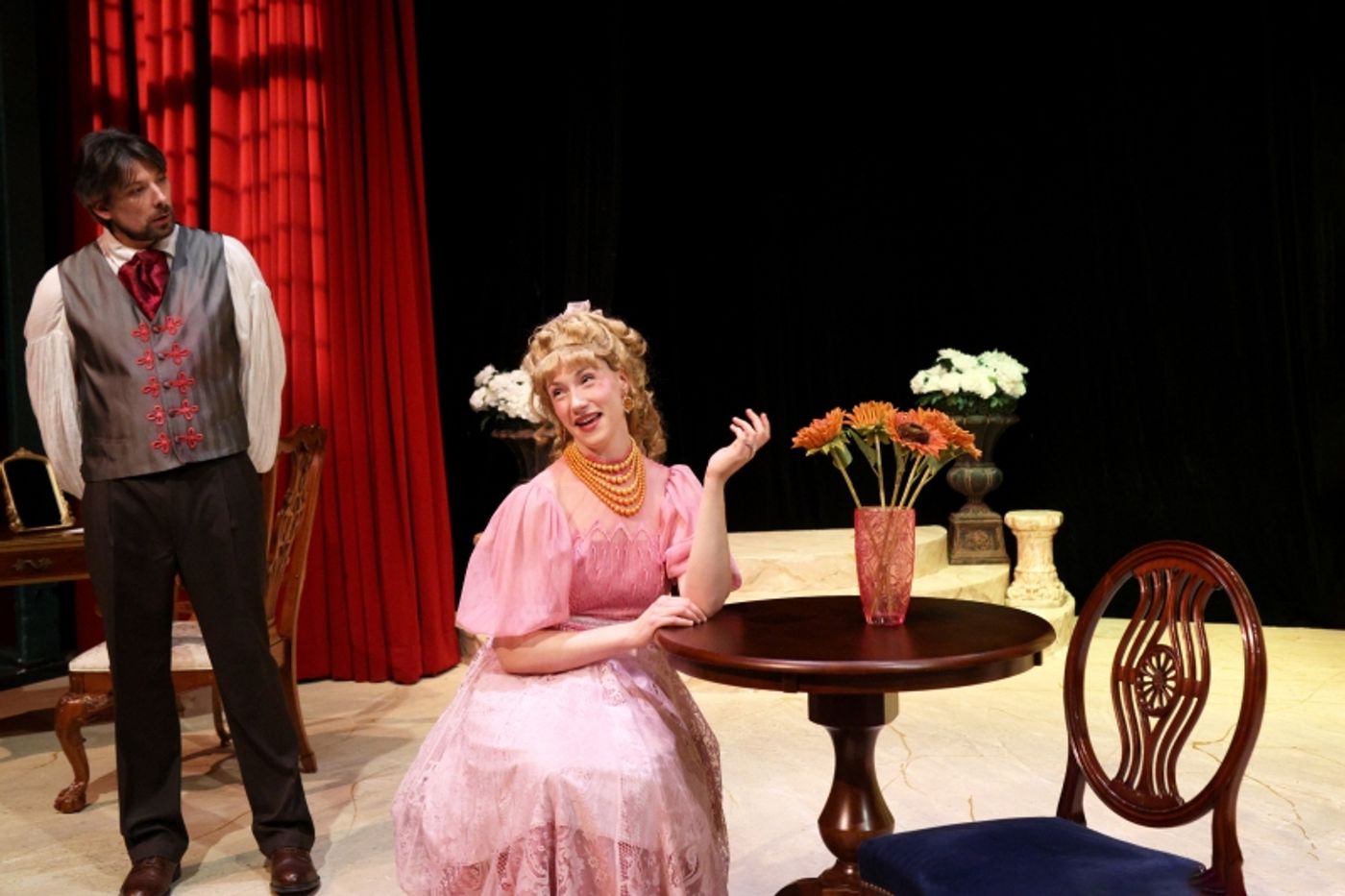
Be that as it may, excellent performances abound. Sean Monarch and Carolyn Bergdolt are beautifully matched as the Teazles—he handsome and forceful, and just a tiny bit feckless, she twinkling with wit and with a not-quite-hidden love for her husband. Erin Struckhoff is outstanding as Charles, the charismatic spendthrift; Leslie Wobbe makes Joseph the immoral lout that he has, till now, hidden from the world. Marni Romano is earnest and innocent as the much-wooed Maria. Jan Meyer fills Uncle Oliver with luscious fun. The lovely Nancy Lubowitz is funny and fearsome as Lady Sneerwell. Michael Monsey and Scott Jackson, as Crabtree and Sir Benjamin, give fine, almost vaudeville performances as this tag-team of gossips. One voice of sanity and reason, Rowley, is ably performed by Brandon Atkins. Lisa Haley (Mrs. Candour), Mike Maskus (Careless), and Lejla Suskic (Servant) all do lovely work. Mary Klein makes Snake a cuddly sort of conniver.
As in her Twelfth Night director Sartin drew quite wonderful diction from her cast. And she artfully cut the script from something like three hours down to a very happy ninety minutes; she did so like the finest plastic surgeon—with nary a scar!
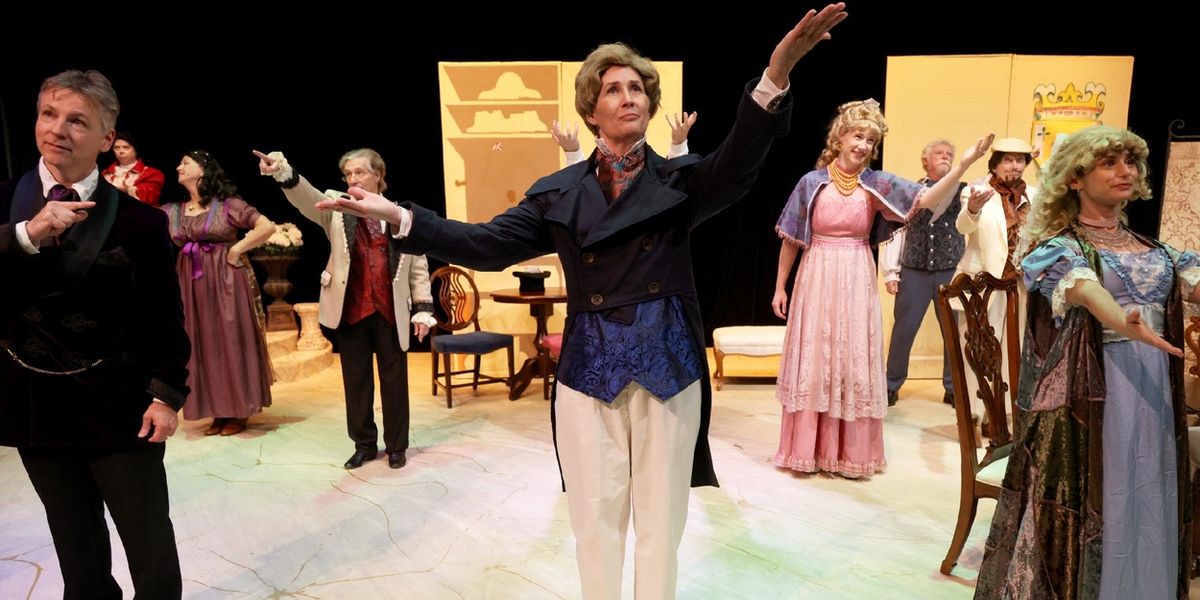
Lively dancing by the whole cast was done at the rise of the Act I curtain and after the curtain-call bows. It was … what? Perhaps a rock-and-roll minuet? Quite modern, but very much in the graceful playful spirit of the play. No choreographer was listed. (Perhaps the multiply-gifted Heather Sartin?) The excellent sound design was by Will Sartin (yes, her son).
Ms. Sartin designed the simple elegant set, in which periaktoi rotate to make set changes almost instantaneous. Scenic painting by Bob Beck and Nancy Crouse is very much a work of art. Lighting is by that old master Nathan Schroeder. Costumes were a challenge indeed, but Costumer Abby Pastorello triumphed. Splendid work!
I congratulate producer Sam Hack and the Clayton Community Theatre for this beautiful show. It continues their long dedication to bringing us excellent productions of real classic theater.
The production played October 9 through 19.
|
Guys And Dolls Kirkwood Pac (7/24-8/23) |

|
JOB New Jewish Theatre (NJT) (8/06-8/23) |
|
Mamma Mia! The Fabulous Fox Theatre (3/30-4/04) |

|
Gunhild Carling at City Winery St. Louis City Winery St. Louis (10/11-10/11) |

|
Gateway Dirt Nationals – 3 Day Pass The Dome at America's Center (12/03-12/05) |
|
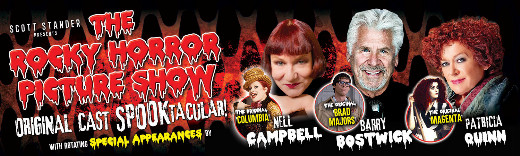
Rocky Horror Picture Show Original Cast Spooktacular Tour with Barry Bostwick, Nell Campbell, and Patricia Quinn The Fabulous Fox Theatre (10/06-10/06) |

|
WSIE Music Series Event w/ Dawn Weber – August 22, 7-9pm Harold Square Outdoor Amphitheater (8/22-8/22) |
|
Wicked Fox Theatre (5/12-5/30) |
|
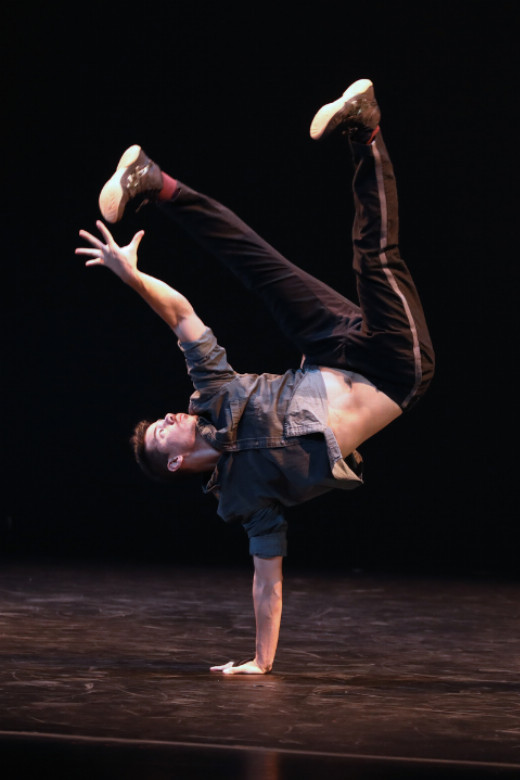
RUBBERBAND Touhill Performing Arts Center (2/27-2/27) |
|
The Book of Mormon (Non-Equity) Fox Theatre (2/02-2/07) |
Reader Reviews
To post a comment, you must register and login.