


Review: ONE-ACT FESTIVAL at Union Avenue Opera
"dwb" and "As One" at Union Avenue Opera
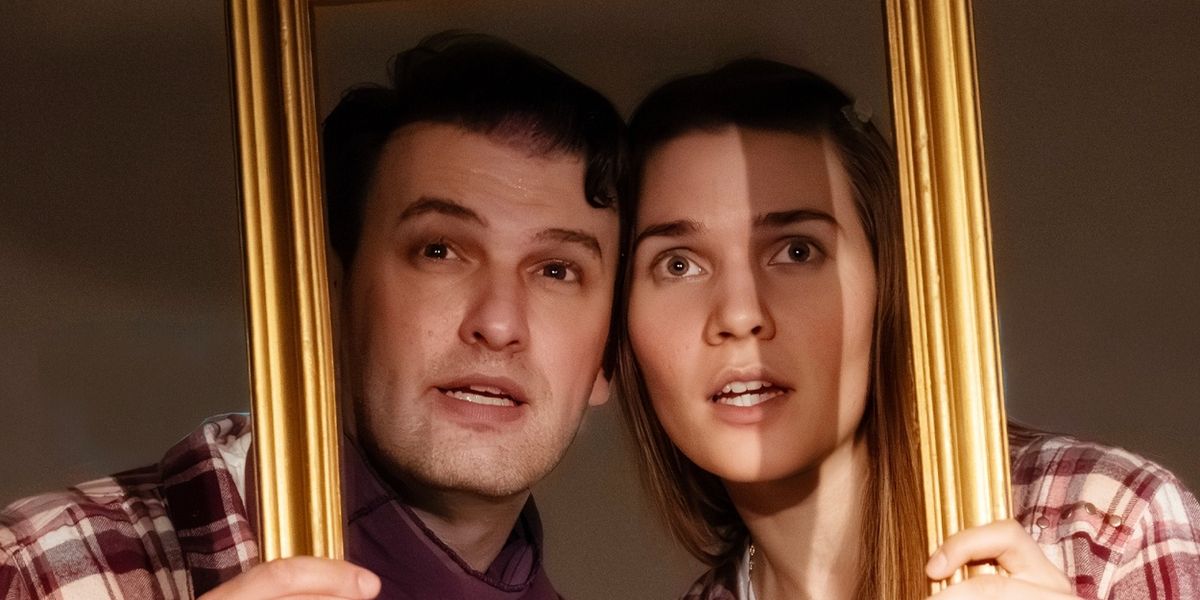
New things at Union Avenue Opera! This wonderful company is extending it’s 31st season with an evening of two one-act operas.
Neither of these works would ever be mistaken for Leoncavallo or Mascagni. They are both quite, quite modern. And neither of them ends in death (so they can’t be tragedies) or marriage (so they can’t be comedies).
They are, if you will, social justice operas.
The performance was held not in the company’s usual space, the large sanctuary of the Union Avenue Church, which is still undergoing repairs from the recent tornado damage. The one-acts were performed in the much smaller Brigham Gallery in that building. It seats perhaps a hundred people and of course technical aspects are minimal, but it was perfectly suitable for these two small, intimate pieces.
As One (2014) was composed by Laura Kaminsky, with libretto by Mark Campbell and Kimberly Reed. It is a very lovely and sensitive tale about a boy who feels that he is really a girl. It is, in fact, the story of Kimberly Reed (now a trans-woman media super-star). I usually avoid plays (and operas) about oppressed minorities whose grievance has become a political hot-button. It’s easy for an opportunist to whip out a mediocre script and to get it widely produced. But that is not the case in this small legend of gender dysphoria. This is very beautiful stuff!
Laura Kaminsky is an internationally acclaimed composer. In As One a string quartet serves as orchestra. The music is modern, with occasional dissonance, but all-in-all it’s quite gorgeous and accessible. The libretto is by the deeply veteran Mark Campbell who has written forty-one operas and is in the OPERA America Hall of Fame. He worked with Kimberly Reed herself to develop this intimate and magical story.
We find a bare stage with only two light benches. At the side is a large projection screen. On this, as the action proceeds, we are given evocative film sequences (prepared by Kimberly Reed). Supertitles are shown above and behind the acting space.
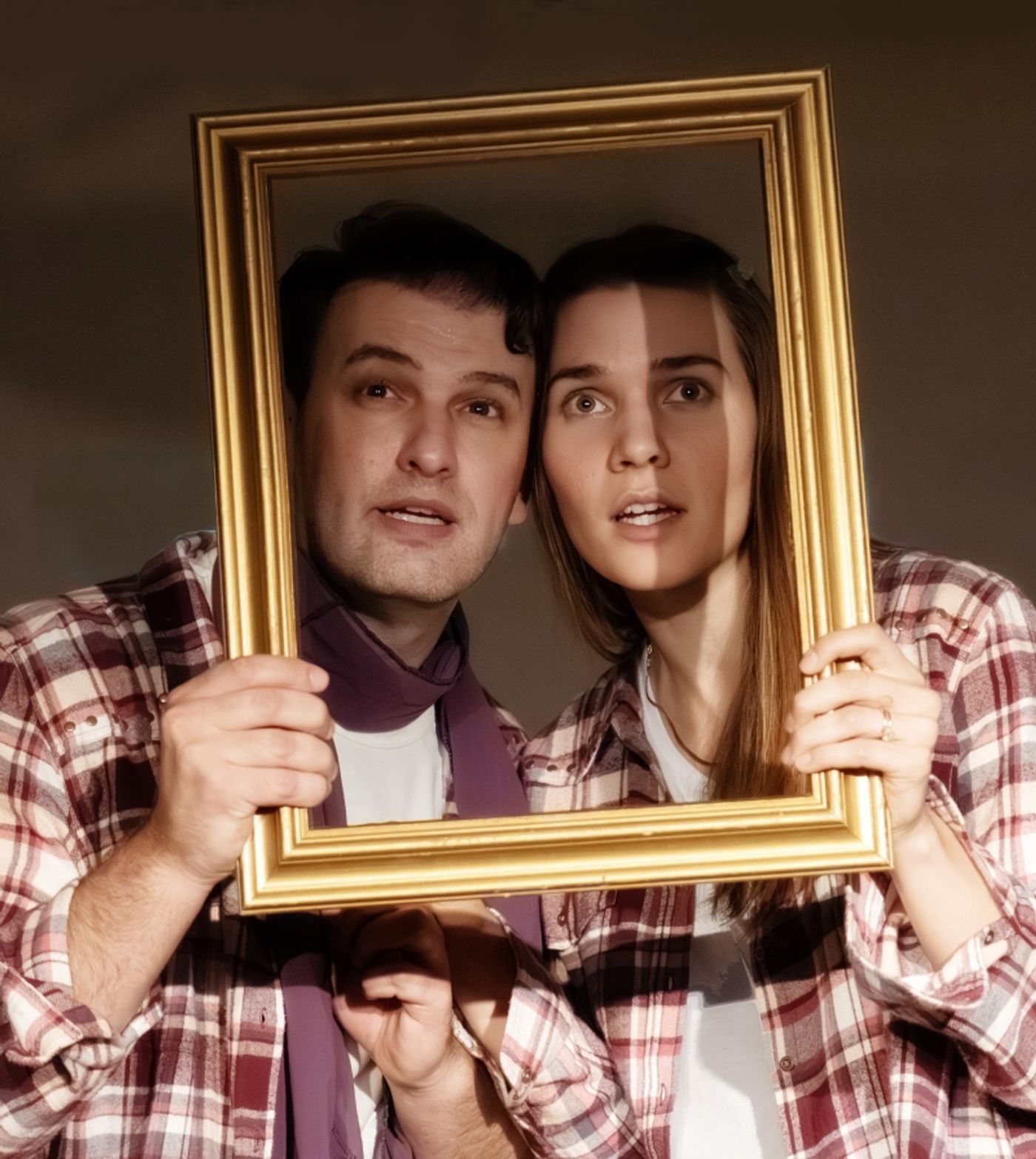
We meet a young man and a young woman dressed identically in jeans and plaid shirts. These are “Hanna Before” (baritone Evan Bravos) and “Hanna After” (mezzo-soprano Emma Dickens). They’re a very handsome couple indeed.
We see the boy first as a lad delivering papers on his bike. He has a secret: sometimes he puts on a girl’s blouse! (“It feels so right!”) He even puts in rolled-up socks for a bosom. We follow the boy as he grows, exploring and being troubled by his gender feelings.
In grade school his teacher repeatedly faults his cursive writing: “You mustn’t write like a girl!”
In Junior High there is that infamous assembly where boys and girls are divided to watch appropriate sex-ed films. Hanna doubts she is in the right group.
True story: in my eighth grade—oh so many decades ago—when we were mysteriously divided into two separate assemblies, we hundred or so pubescent boys gazed in fascination as the film started and the camera zoomed ever-so-slowly in on that famously naked lady, the Venus de Milo. Miss Roberts, the School Nurse, had inadvertently loaded the wrong film into the projector. Quick dash! Change reels! (Many sighs of disappointment.)
In high-school Hanna strives to be the perfect boy: class president, team captain, valedictorian—so that no one will suspect his inner feelings.
In a moment of bravery, when the class is studying Donne’s “No Man is an Island”, he stands up to declare the he himself is an island.
Then he hears a word on TV that gives him hope. He’s not alone! He rushes to the library searching for information about “trans…”. Well, people might think he’s doing research on the Transvaal War.
All of this is done with gentleness and with a genuine, self-reflective sense of humor.
Baritone Evan Bravos brings a strong, clear lyric voice to “Hanna Before”, the male half of this personality. His diction is perfect, and he fills the role with graceful confidence. This is his Union Avenue debut, but he has performed this role before at Opera Santa Barbera.
Emma Dickens (“Hanna After”) is blessed with a pure and powerful voice as well as with a bone-deep wholesome natural beauty. I was first impressed with her eight years ago here at Union Avenue when she did some rather less serious playing with genders: she (as Emma Sorenson) sang a wonderful Hänsel in Hänsel und Gretel.
Stage Director Joan Lipkin handles the staging with such grace! The benches are moved occasionally to vary the acting space. Ever and anon Hanna Before and Hanna After circle each other, each searching into the other with honest curiosity. Sometimes an empty mirror-frame is held between them as they gaze, mystified at the other half of themselves.
Hanna, as an adult, finds a comfortable strategy: Hanna crosses a bridge to the next city to live as a woman, then crosses back to life as a man. She experiences casual flirting. (“How do you do this?”) She begins taking hormones to embrace her feminine side—but finds they lead to emotional turmoil. She avoids returning home for Christmas. There is a frightening threat of violence from a drunken stranger.
In the end the piece steps across the line into almost fairy-tale. Hanna goes to a remote cabin in Norway and lives with nature. There, with the Northern Lights as muse, she finds a sort of epiphany that lets her finally live “as one”. Happy ending!
Not a lot of useful advice for the gender dysphoric, but a very perceptive glimpse into what that experience is like.
And now to the second half of the evening:
dwb (Driving While Black) (2023) was composed by Susan Kander with libretto by Roberta Gumbel. It deals with the seemingly undying stress between Police and Black America. We are all aware of “That Talk” which black parents must have with their teen children: how to handle the fact that if you Drive While Black you are implicitly guilty.
This is a one-woman show, with an “orchestra” consisting of only one cello and one percussionist (whose armory of instruments is most impressive). The stage director was Ivan Griffin.
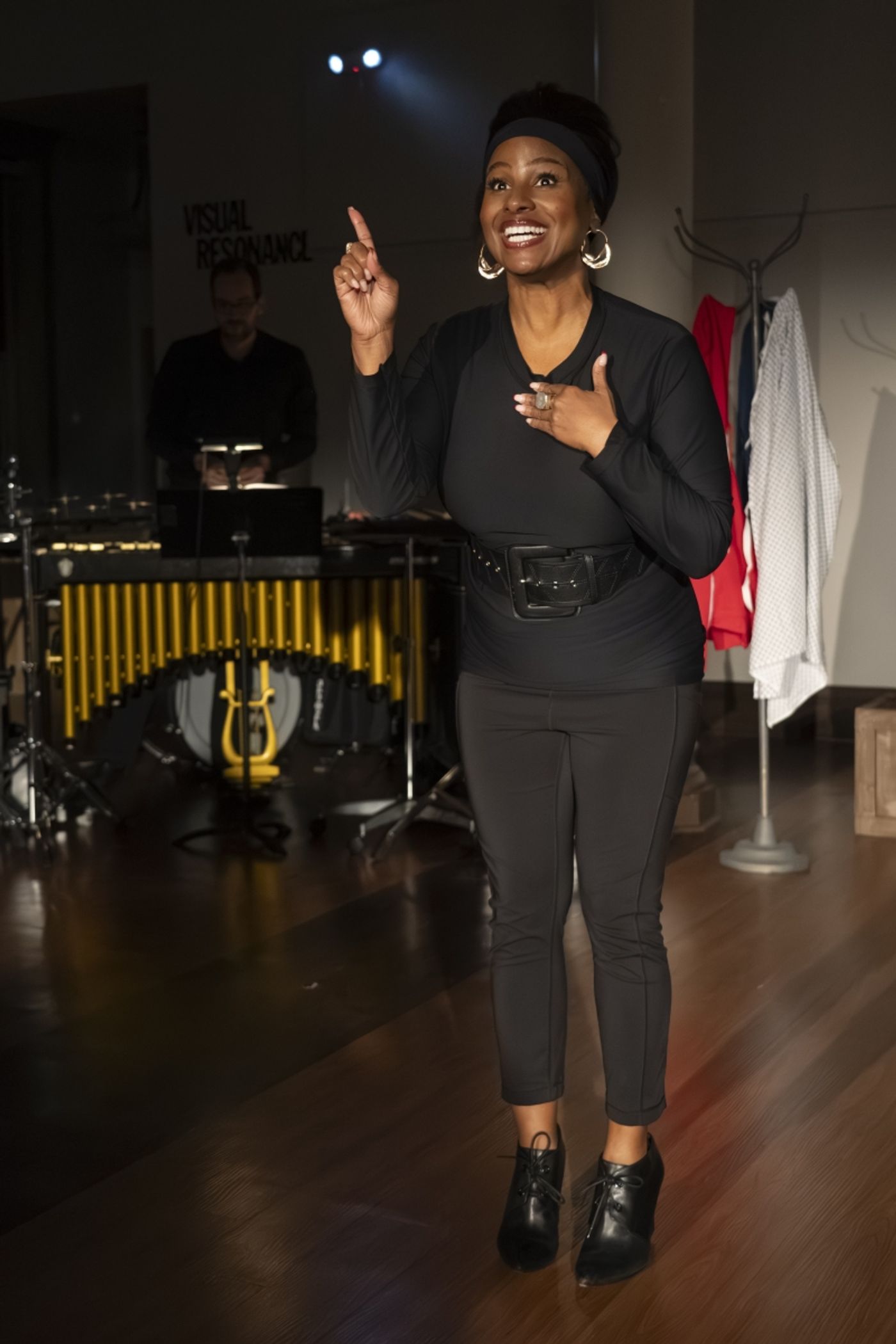
First to praise the performers: Soprano Marsha Thompson has, on the Union Avenue stage, given truly magnificent portrayals of Aida and of Abigaille in Nabucco. Here, as the mother of a growing son, she is given less opportunity to flourish her true operatic gifts.
I have never heard so rich a cello tone as that which fills the hall under the bow of Marcia Erwin. Rife with double-stops it is quite magnificent.
Percussionist Sebastian Buhts is amazing. He darts from vibraphone to xylophone to toy piano to various other dingers and tappers and clangers and bonkers—and he’s a master of the deflating balloon. (“Squeeeeeee!”) Seriously, Buhts is a true artist. Go to his web-site sebastianbuhts.com. His marimba performance in a medley of “Back Home Again in Indiana”, “I’m Alabamy Bound” and “California Here I Come” will make you swallow your gum! Mallets flash faster than a humming-bird’s wings. Such astonishing virtuosity!
The two musicians do wonders in establishing a feeling of urban chaos, of threat, of fear. But the totally atonic score gives the sense of utter randomness. Bangs and clangs and slaps and stomps and knocks and moans abound. But to what end?
We begin with Mother screaming in childbirth, then watch as her son grows. We see various stressful moments for the mother and/or son—some unique to Black families, some familiar to all. As the son grows our focus is drawn occasionally to several pairs of sneakers: tiny for the toddler, small for the kid, large for the teen. But the libretto is disjointed. There is little that really engages us in the story. In the end, despite her fears, the mother gives the car keys to her son.
So both Kander’s score and Gumbel’s libretto were disappointing. There certainly is a real drama to be told—a powerful opera to be written—about Driving While Black.
dwb is simply not that opera.
The One-Act Opera Festival appeared at Union Avenue Opera on October 10 through 12.
Reader Reviews
To post a comment, you must register and login.